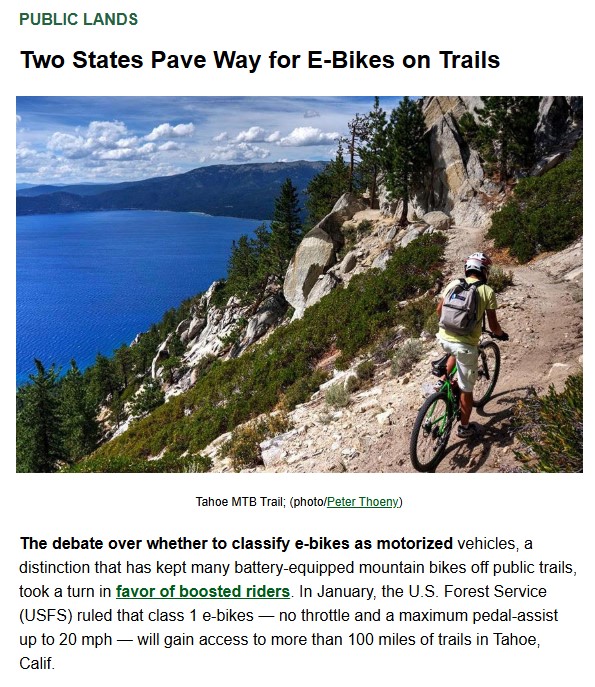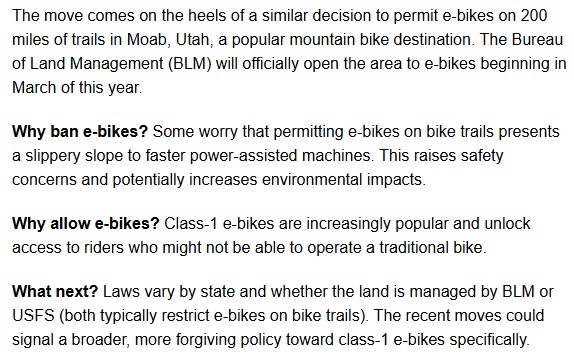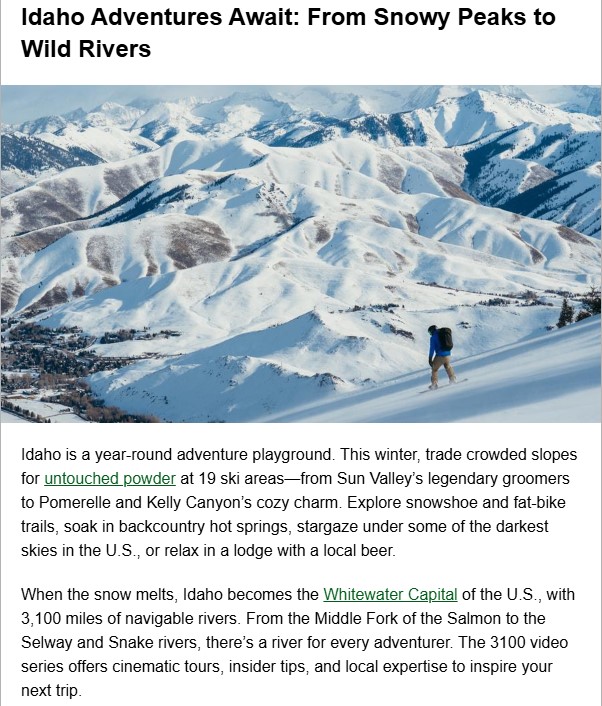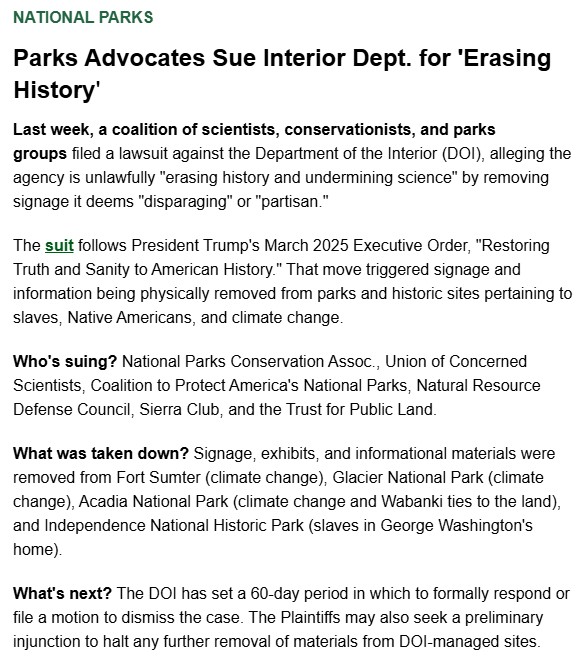






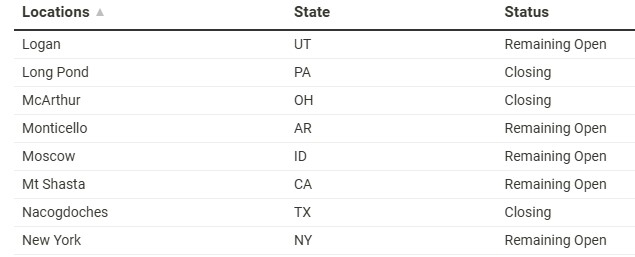
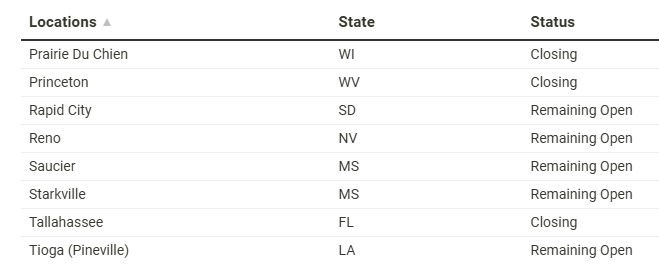
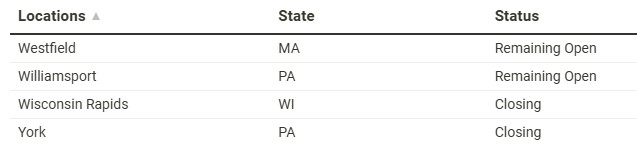
There are fewer than 300 wolverines left in the Lower 48, but soon a new effort will seek to restore the endangered animal’s population. Colorado Parks & Wildlife (CPW) just announced its plan for the first-ever wolverine reintroduction program.

History of wolverines: Wolverines were once widespread in the Lower 48, in states like California, Minnesota, Oregon, and Colorado, according to the Center for Biological Diversity.

Since the early 1900s, the population has sharply declined, mostly due to trapping and habitat loss. In 2023, they were added to the Endangered Species List.

Why reintroduce? Beyond helping revive an endangered species, reintroducing the wolverine has other benefits. The animal is naturally an opportunistic scavenger-predator. In addition to hunting small mammals like squirrels and rabbits, they’ll eat leftovers from carcasses of sheep, caribou, and moose that other, larger predators have left behind.

As the nonprofit Defenders of Wildlife explains, “Wolverines play an important role as nature’s cleanup crew. By scavenging dead animals, they help recycle nutrients back into the ecosystem and reduce disease spread by eating carcasses.”

What’s the plan? According to CPW, over 94% of the planned reintroduction habitat is on federal land. The areas include parts of Rocky Mountain National Park, the Elk and West Elk Mountains, and the San Juan Range.

The department will release 15 wolverines per year for 3 years beginning in 2027. Depending on how the species fares, there may be more reintroductions. Since wolverines have very large home ranges, the state can support around 100.

The U.S. Department of the Interior is preparing to issue a new directive that would make hunting and fishing the default use across most Interior-managed public lands unless specific closures are justified.

What’s new: Under this framework, federal lands would be considered open to hunting and fishing unless a closure is required by law, public safety concerns, or documented resource protection needs. Closures will require clear er justification, higher-level approval, and better documentation.

This does not create new hunting or fishing rights or eliminate conservation safeguards. It does, however, flip the starting assumption. Hunting and fishing would be treated as a default use of federal lands, not an exception.

What land does it a pply to? The order would apply to areas controlled by the Bureau of Land Management, U.S. Fish and Wildlife Service, and the Bureau of Reclamation. Some units within the National Park Service that already permit hunting would also fall under the framework.

What land is excluded? Areas closed to hunting by statute would remain closed. Lands managed by the Bureau of Indian Affairs would not be affected. READ MORE

GET MORE INFORMATION

BOISE, Idaho — Winter riders looking to hit the snow at Pilot Peak and Mores Creek Summit in Boise County should avoid the area due to poor snow conditions and downed trees.

Boise County Grooming 8A, a group that maintains snowmobile trails and winter parking lots, said it was astonished by how many trees had fallen in the area Thursday.

“These are not little ones either,” officials said on social media. “There is hundreds and hundreds of trees down all over, I have never seen anything like it. There is no way to cut them all, we need multiple feet of snow to cover a lot of them.”

Boise County officials said even if it gets good snowfall, the area will be challenging to groom, as “[they] are going to need a lot of snow to be able to groom over and around this huge mess.”

“In the 39 years of riding Mores Creek area I have never seen anything close to what we seen today,” Boise County Grooming 8A said.

The Boise County Sheriff’s Office said riders should avoid the area for safety concerns due to a 3-foot snow base. Mores Creek Summit is recommended for expert riders, and the approximate Thursday’s snow base is 0 feet.  LINK TO STORY

Union representatives for U.S. Forest Service workers in the Sawtooth and Salmon-Challis national forests are echoing some conclusions stated in an internal Forest Service trails report recently obtained and published by The Washington Post describing widespread public and employee dissatisfaction with trails on federally-managed public lands.

The internal report, published on Tuesday, Dec. 16, stated that services and public satisfaction in national forests across the U.S. will “continue to decline in 2026 and beyond without direction to prioritize investments in recreation generally and the trails program specifically.”

The report also stated that some districts across the country have lost up to 100% of their trails staff and “hundreds of years of trail expertise.” It stated that Forest Service staff are experiencing stress and burnout.

In late 2024, the Forest Service announced that it would lay off its entire seasonal, nonfirefighter workforce for the upcoming fiscal year due to budget constraints.

READ STORY:  Union representatives for USFS-Jan2           //        USFS 2025 Trail Status Summary

WATCH VIDEO

WATCH VIDEO


https://boisedev.com/2025/03/20/wilks-brothers-skirting-subdivision-rules-in-plan-to-sell-2000-acres-near-cascade-2/

BOISEDEV ICYMI 2025
In Case You Missed It: Some of our best stories of the year

A company owned by Texas billionaires Dan and Faris Wilks is selling 73 ranch sites carved from about 2,000 acres south of Cascade.

Plans for Legacy Creek Ranch, as dubbed by DF Development, look like subdivisions across Valley County, but are not subject to the same rules and review process because the ranch sites were created by a series of lot line adjustments and original parcel splits.

That, Valley County Planning and Zoning Administrator Cynda Herrick said, is the difference between selling raw land and being required to follow the county’s subdivision laws.

“I’ve been talking with (DF) and they understand that this isn’t the preferred method,” Herrick told Valley Lookout. “But it’s what they’re entitled to by law.”

The method used by DF enables Legacy Creek Ranch to avoid the county’s subdivision requirements, which include plans for drainage, irrigation, drinking water, septic systems, utilities, and streets.

It also means that the company is not required to create a fire protection plan covering things like water supply, emergency access, and vegetation management.

The plan also avoids review by the Valley County Planning and Zoning Commission, as well as several state agencies, including the Idaho Transportation Department, the Idaho Department of Environmental Quality, and the Idaho Department of Water Resources.   READ MORE

Volunteers clear nearly 500 fallen trees from Forest Service roads | Coeur d’Alene Press https://share.google/6dS7zogwVPNW5DTuF

Volunteers assess road conditions in the Fernan Hill area following last week’s high winds. Volunteers removed nearly 500 fallen trees from area Forest Service Roads over the weekend.

by HAILEY HILL
Staff Writer | December 26, 2025 1:08 AM

It’s not just snowmobilers that recreate on North Idaho’s National Forest land, said Back Country ATV and UTV Association President Bret Uhlich.

Hikers, cross-country skiers and even sled dog teams take advantage of the groomed backroads and trails that make winter recreation accessible.

“We all love the backcountry,” Uhlich said.

It was this love for the backcountry that united 75 volunteers Saturday, enough manpower to clear nearly 500 fallen trees along Bunco Road, Fernan and the Fourth of July Pass.

Most volunteers were members of local organizations, including the Back Country ATV and UTV Association, the Coeur d’Alene Snowmobile Club and multiple Jeep clubs.

“Calls for action” were issued last week after high winds tore through North Idaho, downing trees, damaging infrastructure and resulting in one death.

One member of the Snowmobile Club had driven up into the Fernan Saddle area Wednesday to assess the road conditions and found trees nearly 2 feet in diameter toppled across the dirt road.

The club member was able to clear a quarter mile of the roadway by himself.

“Progress is possible, but it is slow, hard work,” the Snowmobile Club shared to social media Dec. 18.

With volunteers split into nine teams, several dozen miles of roadway were cleared of downed trees and other debris.

Cutting and moving the downed trees out of the roadways will save groomers both time and resources once the area receives significant snowfall, said Coeur d’Alene Snowmobile Club President Steven Cox.

The work will also allow outdoor enthusiasts to access the trails earlier in the season.

“I figured we should use the brief window we have before it started to snow,” Cox said.

These efforts underscored the importance of organizations like the Snowmobile Club, he added.

“This shows exactly what the need for this club is,” Cox said. “It was really good to see how many people came together to do this.”

And though there’s still plenty more work left to do, time and weather will determine whether crews can safely get back out there.

“There’s more to go, but unfortunately it’s a little dicey out there,” Uhlich said.


2026-Convention-Registration-PRBCH

2026_bch_convention_flyer_8_6_25_second_adjustment

2026-Convention-Registration-PRBCH

Watch Videos

The EXPLORE Act (Expanding Public Lands Outdoor Recreation Experiences Act), signed into law in January 2025, is a bipartisan U.S. law designed to boost outdoor recreation on public lands by modernizing permits, improving infrastructure, supporting rural economies, and increasing access for all Americans, including veterans and underserved communities, through provisions like streamlined processes, new trails, and better camping facilities, while also protecting natural resources. 
Key Goals & Provisions:
  • Streamlined Permitting: Makes it easier for outfitters, guides, and nonprofits to operate on public lands.
  • Improved Access: Creates new bike trails, modernizes campgrounds, and helps underserved communities get parks and green spaces.
  • Economic Support: Benefits local economies, especially in rural areas, by supporting recreation businesses and infrastructure.
  • Modernization: Updates technology and processes for visitor experiences, like online passes and better data.
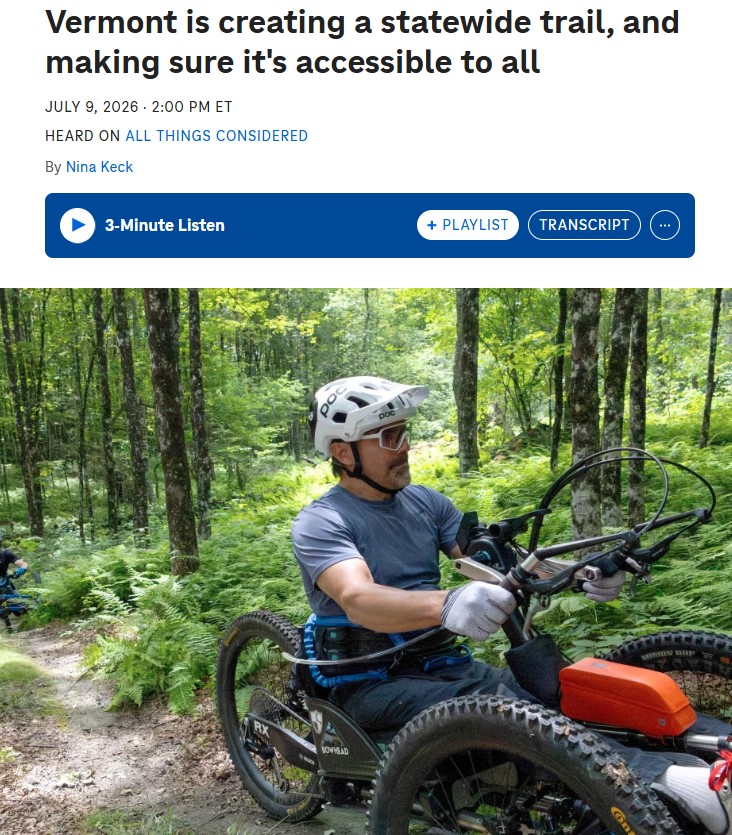
  • Inclusivity: Includes provisions for adaptive trails for veterans and people with disabilities (like the Military & Veterans in Parks Act).
  • Expanded Opportunities: Supports activities like shooting ranges, climbing, and camping. 
Why it’s Important:
  • Comprehensive: A package of multiple recreation-focused bills rolled into one.
  • Bipartisan: Passed with broad support in Congress.
  • Sustainable: Aims to grow the outdoor economy without harming natural resources, preventing degradation at busy sites. 
In essence, the EXPLORE Act makes it simpler and more accessible for more people to enjoy America’s public lands and waters. 

Bipartisan legislators in the House this week co-authored a bill to outlaw the intentional use of snowmobiles and other motorized vehicles to ram and crush coyotes, wolves, and other animals on federal land.

The Snowmobiles Aren’t Weapons (SAW) Act would “close a glaring gap in federal wildlife protections,” according to the conservation group, Animal Wellness Action.

While several states prohibit hunting wildlife “from motor vehicles,” most states, not including Minnesota, Oregon, and Colorado, do not explicitly outlaw ramming or running over animals with a motorized vehicle on federal land.

“At a time when the House is taking up problematic legislation to remove federal protections for gray wolves from the Endangered Species Act, it’s more important than ever to stand up for responsible stewardship of our public lands and wildlife,” said Rep. Val Hoyle, D-Ore. “This bipartisan legislation shows we can work through thoughtful policy debates on conservation and wildlife management without condoning cruel and dangerous practices that threaten animals and public safety.”

The bill was co-sponsored by Mike Lawler, R-N.Y., Debbie Dingell, D-Mich., and Brian Fitzpatrick, R-Pa.

saw_act_full_bill_text

19. December 2025 · Comments Off on Public Lands – Mike Lee is at it again! · Categories: Current Events, Public Lands

After receiving a lot of flak

16. December 2025 · Comments Off on Public Lands – 2025 Boise National Forest · Categories: Current Events, Public Lands

Hey Folks,
I’m reaching out to highlight our appreciation for your time and energy in working with the Boise National Forest and our north zone (Cascade, Emmett and Lowman District) trails program.
I’m currently applying for trail grant funding to pay for crews to do work on motorized and non-motorized trials in 2027 and 2028. The reason for this timeline is that I learn whether we are awarded the grant in early summer 2026 and can’t receive funding until the fall of 2026, therefore I use that funding to pay for crew time the following year.

I have attached a draft of our current trail grant; I also send a draft of the grant to the IDPR committee that oversees the awarding of RTP grants.

What I need from your organization if you haven’t already submitted it: Volunteer hours for the 2025 field season. I have attached a volunteer report form, but you can also use a different format, number of volunteers number of hours (8 is the minimum for a day) and where are really helpful. What I need if your group would like to support the Boise NF in it’s grant request for 2026. A letter of support.
I use volunteer hours to make up the %5 non-federal match. Currently IDPR lists that value at $7.25 an hour for the RTP grant. I have made a request to update that amount to match the actual value that volunteers contribute, so hopefully that will change at some point. The letter of support needs to list the number of volunteer hours a group is willing to support us doing trail work during the years we will have the grant. The letter must explicitly state the number of hours, as per IDPR policy. I generally use the previous year’s volunteer hours or take an average. I am happy to help sort out hours and draft a letter or provide examples if needed. If you don’t want to state you will help with hours, just a note that you support the grant is also helpful.

Second, please let me know if there is a time when I could attend a club meeting in January, February or March and what date, time and location the meeting would occur and I can give an update on 2025 trail work and future planning.

Again, thank you so much for the support and help, we covered a lot of ground in 2025 and addressed lots of post fire impacts with help from so many partners. We certainly couldn’t do the work without you.

10. December 2025 · Comments Off on Education – Horse accident in Wyoming · Categories: Current Events, Education

READ FULL STORY:  Horseback Ride Fall – 2025

10. December 2025 · Comments Off on Education – Quicksand · Categories: Current Events, Education

READ FULL STORY:  Hiker Rescued From Quicksand

21. November 2025 · Comments Off on Idaho State Department of Agriculture urges pause on horse events after out-of-state EHV-1 outbreak · Categories: Current Events, Education

Idaho State Department of Agriculture urges pause on horse events after out-of-state EHV-1 outbreak

Idaho State Department of Agriculture officials are urging horse owners and event organizers to hit pause on upcoming equine events and avoid transporting horses for now, after multiple cases of Equine Herpesvirus Type 1 (EHV-1) were confirmed in horses that attended recent competitions in Texas and Oklahoma.

There are no confirmed EHV-1 cases in Idaho at this time, according to the ISDA. But because the virus can spread easily and can be deadly, the Idaho State Veterinarian is strongly recommending a temporary halt to hauling horses.

EHV-1 affects horses’ respiratory and neurological systems. It spreads through direct horse-to-horse contact, shared airspace, contaminated clothing, and other surfaces. Symptoms include fever, nasal discharge, coughing, lethargy, or neurological symptoms such as stumbling, incoordination, loss of tail tone, and hind-limb weakness.

EHV-1 cases have been reported in Texas, Oklahoma, and Louisiana. Idaho horse owners who attended or were near those competitions are asked to contact the Idaho State Veterinarian. Exposed horses should quarantine for 21 days and be monitored for symptoms. This virus is not transmissible to humans.

More guidance is available here.

20. November 2025 · Comments Off on Public Lands Jobs – SBFC 2026 · Categories: Current Events

LINK TO POSTED POSITIONS

20. November 2025 · Comments Off on Public Lands – Idaho’s wildfire suppression fund · Categories: Current Events, Public Lands

https://idahocapitalsun.com/2025/11/19/balance-of-idahos-state-wildfire-suppression-fund-drops-to-15-million-after-2025-season/

While the state continues navigating budget holdbacks and revenue shortfalls, the balance of Idaho’s wildfire suppression fund is expected to drop to $15 million after closing the books on the 2025 wildfire season, state officials said Tuesday.  Idaho’s expenses for the 2025 wildfire season netted about $40.6 million, Idaho Department of Lands Director Dustin Miller said during Tuesday’s meeting of the Idaho State Board of Land Commissioners, which is frequently referred to as simply the Land Board. Miller told the Land Board that Idaho incurred about $59.3 million in expenses as of Nov. 3, but the state expects to recoup about $18.6 million through reimbursement agreements and partnerships – resulting in a net total of about $40.6 million.

Miller estimated that leaves the state’s wildfire suppression fund with a balance of about $15 million heading into the 2026 wildfire season.

That amount of money is likely not enough to pay wildfire bills in 2026. Miller estimated that the state will be on the hook for almost $5 million next year in fixed costs at the beginning of the season before the first fire even starts.  Idaho Gov. Brad Little said costs could be well over $10 million when the cost of contracting for helicopters, crews and other equipment are added – all before fighting a single wildfire.

That means state officials could have to find additional money to fight wildfires at a time when all state agencies – other than the K-12 public school system – are navigating mandatory budget holdbacks of 3% and the state budget is projected to end the current fiscal year with a budget deficit estimated at $58.3 million, the Idaho Capital Sun previously reported. As state revenues come in below projections, the Idaho Legislature’s powerful budget-setting committee, the Joint Finance-Appropriations Committee, or JFAC, has signaled that next year’s budgets will be tight, and legislators will generally focus more on trimming budgets rather than approving new budget expenses to avoid running a budget deficit, the Sun previously reported.

Idaho governor said he doesn’t want state going into debt fighting wildfires

Little has favored pre-funding the state’s wildfire suppression fund to make sure money is available upfront, ensure firefighting operations are not shortchanged or interrupted and to avoid going into debt fighting wildfires.

“Backing the Fire Suppression Deficiency Fund means Idaho’s wildland firefighters can focus on aggressively protecting timber, lands, property and people without funding delays, and lawmakers can enter next year’s budgeting cycle without a deficit due to wildfire suppression,” Little and the Land Board members wrote in a Feb. 18 letter to JFAC.  At the beginning of the 2025 legislative session, Little requested $60 million to build up the wildfire suppression fund, but the Idaho Legislature agreed to provide $40 million.  With the balance of the wildfire fund now dropping to $15 million, Little said Tuesday he is trying to decide how much funding he needs to request to be prepared to fight wildfires in 2026 so the state does not have to use deficiency warrants to pay the bills. Little and other state officials have compared the deficiency warrant process to running up credit card debit to pay for essential state services.

“By the time you contract for helicopters and the airplanes and the crews and everything, it’s well over $10 million,” Little said Tuesday. “I’m just trying to figure out what the budget request needs to be so we don’t have to do deficiency warrants.”

Compared to the more severe 2024 wildfire season, Idaho’s wildfire costs were lower this year at an estimated $40.6 million. In 2024, Idaho’s wildfire costs were about $58 million, the Sun previously reported.

The Land Board is made up of Little, Secretary of State Phil McGrane, Idaho Attorney General Raúl Labrador, Idaho State Controller Brandon Woolf and Idaho Superintendent of Public Instruction Debbie Critchfield.  The Land Board provides direction to the Idaho Department of Lands, which is responsible for fighting wildfires on state land.

The Idaho Legislature will set the fiscal year 2027 budget for the Idaho Department of Lands during the 2026 legislative session, which begins Jan. 12  at the Idaho State Capitol in Boise.

18. November 2025 · Comments Off on Public Lands – ICL’s Virtual Meeting – Stibnite · Categories: Current Events, Public Lands, Public Meetings

MEETING LINK    //    REGISTRATION LINK

Stibnite Gold Project

12. November 2025 · Comments Off on Public Lands – SBFC Wildest Place Fall 2025 · Categories: Around The Campfire, Current Events, Public Lands


SBFC-Wildest Place_Fall 2025_Final-Web

31. October 2025 · Comments Off on Public Lands – Nov 2025 – Fix Our Forests Act · Categories: Current Events, Public Lands

READ FULL STORY:  Nov 2026 – Save Our Forest Bill

31. October 2025 · Comments Off on Education: Fall 2025 Idaho Wildlife Federation · Categories: Current Events, Education

Idaho Roadless Rule (PDF)


Idaho’s Large Tracts Program

For many Idaho hunters, some of the best days in the field happen on private timber ground – chasing elk through foggy draws or hiking into a quiet clear-cut for deer at first light. Part of what makes that possible is the Idaho Department of Fish and Game’s Large Tracts Program.

This program is a partnership between Fish and Game and private timber companies that keeps large sections of private forestland open for public use. These are working timberlands – owned and managed for logging – but thanks to these agreements, hunters, anglers, and other recreationists can still enjoy access without needing special permission or paying a trespass fee. In return for allowing access, IDFG compensates enrolled landowners (at a much lower rate than they could get by leasing it exclusively to individuals) and conservation officers are able to enforce regulations and restrictions such as game laws and motor vehicle violations.

Most of these enrolled lands are found in north and north-central Idaho, home to some great whitetail, elk, bear, and turkey habitat. The rules are pretty straightforward, but every year, a few bad choices – driving around a gate, cutting firewood without permission, ignoring closures – risk leaving a negative impression of hunters on the landscape. These lands are private, and access is never guaranteed – especially if abuse or damage becomes a significant enough problem.

Following these rules is more important than ever in times of change. Since May of 2019, PotlatchDeltic – the largest landowner enrolled in the Large Tracts Program –  has allowed public access to 567,002 acres of their land. But just recently a merger has been announced between Potlatch and the Florida based company Rayonier to become the second-largest publicly traded wood commodities company in North America.

While there are many questions that are waiting to be answered, including the new name of the merged companies, one thing is for certain – we want the Large Tracts Programs looked at in a positive light to ensure these properties are able to be accessed by all, not leased to individuals or through paid permit system like much of the private timber ground in western Oregon and Washington.

Programs like this only work when we hold up our end of the deal. Respecting restrictions, packing out what we pack in, and reporting violations when we see them are small actions that make a big difference. They show landowners that Idaho hunters value the opportunity they provide.

The Large Tracts Program is proof that access and private property rights can coexist – when there’s trust and cooperation. So this season, as you head into your favorite patch of timber, remember: these lands aren’t ours, but the privilege to use them is. Let’s do our part to keep them open for Idaho hunters.

Heads up, deer hunters – EHD is affecting parts of the Clearwater. region Get the latest details and heat map from Idaho Fish and Game.  LINK TO MORE INFORMATION

30. October 2025 · Comments Off on Public Lands – Foothills Planting Day (updated) · Categories: Current Events


Wildfire has taken a toll on wildlife habitat in the Boise Foothills – but you can help restore it. This Saturday, join the Idaho Wildlife Federation, youth leaders from the community, and Idaho Fish & Game for a hands-on volunteer restoration day.

We’ll be planting Idaho native shrubs and grasses to stabilize soil, prevent invasive weeds, and improve habitat for mule deer, upland birds, and pollinators.

Join youth leaders, Idaho Wildlife Federation, and Idaho Dept. of Fish and Game to restore an area of the Boise Foothills that was burned during recent wildfire. We will be putting native plants in the ground and learning about our local ecosystem.

Please meet HERE at the Homestead Trailhead (3210 S Council Spring Rd) in Barber Valley. Turn onto Council Springs Road from Warm Springs. Park in the dirt area at the end of the road.

Wear clothes you don’t mind getting dirty and walking shoes. If you have accessibility concerns please reach out to us at climateaction@cityofboise.org. Please bring a water bottle. We will provide shovels and gloves.

Harriman Trail System Assessment

Existing Conditions Assessment

TRAIL MANAGEMENT PLANNING PROJECT

HTS Existing Conditions Assessment Report Spread

25. October 2025 · Comments Off on Public Lands – Harriman State Park Update · Categories: Current Events, Public Lands, Public Meetings

FHSP November Open House Invite Flyer

Existing Conditions Assessment Open House:

The Friends of Harriman State Park (FHSP) is hosting two open houses on Monday, November 10, to update the public on its ongoing trail planning project for the park.

CRO Planning and Design was retained by FHSP in September 2024 to conduct a 21-month research project that will culminate in a new Trails Management Plan for the park.

The consulting firm has now completed an “Existing Conditions Assessment” that describes current trail conditions, critical wildlife habitat, and perspectives from both winter and summer trail users.

New trail maps are featured that geolocate areas of highest use and conflict as well as unauthorized, user-defined trails.

Specific recommendations for future trail design, use and maintenance will be derived from Assessment findings, so agency and public input is critical at this stage. Project partners include:

  • Idaho Department of Parks and Recreation
  • Idaho Department of Fish and Game
  • Caribou-Targhee National Forest

How to Participate in the Open House

We welcome anyone interested to attend the following open house events taking place on Monday, November 10:

  1. Island Park: 12-2 p.m. @ the Fremont County EMS Building (4395 County Circle, Island Park, ID) (Google Maps Directions )
  2. Idaho Falls: 6-8 p.m. @ the Centennial Conference Room of the IDFG/IDPR Regional Office (4279 Commerce Circle, Idaho Falls, ID) (Google Maps Directions )

We are excited to share information and hear your perspectives about the project’s existing conditions assessment, a robust data collection process to gain insights on current physical, managerial, ecological, and visitor use conditions related to Harriman’s trails. These will be drop-in events, so feel free to visit any time during the two-hour periods. Opportunities for feedback about Harriman’s trails and the project will be available at this event.

Click here to RSVP to the open house events!

What if I Cannot Attend the Open Houses?

If you cannot attend the open house, we encourage you to view the virtual open house website, which will share the same information and opportunities for feedback as the in-person open house. Virtual open house materials will be available starting Monday, November 10, and will remain open until December 1.

Friends of Harriman State Park Grant Updates:
To help with future trail rehabilitation, the Friends of Harriman State Park intends to apply for FY2027 grants under these two funding programs administered by the Idaho Department of Parks and Recreation:

Recreational Trails Program (federal)

Mountain Bike Plate Fund (state)


Thank you and have a great weekend,

Brett Rannow, MS (he/him/his)
Associate Planner
715.204.6876

Brett@CROplanning.com

www.CROplanning.com

22. October 2025 · Comments Off on Trail Work – ITA 2025 Roundup · Categories: Current Events, Public Lands, Work Parties and Projects

07. October 2025 · Comments Off on USFS Update during the Government Shutdown! · Categories: Current Events

2025-10-03 Lapse In Appropriations Partner Letter

22. September 2025 · Comments Off on Public Lands – Proponents tout Idaho gold-antimony mine as lawsuits threaten its prospects · Categories: Current Events, Public Lands, Public Meetings

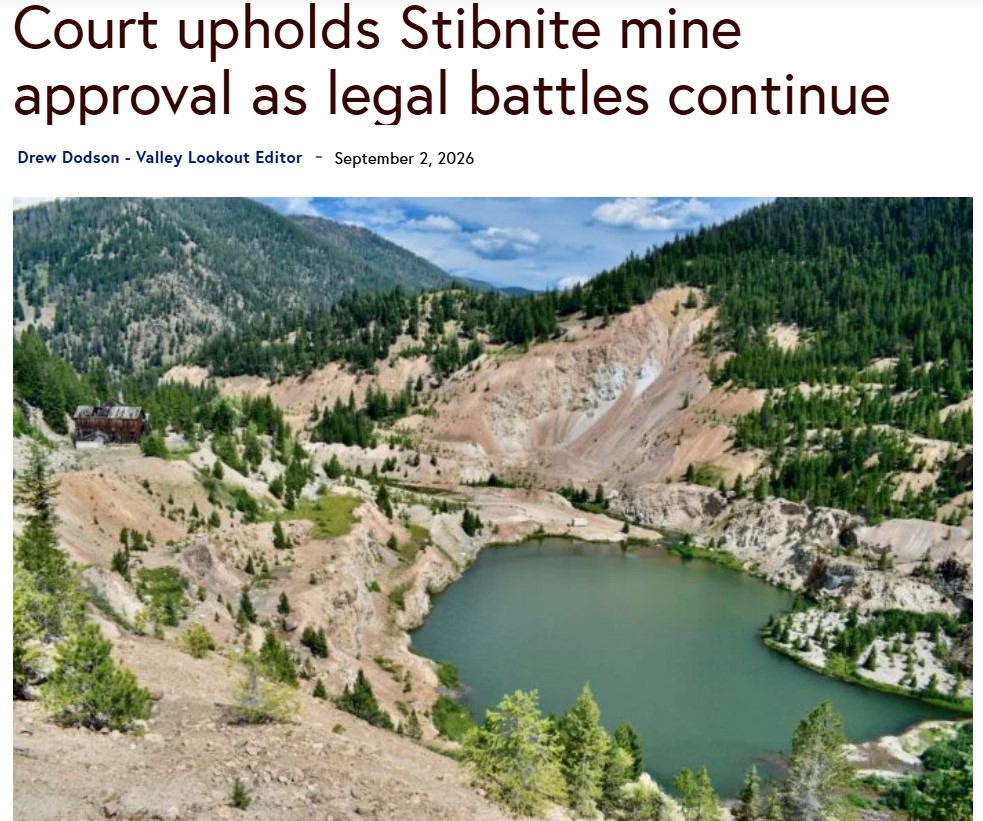
In the face of mounting legal challenges, the corporate backers of a gold and antimony mine in Central Idaho hosted state and federal dignitaries Friday at the remote site to celebrate recent approvals that have advanced the multibillion-dollar venture — which is at least another three years from operations.

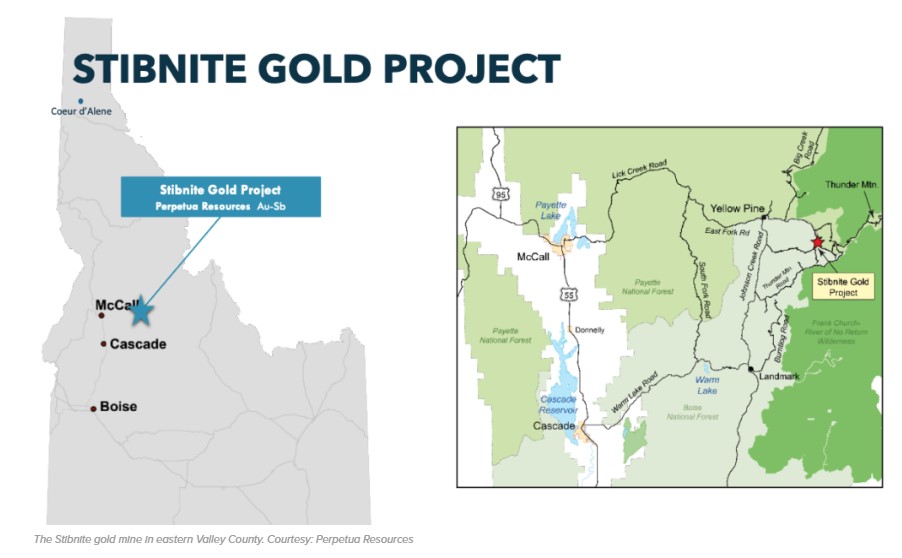
The occasion, labeled a “ribbon cutting” by Perpetua Resources, the mining company behind the large-scale project, was more than eight years in the making. The U.S. Forest Service took that length of time before giving its blessing for the open-pit mine in the Payette National Forest mountains east of McCall — a point of frustration about such permits for Idaho’s federal lawmakers, who have all fully endorsed the project. Perpetua earned federal approval in January to reopen the abandoned site near the community of Yellow Pine, which has been mined off and on dating to the late 19th century. The publicly-traded Canadian gold mining firm, now with its headquarters in Boise, spent handsomely to push what it called the Stibnite Gold Project through the demanding environmental review process. “After eight years of extensive permitting review and over $400 million invested, it is finally time for the Stibnite Gold Project to deliver for America,” Jon Cherry, Perpetua’s president and CEO, said in a news release. “A united vision to produce critical resources urgently needed for national security and to restore an abandoned site, along with the feedback from our communities, have guided us to this monumental milestone.”

At the ceremony Friday, Cherry and other speakers promoted the mine’s importance in delivering the most shovel-ready domestic reserve of antimony in the U.S., including for its use in national defense, the company said in a report of the event. The critical mineral is needed for munitions, including missiles, some nuclear weaponry and other military equipment like night-vision goggles. “This mine offers a secure, reliable, domestic resource for military-grade antimony sulfide and is aligned with the Army’s ongoing ‘Ground-to-Round’ assured munitions strategy for establishing a complete domestic supply chain — from raw material access to material processing to ammunition production — as we modernize and fortify the ‘Arsenal of Democracy,’ ” U.S. Army Maj. Gen. John Reim told attendees. Antimony also is used in clean-energy technologies, including liquid-metal batteries, and for purifying glass in solar panels.

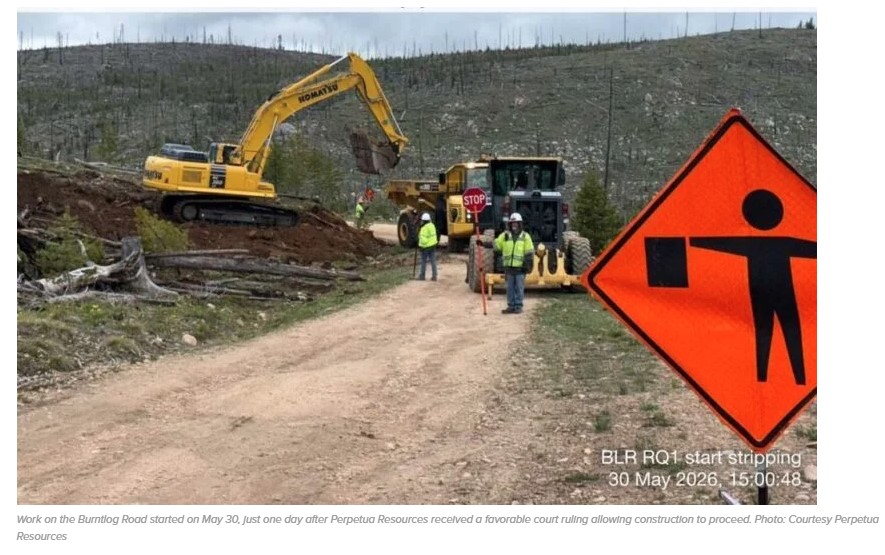
Perpetua also announced Friday that it obtained the Forest Service’s permission to begin initial construction in the near future, contingent on securing project financing. That’s expected to be in place “in the coming weeks,” the news release said. But lawsuits cloud the current mining plan and timeline, which envisions about 15 years of operations. Years more would then be spent cleaning up the site, including restoration of historical habitat where salmon spawn along the Salmon River. Perpetua has reported spending more than $20 million already to improve water quality and clean up legacy waste from past mining at the site.

The Nez Perce Tribe holds exclusive treaty rights to fish, hunt and gather on the land where the mine is planned. The tribe’s original agreement is from 1855 — predating both the U.S. Mining Law of 1872 and Idaho statehood in 1890. Last month, the Nez Perce sued in federal court to overturn the Forest Service’s decision to grant final approval to Perpetua. The mine would restrict access to its tribal members, on top of creating heightened risks of mine runoff entering into the headwaters and decreasing dwindling fish populations, according to the lawsuit. “The Forest Service dismissed our requests to consider alternative approaches that would avoid and minimize harm to our treaty rights and life sources and instead adopted Perpetua’s goals and interests for the mine,” Shannon Wheeler, the Nez Perce’s tribal chair, said last month in a statement. “We are filing suit to force the Forest Service to address the mine’s enormous and long-term degradation and destruction to our treaty life sources, and to honor our reserved right to fully and freely exercise our treaty fishing, hunting, and gathering rights as the U.S. government promised over 170 years ago.” Earlier this year, several conservation groups sued in federal court over their own environmental worries from Perpetua’s proposal to mine the old site in a rugged part of Valley County. The lawsuit cited concerns that the project would use toxic chemicals to extract gold, which could harm sensitive ecosystems and salmon near the border of the Frank Church-River of No Return Wilderness.

Perpetua has signed on as a defendant in both lawsuits, which are in their early stages. State permits pending The mine still requires two more state water quality permits in order to proceed, and also has a state air quality permit tied up in litigation. On Thursday, an Ada County judge sided with the environmental nonprofits the Idaho Conservation League and Save the South Fork Salmon in a lawsuit against the Idaho Department of Environmental Quality for its approval of that permit. The state agency sought to dismiss the legal claim on procedural grounds, but now the suit is scheduled to play out this fall. Anna Marron, spokesperson for the Department of Environmental Quality, declined to comment Friday, citing active litigation.

Perpetua anticipates the mine would create nearly 1,000 jobs during construction and more than half that total for operations. Idaho Gov. Brad Little, who attended Friday’s event, offered his support for the enterprise. “Idaho is proud to celebrate this milestone with Perpetua Resources and showcase the ways we are moving forward valuable projects that create hundreds of good-paying jobs that support Idaho’s rural economy,” Little said. “These jobs will allow Idaho’s young people to build rewarding careers right here in the communities of the west-central mountains.”

Preliminary construction, including road and power upgrades, is expected to get underway next month, Cherry told the Valley Lookout. Controlling shareholder: ‘A dream come true’ Friday’s ceremony drew skepticism from opponents of the mine, given that much remains to be resolved — including in the courts — for the project to move forward and begin digging. “There appears to be an element of theater involved,” Will Tiedemann with the Idaho Conservation League told the Idaho Statesman. “So as much as Perpetua does, this ribbon-cutting seems to be heavily influenced by marketing and appearance than the actual construction and permitting factors of starting construction — and when.” Perpetua said it intends for mining to get underway by 2029.

If that happens, the bulk of the 148 million pounds of antimony at the site would be prioritized during the initial years of operations, the company said. That amount is expected to supply only about a third of annual U.S. demand for six years, with the highest-grade material reserved for the military. The vast majority of profits from the mine, however, would come from its 4.8 million ounces of gold. A company-funded independent study from 2012 estimated about 93% of the project’s value derived from gold, while nearly 7% came from antimony and less than 1% from some silver at the site. Antimony would be produced as a byproduct from the excavation process, Cherry has acknowledged, in the company’s primary pursuit: building and operating a gold mine. In an investor call in June, the company’s controlling shareholder, billionaire hedge fund manager John Paulson, talked about the project exclusively in terms of gold. “

This almost is like a dream come true for us,” he said of the mine’s approvals toward possible operations. “But beyond the current mine plan, we think there is a lot of exploration potential in this site.” Today, with gold prices soaring to all-time highs, the site’s deposit is projected at nearly $18 billion. Antimony also has hovered at record prices this year, with current values placing the mine’s reserve at about $3 billion. To build and operate the mine project was estimated in 2020 to cost $1.3 billion. More recently, Perpetua applied for $2 billion in debt financing from the Export-Import Bank of the U.S., an independent executive branch agency. Perpetua expects its loan application to receive final bank review by spring 2026.

Read more at: https://www.idahostatesman.com/news/local/environment/article312145226.html#storylink=cpy

01. September 2025 · Comments Off on Public Lands – Nez Perce files lawsuit challenging USFS approval of Stibnite Gold Project · Categories: Current Events, Public Lands

LAPWAI – Today, the Nez Perce Tribe filed a lawsuit in the United States District Court for the District of Idaho, challenging the U.S. Forest Service’s final Record of Decision approving Perpetua Resources Corp.’s (“Perpetua”) Stibnite Gold Project (“Mine”), a massive open pit gold mine in the headwaters of Idaho’s South Fork Salmon River in Idaho. The Mine sits within the Nez Perce Tribe’s homeland, where the Tribe reserved in treaties with the United States its sovereign rights to fish, hunt, gather, pasture, and travel.

The Forest Service’s decision authorizes Perpetua to mine three open pits, establish ore processing facilities, build roads and transmission lines, and impound over 400 acres of the Meadow Creek valley with 120 million tons of mine tailings, inundating spawning and rearing habitat for native fish. The Mine will clear thousands of acres of vegetation, destroy hundreds of acres of wetlands, generate billions of pounds of waste, destroy fish and wildlife habitat, and impair surface water and groundwater regimes well past the life of the mine.

According to the Forest Service’s own final environmental analysis, the Mine will cause significant and long-term impacts to the Tribe’s treaty rights and resources. Operations will require diverting the East Fork South Fork Salmon River, a Nez Perce usual and accustomed fishing place, into a tunnel for over a decade, as well as restricting Tribal members from accessing the area for fishing, hunting, and gathering.

Before Perpetua’s predecessor companies began acquiring interests in the Mine in 2008, the Tribe had secured funding to restore legacy mining impacts on fish passage at the site. The Tribe’s Department of Fisheries Resources Management still currently spends approximately $2.8 million annually to restore Chinook salmon, steelhead, and bull trout populations and habitat in the South Fork Salmon River watershed.

“Our treaty-reserved rights are the supreme law of the land and fundamental to the culture, identity, economy, and sovereignty of the Nez Perce people,” said Shannon F. Wheeler, Chairman of the Nez Perce Tribal Executive Committee. “For nearly a decade, the Tribe has consistently and exhaustively voiced our deep concerns to the Forest Service about the Mine’s threats to our Treaty rights upon which our culture and way of life depend and which jeopardize our ability to transfer our knowledge and customs unique to this area to our children.”

“The Forest Service dismissed our requests to consider alternative approaches that would avoid and minimize harm to our Treaty rights and life sources and instead adopted Perpetua’s goals and interests for the Mine,” Chairman Wheeler said. “We are filing suit to force the Forest Service to address the Mine’s enormous and long-term degradation and destruction to our Treaty life sources, and to honor our reserved right to fully and freely exercise our Treaty fishing, hunting, and gathering rights as the U.S. Government promised over 170 years ago.”

30. August 2025 · Comments Off on SW Idaho – Go Riding · Categories: Around The Campfire, Current Events, Ride Ideas

Anna Daly writes: When thinking about outdoor activities to do in and around the Treasure Valley, horseback riding might not be the first to come to mind.

However, there are several ranches within an hour driving distance from Boise that offer horseback trail rides for people of most ages and abilities.

Whether it’s your first time riding or you’re a seasoned rider, horseback riding is a great way to connect with nature and enjoy the scenic views Idaho has to offer.

All of the ranches below have age, weight, clothing requirements, and additional guidelines, so it’s important to check those out before you go.

Flowing Springs Ranch: Located in Robbie Creek, which is about a 45-minute drive from downtown Boise, Flowing Springs Ranch offers trail rides all year long on its 4,000 acres of land. Horseback riding starts at $75/hour per person. The ranch also offers half-day and full-day adventures. For more information and to book a ride, head to Flowing Spring’s website.

Lazy R Ranch: About an hour drive from Boise, along Highway 55, sits the Lazy R Ranch. Near Banks, the 4th-generation working cattle ranch is located in the Dry Buck Valley. Whether you’re a novice, experienced, or in between, a guide will match you with one of their trail horses. Lazy R Ranch offers rides Thursday through Saturday, with 90-minute rides starting at $99. Reservations can be made on the ranch’s website.

Yahoo Corals: This one is a farther drive from Boise, but it is close if you’re in Valley County. Yahoo Corals, located a few miles from downtown McCall, takes riders on trails through the Payette National Forest. Reservations need to be made 3-5 days in advance, with 90-minute trail rides starting at $75. For more information and how to book, head to Yahoo Coral’s website.

18. August 2025 · Comments Off on Education – Dana Bailey – Newest USFS Volunteer Sawyer Instructor · Categories: Current Events, Education

Dana and Karen Bailey are members of the Heartland Chapter of BCHI.
Dana has been assisting with sawyer training for the last 3 year as a sawyer coach.

18. August 2025 · Comments Off on New R4 Regional Crosscut Coordinator-Giovanni Lopez · Categories: Current Events, Education, Public Lands

Please welcome Giovanni Lopez from the Dixie National Forest as our new USFS R4 Crosscut Coordinator.  Gio has a strong wilderness background working with both the Montana Conservation Corps (MCC) and the US Forest Service.  His previous work history with the MCC had him stationed on the Flathead National Forest working within the Bob Marshall Wilderness Complex.  After MCC, Gio has worked in a variety of locations with the USFS such as the Swan Lake Ranger District on the Flathead NF, the Lolo NF, Mt. Baker-Snoqualmie in R-6, the Beaverhead-Deerlodge NF, and now in his current position on the Dixie National Forest in southern Utah.

Gio has a passion for wilderness skills and developing the skillsets of others as a crosscut instructor and C-Sawyer Evaluator.  He is excited for the opportunity to continue building the Regional Crosscut program and working with our Forest Service sawyers and partners in the use of primitive skills/tools.

Gio will be replacing Patrick Brown from the Payette National Forest.  Huge “Thank You” to Patrick as he was in this role for approximately 15 years.  Patrick will still stay involved in the saw program when he is able, and we sure appreciate his dedication and passion building this program.

If you want to reach out to Giovanni, his email is Giovanni.lopez@usda.gov. Thank you Gio for taking on this collateral role within the R4 Saw Program!


16. August 2025 · Comments Off on Public lands – Rock Fire Update · Categories: Current Events, Public Lands

The Great Basin Complex Incident Management Team has taken command of the Rock Fire as of Saturday morning.

Firefighters are making significant progress by utilizing natural terrain, dozer lines, and hose lays to directly attack the fire where conditions permit. Crews near Tamarack Resort are aggressively targeting and extinguishing hot spots while reinforcing control lines along Forest Road 346 and the Tamarack Ski Run “Bliss Run.”

On the west side, the fire has reached ponderosa pine stands, where crews are working directly on the fire’s edge. On the south side, dozers and engines are strengthening containment lines and bringing water into the area to extinguish remaining hot spots. Along the southwest flank, crews are connecting dozer lines to increase containment. On the east side, firefighters are constructing indirect lines to build containment away from the active edge using dozer lines and Forest Road 346 to get ahead of the fire in steep, challenging terrain dominated by subalpine fir and mixed conifer.

Aircraft, including single-engine airtankers (SEATs), scoopers, and helicopters, are supporting ground crews with water and retardant drops. A Temporary Flight Restriction (TFR) remains in place to ensure safe operations for suppression aircraft flying at low altitudes. Flying non-firefighting aircraft, such as drones, is illegal within the TFR and poses a serious hazard to firefighting aircraft.

The National Weather Service has issued a Flash Flood Watch for the fire area. Recently burned landscapes are highly vulnerable to flash flooding due to the loss of vegetation and heat-sealed soils, which prevent rain from soaking in and cause water, ash, and debris to run off rapidly. Weather conditions today include minimum humidity of 30–35%, temperatures in the low-to-mid 70s, and southwest winds of 3–8 mph with gusts up to 15 mph, reaching 20 mph on ridge tops. There is a 20% chance of thunderstorms, with some storms potentially producing heavy rain and gusty, erratic winds. Winds are expected to shift to north-northwest at 4 mph Saturday night, with gusts up to 13 mph. Thunderstorm chances continue at 20%, increasing to 30% on Sunday. A drying trend is anticipated after the weekend, which could lead to increased fire activity.

Three Valley County evacuation zones remain at “Ready” status as set by the Valley County Sheriff on August 13. Residents and visitors are urged to stay alert to changing conditions and adhere to all local authority guidance.


Been working with Ben on this and fully support the draft legislation.

Public lands are a hot topic!

Respectfully,

Dan Waugh
Public Lands
501 E. Baybrook Ct
Boise Id, 83706
Dwaugh@alscott.com
Office: 208-424-3873
Cell: 360-791-1591

Public Lands – Idaho Legislator to unveil proposed constitutional amendment      (Published in the Idaho Capital Sun)

Senator Ben Adams to Propose Constitutional Amendment Protecting Idaho’s Public Lands

PINE – Senator Ben Adams, (R-Nampa) will unveil a proposed Constitutional Amendment next week aimed at permanently protecting Idaho’s public lands from sale and ensuring they remain open and accessible for future generations.

The amendment, which Adams will introduce in the 2026 legislative session, would prevent the State from selling future lands granted or acquired from the federal government. It also establishes guiding principles—with a focus on conservation, public access, and responsible use.

“Public lands are a precious inheritance for Idahoans who’ve hunted, fished, and explored them for generations,” Adams said. “This amendment makes it clear: these lands are not for sale to the highest bidder. They belong to the people of Idaho—now and always.

The proposal includes the creation of a “Public Lands of the State” trust. Revenues generated from responsible land use, like timber harvesting, grazing, and recreation—would be used to maintain the land and support Idahoans directly, especially in rural communities.

“Our rural schools are often surrounded by public land, but they lack the resources to maintain even basic facilities,” Adams said. “We should be using the abundant natural resources in those areas to benefit the people who live there.”

Adams emphasized that preserving land is not just about conservation but about resisting short-sighted deals and protecting Idaho’s identity.

“Selling off public land for a quick payday is a betrayal of our state motto: Esto Perpetua—let it be perpetual,” Adams said. “This land isn’t a developer’s project or a billionaire’s private hunting retreat. It’s our children’s birthright.

The official unveiling will take place at 12:00 pm on August 15 at the Pine Café in Pine, Idaho. Members of the public and press are encouraged to attend.

Senator Ben Adams is a U.S. Marine Corps Veteran and third-term legislator representing District 12. He has been a vocal advocate for veterans, constitutional principles, and protecting Idaho’s land, people, and way of life.
Media Availability: Senator Adams is available for interviews before and after the event. To schedule a time, contact his office at 208-546-9393

01. August 2025 · Comments Off on Forest Service Faces Identity Crisis in USDA Overhaul Plan. Again. · Categories: Around The Campfire, Current Events, Public Lands


The U.S. Forest Service has been searching for an identity almost since the federal government began managing trees in the 19th century.

It started in 1876 inventorying public lands to prevent over-logging. Then it became the lumber provider to the nation. Now, just shy of its 150th birthday, the Forest Service faces another fundamental reorganization announced by Agriculture Secretary Brooke Rollins last week.

Or not. A week after Rollins’ announcement, the Senate Agriculture Committee ordered Deputy Agriculture Secretary Stephen Vaden to present a “Review of the USDA Reorganization Proposal.” Many public lands watchdogs hoped the Wednesday hearing would clarify where the idea came from and how the Forest Service’s tree focus fit in the farm-and-ranch world of the Department of Agriculture.

During the hearing on July 30, Committee Chairman John Boozman, R-Arkansas, offered his appreciation that Vaden, who took the job just two weeks before Rollins announced the reorganization on July 24, was working on his third week when he was summoned to explain the plan.

Ranking member Senator Amy Klobuchar, D-Minnesota, was less welcoming.

“The reason for the short notice is because the administration put out a half-baked plan with no notice,” Klobuchar said. Rearranging a major department that had already lost 15,000 staff members at a time when tariffs and pests such as the screwworm are roiling farm markets is “nothing short of a disaster,” she said.

Sharon Friedman, former Forest Service regional planning director, called the Rollins memo “way out of the normal range of ‘things to do.’” In particular, she pointed to the proposal to phase out Forest Service regional offices, instead of shrink them from the current nine to some smaller number. Earlier this year, draft maps showing a two- or three-region compression were in circulation.

“I think Congress is going to say this is a really stupid, bad idea,” Friedman told Mountain Journal on July 29 ahead of the hearing. “Go back to the drawing board.”

The National Association of Forest Service Retirees was equally aghast. “We do not see anything in the proposal that would improve services or efficiency,” they wrote in a July 29 letter to Senate committee leaders Boozeman and Klobuchar. “Rather, it appears to simply cut staffing and funding without describing how the work will continue to get done. It provides the classic direction to do more with less.”

NAFSR Chairman Steve Ellis told Mountain Journal the proposed reorganization of the Forest Service is nothing new. “I’ve been through a lot of these in my career, going back to when Jimmy Carter was in the White House,” he said. “The political ones are easy to smell, and this has the political smell to it. I doubt that it came from the Forest Service. It came from higher up. They were told ‘Eliminate regional offices and station offices — figure it out.’”

Where to call home?

While the impact that Rollins’ reorganization plan might have on the Forest Service has drawn particular attention, it affects all 29 agencies within the Agriculture Department. Rollins told Politico on Friday that “perhaps 50 to 70 percent of our Washington, D.C. staff will want to move” to five new hubs the agency is creating and the rest should seek jobs in the private sector.

That amounts to about 2,600 of the 4,600 USDA staff now in Washington, D.C. offices. The department has about 100,000 employees nationwide, 90 percent of whom work outside the national headquarters area.

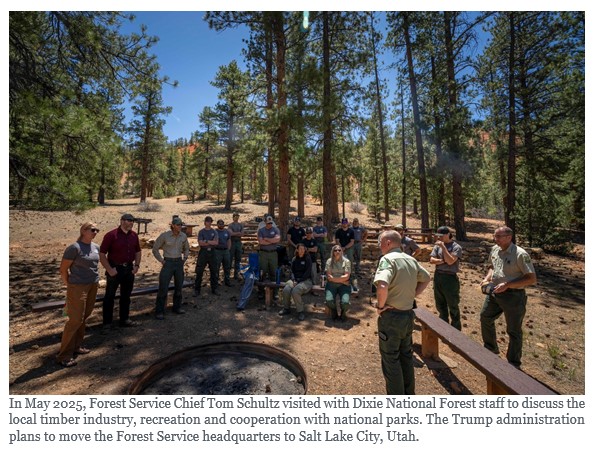
The regional hubs would be in Raleigh, North Carolina; Kansas City, Missouri; Indianapolis, Indiana; Fort Collins, Colorado; and Salt Lake City, Utah. The memo did not say if the Forest Service regional offices would be redistributed among those five cities or eliminated altogether.

Vaden told senators that the plan removed some layers of middle management. “But that does not automatically mean everyone located in a former regional office of an agency will be moved,” he said. Vaden also pledged that USDA would help with moving costs for current employees, while “building the next generation of USDA leadership” in the regional hubs.

Most of Wednesday’s Senate hearing focused on two issues: Why there was so little advance notice of the plan and what senators’ districts were being considered for receiving the USDA jobs Rollins was moving out of Washington, D.C.

Senator John Hoeven, R-North Dakota, praised the reorganization’s goals, but warned he needed to see more collaboration with Congress.

“There’s a difference between you selecting hubs on your own and if we work together and come up with a plan,” Hoeven said. “Is this an outcome that we’re going to talk about, or a fait accompli?”

But Vaden did reveal a few expectations for the Forest Service.

Senator Ben Jay Luján, D-New Mexico, asked about the impact of “eliminating a regional office” of the Forest Service. Vaden replied that the Forest Service’s national human resources office in Albuquerque would not be affected in the reorganization, but that “the regional office will no longer be there.” Its building is already on a federal list to be closed and sold, and its employees would “be absorbed to other areas or asked to move.”

In his testimony, Vaden said one of the biggest reasons for the organization was to get the USDA workforce out of the National Capitol Region, which has “one of the highest costs of living in the country.” Federal salaries include a “locality rate,” or pay boost, to help employees afford expensive areas. The Washington, D.C. locality rate is 33.94 percent above a federal job’s base pay. Federal workers with new families couldn’t afford to buy homes in the Capitol area, where prices are averaging more than $800,000, he said.

What saves money?

“If you’re really looking for savings and belt tightening, focusing on the higher level of the organization doesn’t bother me,” said Mary Erickson, the recently retired supervisor of the Custer-Gallatin National Forest. “It’s not like you couldn’t downsize the regional offices, but the transitional costs of that are daunting. As you eliminate regional offices, where does that work go? And how do you do that in a year’s time? That’s a lot of work. And they say they don’t want to do this in fire season. Those are pretty long these days.”

Erickson pointed out that Fort Collins’ locality rate is 30.52 percent, resulting in almost no payroll savings. And although Salt Lake City’s locality rate is 17.06 percent, Utah’s public land is predominantly managed by Interior’s Bureau of Land Management, not the Forest Service.

“There’s been no explanation for those locations,” Erickson said. “No one seems to know who’s the mastermind behind this design.”

Nor does there appear to be any acknowledgement of previous federal reorganization attempts. Congress created a Special Agent in the Agriculture Department to survey the nation’s public forests in 1876, and opened a Division of Forestry in 1881. A decade later, Congress passed oversight of “forest reserves” to the Interior Department. President Theodore Roosevelt moved it back to Agriculture in 1905, naming Gifford Pinchot the first chief of the Forest Service.

An official history of the Forest Service’s first century labels eight more evolutions, including “The War Years,” “Environmentalism/Public Participation Era” and “Ecosystem Management and the Future Era.”

Ellis recalled the attempt at slimming down the BLM during the Clinton administration.

“They decided to take the district office layer out, which is like removing the forest supervisor layer in the National Forest System,” Ellis said. “It ended up costing a lot of money to move people around and get out of office leases. It ended up being a total flop. When the second Bush administration came on, they quietly put that layer back in.”

The first Trump administration took a similar track in 2019 when it moved the BLM headquarters out of Washington, D.C. Staff were dispersed to new offices in Colorado, Nevada, Utah and several other bases.

A 2021 survey of BLM workers by Public Employees for Environmental Responsibility reported that 87 percent of reassigned employees either retired or quit rather than move. The field offices were staffed largely by new hires who lacked the scientific or experiential backgrounds of the former staff. “This lack of expertise in new hires has resulted in a shunning of science at the agency, and even a demonization of intellectual culture in some cases,” the PEER report stated.

It also resulted in a paucity of workers handling public business. At the time, the Utah area reported an average of one BLM employee for every 37,277 acres of public land. Arches National Park, which is surrounded by BLM lands, had one employee for every 1,530 acres.

Biden administration Interior Secretary Tracy Stone-Manning moved much of the BLM headquarters staff back to Washington in 2022. But she also reinforced the Colorado office, expanding its contingent from 27 positions under Trump to 56.

Friedman now runs the forestry policy blog Smokey Wire. She was a planning director in 2007 when a “Transformation Team” explored ways of performing Forest Service duties better. It did not appear to consider moving to another part of the federal org chart, such as Interior. But Friedman noted her own inability to find out what it actually accomplished: “I couldn’t find any documentation for the effort. It wasn’t even clear whom I would ask at the Forest Service. Historian? Archivist? I got some phone numbers and emails, but no one returned the messages.”
Some of that effort looked into moving the Forest Service from Agriculture to Interior. A 2009 Government Accountability Office report concluded “a move would provide few efficiencies in the short term and could diminish the role the Forest Service plays in state and private land management … [If] the objective of a move is to improve land management and increase the effectiveness and efficiency of the agencies’ diverse programs, other options might achieve better results.”

The 2009 GAO report also cataloged other past consolidation initiatives. One was the colocation of wildland firefighting experts from the Forest Service, BLM, Fish and Wildlife Service, National Park Service and Bureau of Indian Affairs to create the National Interagency Fire Center in Boise, Idaho. That took place in 1965.

Where’s the Fire?

One particular problem drags public lands management off balance: wildfire.

While logging trees and grazing cows and digging trail occur far from the average American’s attention, forest fires are literally front-page news. The Forest Service routinely spends nearly half its annual budget fighting fire. It handles between 70 and 80 percent of the public land ignitions, with Interior agencies such as the Bureau of Land Management chasing most of the rest.

Federal firefighters have long chaffed at being just a tool in a larger agency’s land management toolbox, according to Freidman.

“There’s a tension between wildfire people and everybody else,” she said. “They got pay raises and nobody else did. They want to work for other wildfire people, because they feel they’re a national asset. They think they shouldn’t have others holding them back when they could be making money.”

But wildfire and public land management are woven together in a tight braid. Fire-dependent ecosystems cover most of the western United States. Local ranger districts not only map and monitor their surrounding forest for fire potential, their staffs often donate their time to the community volunteer fire department and ambulance service.

Removing fire duties from the Forest Service would “hollow out” the agency, according to Ellis.

“Fire is integrated in every program the Forest Service does,” he said. “Anything you do on public lands affects the fuel. It isn’t just burning slash piles. It’s how you graze range land. It’s timber harvest. That’s all fuels management. The fuel in Los Angeles fires [last January] was homes.”

During the hearing, Senator Klobuchar asked if there was a bigger plan to move the Forest Service, or parts of it, to some other cabinet agency. She particularly wanted to know about the fate of wildland firefighting.

Vaden replied that the president’s budget, not the reorganization plan, called for the centralization of wildfire services. In other responses, Vaden said the Missoula-based Fire Lab would not be moving, and that the Salt Lake City regional hub was chosen in part because it offered “aviation assets” that would help the Forest Service in the “administration’s plan regarding centralizing wildfire efforts.”

Congress had already shown resistance to other Trump administration moves. Last week, both the House and Senate Appropriations committees rejected a plan to wrap the Forest Service’s firefighting duties into a new wildland fire management service housed in the Interior Department. Despite a Trump executive order creating the consolidated wildfire service and Forest Service and Interior budget reports detailing how it would work, congressional budgeters put the 2026 wildfire allocations back in their traditional multiagency bankbooks.

The committee is disappointed with the utter lack of regard for complying with Congressional intent on spending funds as appropriated,” the Senate Appropriations Committee bill report stated. On other pages, the Senate committee overruled Trump’s order changing the name of North America’s highest mountain from Denali to McKinley. And it blocked an Interior Department plan to hand over some unnamed small national park facilities to state management.

“Over my whole career, the president’s budget, if you took it as reality, was completely drastic,” Erickson said. “We always expected it was going to be moderated by the Congressional process. Up to this point with Trump, you hadn’t seen that. Maybe we’re seeing some good signs there.”

24. July 2025 · Comments Off on USDA Announces Major Reorganization, Forest Service Restructuring · Categories: Around The Campfire, Current Events, Public Lands


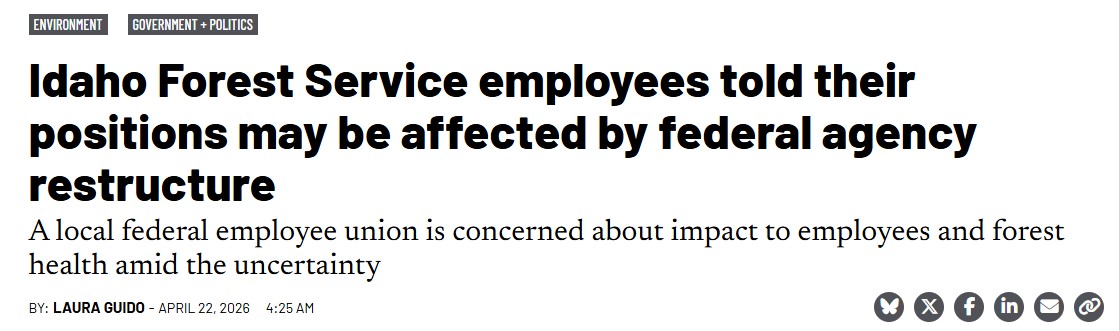
This morning, USDA Secretary Rollins announced a major reorganization of the U.S. Department of Agriculture and restructuring of the U.S. Forest Service.

The Press Release can be found here

.The Secretarial Memorandum can be found here.    Secretary Memorandum: SM 1078-015 sm-1078-015

Here are some key takeaways (USDA-wide, not just the Forest Service):

  • USDA currently has about 4,600 employees in the Washington, D.C. area.  That will be reduced to 2,000.  Employees will be relocated to new Hubs or the field.
  • USDA’s five Hubs will be: Raleigh, North Carolina; Kansas City, Missouri; Indianapolis, Indiana; Fort Collins, Colorado; Salt Lake City, Utah
  • USDA will vacate certain office spaces in Washington, D.C. and will revisit (but retain) “the utilization and functions in the USDA…Yates Building…” which has been the permanent home of the Forest Service since the 1990s.
  • This is the first step in a multi-step, multi-month process of reorganization and restructuring to reduce the size and costs of the USDA workforce.  As of today, 15,364 individuals voluntarily elected deferred resignation Department-wide.


What does this mean for the Forest Service?

There will be more information and announcements in the coming weeks and months.  Here’s what we know from the Secretarial Memo:

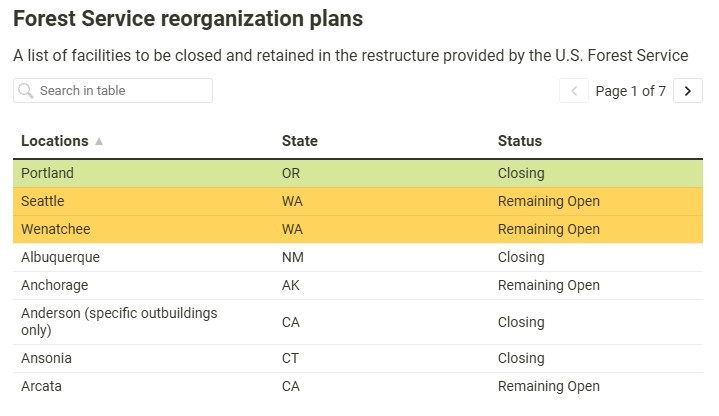
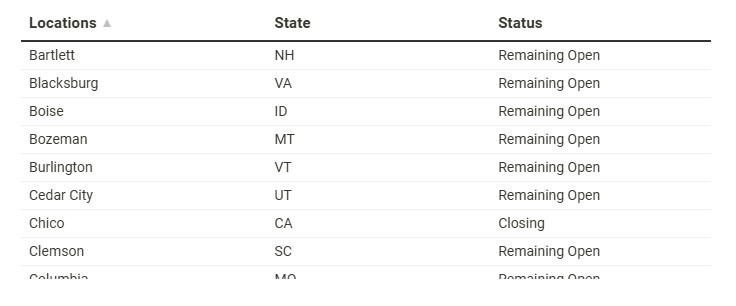
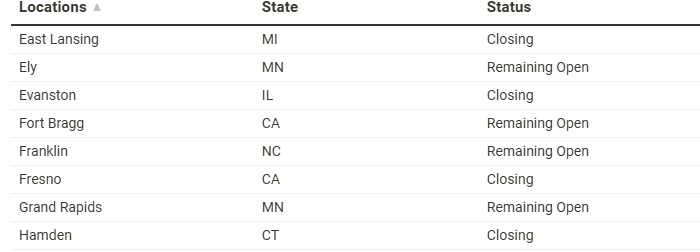
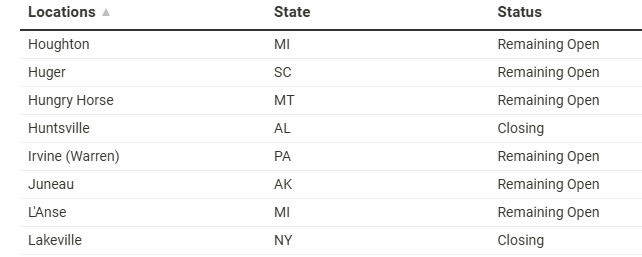
  • The Forest Service will phase out the nine Regional Offices over the next year.  Implementation of the Regional Office phase out will consider the current fire season.
  • While not stated in the Memo, we expect current Regional staff to be reassigned or relocated to the Hubs or individual forests.
  • It’s our intel that Regional Foresters will also take on larger geographic and administrative responsibilities.
  • Note: None of the Hubs are in AFRC’s service area and have little correlation to the National Forest System land base.
  • The Forest Service will maintain a reduced state office in Juneau, Alaska and an eastern service center in Athens, Georgia.
  • The current stand-alone Research Stations will be consolidated into a single location in Fort Collins, Colorado.
  • The Forest Service will retain the Fire Sciences Lab and Forest Products Lab.


We’ll continue to gather and share more information about these significant structural changes to USDA and the Forest Service.  We are already in touch with key agency leaders to better understand implications for the Forest Service, our industry, and our work.  Change is disruptive.  AFRC will continue to strategize and adapt accordingly to maximize our advocacy and effectiveness for our members under this new structure.  One thing is clear: the restructuring underscores the power and importance of AFRC’s model of having a presence, relationships, and involvement at the local and national forest level.


Sincerely,


Travis Joseph

President/CEO

American Forest Resource Council

(Washington, D.C., July 24, 2025) – U.S. Secretary of Agriculture Brooke L. Rollins today announced the reorganization of the U.S. Department of Agriculture (USDA), refocusing its core operations to better align with its founding mission of supporting American farming, ranching, and forestry.

Over the last four years, USDA’s workforce grew by 8%, and employees’ salaries increased by 14.5% – including hiring thousands of employees with no sustainable way to pay them. This all occurred without any tangible increase in service to USDA’s core constituencies across the agricultural sector. USDA’s footprint in the National Capital Region (NCR) is underutilized and redundant, plagued by rampant overspending and decades of mismanagement and costly deferred maintenance. President Trump has made it clear government needs to be scrutinized, and after this thorough review of USDA, the results show a bloated, expensive, and unsustainable organization.

To be clear, all critical functions of the Department will continue uninterrupted. For example, we are at the height of fire season, and to date, have not only exceeded hiring goals, but have preserved the ability to continue to hire. Earlier this year, Secretary Rollins issued a Secretarial Memorandum exempting National Security and Public Safety positions from the federal hiring freeze. These 52 position classifications carry out functions that are critical to the safety and security of the American people, our national forests, and the inspection and safety of the Nation’s agriculture and food supply system. These positions will not be eliminated. However, employees may be subject to relocation.

“American agriculture feeds, clothes, and fuels this nation and the world, and it is long past time the Department better serve the great and patriotic farmers, ranchers, and producers we are mandated to support. President Trump was elected to make real change in Washington, and we are doing just that by moving our key services outside the beltway and into great American cities across the country,” said Secretary Rollins. “We will do so through a transparent and common-sense process that preserves USDA’s critical health and public safety services the American public relies on. We will do right by the great American people who we serve and with respect to the thousands of hardworking USDA employees who so nobly serve their country.”
The reorganization consists of four pillars:

  • Ensure the size of USDA’s workforce aligns with available financial resources and agricultural priorities
  • Bring USDA closer to its customers
  • Eliminate management layers and bureaucracy
  • Consolidate redundant support functions

To bring USDA closer to the people it serves while also providing a more affordable cost of living for USDA employees, USDA has developed a phased plan to relocate much of its Agency headquarters and NCR staff out of the Washington, D.C. area to five hub locations. The Department currently has approximately 4,600 employees within the National Capital Region (NCR). This Region has one of the highest costs of living in the country, with a federal salary locality rate of 33.94%. In selecting its hub locations, USDA considered where existing concentrations of USDA employees are located and factored in the cost of living. Washington, D.C. will still hold functions for every mission area of USDA at the conclusion of this reorganization, but USDA expects no more than 2,000 employees will remain in the NCR.

USDA will vacate and return to the General Services Administration the South Building, Braddock Place, and the Beltsville Agricultural Research Center, and revisit utilization and functions in the USDA Whitten Building, Yates Building, and the National Agricultural Library. The George Washington Carver Center will also be utilized until space optimization activities are completed. These buildings have a backlog of costly deferred maintenance and currently are occupied below the minimum set by law. For example, the South Building has approximately $1.3 billion in deferred maintenance and has an average daily occupancy of less than 1,900 individuals for a building that can house over 6,000 employees.

USDA’s five hub locations and current Federal locality rates are:

  1. Raleigh, North Carolina (22.24%)
  2. Kansas City, Missouri (18.97%)
  3. Indianapolis, Indiana (18.15%)
  4. Fort Collins, Colorado (30.52%)
  5. Salt Lake City, Utah (17.06%)

View the Secretary Memorandum (PDF, 2.6 MB)

This is only the first phase of a multi-month process. Over the next month and where applicable, USDA senior leadership will notify offices with more information on relocation to one of the regional hubs.

To make certain USDA can afford its workforce, this reorganization is another step of the Department’s process of reducing its workforce. Much of this reduction was through voluntary retirements and the Deferred Retirement Program (DRP), a completely voluntary tool. As of today, 15,364 individuals voluntarily elected deferred resignation.

Dan Waugh – Public Lands

501 E. Baybrook Ct

Boise Id, 83706

Dwaugh@alscott.com

Office: 208-424-3873

Cell: 360-791-1591


17. July 2025 · Comments Off on Pubic Lands – July Fires in PNF · Categories: Current Events

Fire crews remain on the ground in the Payette National Forest, working to contain three wildfires, with efforts focused on protecting structures at two lodges along the Salmon River, according to the U.S. Forest Service.

Big Bear Fire

The Big Bear Fire started on July 9 from a lightning strike in the Krassel Ranger District and has burned approximately 2,529 acres.

Officials in a Wednesday, July 16 update said flames moved into the Arctic Creek drainage and around Arctic Creek Lodge overnight, prompting firefighters to begin structure protection efforts.

The U.S. Forest Service said the lodge remains unaffected, and firefighters will continue to protect structures using pumps and sprinklers. Structure protection also remains in place at River of No Return Lodge.

The Payette National Forest is coordinating with the Salmon-Challis National Forest regarding rafting on the Salmon River.

Rush Fire

The Rush Fire has burned 747 acres since it started on July 10 due to lightning.

The U.S. Forest Service said on Tuesday, July 15, firefighters at Taylor Ranch created fire lines to protect threatened structures. The fire remained active overnight into Wednesday, until humidity levels reduced the fire’s behavior.

Crews remain on scene and are prepared to begin back-firing operations if needed, according to the Forest Service. The Soldier Bar airstrip burned over and is closed for public safety as of Wednesday, July 16.

Skunk Fire

The Skunk Fire has burned roughly 4 acres in the McCall Ranger District. The fire is 60% contained as of July 16.
The human-caused fire started on July 13 north of Skunk Springs between Forest Service roads 337 and 340, southeast of Warren Summit.

The Forest Service on Tuesday said fire activity was minimal within its established containment lines. No active fire was reported along the perimeter.

Officials said firefighters plan to focus on mop-up operations on Wednesday, July 16.

For further information regarding these fires, visit the U.S. Forest Service website here.


13. July 2025 · Comments Off on Alert – Water Bottle Recall · Categories: Around The Campfire, Current Events

There’s nothing wrong with buying cheap products from Walmart — everyone loves a good deal — but sometimes it can backfire. In the case of a new Ozark Trail recall, that’s literally what happened to several people injured by water bottles.

Walmart announced a massive recall Thursday of its Ozark Trail water bottles. The one-piece, screwcap lid can evidently pop off from built-up pressure, causing impact and laceration injuries. If you own a silver 64-ounce stainless steel insulated water bottle from Ozark Trail purchased at Walmart, you should stop using it immediately to avoid potential injuries, government regulators said this week.

Approximately 850,000 of these water bottles have been recalled, according to a July 10 notice from the Consumer Product Safety Commission (CPSC). The model number — listed on the packaging but not on the product — is 83-662. Walmart has been selling this product since 2017 for around $15.

Walmart received three reports of consumers being struck in the face after the water bottle lid was violently expelled.  https://gearjunkie.com/food-hydration/walmart-ozark-trail-water-bottle-recall

02. July 2025 · Comments Off on Public Lands – SNRA Trails Reporting · Categories: Current Events, Public Lands

LINK TO FORM

01. July 2025 · Comments Off on Public Lands – Fee Changes · Categories: Current Events, Public Lands

Author: Tracy Bringhurst
Published: 12:30 PM MDT June 30, 2025

MCCALL, Idaho — The Payette National Forest announced on Monday that it is proposing changes to recreation fees at various sites throughout the forest, with public comments open through September 15.

Forest Supervisor Matthew Davis stated that the fees are crucial for maintaining high-quality recreation experiences.

“We recognize how important our recreation areas are to local communities and visitors of the Payette National Forest,” Davis said. “Recreation fees are a critical funding source that helps us provide clean, safe, and accessible recreation opportunities.”

Even with the proposed changes, more than 52% of forest recreation sites would remain free to use, according to the Forest Service.

The 2004 Federal Lands Recreation Enhancement Act allows the Forest Service to retain at least 80% of collected recreation fees for local use in operating, maintaining and improving sites. Revenue would help fund infrastructure improvements and additional seasonal recreation staff.

The Forest Service said recreation fees help provide quality opportunities that meet modern visitor expectations while creating a more financially sustainable program for future generations.

The public can submit comments through Sept. 15 by mail to Payette National Forest, Attention: Emily Simpson, 500 North Mission Street, McCall, Idaho 83638. Comments are also accepted online.

Oral comments can be provided in person to Simpson during business hours, Monday through Friday from 9 a.m. to 4 p.m., or by calling 208-634-0700.

After public comment closes, the proposed fee changes will be reviewed by a citizens’ advisory committee representing various recreation interest groups. The committee will submit recommendations to the Regional Forester for a final decision.

More information is available here.    Payette National Forest | Proposed Changes to Recreation Fees on the Payette National Forest | Forest Service

Public Commentary Period

The public is invited to provide comments on these proposed changes until September 15, 2025This public comment period allows you to ask questions and share feedback with agency decision-makers. Your comments regarding the proposed fee change will be considered.

How to Provide Comments

To ensure that your comments are considered, please share your comments no later than September 15, 2025 using one of the methods listed below.

Online

Comments can be provided online at https://arcg.is/1eKXDW0.

Postal Mail

Utilizing the downloadable Recreation Fee Proposal Comment Form, send postal mail comments to:

Payette National Forest

Attn: Emily Simpson

500 N Mission Street, McCall, ID 83638

Oral Comments

Oral comments must be made in person at the Payette National Forest Supervisor’s Office during normal business hours (Monday- Friday 9 a.m. – 4 p.m.), or by calling 208-634-0700 and indicating you would like to provide comments on the proposed recreation fee changes.

Email

Comments will be accepted by email at this email address:

emily.simpson@usda.gov

Please ensure to list Recreation Fee Changes in the subject line.


24. June 2025 · Comments Off on Public Lands – Senate Removes Public Lands Sales Package – for now! · Categories: Around The Campfire, Current Events, Public Lands

Breaking news: Senator Mike Lee’s proposal to sell off up to 3.3 million acres of public lands appears to have been removed from the Senate’s budget reconciliation bill.

Over the past two weeks, hundreds of thousands of outdoor enthusiasts—alongside hunters, anglers, motorized users, and conservationists—spoke up to defend public lands. Late yesterday evening, the land sales were removed on a technicality by the Senate parliamentarian, meaning that this dangerous proposal is out of the budget bill for now.

Lawmakers heard you, and the proposal to sell off millions of acres was already facing strong headwinds and was on the cusp of being scaled back or removed prior to this ruling.

This is a big win—for a few important reasons:
• Those 3.3 million acres will remain public, for now, accessible to the 175 million Americans who recreate each year.
• The outdoor community showed up in force. In just days, more than half a million letters poured into Congress—a volume we’ve never seen before.
• Lawmakers responded. In the past week, multiple Senators publicly opposed the sell-off proposal, sending a clear signal that these ideas aren’t welcome.

Thank you for raising your voice. This community continues to show that when public lands are under threat, we are ready to fight for them.

That said, we’re not out of the woods yet. Senator Mike Lee has already indicated he plans to revise his proposal and push again for public land sell-offs—this time with narrower language that he hopes will pass.

We’ll keep fighting—and we hope you will too.

20. June 2025 · Comments Off on Public Lands – Stibnite expansion planned · Categories: Around The Campfire, Current Events, Public Lands

Perpetua eyes possible Stibnite mine expansion – Valley Lookout

A gold and antimony mine approved in eastern Valley County is well-positioned for future expansion, according to executives for the mining company.

On Wednesday, Perpetua Resources outlined preliminary plans for a possible expansion of its Stibnite mine, which was approved earlier this year following an eight-year review by the Payette National Forest.

Marcelo Kim, who chairs the company’s corporate board, told shareholders that the company will explore additional zones that could add as much as 2.4 million ounces of gold to the mine’s current reserve of 4.8 million ounces.

“We believe there are ample high-grade extensions to our existing reserves that we plan to drill out,” Kim said. “Should we be able to bring this material into reserves, we could see a substantial benefit to our gold production from higher grades as well as antimony production.”
A shareholder presentation included a map showing more than two dozen new exploration zones and nine “priority targets.” Many of the areas are adjacent to the two existing pit mines the company is already permitted to develop.

Kim said the exploration zones are based on mineralization the company has observed and “not blue sky prospects.”

However, any expansion of the company’s planned mining operations would require further regulatory approval from the Payette and other agencies.

Marty Boughton, a Perpetua spokesperson, told Valley Lookout the acreage for the exploration zones is not currently available.

“We haven’t finalized a detailed plan yet, just some forward-looking targets,” Boughton said. “Our primary focus is bringing the Stibnite Gold Project as permitted online.”
Latest stock offering
Wednesday’s investor presentation came on the heels of Perpetua securing another $425 million in financing following a stock offering that opened last week.

The offering initially was for $300 million, but the company increased it to $325 million to fund the additional exploration work, Kim said.

At the same time, Paulson & Co., a New York City investment firm led by billionaire John Paulson, agreed to purchase another $100 million in stock.

The purchase raised Paulson’s total investment in Perpetua to $185 million since 2016. The firm owns about 32.3 million shares of Perpetua stock, giving it a 31% ownership stake in the company as its largest investor, Boughton said.

Kim, a Paulson partner since 2011, was appointed to his role as board chairman in 2020 when five longtime board members resigned amid Paulson’s demands for leadership changes.

$2B loan application
Most of the $425 million Perpetua raised through the stock offering will be used to meet equity requirements for a $2 billion loan the company applied for through the Export-Import Bank of the United States.

If approved, the loan would fund the $2.2 billion cost to build the mine, a process that Perpetua estimates would take two to three years.

Construction cannot begin, however, until Perpetua receives approval from the Payette on a financial assurance package that guarantees funding for clean-up of the site.

The company is actively seeking financial assurances totaling about $155 million to cover the construction phase of the project. It currently expects to begin mining operations in 2029.

Project background
Perpetua plans to extract more than $6 billion in gold, silver, and antimony from Stibnite, the site of historic mining operations during World War II and as far back as 1899.

The mine could produce an estimated 148 million pounds of antimony and 4.8 million ounces of gold, which would account for nearly all of the mine’s projected revenue.

The metals would be extracted from three open pit mines totaling about 473 acres within the 1,740-acre project zone, which is about three miles from the Frank Church – River of No Return Wilderness.

Opponents of the mine fear it could pollute the East Fork South Fork Salmon River, which flows through the project site, and cause other environmental damage.

Water quality in the East Fork and other streams at the proposed mine site does not currently meet federal drinking water standards due to high concentrations of arsenic and antimony from pollutants left by previous mining companies.

Perpetua’s mining proposal is authorized by the General Mining Act of 1872, a federal law that allows anyone to patent mining claims on public land.

A review of the project began in 2016 under the National Environmental Policy Act, a federal law that requires all projects that could affect natural resources to be studied for environmental harm.

19. June 2025 · Comments Off on Public Lands Eligible for sale interactive map – June 2025 · Categories: Current Events, Public Lands

Public Lands Eligible for Sale interactive Map


LEARN MORE ABOUT THIS BILL AND MASSIVE PUBLIC LANDS SELL-OFF

13. June 2025 · Comments Off on GOP Senate Plan to Sell of Public Lands · Categories: Around The Campfire, Current Events, Public Lands

LINK TO SEND MESSAGE

13. June 2025 · Comments Off on Public Lands – $$ Cut to National Parks · Categories: Around The Campfire, Current Events, Public Lands

Read full article


08. May 2025 · Comments Off on Public Lands – Sawtooth National Forest 2024 Roundup · Categories: Current Events, Public Lands

End of Season 2024   (PDF)

29. April 2025 · Comments Off on PUBLIC LAND – Draft Plan Leaked · Categories: Current Events, Public Lands

As the Department of the Interior develops a plan to “restore American prosperity” by exploiting Western natural resources, a Wyoming attorney who has steeled rural communities against federal policies is atop the hierarchy that will marshal the effort.

Secretary of the Interior Doug Burgum last month appointed Karen Budd-Falen as temporary deputy secretary and his senior advisor. As the department fleshes out a four-year strategic plan to use natural resources across 19.9 million acres of national parks and Bureau of Land Management property in Wyoming, Budd-Falen will be in the Interior’s second-highest position.

A draft of the four-year Interior plan leaked to Public Domain outlines department objectives for prosperity, security and recreation. Conservationists have decried elements they say would dismantle environmental safeguards, turn over federal property, promote energy development and favor rural communities over nationwide interests.
The Interior Department last week blasted the leak and called its publication “irresponsible.”

“It is beyond unacceptable that an internal document in the draft/deliberative process is being shared with the media before a decision point has been made,” Interior’s press office wrote WyoFile on Thursday. “Not only is this unacceptable behavior, it is irresponsible for a media outlet to publish a draft document.

“We will take this leak of an internal, pre-decisional document very seriously and find out who is responsible,” the statement reads.

The draft plan, which the agency said is “not final nor ready for release,” sets four goals and several objectives to accomplish them. Interior’s drafted goals are to restore American prosperity, ensure national security through infrastructure and innovation, and allow sustainable enjoyment of natural resources. It would do all that through the fourth goal — collaboration with states, tribes and local governments.
The draft plan to restore American prosperity would use American energy to “lower… costs and increases affordability.” But it includes elements that worry conservationists who fear damage to Interior agencies including the National Park Service, BLM, U.S. Fish and Wildlife Service and Bureau of Indian Affairs.

The plan would “deregulate” to increase “clean coal” production and oil and gas drilling. It would streamline the National Environmental Policy Act, a law designed to safeguard the environment. And it would reduce the cost of grazing, which critics say is already too low.

The draft would “release federal holdings” — divest Americans of their public property — to allow states and communities to reduce housing costs. Interior would support agriculture and increase revenues from logging, non-energy mining, and grazing. The draft treats natural resources as assets, viewing federal holdings for the economic value that can be derived from them.

The leaked document “reads like an industry wish list,” the Center for Western Priorities said in a statement. It includes “a thinly veiled reference to the seizure and sale of public lands,” according to the conservation group.

The draft treats the West’s natural resources “as nothing more than numbers on a balance sheet,” Western Priorities Executive Director Jennifer Rokala said in a statement. In the plan, those resources are “products to be sold off and exploited to help pay for tax cuts for Elon Musk and Trump’s fellow billionaires,” she said.

“It resembles a business plan from a desperate CEO, not a framework to steward public lands for the benefit of all Americans,” Rokala’s statement reads.

To her post, Budd-Falen brings years of experience fighting for ranchers and other public land users and developers. The federal government has been a frequent adversary, but so has Western Watersheds Project, another conservation group that focuses on public land grazing.

She represented a group of ranchers who sued Western Watersheds for trespassing when a field worker collected water to test for pollution caused by grazing. She advised rural counties to adopt land use plans they could leverage when contesting federal programs on public land in their areas. She also represented stock growers who sided against four Missouri hunters who corner crossed to hunt public land on Elk Mountain in Carbon County. She represented the Cliven Bundy family and others as they fought grazing reductions imposed after Las Vegas developers were permitted to occupy desert tortoise habitat. That family later became infamous for armed standoffs with federal officials over use of public land.

Interior_Department_Draft_Strategic_Plan_Via_Public_Domain

26. April 2025 · Comments Off on Pulaski Users Group – Spring 2025 · Categories: Current Events, Public Lands

PDF: _PUG+2024+ANNUAL+REPORT+(16)-compressed

26. April 2025 · Comments Off on Idaho House Bill 487 – April 25, 2025 · Categories: Around The Campfire, Current Events, Public Lands, Public Meetings


PDF: HB487 1 Pager

21. April 2025 · Comments Off on April 2025 Chat with Chief of the USFS · Categories: Current Events, Public Lands

Watch Video

I invite you to watch my second video (or read the transcript below), where I talk about our agency priorities and my focus areas as Chief. I continue to believe that safety must be our highest priority, no matter where you work. We must be safe in the course of our duties, and we must look out for one another.

I also share a bit more about what I mean when I say we need to get back to basics. Everyone, including the public, knows that we fight fires, but we do so much more, from forest management to outdoor recreation to mineral and energy management. By focusing on the fundamentals of our work, we can do more to support the health and vitality of our forests and grasslands and neighboring communities.

Overall, our work is built upon relationships and communication, from those with one another to our partners, and I look forward to communicating with all of you through these videos and as we meet in person.

TRANSCRIPT

When I came in, people were asking, “What are the priorities? What are we focused on?” I looked at a couple different things. One, first and foremost, was safety.

And as we prepare for fire season or when, regardless of whether you’re a firefighter, but just doing your job day to day can be hard. And so to me, first and foremost, as we do our jobs, it’s got to be safe, how we perform them and looking out for each other. Another big focus for me is trying to get back to basics. To me, like, really focusing on what our primary responsibilities and duties are that we do.

We’re fighting fire. We have a forest management program. We have a recreation, outdoor recreation program, the minerals program, oil and gas.

But the recreation program, for me, is an area that I’ve learned a lot about that. We have over two hundred million users on an annual basis that recreate on national forest lands.

I mean, so that the interest in the use and how we’re viewed is so positive, I think when I’ve looked at some of the customer survey results, we have like seventy percent positivity in terms of like how people view us and how we interact with the public. So it’s significant, the work that we do, it’s critical, and how we deliver that to the public.

And, you know, one thing that I didn’t mention was the role of relationships, right, and partnerships. But whether it’s in fire, whether it’s in archaeology, whether it’s recreation, we have so many partners. I really think we are in the relationship business, and you all see that in how you do your jobs. Maintaining those relationships and spending the time to to get to know people, in and out of work, is critical, for us to do our jobs effectively.

16. April 2025 · Comments Off on One of the really good ones has said Enough! · Categories: Around The Campfire, Current Events

Hi SNRA Trails Partners and Volunteers,

My final day with the Sawtooth NRA will be Monday April 21st. I want to thank all of you for your dedication as partners and volunteers during my time as the Trails Supervisor here, and for many of you, well before I started here. It has been a delight to maintain and enhance the trail system on the Sawtooth NRA and an absolute pleasure to do so alongside such a robust and active partnership program. Thousands of trees have been cut and hundreds of miles of trails have been maintained thanks to all the important work your organizations do.

Bryce Parker, SNRA Wilderness and Trails Coordinator, will take over as the contact for all things trails on the SNRA. His work cell is 970.409.8110. bryce.parker@usda.gov

Please let me know if I can do anything for you before I go.

Hope to see you all down the trail,   Caitlin