


BOISEDEV ICYMI 2025
In Case You Missed It: Some of our best stories of the year
A company owned by Texas billionaires Dan and Faris Wilks is selling 73 ranch sites carved from about 2,000 acres south of Cascade.
Plans for Legacy Creek Ranch, as dubbed by DF Development, look like subdivisions across Valley County, but are not subject to the same rules and review process because the ranch sites were created by a series of lot line adjustments and original parcel splits.
That, Valley County Planning and Zoning Administrator Cynda Herrick said, is the difference between selling raw land and being required to follow the county’s subdivision laws.
“I’ve been talking with (DF) and they understand that this isn’t the preferred method,” Herrick told Valley Lookout. “But it’s what they’re entitled to by law.”
The method used by DF enables Legacy Creek Ranch to avoid the county’s subdivision requirements, which include plans for drainage, irrigation, drinking water, septic systems, utilities, and streets.
It also means that the company is not required to create a fire protection plan covering things like water supply, emergency access, and vegetation management.
The plan also avoids review by the Valley County Planning and Zoning Commission, as well as several state agencies, including the Idaho Transportation Department, the Idaho Department of Environmental Quality, and the Idaho Department of Water Resources. READ MORE
Volunteers clear nearly 500 fallen trees from Forest Service roads | Coeur d’Alene Press https://share.google/6dS7zogwVPNW5DTuF
 Volunteers assess road conditions in the Fernan Hill area following last week’s high winds. Volunteers removed nearly 500 fallen trees from area Forest Service Roads over the weekend.
It’s not just snowmobilers that recreate on North Idaho’s National Forest land, said Back Country ATV and UTV Association President Bret Uhlich.
Hikers, cross-country skiers and even sled dog teams take advantage of the groomed backroads and trails that make winter recreation accessible.
“We all love the backcountry,” Uhlich said.
It was this love for the backcountry that united 75 volunteers Saturday, enough manpower to clear nearly 500 fallen trees along Bunco Road, Fernan and the Fourth of July Pass.
Most volunteers were members of local organizations, including the Back Country ATV and UTV Association, the Coeur d’Alene Snowmobile Club and multiple Jeep clubs.
“Calls for action” were issued last week after high winds tore through North Idaho, downing trees, damaging infrastructure and resulting in one death.
One member of the Snowmobile Club had driven up into the Fernan Saddle area Wednesday to assess the road conditions and found trees nearly 2 feet in diameter toppled across the dirt road.
The club member was able to clear a quarter mile of the roadway by himself.
“Progress is possible, but it is slow, hard work,” the Snowmobile Club shared to social media Dec. 18.
With volunteers split into nine teams, several dozen miles of roadway were cleared of downed trees and other debris.
Cutting and moving the downed trees out of the roadways will save groomers both time and resources once the area receives significant snowfall, said Coeur d’Alene Snowmobile Club President Steven Cox.
The work will also allow outdoor enthusiasts to access the trails earlier in the season.
“I figured we should use the brief window we have before it started to snow,” Cox said.
These efforts underscored the importance of organizations like the Snowmobile Club, he added.
“This shows exactly what the need for this club is,” Cox said. “It was really good to see how many people came together to do this.”
And though there’s still plenty more work left to do, time and weather will determine whether crews can safely get back out there.
“There’s more to go, but unfortunately it’s a little dicey out there,” Uhlich said.



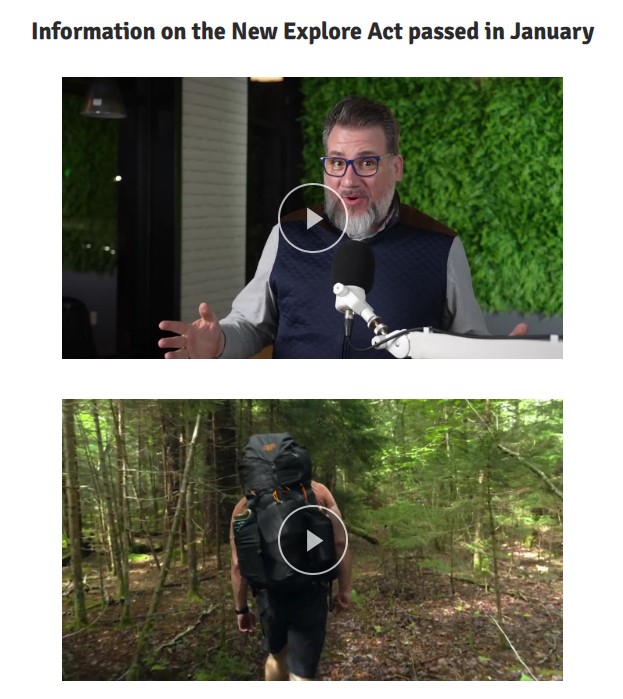 Watch Videos
- Streamlined Permitting: Makes it easier for outfitters, guides, and nonprofits to operate on public lands.
- Improved Access: Creates new bike trails, modernizes campgrounds, and helps underserved communities get parks and green spaces.
- Economic Support: Benefits local economies, especially in rural areas, by supporting recreation businesses and infrastructure.
- Modernization: Updates technology and processes for visitor experiences, like online passes and better data.
- Inclusivity: Includes provisions for adaptive trails for veterans and people with disabilities (like the Military & Veterans in Parks Act).
- Expanded Opportunities: Supports activities like shooting ranges, climbing, and camping.
- Comprehensive: A package of multiple recreation-focused bills rolled into one.
- Bipartisan: Passed with broad support in Congress.
- Sustainable: Aims to grow the outdoor economy without harming natural resources, preventing degradation at busy sites.
2025 Session Recordings
Click here to view the recorded sessions from 2021-2025, including a brief description, list of presenters, and available recordings.
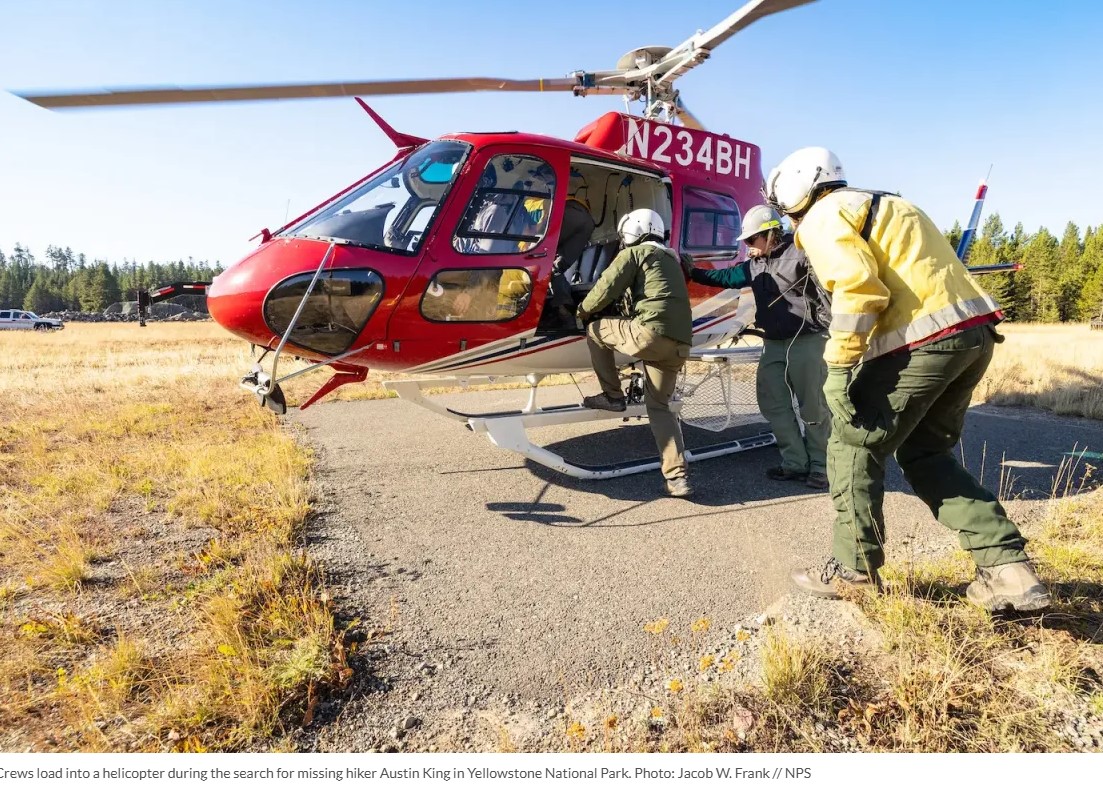
Much of Wyoming outside of Yellowstone and Grand Teton also struggles with emergency response time.
By Katie Klingsporn, WyoFile
Wyoming’s U.S. Sen. John Barrasso is pushing legislation to upgrade emergency communications in national parks — a step he says would improve responses in far-flung areas of parks like Yellowstone and Grand Teton national parks.
“This bill improves the speed and accuracy of emergency responders in locating and assisting callers in need of emergency assistance,” Barrasso told members of the National Parks Subcommittee last week during a hearing on the bill. “These moments make a difference between visitors being able to receive quick care and continue their trip or facing more serious medical complications.”
The legislation directs the U.S. Department of the Interior to develop a plan to upgrade National Park Service 911 call centers with next-generation 911 technology.
Among other things, these upgrades would enable them to receive text messages, images and videos in addition to phone calls, enhancing their ability to respond to emergencies or rescues in the parks.

Each year, rangers and emergency services respond to a wide range of calls — from lost hikers to car accidents and grizzly maulings — in the Wyoming parks’ combined 2.5 million acres.
Outside park boundaries, the state’s emergency service providers also face steep challenges, namely achieving financial viability. Many patients, meantime, encounter a lack of uniformity and longer 911 response times in the state’s so-called frontier areas.
Improving the availability of ground ambulance services to respond to 911 calls is a major priority in Wyoming’s recent application for federal Rural Health Transformation Project funds.
Bipartisan legislators in the House this week co-authored a bill to outlaw the intentional use of snowmobiles and other motorized vehicles to ram and crush coyotes, wolves, and other animals on federal land.
The Snowmobiles Aren’t Weapons (SAW) Act would “close a glaring gap in federal wildlife protections,” according to the conservation group, Animal Wellness Action.
While several states prohibit hunting wildlife “from motor vehicles,” most states, not including Minnesota, Oregon, and Colorado, do not explicitly outlaw ramming or running over animals with a motorized vehicle on federal land.
“At a time when the House is taking up problematic legislation to remove federal protections for gray wolves from the Endangered Species Act, it’s more important than ever to stand up for responsible stewardship of our public lands and wildlife,” said Rep. Val Hoyle, D-Ore. “This bipartisan legislation shows we can work through thoughtful policy debates on conservation and wildlife management without condoning cruel and dangerous practices that threaten animals and public safety.”
The bill was co-sponsored by Mike Lawler, R-N.Y., Debbie Dingell, D-Mich., and Brian Fitzpatrick, R-Pa.
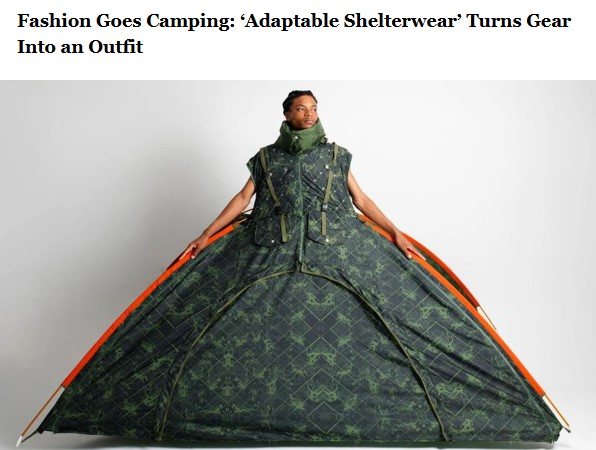
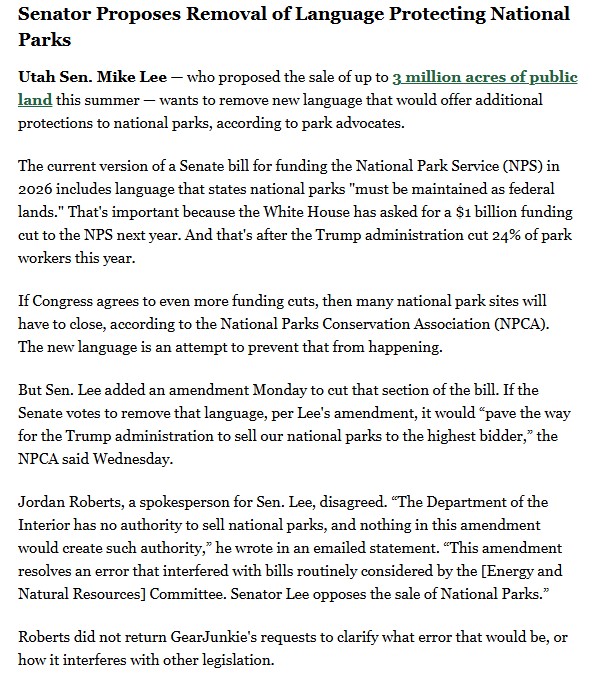
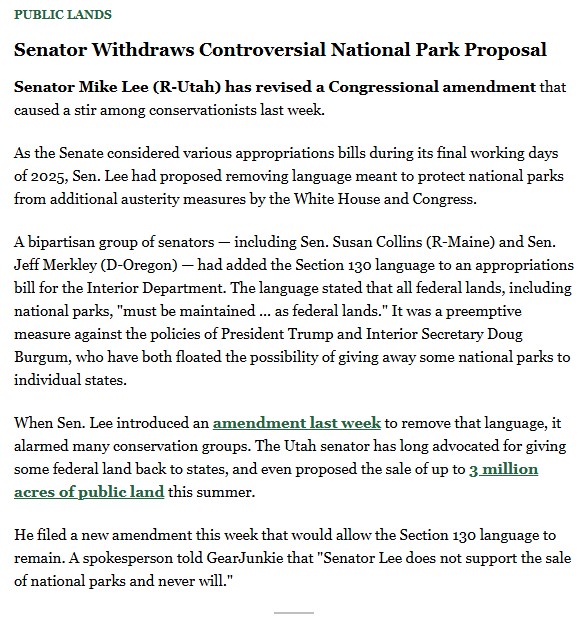
After receiving a lot of flak
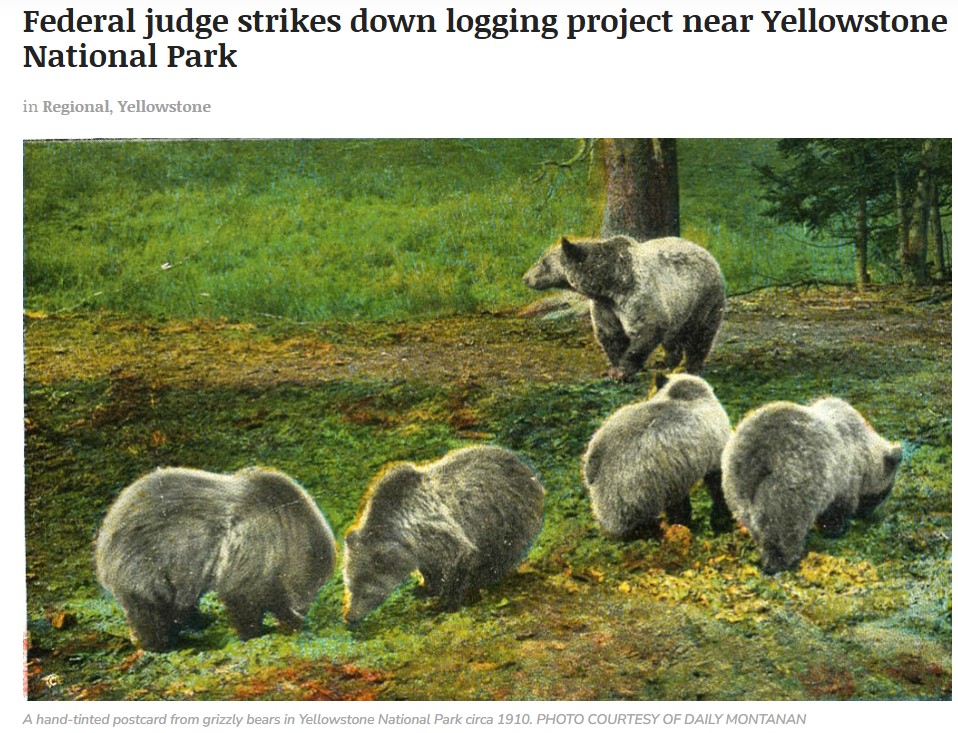
Court said Forest Service plans too vague and failed to consider grizzly bear habitat
By Darrell Ehrlick DAILY MONTANAN
A federal judge halted a large logging project near Yellowstone National Park because he said the United States Forest Service submitted plans that made it impossible to judge how it would affect critical grizzly bear habitat.
The 16,500-acre project located in the Custer Gallatin National Forest would have allowed the U.S. Forest Service to select timber and build roads for logging, but without offering specifics, only pledging that its plans would consider the total distance of the roads and not exceed certain parameters in acreage size, designed to protect critical bear habitat.
However, Judge Donald W. Molloy said that the plans amounted to giving the Forest Service permission and trusting that it would be compliant later. He also said in a 46-page ruling released Thursday that the plans also made it difficult to judge how the logging project would impact grizzly habitat, and that U.S. Fish and Wildlife Service said a female grizzly’s minimum range was 10 acres, while not basing that decision on any cited science. READ FULL STORY




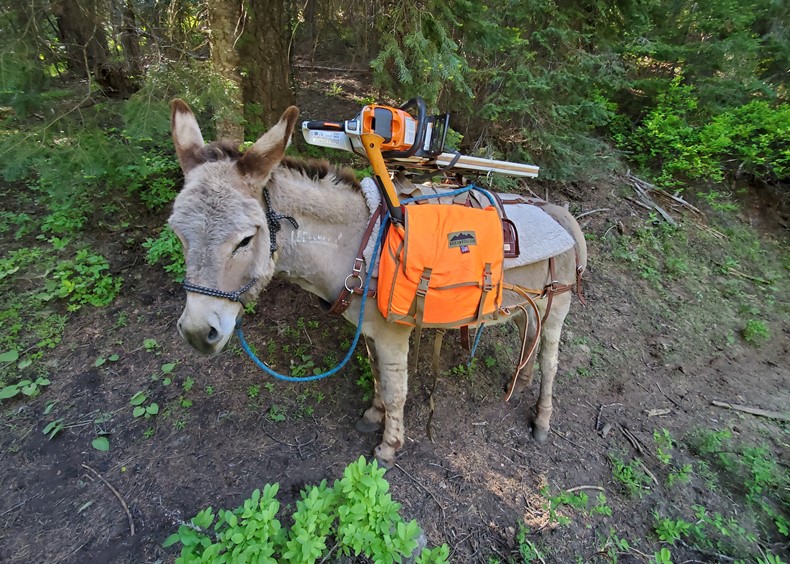
How do I hang a pack saw on my saddle?
One sure way to secure a saw to your riding saddle is to tie the pack saw handle with the rear saddle strings and then secure the blade under your leg. However, the pack saw scabbard has a versatile design that would allow you many options. Whichever way you choose, remember to offset the added weight of your saw by loading your horse saddlebags or horn bags heavier on the opposing side.
Why do I need to carry a pack saw or a camp axe with me on the trail?
The obvious answer here is for windfall blocking the trail. It is not always possible to go around a windfall, nor would you necessarily want to get into that habit; the new trail you would create only adds to the erosion of a potentially fragile area. It is better instead to simply clear the trail. Read the article “Pack Saws and Camp Axes” for a full explanation of why it is so important to carry a pack saw when you are out on the trail.
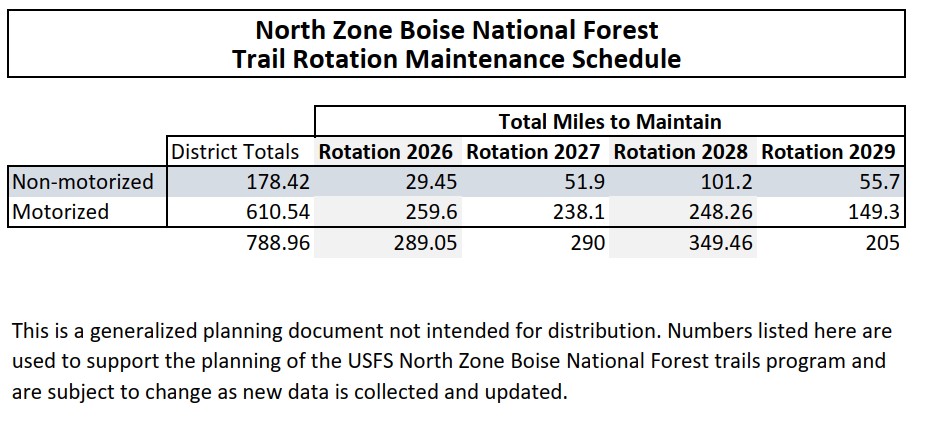
 Hey Folks,
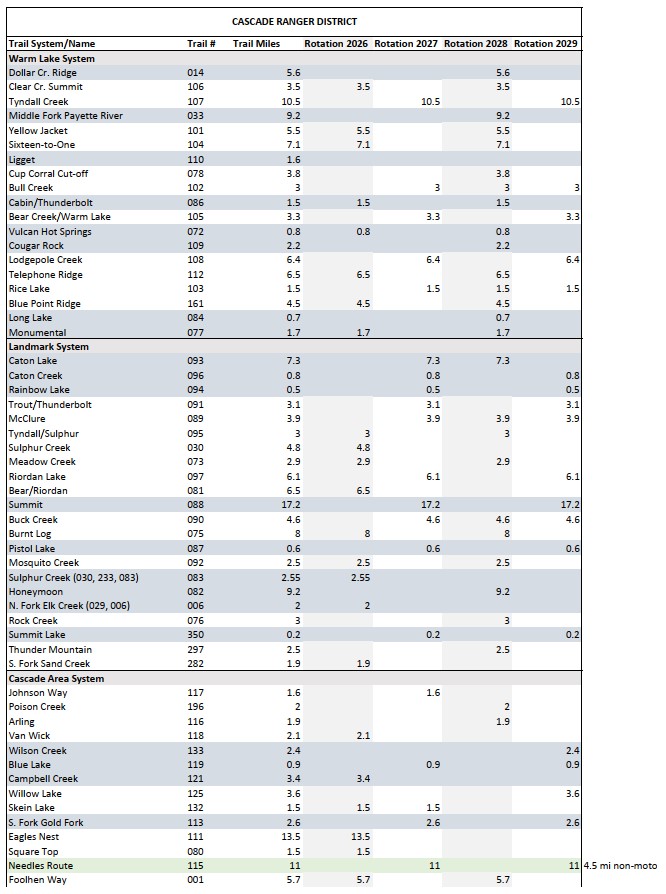
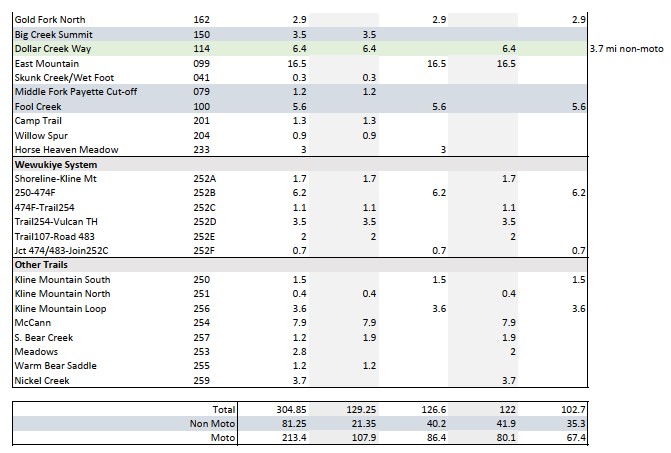
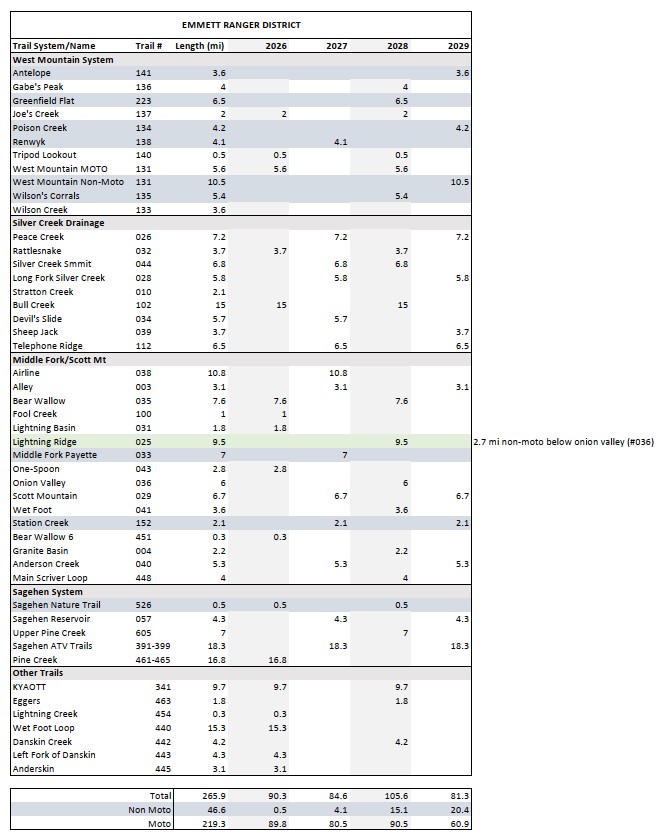
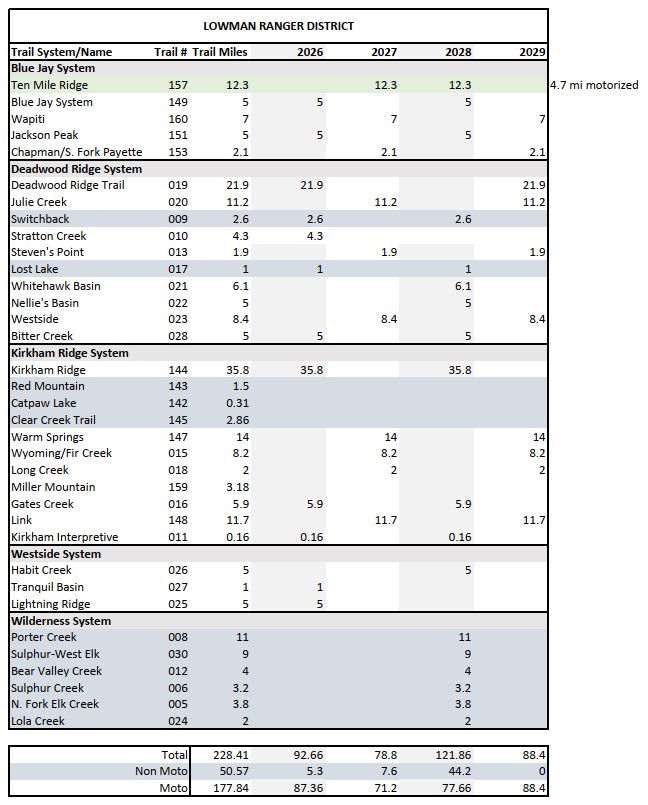
I’m reaching out to highlight our appreciation for your time and energy in working with the Boise National Forest and our north zone (Cascade, Emmett and Lowman District) trails program.
I’m currently applying for trail grant funding to pay for crews to do work on motorized and non-motorized trials in 2027 and 2028. The reason for this timeline is that I learn whether we are awarded the grant in early summer 2026 and can’t receive funding until the fall of 2026, therefore I use that funding to pay for crew time the following year.
I have attached a draft of our current trail grant; I also send a draft of the grant to the IDPR committee that oversees the awarding of RTP grants.
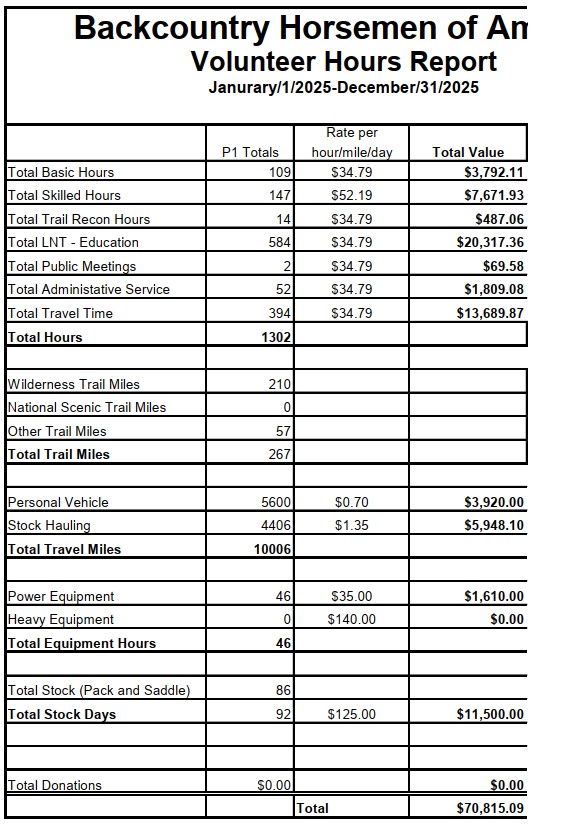
What I need from your organization if you haven’t already submitted it: Volunteer hours for the 2025 field season. I have attached a volunteer report form, but you can also use a different format, number of volunteers number of hours (8 is the minimum for a day) and where are really helpful. What I need if your group would like to support the Boise NF in it’s grant request for 2026. A letter of support.
I use volunteer hours to make up the %5 non-federal match. Currently IDPR lists that value at $7.25 an hour for the RTP grant. I have made a request to update that amount to match the actual value that volunteers contribute, so hopefully that will change at some point. The letter of support needs to list the number of volunteer hours a group is willing to support us doing trail work during the years we will have the grant. The letter must explicitly state the number of hours, as per IDPR policy. I generally use the previous year’s volunteer hours or take an average. I am happy to help sort out hours and draft a letter or provide examples if needed. If you don’t want to state you will help with hours, just a note that you support the grant is also helpful.
Second, please let me know if there is a time when I could attend a club meeting in January, February or March and what date, time and location the meeting would occur and I can give an update on 2025 trail work and future planning.
Again, thank you so much for the support and help, we covered a lot of ground in 2025 and addressed lots of post fire impacts with help from so many partners. We certainly couldn’t do the work without you.
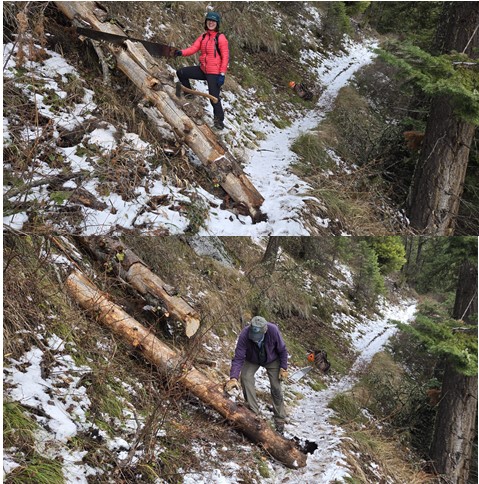
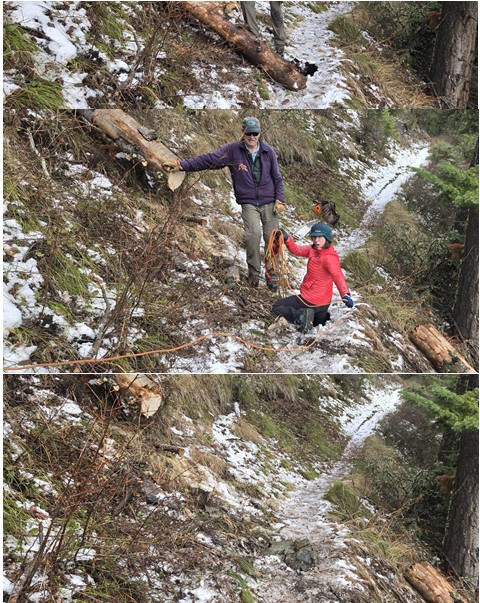

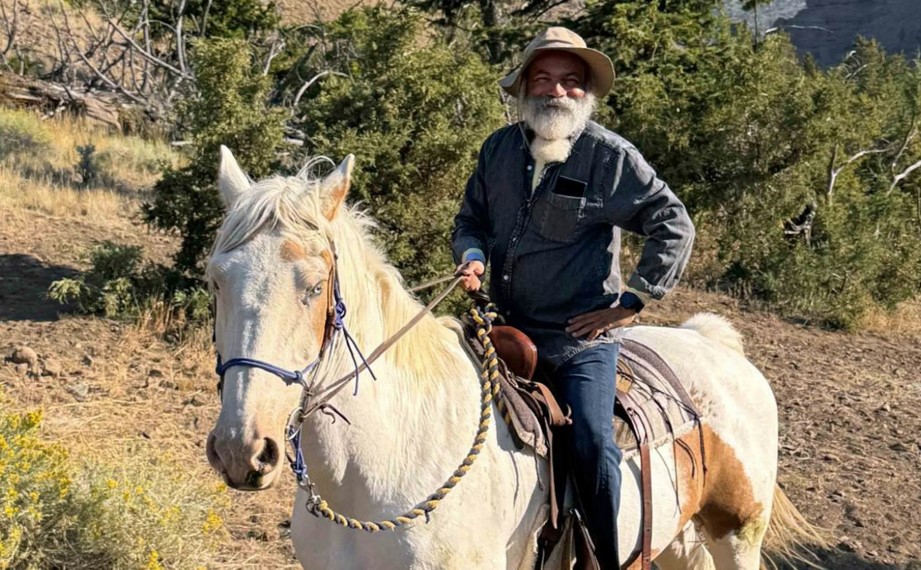

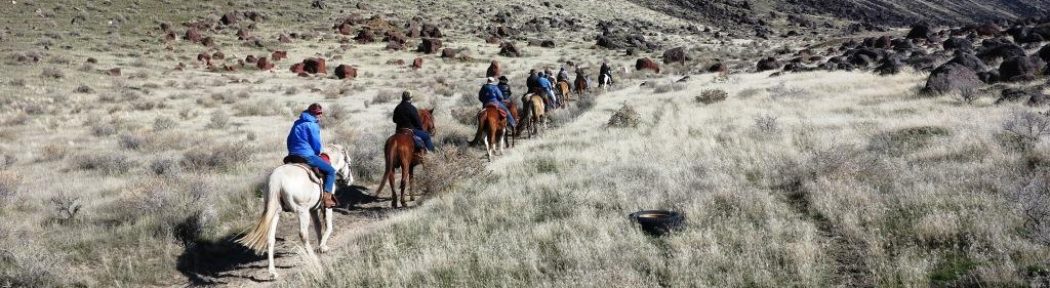
READ FULL STORY: Horseback Ride Fall – 2025
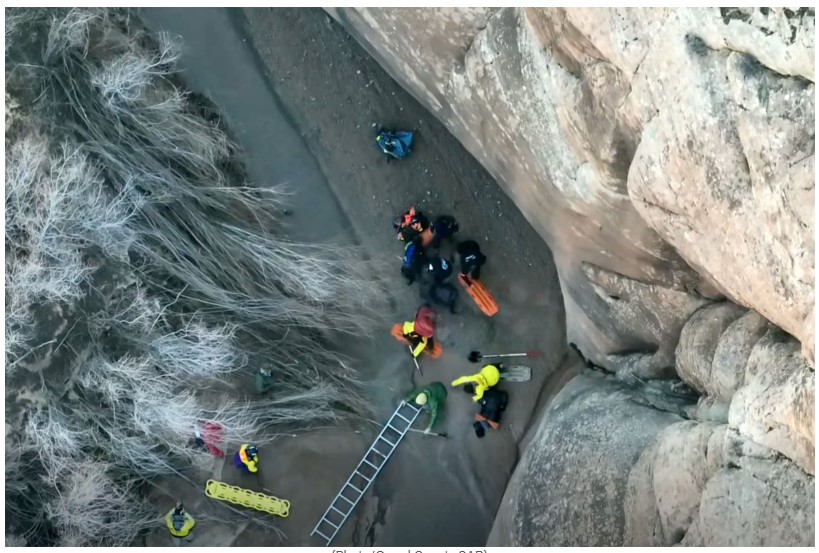 READ FULL STORY: Hiker Rescued From Quicksand
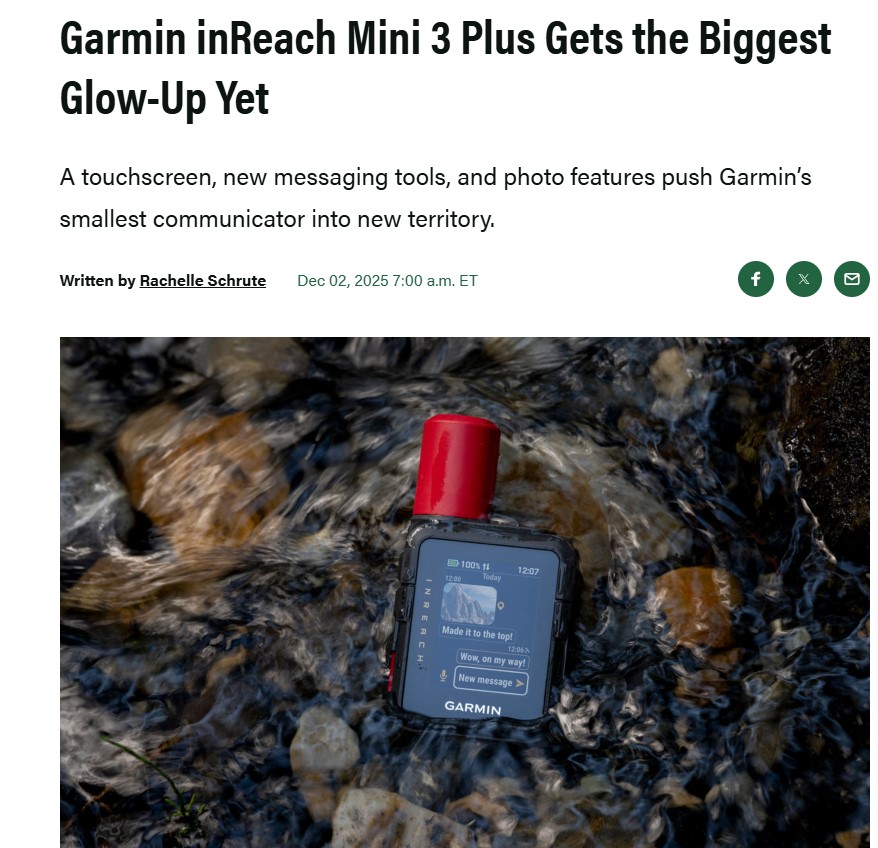
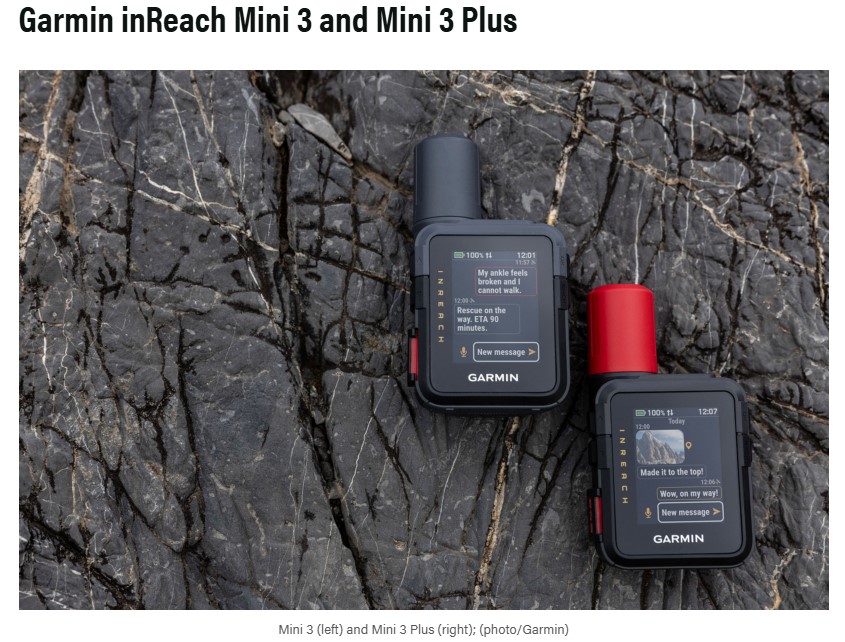 Outdoor communication keeps getting smarter, smaller, and, like all thing, more expensive. Garmin’s new inReach Mini 3 Plus ($499) adds a touchscreen, voice messaging, and photo sharing to a device that once prided itself on being almost stubbornly simple.
The new version jumps from a tiny grayscale screen and a handful of buttons to something closer to a stripped-down phone. It sends voice messages, supports photo viewing, allows photo sharing when paired with the Messenger app, and uses a touchscreen for faster navigation. It’s a sharp turn for a device best known for blunt practicality.
The core inReach pieces are still here. Two-way messaging, SOS support, and LiveTrack all remain, now delivered through a color screen with built-in audio tools. Battery life stretches up to 330 hours in 10-minute tracking mode, which should get most people through long trips without rationing power. READ FULL STORY


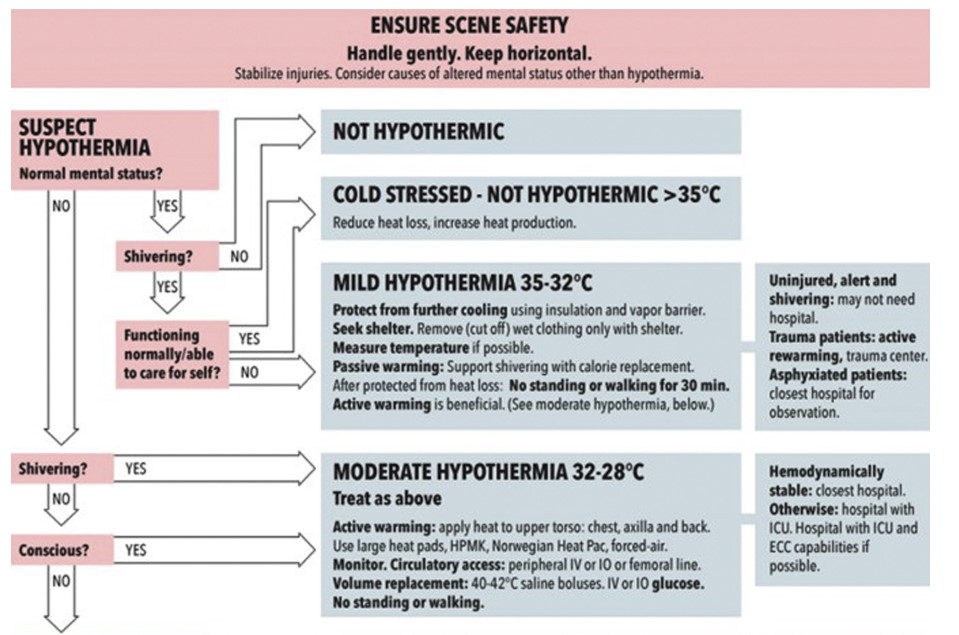
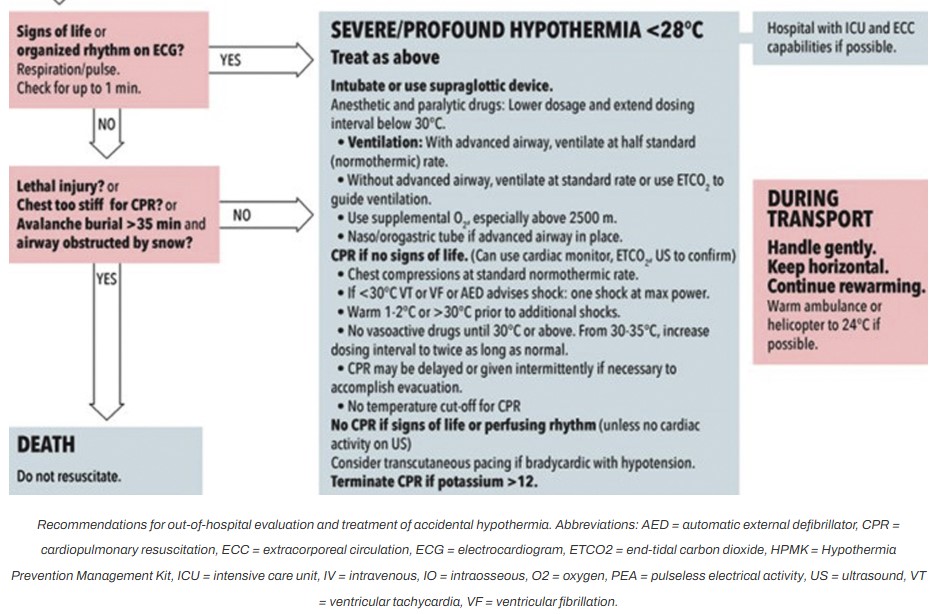
 The Wilderness Medical Society convened an expert panel of clinicians and researchers to appraise and update the WMS clinical practice guidelines for out-of-hospital evaluation and treatment of accidental hypothermia. The panel readdressed previously posed questions and considered additional questions not previously considered. All articles were considered, but those published between 2013 and 2019 were the focus of the review. The 2019 guidelines are the product of this effort. The guidelines focus on pre-hospital treatment, although hospital capabilities are discussed and considered for transport and triage recommendations.
Accidental hypothermia is the unintentional drop in core temperature to 35°C (95°F) or lower, and is a result of net heat loss from the body. For the purposes of out-of-hospital assessment, classification of hypothermia is based upon the clinical presentation of the patient. Core temperature is addressed, but this is frequently impossible to reliably, or safely, obtain in the field. The key considerations for classification and treatment are level of consciousness, alertness, intensity of shivering, physical capacity, and cardiovascular stability. The “Cold Card,” presented in the guidelines, provides a succinct summary and is easy to carry into the field.
The cold stressed patient [core temperature >35°C (95°F)], is not hypothermic. They have a normal mental status, coordination, are alert, and will be shivering to produce heat. The mildly hypothermic patient [core temperature 35-32°C (95-89.6°F)] will demonstrate impaired movement, often manifesting as poor coordination. They may be mildly tachycardic, but blood pressure will be normal. Moderate hypothermia [core temperature 32-28°C (89.6°-82.4°F)] is remarkable for worsening coordination, changing mental status, and decreased alertness. Shivering may still be present in patients with moderate hypothermia. Careful handling is imperative for these patients. Patients with severe/profound hypothermia [core temperature <28C° (82.4°F)] demonstrate a marked decrease in their level of consciousness, to the point of coma, will no longer be shivering, and demonstrate cardiac instability. These patients must be handled very carefully to prevent ventricular arrhythmias. If no pulse is present after a one-minute check, compressions should be started.
Treatment is progressive, depending on the state of hypothermia. Field rewarming begins with the prevention of further heat loss by protecting the patient from the environment – including the safe removal of wet clothing, and initiation of rewarming. Rescuers must be aware of the possibility of afterdrop and circumrescue collapse, both of which can be triggered by moving a patient from the horizontal position. After protection from the environment, methods of active field rewarming employ a combination of an insulative layer, a vapor barrier to prevent evaporative heat loss, and an external heat source. Examples of the heat source include chemical heat packs, forced air, and hot water bottles. Heat should be applied to the axilla and chest and care taken to monitor for burns. It is not recommended that small chemical heat packs (hand warmers) be used for core rewarming as they do not provide sufficient heat to affect core temperature. Immersion in warm water or a warm shower is not recommended for patients with hypothermia as it may lead to shock due to peripheral vasodilation.
Resuscitation of hypothermic patients differs from normothermic patients in that compressions are NOT started if there is any palpable pulse – regardless of rate. Rescuers should palpate for a pulse for at least one minute and only start compressions if no pulse is present. If a monitor is available, the rhythm should be assessed. A nonperfusing rhythm, such as ventricular fibrillation or asystole, is an indication to begin compressions. Organized electrical activity without a pulse (PEA) should be assessed with ETCO2 (end-tidal carbon dioxide) monitoring. If ETCO2 indicates there is perfusion, do no initiate compressions. Resuscitation is not initiated in patients with fixed, dilated pupils, obvious fatal injuries, and rigor mortis. Lividity is an unpredictable indicator in hypothermic patients so is not to be used as a sign of death.
Accidental hypothermia in the wilderness environment rarely occurs with readily available transport. In those needing active resuscitation, transporting is a challenge, however, and may be unsafe for rescuers. Compressions may be interrupted for up to 5 minutes while moving the patient. Compressions should resume for at least 5 minutes before the next interruption.
Once advanced field interventions are available, IV access should be attempted, and warm fluid resuscitation initiated. An AED or defibrillator may be employed for a shockable rhythm. If the body temperature is below 30°C (85°F), only one attempt should be made. Further attempts are indicated once the temperature is greater than 30°C. Medications for resuscitation should not be administered until the core temperature is above 30°C, and then intervals for administration should be doubled. If airway protection is indicated, it should be initiated when available. Ventilation rate should be guided by ETCO2, and if not available, care must be taken to not hyperventilate the patient.
Patients with moderate and severe hypothermia are to be transported to a hospital capable of caring for them. Patients with cold stress and mild symptoms need not be transported if they have been successfully treated in the field. Patients with hemodynamic instability, and especially those requiring compressions, should be transported to a facility capable of extracorporeal cardiac life support (ECLS), preferably extracorporeal membrane oxygenation although cardiopulmonary bypass is an option. Rescuers should use good judgement and not bypass a facility if transport times are lengthy. The transport vehicle should be heated to 28°C (82.4°F), however, may be quite uncomfortable for attendants and pilots.
The ultimate outcome for the hypothermic patient is dependent on prompt recognition and classification of symptoms, protection from further heat loss, initiation of active rewarming, gentle handling during rescue, and appropriate resuscitation. In cases of severe and hemodynamically unstable hypothermia, transport to an ECLS capable facility will further improve the patient’s chances for survival.
Introduction
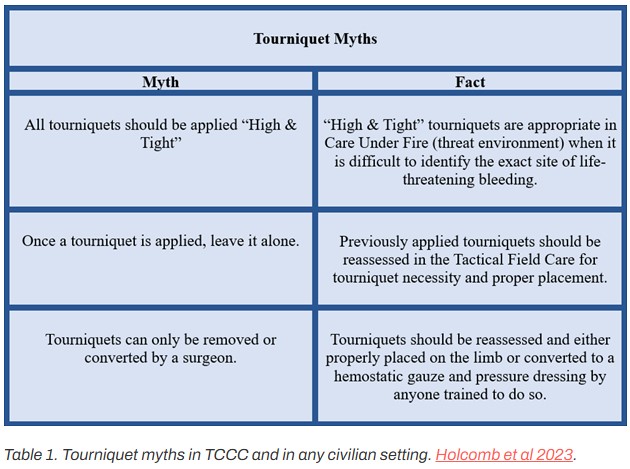
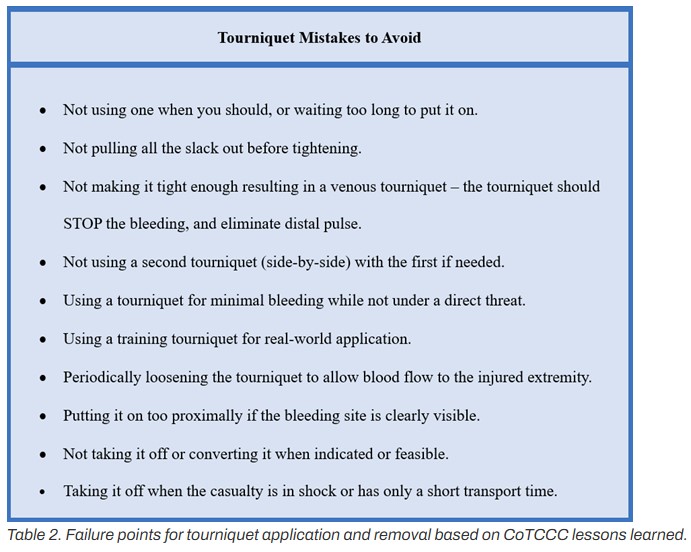
Prior to 2001, tourniquets (TQ) were inferiorly made, lacked evidence and effective training, and their use was discouraged. However, with effective modern TQ science, development, and TQ inclusion into the Tactical Combat Casualty Care (TCCC) guidelines, TQs became universally accepted by 2006 in the military as the primary option for extremity arterial bleeding. Eventually TQ use transitioned with success to civilian Emergency Medical Service/Fire Department personnel, Law Enforcement personnel, and first responders. Yet, there still is a need to overcome TQ myths (Table 1). Additionally, history reveals from WWII to present that mistakes will occur when applying a TQ (Table 2). For instance, many TQs have been applied to injured extremities without life-threatening bleeding in both military and civilian casualties. Many of these applied TQs were inappropriate since many were placed without visualizing the wound when not in a direct threat environment. In addition, when TQs are applied for over 2 hours, there will be progressive damage that may result in muscle necrosis, need for fasciotomy, renal failure, amputation, and death. This suggests a greater need for TQ education and training.
PDF: Tourniquet Lessons Learned from Ukraine and Israel
As an outcome from recent TQ lessons learned in the Ukraine and Israel wars, an article by Colonel John Holcomb, MD and colleagues was recently published in the Journal of Trauma, December 2023. They describe a renewed attention and education about how to avoid prolonged TQ application as recommended in the TCCC guidelines (See Massive Hemorrhage and Circulation sections – Table 3). It is our intent to provide the wilderness medical provider information about: 1) TQ replacement and TQ conversion (ideally performed no later than 2 hours after being applied); and 2) ensure the reader has up-to-date CoTCCC resources with the current TQ replacement/TQ conversion education and training.