 Bookmark our 2026 Idaho Wildlife Bill Tracker to keep the bills that matter in your scope.
Find your local legislators https://legislature.idaho.gov/legislators/whosmylegislator/
Bookmark our 2026 Idaho Wildlife Bill Tracker to keep the bills that matter in your scope.
Find your local legislators https://legislature.idaho.gov/legislators/whosmylegislator/

Hi Heather, Dan and Rob,
Thank you for sharing your wilderness/trail resources! My family and I are headed out to Joshua Tree next week for our annual camping trip and we’re super excited! I’m putting together our packing checklist and meal plan now. Your backpacking/campfire recipes were fantastic – I’m glad we came across the Squaw Butte Back Country Horsemen’s Training & Documentation page. We found this on Dutch Oven cooking and wanted to share.
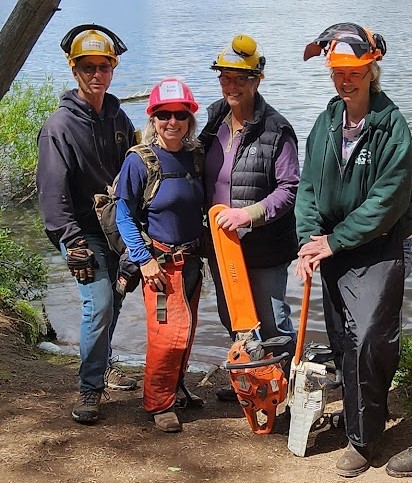
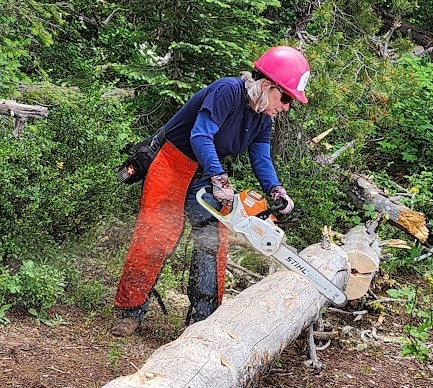
USFS Developing Thinking Sawyer Chain Saw Academic Training Opportunities
1st Class
Where: Carl’s Cycles, 5550 W State Street, Boise, ID
When: Wednesday Feb 4th/Feb 11th 6-9 pm
(Broken into two 2 – 3 hour sessions)
2nd Class (Preregistration Required for access to NG Base)
Where: Gowen Field, Regional Maintenance Training Site, 4355 W. Harvard St. Bldg. 806 Boise, ID 83705
When: Saturday March 7th 830am to 4pm
3rd Class
Where: Classroom with be held in Sweet, ID from 08:30 to 16:00 on Saturday May 3, 2026
What is a Sawyer?
In March of 2023 the USFS released “Developing Thinking Sawyer” a module-based chain saw training course developed with seasonal fire crews and volunteers in mind. This two-day course consists of 6-8 hours classroom and demonstration, followed by a day in the field working on various sawyer problems and certification evaluation. DTS covers both Chainsaw and Crosscut and is recognized by all three federal land agencies.
USFS certifications for non-fire employees and volunteers are:
Apprentice “A” bucker , “A” bucker/faller
Requires a B or C sawyer to be supervising
Journeyman “B” bucker , “B” bucker/faller
Master “C” bucker , “C” bucker/faller
Sawyers can hold multiple levels of certification on one card. Example: Chainsaw: C-bucker, B-faller; Crosscut: B-bucker/faller.
Chainsaw Sawyers must be 18 at the time of their field day and have a valid First Aid Card.
“B” sawyers require the full DTS training with an extra day if falling certification is required.
“C” sawyers require multiple years of experience and completion of DTS and an additional advanced workshop.
Sawyer Certification cards are valid for 3 years before recertification is required. Recertification can be compressed with a ½ day classroom refresher and a ½ day in the field.
First Aid/CPR cards generally are valid for 2 years.
Why is sawyer training important?
The federal public lands agencies require all people doing trail work on public lands to be under a volunteer agreement or some sort of contract. Those under volunteer agreements must posses the same training certifications as agencies summer employees, first aid/CPR and if running a saw, a sawyer certification. “Volunteers will be covered by USFS workman’s compensation and liability insurance, while working on projects approved by the land agency.”
With the crazy weather across Idaho in Dec of 2025, we are already seeing an incredible amount of trees blown down due to the high precipitation and warm weather when the crazy wind storms came through. The 2026 riding season will be impacted by the amount of trees that have fallen. Its going to be vital for safe and effective clearing of trees with chainsaws.
Cost.
DTS Workshop are free to any volunteer who is a member of a group with a Volunteer Agreement.
What to bring?
Bring an open mind to safe and effective chainsaw training. All PPE and saws will be provided at the field days.
First Aid Training (Required prior to field day)
Best: Wilderness First Aid Boise, ID WFA | Idaho Rescue Training
Minimum: Adult First Aid/CPR/AED Online
How to Sign up?
Please RSVP with Rob Adams (moosely.adams@gmail.com) and Dan Waugh (dan.p.waugh@gmail.com).
Field Day.
Field Days will be held north of the Pine Flats Campground on the Banks-Lowman Road west of Lowman, ID
Sign-up and Safety Meeting will be completed before 10:00, Field Day 10:00 to 15:00
In the past this area has been snow free by early April
Dates: Sunday April 19, Sunday April 26, Sunday May 3 & Saturday May 9
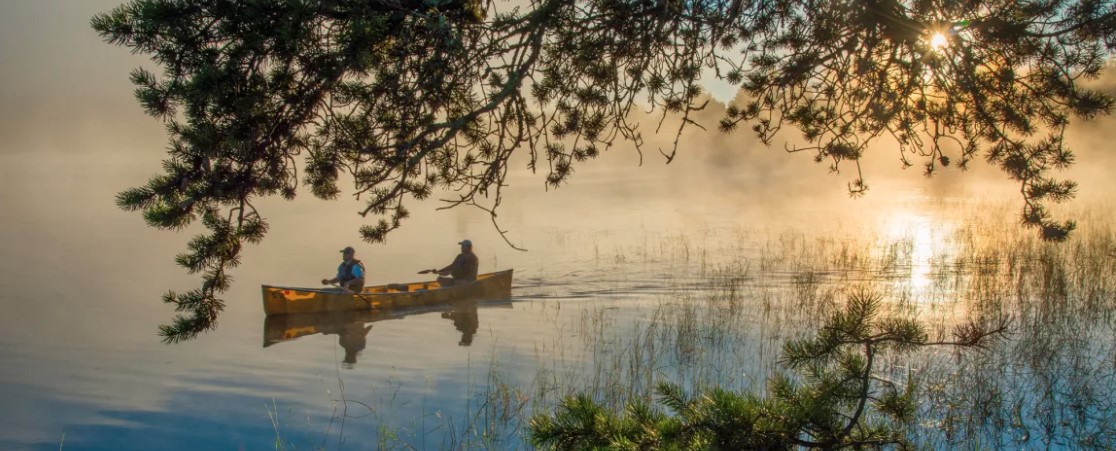
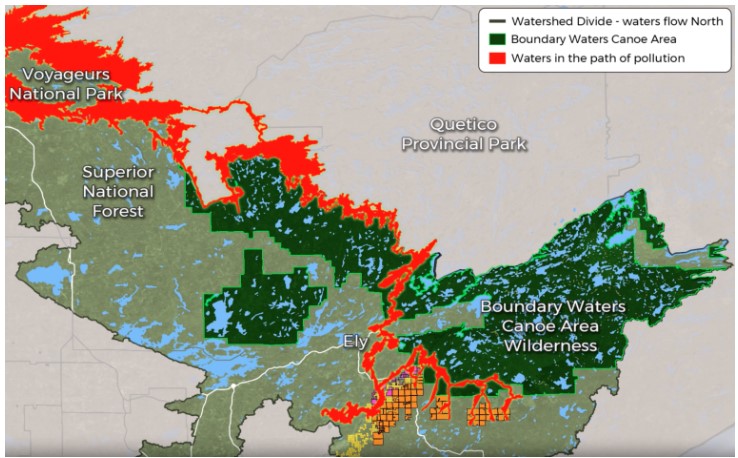 The U.S. House of Representatives narrowly passed a resolution Wednesday that puts a copper-nickel mine on the edge of the Boundary Waters Canoe Area Wilderness one step closer to reality. Taking an unprecedented approach to using the relatively novel Congressional Review Act, the House voted 214-208 in favor of overturning a 20-year mining moratorium that was established in 2023. These current protections cover 225,504 acres in the Superior National Forest and center around the Rainy River Watershed that lies upstream of the BWCA.
“The Boundary Waters is the pinnacle of wild places,” says Matthew Schultz with Sportsmen for the Boundary Waters. “The chance of polluting a place like that to me is pretty crazy. It just doesn’t shake out.” READ MORE

Idaho state Sen. Ben Adams, R-Nampa, introduces a proposed amendment to the Idaho Constitution that prevents the state from selling future public lands it obtains from the federal government. (Clark Corbin/Idaho Capital Sun)
Sen. Ben Adams, R-Nampa, first announced his proposal in August, well ahead of the 2026 legislative session that began this month, the Idaho Capital Sun previously reported. He unveiled the draft text of the amendment later that month.
Adams told the Senate State Affairs Committee on Wednesday that since unveiling his proposal, he’s had conversations with residents and industry leaders all over the state.
“I wanted feedback. I wanted a lot of feedback, because it deals with a very personal matter for every Idahoan, and that is our public land here in Idaho,” Adams said.
He said he slightly changed the text from his August proposal, but “the intent did not change.” READ MORE
We’re looking forward to hosting a number of webinars over the next few months to help get you ready for hiking season.
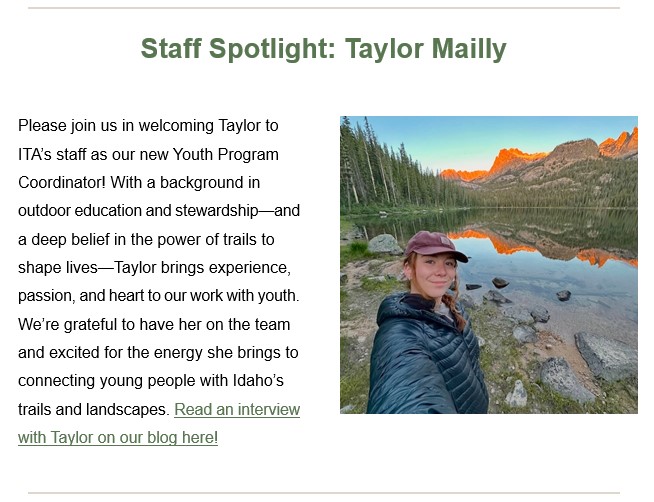
Come learn about our Youth Trail Program for ages 14-18!
February 10 @ 6pm PT/ 7pm MT
Learn how to make backcountry meals that are simple, nourishing, and actually taste good with Kristina Schmid, founder of EmpowHer Outdoors.
February 11 @ 6pm PT/ 7pm MT
This is your chance to get a sneak peek at the year’s best projects and learn how you can be part of making a difference on Idaho’s incredible trails.
February 26 @ 6pm PT/ 7pm MT
Basic Wilderness Survival & First Aid Webinar
Kristina from EmpowHer Outdoors will help you build confidence in the outdoors by learning essential wilderness survival and basic first aid skills.
March 11 @ 6pm PT/ 7pm MT
 WHAT’S BEHIND ALL THIS deferred maintenance? According to Forest Service staffing
reports from 2019, the agency’s workforce has contracted substantially over the last 30
years, losing roughly 20% of its staff. Under the Trump administration, full-time staffing
has decreased by an additional 10% due to DOGE layoffs, though this
month’s Congressional appropriations bill spared the agency the worst of the drastic
2026 budget cuts proposed by the White House last year.
Recreational trail staff, once robust in the 1980s, has dwindled with these reductions in
force, with many districts reporting zero, or just one, permanent recreation staff and
fewer than three seasonal staff to oversee hundreds of miles of trail. A July 2025
internal Forest Service report, shared with me by a confidential source, concluded that
each of the agency’s nine regions were missing up to 80% of their trail and recreation
workers.
December’s follow-up Forest Service report quoted a chorus of disaffected anonymous
rangers. “My trail program is suffering the worst morale setbacks of all my district
programs,” said one acting district ranger. “We lost 200 years of trail experience this
year,” said a forest recreation manager. One district trail manager was considering
packing in a multi-decade career altogether. “It feels like 24 years of trails and
wilderness work,” they said, “rolling back to the bottom of the hill.”
Volunteers and local stewardship groups have had to show up in force, demonstrating
the value Americans place on access to public lands. In fiscal year 2023, 71,660
volunteers contributed 2.6 million hours of service to the Forest Service, more than
double the hours logged by agency employees. Yet even that tidal wave of donated labor
can only slow, not reverse, the decline of infrastructure compounded over decades of
mismanagement.
At the highest levels of government, on both sides of the aisle, politicians acknowledge
this systemic neglect. During his Senate confirmation hearing, now-Secretary of the
Interior Doug Burgum agreed that addressing the maintenance backlog was crucial: “We
just have to make sure not just the national parks, but across the whole department, we
have to get the formulas right, because we are creating liabilities for future generations
if we are not taking care of that deferred maintenance.”
READ FULL STORY: Public Land Trails are Disappearing
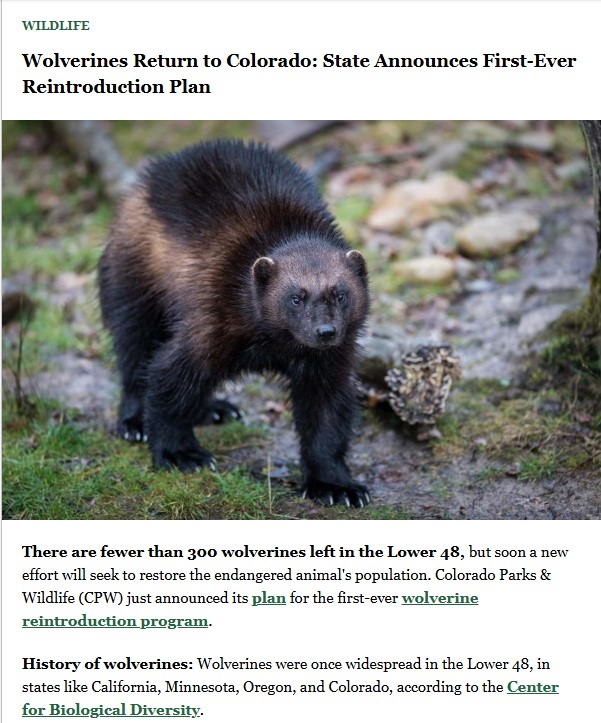 There are fewer than 300 wolverines left in the Lower 48, but soon a new effort will seek to restore the endangered animal’s population. Colorado Parks & Wildlife (CPW) just announced its plan for the first-ever wolverine reintroduction program.
History of wolverines: Wolverines were once widespread in the Lower 48, in states like California, Minnesota, Oregon, and Colorado, according to the Center for Biological Diversity.
Since the early 1900s, the population has sharply declined, mostly due to trapping and habitat loss. In 2023, they were added to the Endangered Species List.
Why reintroduce? Beyond helping revive an endangered species, reintroducing the wolverine has other benefits. The animal is naturally an opportunistic scavenger-predator. In addition to hunting small mammals like squirrels and rabbits, they’ll eat leftovers from carcasses of sheep, caribou, and moose that other, larger predators have left behind.
As the nonprofit Defenders of Wildlife explains, “Wolverines play an important role as nature’s cleanup crew. By scavenging dead animals, they help recycle nutrients back into the ecosystem and reduce disease spread by eating carcasses.”
What’s the plan? According to CPW, over 94% of the planned reintroduction habitat is on federal land. The areas include parts of Rocky Mountain National Park, the Elk and West Elk Mountains, and the San Juan Range.
The department will release 15 wolverines per year for 3 years beginning in 2027. Depending on how the species fares, there may be more reintroductions. Since wolverines have very large home ranges, the state can support around 100.
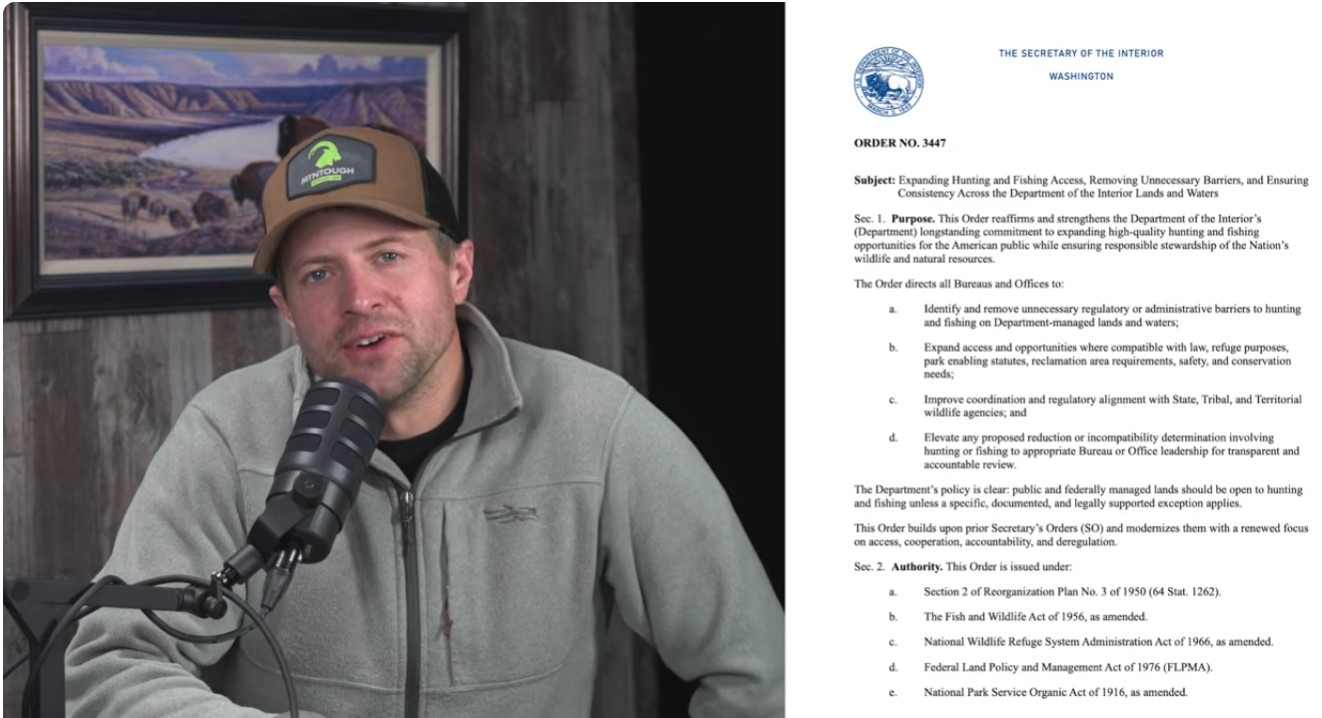
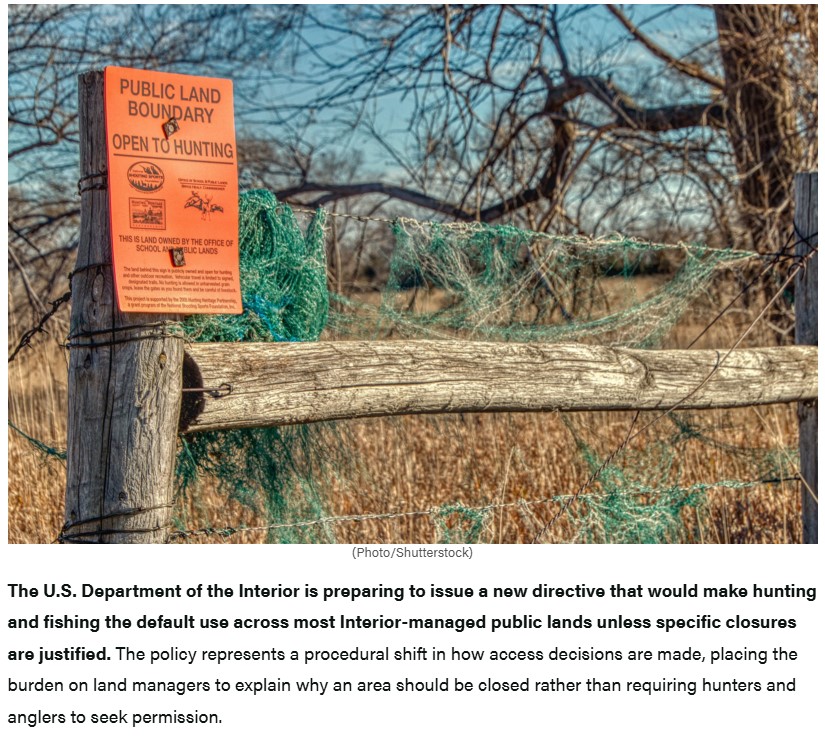 The U.S. Department of the Interior is preparing to issue a new directive that would make hunting and fishing the default use across most Interior-managed public lands unless specific closures are justified.
What’s new: Under this framework, federal lands would be considered open to hunting and fishing unless a closure is required by law, public safety concerns, or documented resource protection needs. Closures will require clear er justification, higher-level approval, and better documentation.
This does not create new hunting or fishing rights or eliminate conservation safeguards. It does, however, flip the starting assumption. Hunting and fishing would be treated as a default use of federal lands, not an exception.
What land does it a pply to? The order would apply to areas controlled by the Bureau of Land Management, U.S. Fish and Wildlife Service, and the Bureau of Reclamation. Some units within the National Park Service that already permit hunting would also fall under the framework.
What land is excluded? Areas closed to hunting by statute would remain closed. Lands managed by the Bureau of Indian Affairs would not be affected. READ MORE
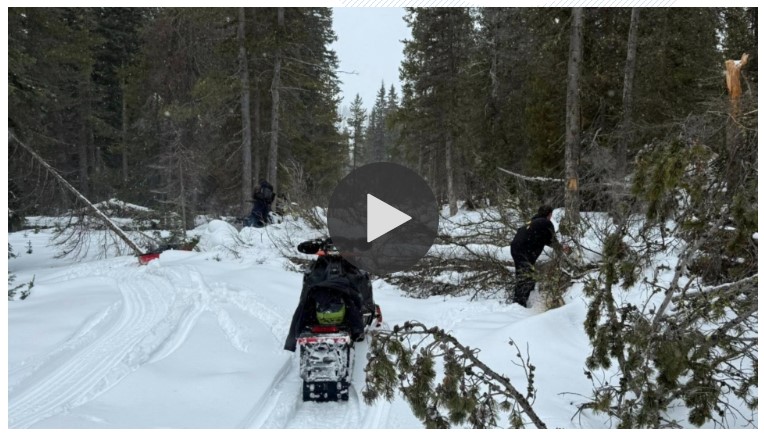 BOISE, Idaho — Winter riders looking to hit the snow at Pilot Peak and Mores Creek Summit in Boise County should avoid the area due to poor snow conditions and downed trees.
Boise County Grooming 8A, a group that maintains snowmobile trails and winter parking lots, said it was astonished by how many trees had fallen in the area Thursday.
Boise County officials said even if it gets good snowfall, the area will be challenging to groom, as “[they] are going to need a lot of snow to be able to groom over and around this huge mess.”
“In the 39 years of riding Mores Creek area I have never seen anything close to what we seen today,” Boise County Grooming 8A said.
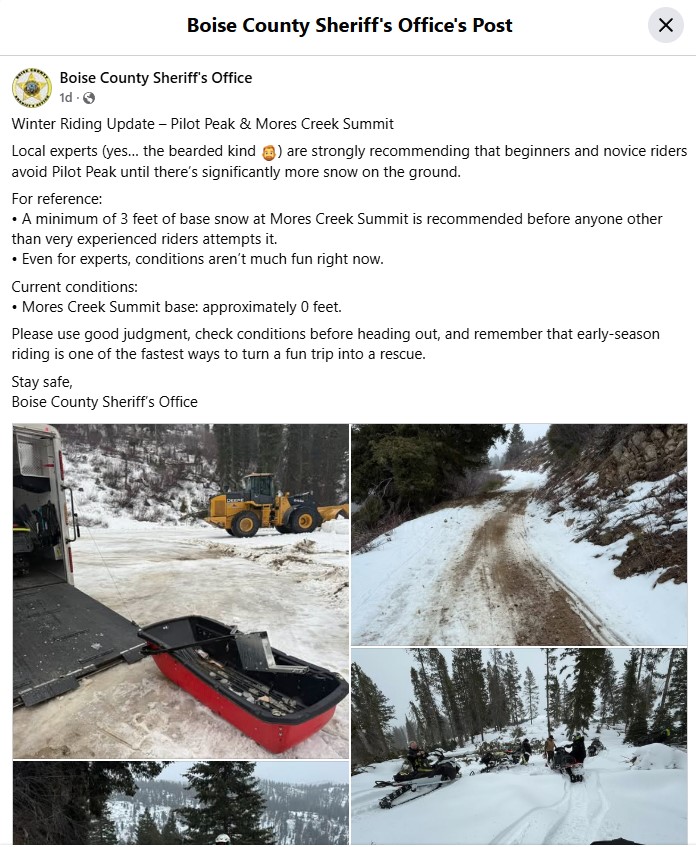
The Boise County Sheriff’s Office said riders should avoid the area for safety concerns due to a 3-foot snow base. Mores Creek Summit is recommended for expert riders, and the approximate Thursday’s snow base is 0 feet. LINK TO STORY

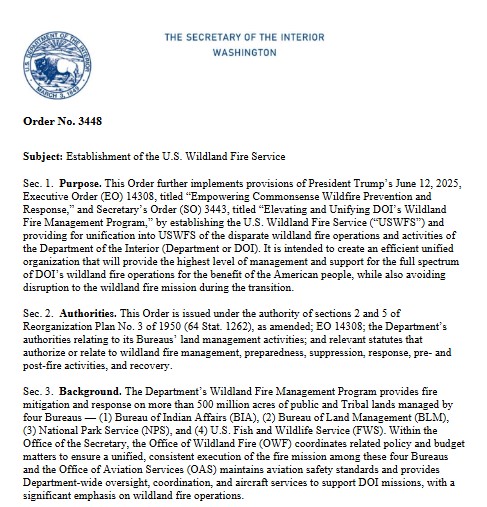
Union representatives for U.S. Forest Service workers in the Sawtooth and Salmon-Challis national forests are echoing some conclusions stated in an internal Forest Service trails report recently obtained and published by The Washington Post describing widespread public and employee dissatisfaction with trails on federally-managed public lands.
The internal report, published on Tuesday, Dec. 16, stated that services and public satisfaction in national forests across the U.S. will “continue to decline in 2026 and beyond without direction to prioritize investments in recreation generally and the trails program specifically.”
The report also stated that some districts across the country have lost up to 100% of their trails staff and “hundreds of years of trail expertise.” It stated that Forest Service staff are experiencing stress and burnout.
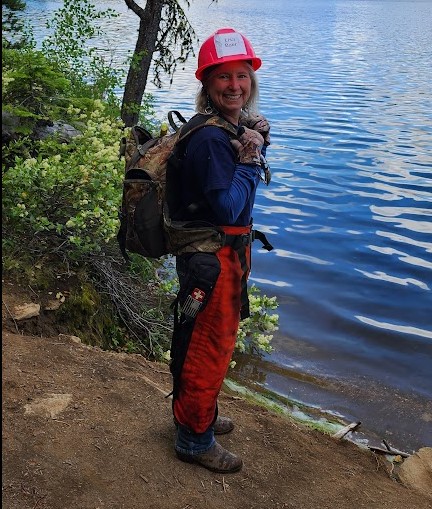
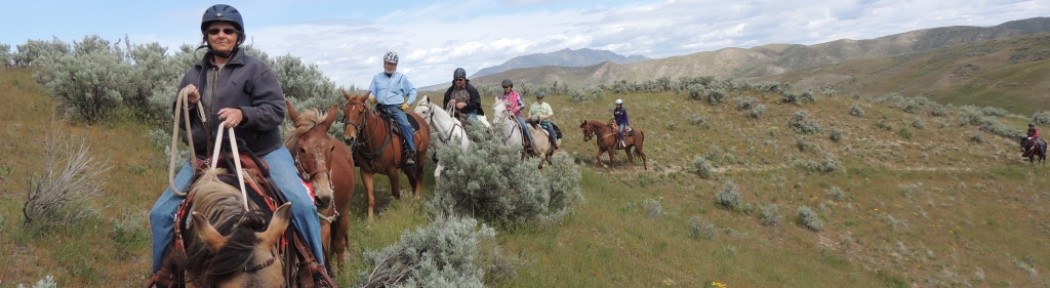
Good morning and Happy New Year! As we reflect on the accomplishments of 2025, I want to extend my heartfelt gratitude to each of you for your dedication to our Squaw Butte Chapter. Your contributions were vital in achieving our goals, as evidenced by the impressive totals we logged this year: 1,405 personnel hours, 467 trail miles, 8,892 travel miles, and 82 stock with 92 stock days, culminating in a total value of $73,408.66. Thank you for your commitment and hard work; it truly made a difference.
2026 will bring many more adventures and a lot of opportunities to get involved!
I have included a copy of the report that has been sent to BCHI and the BCHI proposal to move the hours and miles report due date to September 1st.
Please remember that there will not be a meeting tonight. See you all in February!
Lisa Baer
Squaw Butte Back Country Horsemen End of Year Summary 2025
Back Country Horsemen of Idaho Proposal Hours Coordination 2026