LINK TO VIDEO

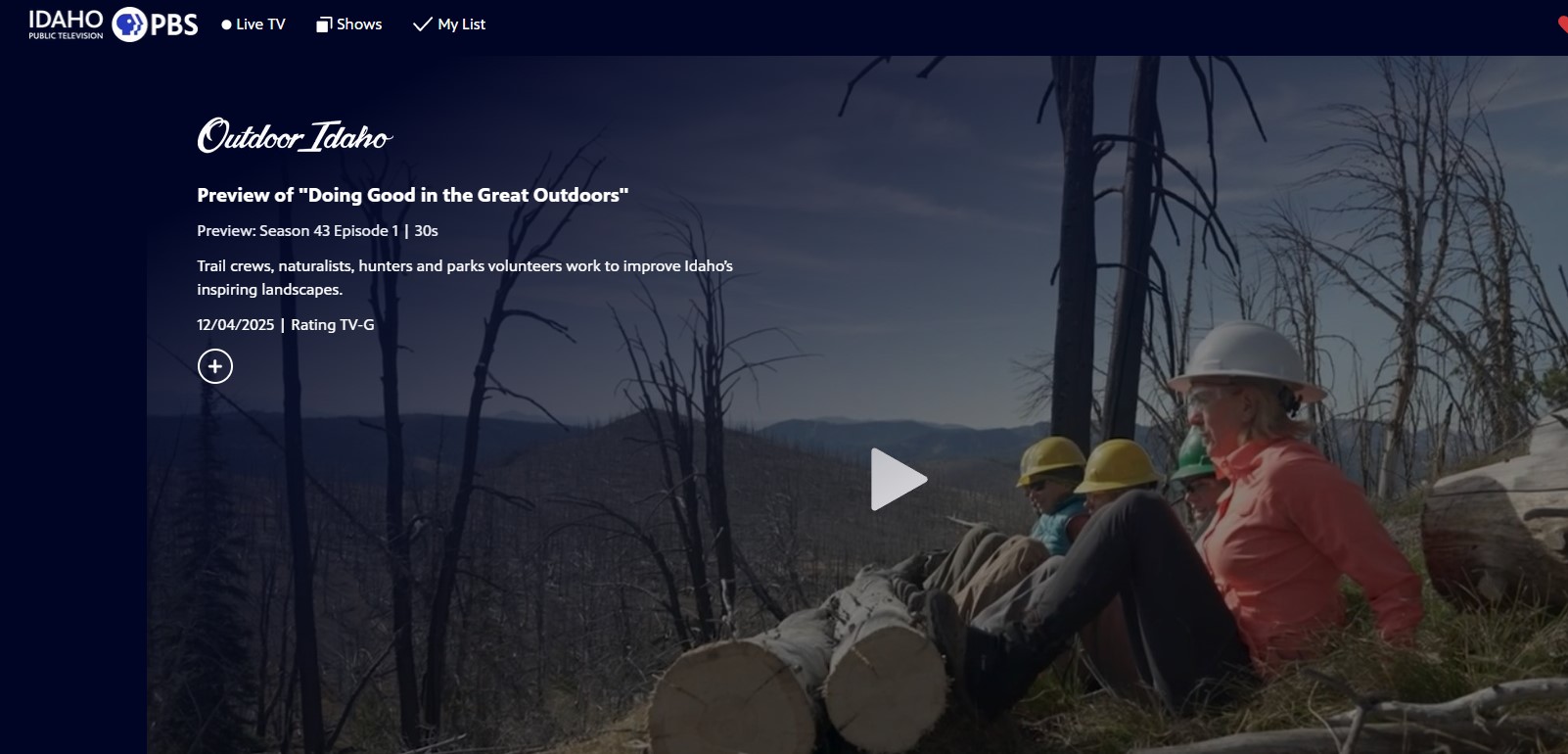
Preview of “Doing Good in the Great Outdoors”

Preview: Season 43 Episode 1 | 30s

We meet trail crews, naturalists, hunters, parks volunteers and even some budding high school biologists who give of their time and their talents to make the Idaho outdoors a better place, and model America’s spirit of volunteerism and citizenship in doing so.

12/04/2025 | Rating TV-G

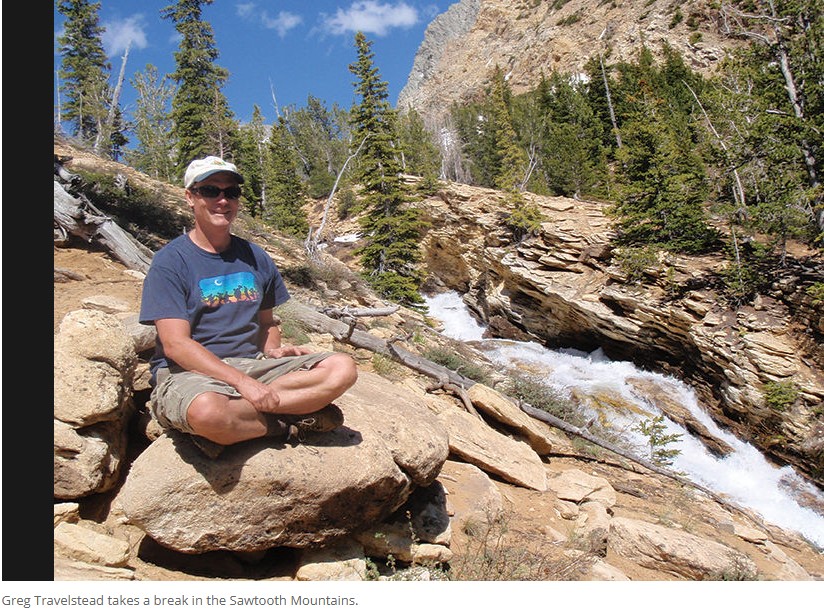
Greg Travelstead spends five to six days at a time working for free with trail crews in the Sawtooth Mountains, Boulder-White Clouds and Frank Church-River of No Return Wilderness.

More recently, he has taken crews to work in Hawaii.

Back in Hailey, he runs Evergreen Advisors, a land-use and water-rights planning company that he started after moving to the Wood River Valley in 2006. He co-founded the nonprofit Pulaski Users Group in 2019 and serves as its board president. Since its inception, the organization has restored 75 miles of wilderness trails, engaging with about 600 volunteers willing to spend time off the grid, using old-fashioned crosscut saws in rugged terrain.

“I have a great deal of respect for those who work full time for land management agencies. They are vastly underpaid,” said Travelstead. “If the Forest Service would have paid more, enough to afford a mortgage, I would have worked for them. But I needed a foot in the business world in order to have significant leisure time to wander in the woods.”

Travelstead, 62, was born in Baltimore and spent his teenage years in Rapid City, South Dakota. He remembers the nearby American Indian Movement occupation of Wounded Knee on the Pine Ridge Reservation and a flood that hit his hometown that killed 300 people.

“Those were interesting times,” said Travelstead, who moved to Boise for his final two years of high school. “The only thing that dug me out from a life of crime and delinquency was my first backpacking trip in the White Clouds Wilderness with my girlfriend. It plugged me into nature and soothed me like nothing else.”

Travelstead earned a geology degree from Rensselaer Polytechnic Institute, thinking it would land him in the woods like a prospector, but remote sensing technology had changed the discipline, so he worked for three years for a self-storage company before going to the University of Colorado for an MBA.

After four years with Arthur Andersen accounting firm, he wound up working as managing director of a diversified holding company in Australia. There he was introduced to the indigenous Bardi people of the Kimberley Region of Western Australia.  “I was adopted by the community and learned their customs and traditions,” he said. “One of the reason they were fond of me is that I helped them navigate the Office of Indigenous Affairs and helped them get grants for solar power and for Land Rovers, so they could get around.”

Travelstead has worked in the Wood River Valley on conservation easements, water rights transfers and valuations. His clients have included the Wood River Land Trust, The Nature Conservancy and private landowners.

But his passion is to spend time outdoors. Crews of six to 12 workers take to the wilderness seven times each year. For the last two summers, his Pulaski Users Group crews have been working on an 11-mile stretch of overgrown and damaged trail up Johnson Creek near Grandjean.  “The trail was getting so bad that it crisscrossed Johnson Creek and was imperiling critical bull trout spawning areas,” he said. “It’s been incredibly tough just to access the trailhead. We were unable to wrap it up this summer due to the Wapiti Fire.”  The Johnson Creek trail work has been funded with a $48,000 grant from the agency coalition known as American Trails. The Pulaski Users Group annual $100,000 budget is covered by donations and additional grants from the National Forest Foundation and Central Idaho Advisory Council.

The organization also works under a five-year cost-sharing agreement with the Forest Service.

“We have only two paid seasonal employees,” Travelstead said. “We are as close to a purely volunteer organization as you can get.”

The Pulaski Users Group works with retirees and students from the Sun Valley Community School and the Flourish Foundation. For three years the crews have been working in Hawaii, on the Big Island and Kauai.

Travelstead said the work they have been doing on trails has ingratiated them with the indigenous Hawaiians.

“At first they thought we were crazy, but now we’re getting invited to family dinners with the locals,” he said.

For more information, go to pulaskiusers.org.

READ FULL STORY

Idaho State Department of Agriculture urges pause on horse events after out-of-state EHV-1 outbreak

Idaho State Department of Agriculture officials are urging horse owners and event organizers to hit pause on upcoming equine events and avoid transporting horses for now, after multiple cases of Equine Herpesvirus Type 1 (EHV-1) were confirmed in horses that attended recent competitions in Texas and Oklahoma.

There are no confirmed EHV-1 cases in Idaho at this time, according to the ISDA. But because the virus can spread easily and can be deadly, the Idaho State Veterinarian is strongly recommending a temporary halt to hauling horses.

EHV-1 affects horses’ respiratory and neurological systems. It spreads through direct horse-to-horse contact, shared airspace, contaminated clothing, and other surfaces. Symptoms include fever, nasal discharge, coughing, lethargy, or neurological symptoms such as stumbling, incoordination, loss of tail tone, and hind-limb weakness.

EHV-1 cases have been reported in Texas, Oklahoma, and Louisiana. Idaho horse owners who attended or were near those competitions are asked to contact the Idaho State Veterinarian. Exposed horses should quarantine for 21 days and be monitored for symptoms. This virus is not transmissible to humans.

More guidance is available here.

LINK TO POSTED POSITIONS

READ ONLINE

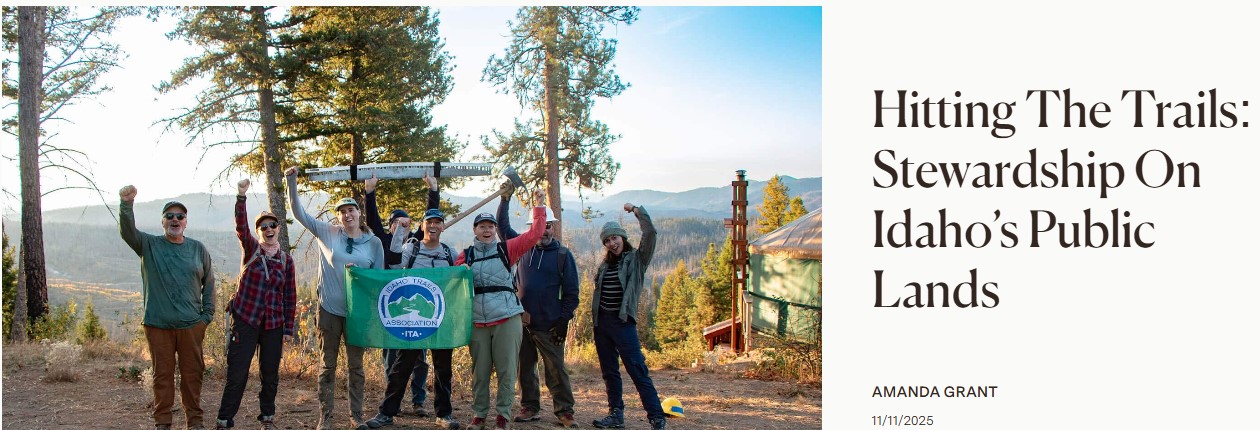
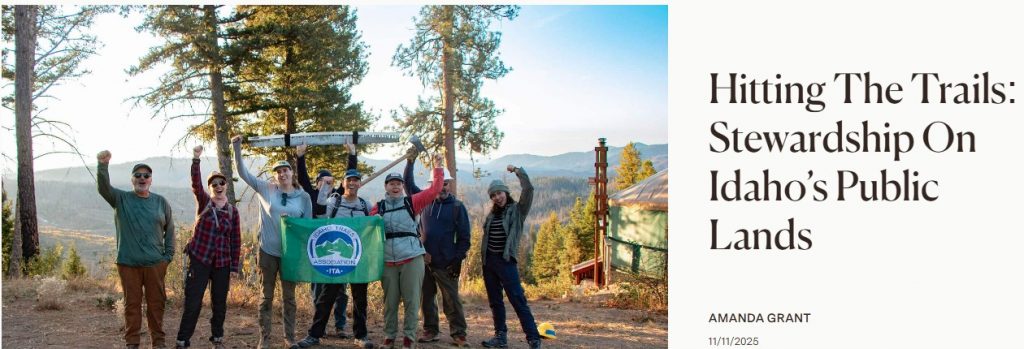
Nearly two-thirds of Idaho land is public, which means that outdoor recreation is not just a huge economic driver, but, for a majority of Idahoans, it’s a way of life. Our public lands are managed by entities including the U.S. Forest Service (USFS), the Bureau of Land Management, Idaho Department of Lands, Idaho Fish and Game, and Idaho Department of Parks and Recreation. And behind the scenes, there are even more organizations working to keep these large acreages of land accessible to all of us. Here are just a few:

The Idaho Trails Association (ITA) was founded in 2010 and predominantly works on backcountry trails throughout Idaho. However, they’ve also recently expanded into the “front-country” of the Boise foothills and trails adjacent to cities including Pocatello, Sandpoint, and Coeur d’Alene.

In 2025, the ITA had over 800 volunteers with 15,000 hours of volunteer time on over 350 miles of trails. Volunteers don’t need to have prior experience — they receive training before starting projects. Projects range from easy to arduous and range in length from one day to over a week. Traditional tools including crosscut saws, axes, and Pulaskis are used for trail maintenance.

ITA partners with other trail groups to build capacity and work together to get more continuous miles of trail done, Executive Director Melanie Vining said. These include the Back Country Horsemen of Idaho, Great Burn Conservation Alliance, Ridge to Rivers, Friends of Scotchman Peaks Wilderness, and the Selway Bitterroot Frank Church Foundation (SBFC).

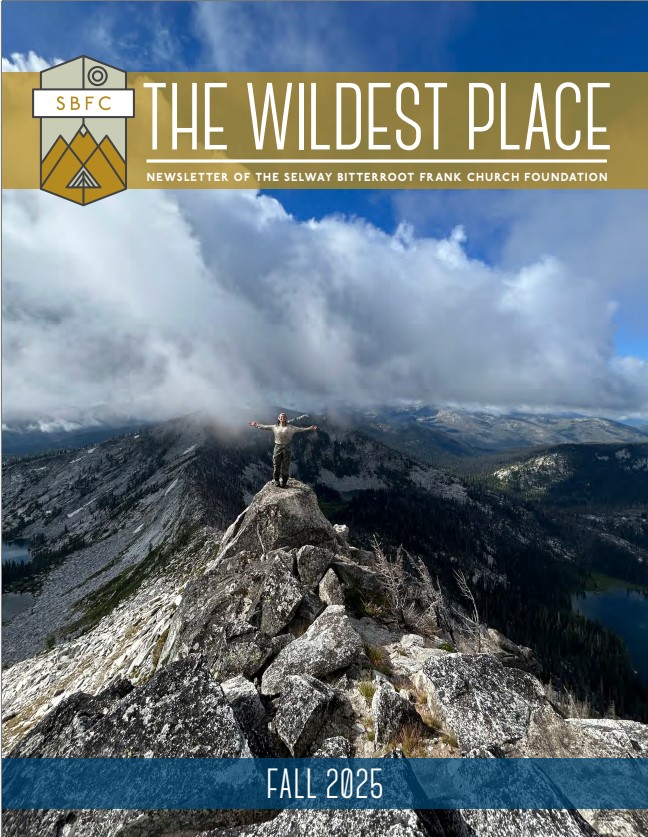
The SBFC was founded in 2006 by concerned citizens with help from the USFS to add capacity for on the ground stewardship in the Selway Bitterroot Wilderness. They added the Frank Church-River of No Return Wilderness to their work around 2012. Both wildernesses are managed by the USFS.

“Having a partner stewardship organization is critical for public lands management agencies, particularly when working in remote/large landscapes like the Selway and the Frank,” said Executive Director Ryan Ghelfi. With recent federal funding cuts, work from these partner organizations has become even more crucial. SBFC has continued to raise private funds to help augment the USFS capacity to get trail work and other stewardship projects done. They were even able to hire River Rangers and Checkers for the Middle Fork and Main Salmon Rivers.

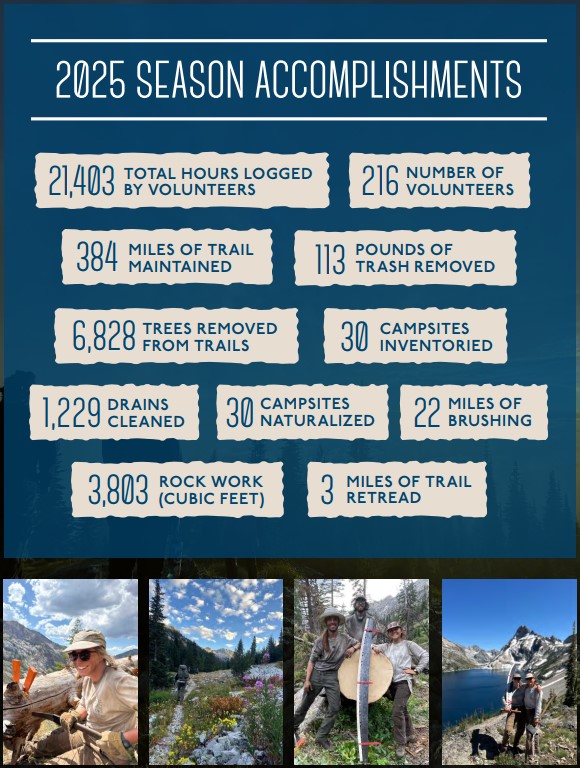
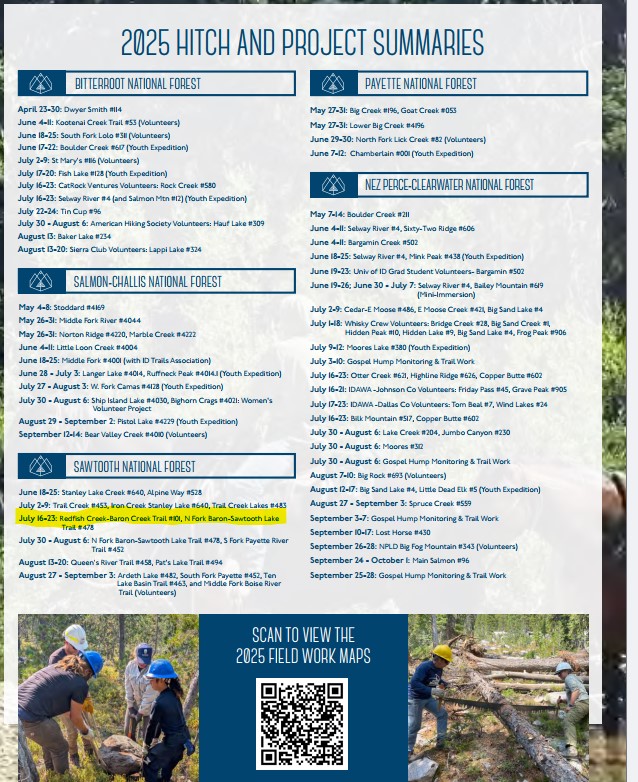
The SBFC has engaged with approximately 200 volunteers this year, both adults and kids, who focused on trail maintenance which included removing downed logs, cutting back brush on trails, and rebuilding tread that had been washed away from time or extreme storms.

The Sawtooth Society was founded in 1997 by a group of landowners, politicians, and recreationalists to assist in preserving the scenic and historical values of the 756,000 acre Sawtooth National Recreation Area (SNRA).

They work with, but independent from, the USFS to assist in maintaining the 900 miles of trails, provide funding for improvement projects, and serve as a liaison for local, regional, and national collaboratives.

In a typical year, they facilitate around 700 hours of volunteer work alongside their paid staff. Volunteers complete a variety of tasks — from stuffing envelopes to bucking trees in the backcountry. With federal funding cuts, the SNRA had its staff dramatically reduced from 34 full-time, non-fire staff to just nine.

The Sawtooth Society was perfectly positioned to help in this situation with its own trail crew infrastructure. They additionally raised $80,000 from supporters to double their trail crew capacity and provide visitor services at the SNRA Headquarters.

“We were able to hire the crew the USFS would have hired, maintaining collective decades of SNRA trail knowledge that would have been lost otherwise. Most importantly, this ensured that trails that are used the most would be open and accessible for the many types of recreation that takes place in the SNRA,” Director of Operations Michael Hoover said.

The Central Idaho Mountain Bike Association (CIMBA) is based in the McCall area. With only two paid employees, the rest of the work is done by volunteers. CIMBA has helped to maintain mountain bike trails at places such as Ponderosa State Park, Brundage Mountain Resort, USFS land, and Jug Mountain Ranch. In the past, they have also partnered with the Central Idaho Trail Riders Alliance on projects. If you like to recreate — whether it’s motorcycles, mountain biking, hiking, or trail running, Trail Coordinator Jared Alexander stressed the importance of getting involved with your local volunteer groups.

Alexander also praised all of the people, or “trail fairies,” that aren’t even out with an organization who help clear trails on their own free time. All of us can be stewards of our public lands.
https://idahocapitalsun.com/2025/11/19/balance-of-idahos-state-wildfire-suppression-fund-drops-to-15-million-after-2025-season/

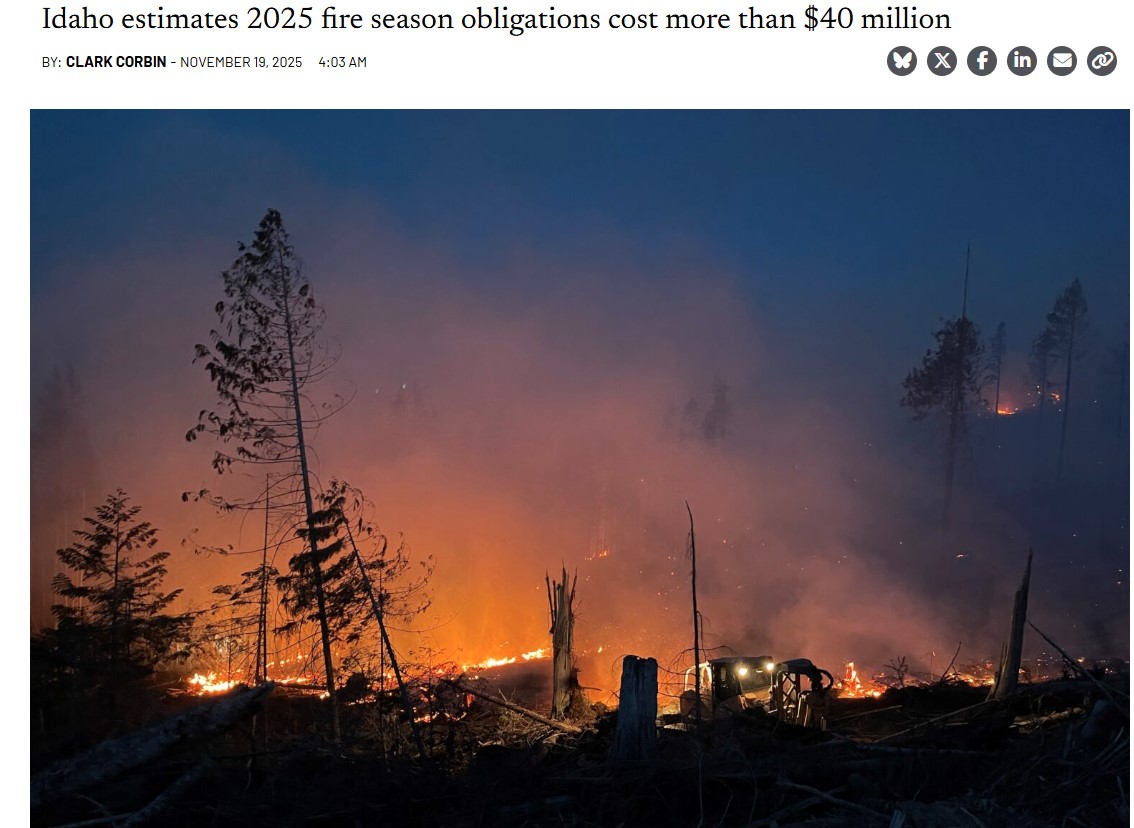
While the state continues navigating budget holdbacks and revenue shortfalls, the balance of Idaho’s wildfire suppression fund is expected to drop to $15 million after closing the books on the 2025 wildfire season, state officials said Tuesday.  Idaho’s expenses for the 2025 wildfire season netted about $40.6 million, Idaho Department of Lands Director Dustin Miller said during Tuesday’s meeting of the Idaho State Board of Land Commissioners, which is frequently referred to as simply the Land Board. Miller told the Land Board that Idaho incurred about $59.3 million in expenses as of Nov. 3, but the state expects to recoup about $18.6 million through reimbursement agreements and partnerships – resulting in a net total of about $40.6 million.

Miller estimated that leaves the state’s wildfire suppression fund with a balance of about $15 million heading into the 2026 wildfire season.

That amount of money is likely not enough to pay wildfire bills in 2026. Miller estimated that the state will be on the hook for almost $5 million next year in fixed costs at the beginning of the season before the first fire even starts.  Idaho Gov. Brad Little said costs could be well over $10 million when the cost of contracting for helicopters, crews and other equipment are added – all before fighting a single wildfire.

That means state officials could have to find additional money to fight wildfires at a time when all state agencies – other than the K-12 public school system – are navigating mandatory budget holdbacks of 3% and the state budget is projected to end the current fiscal year with a budget deficit estimated at $58.3 million, the Idaho Capital Sun previously reported. As state revenues come in below projections, the Idaho Legislature’s powerful budget-setting committee, the Joint Finance-Appropriations Committee, or JFAC, has signaled that next year’s budgets will be tight, and legislators will generally focus more on trimming budgets rather than approving new budget expenses to avoid running a budget deficit, the Sun previously reported.

Idaho governor said he doesn’t want state going into debt fighting wildfires

Little has favored pre-funding the state’s wildfire suppression fund to make sure money is available upfront, ensure firefighting operations are not shortchanged or interrupted and to avoid going into debt fighting wildfires.

“Backing the Fire Suppression Deficiency Fund means Idaho’s wildland firefighters can focus on aggressively protecting timber, lands, property and people without funding delays, and lawmakers can enter next year’s budgeting cycle without a deficit due to wildfire suppression,” Little and the Land Board members wrote in a Feb. 18 letter to JFAC.  At the beginning of the 2025 legislative session, Little requested $60 million to build up the wildfire suppression fund, but the Idaho Legislature agreed to provide $40 million.  With the balance of the wildfire fund now dropping to $15 million, Little said Tuesday he is trying to decide how much funding he needs to request to be prepared to fight wildfires in 2026 so the state does not have to use deficiency warrants to pay the bills. Little and other state officials have compared the deficiency warrant process to running up credit card debit to pay for essential state services.

“By the time you contract for helicopters and the airplanes and the crews and everything, it’s well over $10 million,” Little said Tuesday. “I’m just trying to figure out what the budget request needs to be so we don’t have to do deficiency warrants.”

Compared to the more severe 2024 wildfire season, Idaho’s wildfire costs were lower this year at an estimated $40.6 million. In 2024, Idaho’s wildfire costs were about $58 million, the Sun previously reported.

The Land Board is made up of Little, Secretary of State Phil McGrane, Idaho Attorney General Raúl Labrador, Idaho State Controller Brandon Woolf and Idaho Superintendent of Public Instruction Debbie Critchfield.  The Land Board provides direction to the Idaho Department of Lands, which is responsible for fighting wildfires on state land.

The Idaho Legislature will set the fiscal year 2027 budget for the Idaho Department of Lands during the 2026 legislative session, which begins Jan. 12  at the Idaho State Capitol in Boise.


LINK TO VIDEO

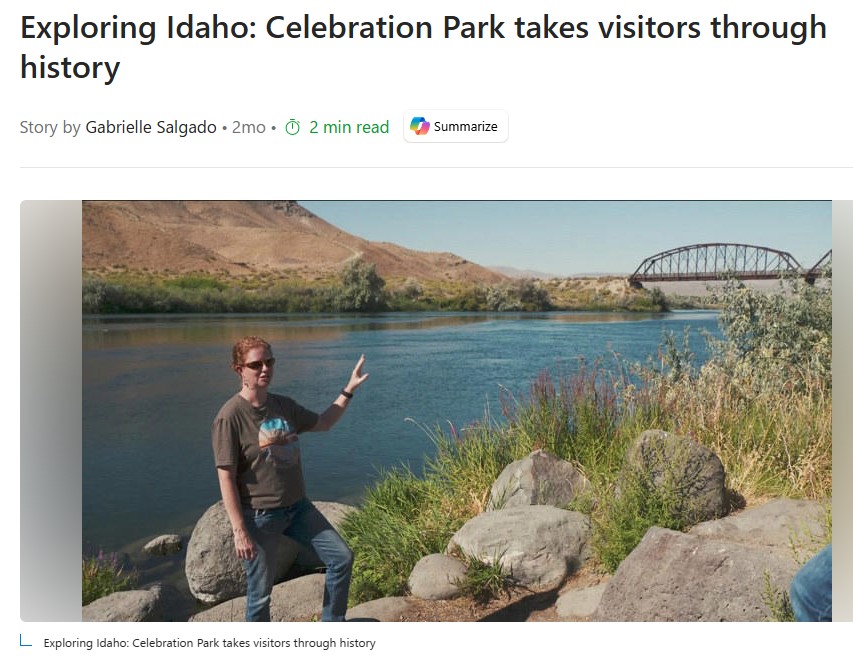
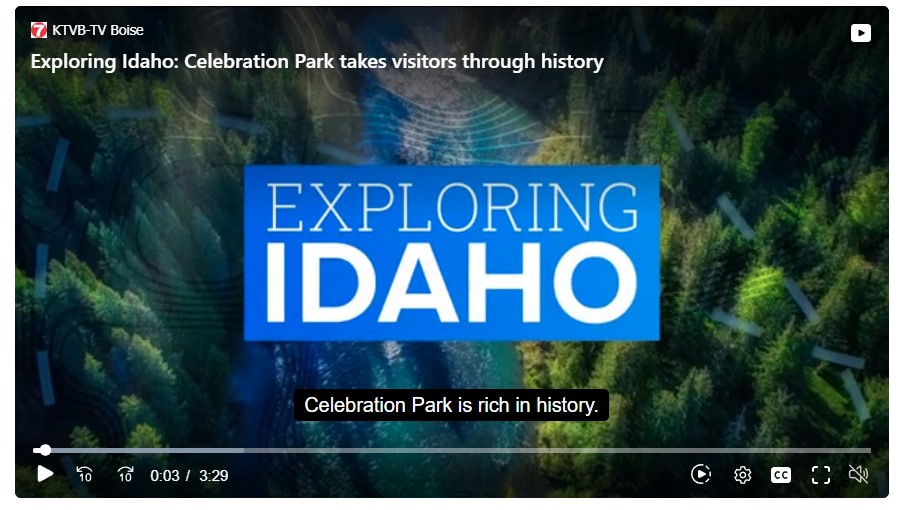
Celebration Park in Canyon County takes visitors on a journey through history, dating back 17,000 years.

Running along the Snake River, the park’s history starts with the geological event that shaped the landscape, the Bonneville Flood.

“A volcanic eruption, they think, diverted more water into Lake Bonneville, causing it to go up higher and hit a soft sediment layer at Preston, Idaho, and then it burst through and went up to the Snake River,” said Nichole Schwend, Canyon County director of culture and natural resources. The prehistoric flood knocked down basalt columns. The pressure from the water rounded the columns into boulders, Schwend said.

The Shoshone, Bannock and the Northern Paiute people later chiseled petroglyphs onto the boulders, Schwend said. The meaning of the petroglyphs is up for interpretation.

“We can’t say for sure what any of them mean,” Schwend said. “You can split those into abstract which nobody agrees on, and then you could talk about them in representational which everyone kind of agrees on.”

The images on the rocks appear to change daily based on the angle of the sun, Schwend said.

For those looking for interactive history, Celebration Park also has atlatl throwing. An atlatl is a Native American spear-like weapon used for hunting. The atlatl predated the bow and arrow.

“These are generally the hunting tool that came before the bow and arrow,” Schwend said. “Sometimes when the bow and arrow arrived in areas it completely replaced the atlatl, other times they overlapped.”

Today, visitors can attempt to shoot a mammoth on hay bales.

On the other side of the park stands the Guffey Railroad Bridge, connecting Canyon and Owyhee counties.

The bridge was built in the late 1890s to transport iron ore from Owyhee County to Canyon County through an electric railroad, Schwend said. When the bridge was completed, it was the tallest railroad bridge in the country.

Unfortunately, the bridge came too late.

“The mines panned out,” Schwend said. “A load of ore never went across.

After the mining rush, the bridge was used to transport livestock. It is said to have carried more livestock than any other rail line in the west.

In the 1940’s Union Pacific pulled all train rails from the bridge, and Owyhee County made plans to scrap the bridge entirely for safety reasons, Schwend said.

“This just became a bridge with huge eye beams across for a long time, and they were worried that, you know, it was inviting somebody to get hurt,” Schwend said.

The bridge was saved by the Idaho Historical Society, which later sold it to Canyon County for a cheap price.

“They bought the bridge from Owyhee County and Tom Bicak, who’s the one who created this, this park here, he knew immediately that he needed that bridge,” Schwen said. “They agreed to sell it to him for $1.”

Today, the bridge is used as a pedestrian bridge, connecting Canyon County to hiking trails on the Guffey and Black buttes.

MEETING LINK    //    REGISTRATION LINK

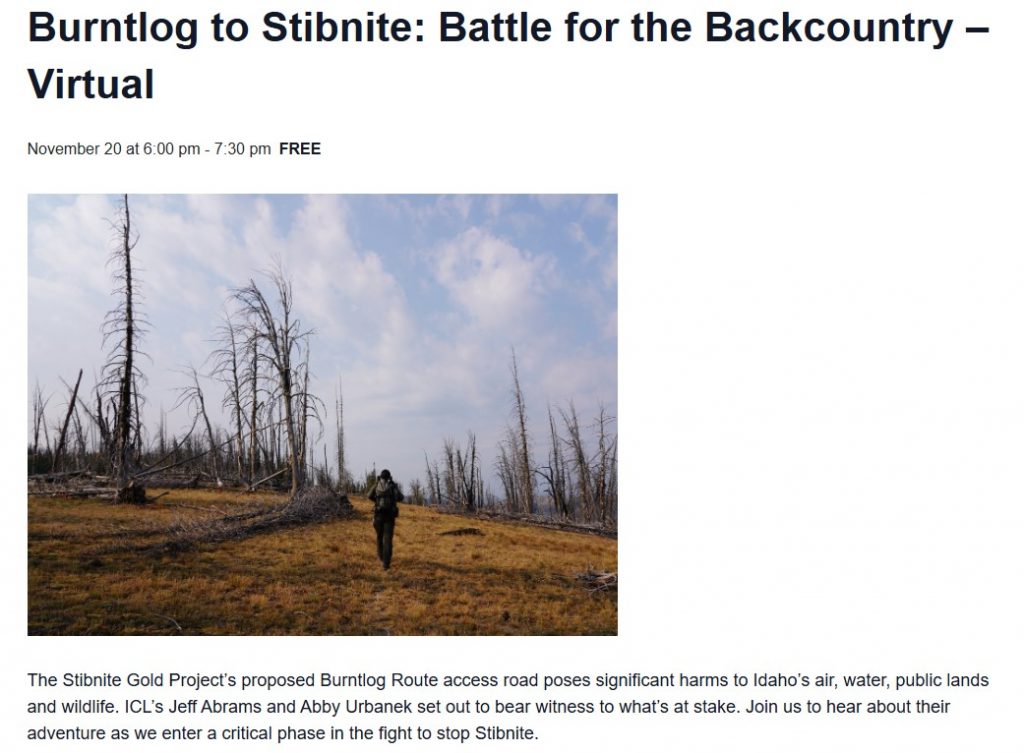
Stibnite Gold Project

LINK TO WEB SITE


LINK TO PAGE

wfa-schedule-january-2025
2021_wm_student_agreement_rev_jan_2022

2026-BCH-Convention


SBFC-Wildest Place_Fall 2025_Final-Web

LINK TO EDUCATION PAGE


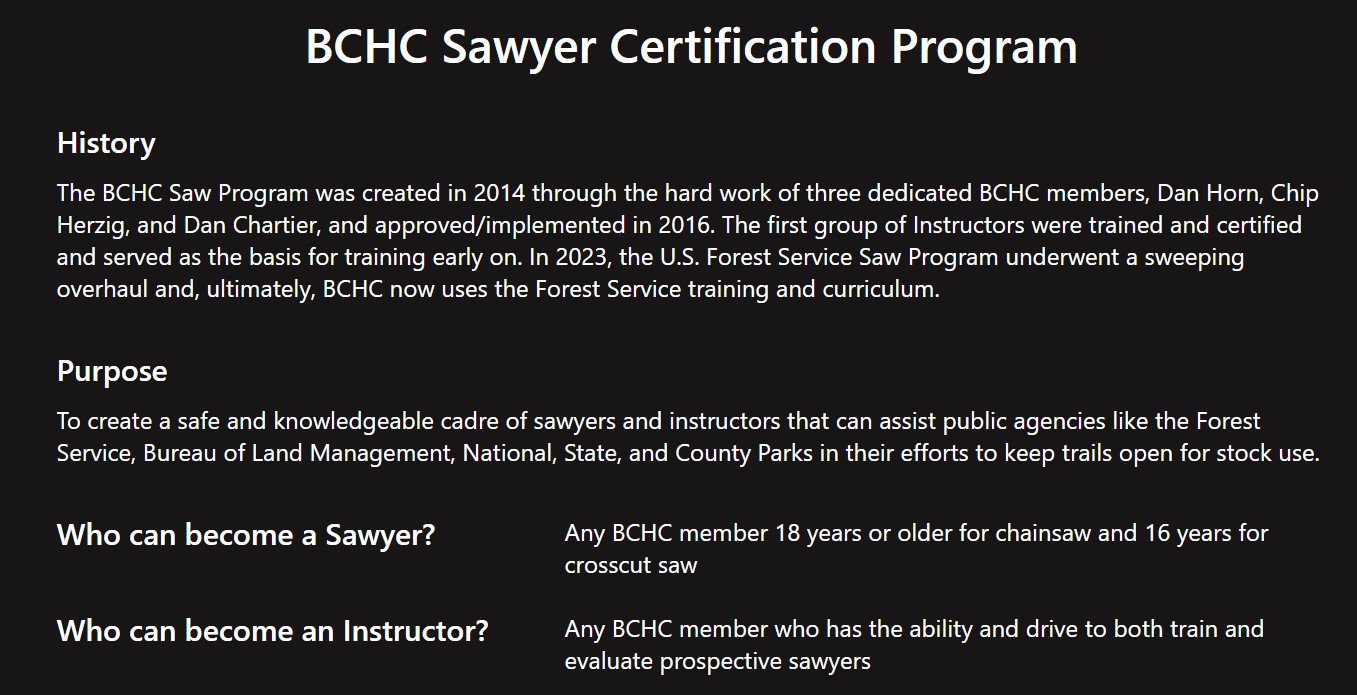
LINK TO SAW PROGRAM PAGE

The BCHC saw program was the framework that the BCHI saw program was built. They were a great help in getting our program started.