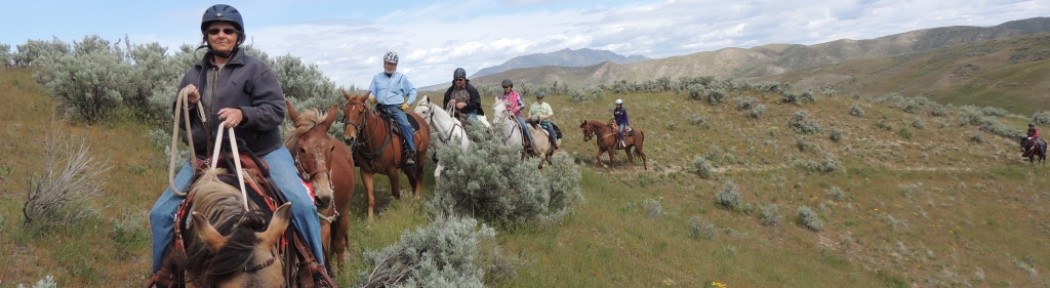
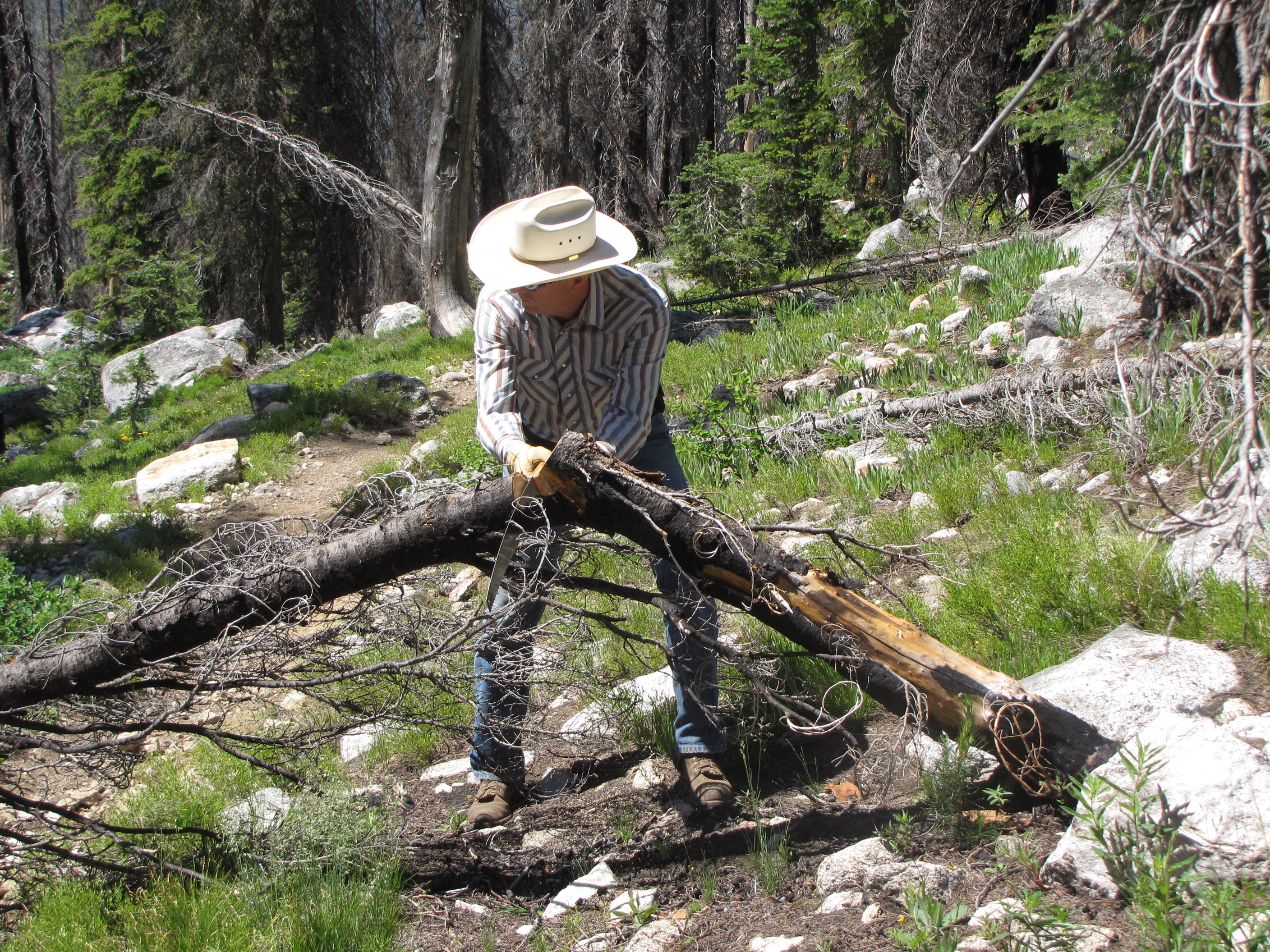
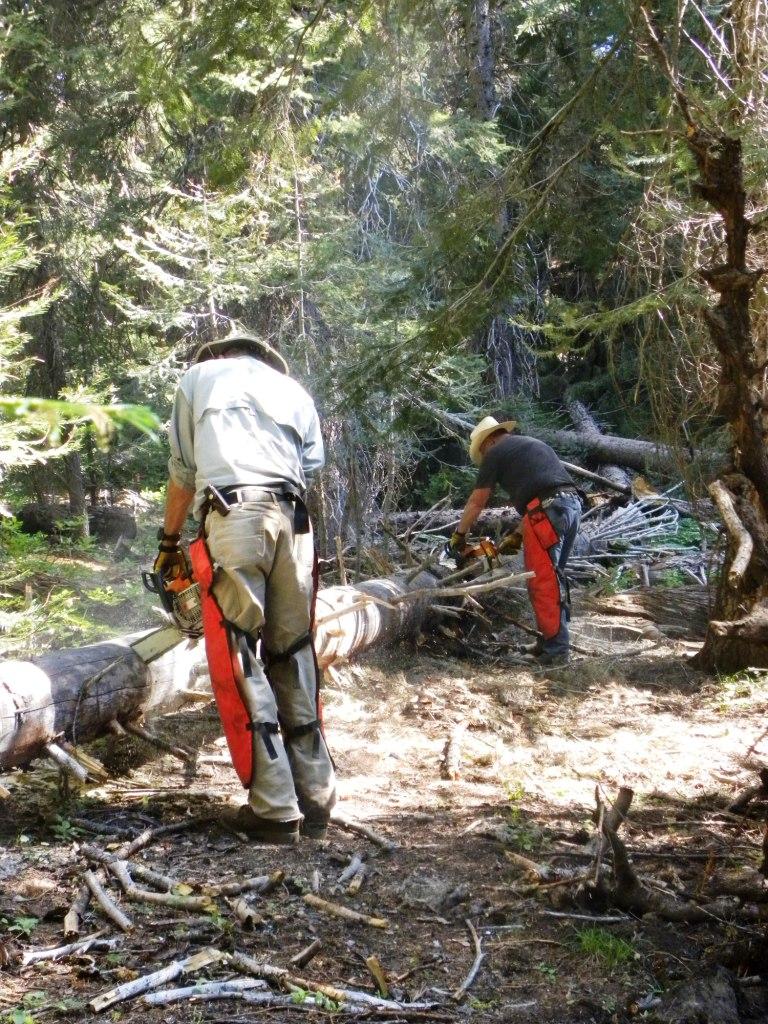
Our boots on the ground trail clearing efforts, educational, and political (lot of time attending public meeting) all paid off. The 2013 year was very successful and sets us up well for 2014. Great job everyone. Let’s see if we can top this in 2014!
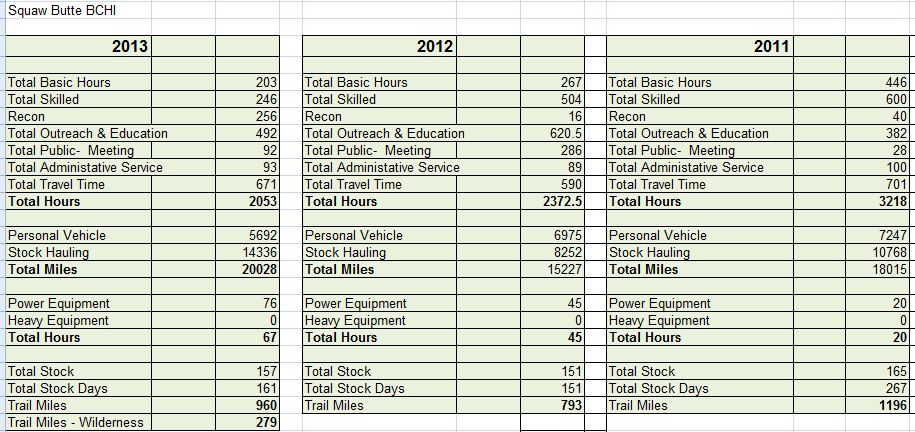
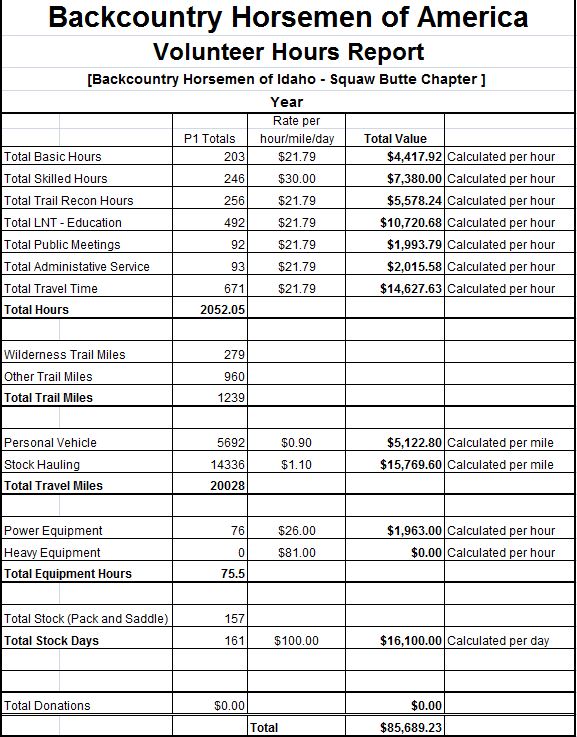
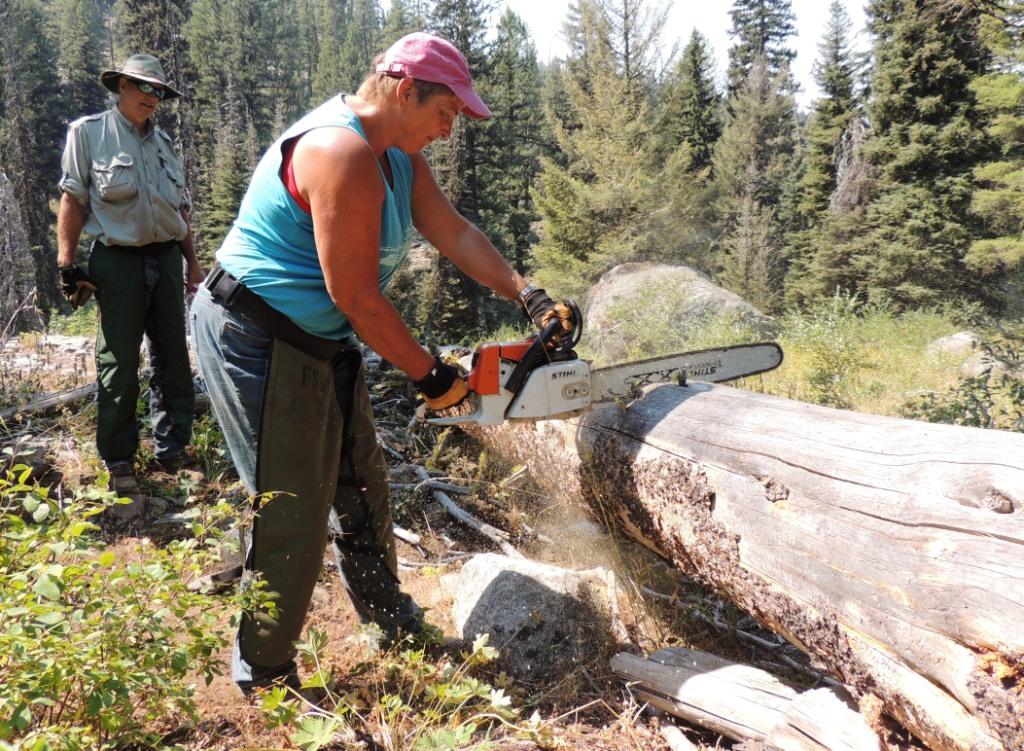
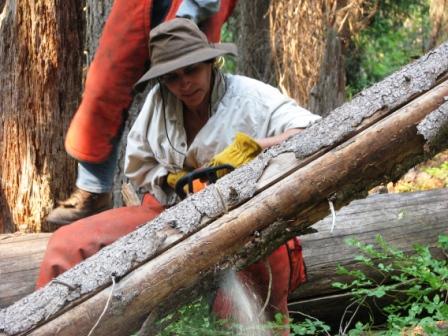
Our boots on the ground trail clearing efforts, educational, and political (lot of time attending public meeting) all paid off. The 2013 year was very successful and sets us up well for 2014. Great job everyone. Let’s see if we can top this in 2014!
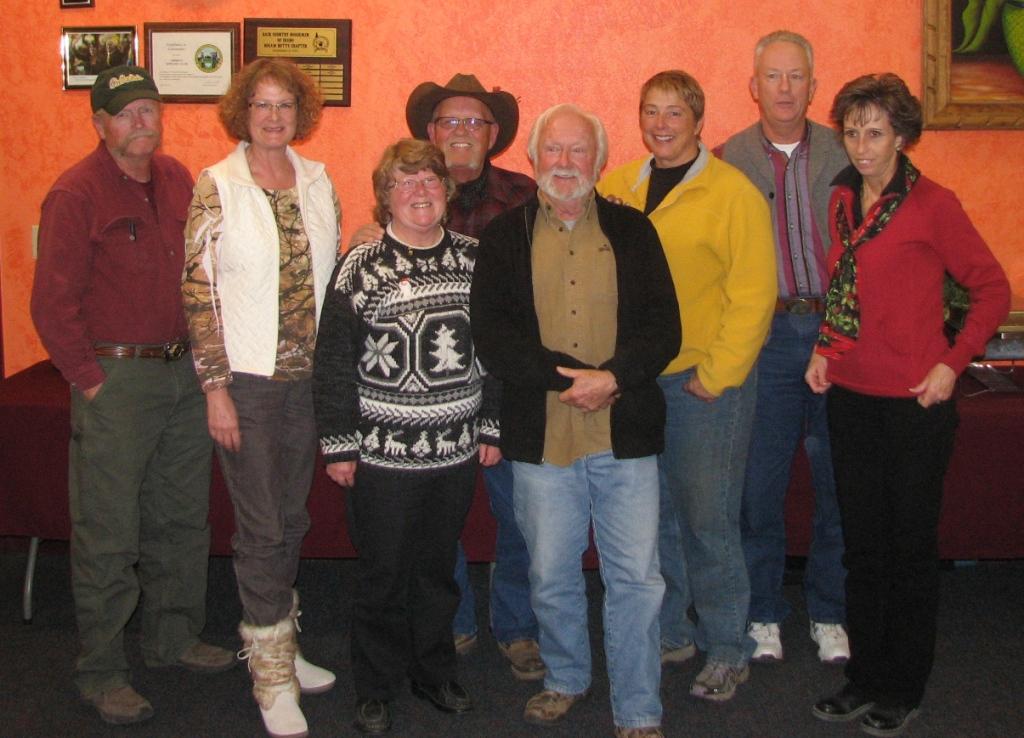
President Kay Ryan
VP Bill Holt
Treasurer Bill Conger
Sec team Linda Erickson, Shelly Duff
State Board Robbin Schindele, Phil Ryan, Marybeth Conger
Foundation Roger Segers
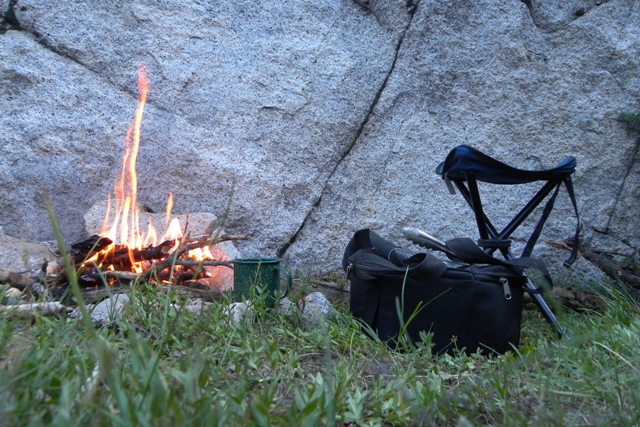
Start preparing now for next seasons camp! Check out this website for some pretty cool camping tips and tricks. From how to make your own lantern out of mountain dew to converting a coffee can into the perfect container for protecting that all important roll of toilet paper.
http://www.buzzfeed.com/peggy/camping-hacks-that-are-borderline-genius

The Problem
America’s National Forest trails are squeezed between the demands of an enthusiastic public and the challenge of shrinking budgets and a lack of attention. According to the comprehensive June 2013 study by the Government Accountability Office, The Forest Service trail maintenance backlog exceeds a half-billion dollars, and only one-quarter of the agency’s 158,000 miles of trails meets agency standards for maintenance. Nearly two-thirds of these trail miles receive no maintenance at all.
Meanwhile, National Forest trails are giving back to American communities at unprecedented levels: since 1980, trail use has increased nationwide by 376% as people seek exercise, relaxation, and adventure on America’s public lands. Forest trails help fuel a $646 billion recreation industry. The constituency of people supporting trails is enthusiastic and energetic, bringing people together through unique partnerships that link hunters, horsemen, hikers, anglers, bicyclists, conservationists and many others in service of our national trails system. Today, nearly a quarter of Forest Service trail maintenance is provided by volunteers, state funding, and other federal and non-federal sources.
The trail network on our national forests is simply too important to let lapse into ruin and disrepair. We are aware that additional resources are necessary to fully maintain our nation’s trails and are working to secure additional funding for trail maintenance. But in a time of limited budget, there are things that the agency can do now to improve trail maintenance, and the Forest Service needs to look for creative solutions to supplement limited funds, empower volunteer networks, and ensure existing resources are used more efficiently.
The Solution
The ideas we support to address these challenges and improve and safeguard our rich treasury of national forest trails include the following:
• Increase transparency in the trail maintenance program by providing an annual breakdown of how the US Forest Service’s trail maintenance budget is used. This breakdown should detail amounts retained for overhead costs and the resulting amounts that are used for actual trail work. This disclosure will allow the Service and the public to consider whether the amount of overhead can be reduced to enable the agency to do more trail work on the ground;
• Institute national-level goals and targets for trail maintenance and stewardship that will be used as performance measures; create incentives that reward exceptional leadership and service on trails among agency staff;
• Modify the “Volunteer in Forest” program to more evenly distribute the risks associated with the use of volunteers throughout the National Forest System, limit the liability carried by any single forest, and lower the liability barriers for using volunteers to assist with trail maintenance and stewardship;
• Provide national direction and better coordination to maximize the utilization of fire crews for trail work whenever possible;
• Prioritize the selection, training, and retention of skilled and motivated trail staff as well as leadership on trails at higher levels of the agency;
• Develop a USFS Enterprise Team focused on addressing the problems and challenges of existing national forest trails – including working more effectively with partners and providing rapid response crews to remediate severe and sudden trail impacts;
• Standardize national protocols for training and certification on chainsaw and crosscut saw use and expand sawyer training capacity beyond the agency to include skilled non-agency partners; and
• Develop policies, procedures, training, and leadership that would allow volunteer crews to operate more independently, effectively, and efficiently, regardless of the presence of US Forest Service staff.
National Forest Trails Stewardship Administration Concepts Proposal
National Forest Trails Stewardship – FINAL Concept Paper Oct 2013
TRAILS Legislation sign-on letter FINAL TRAILS Admin sign-on letter FINAL
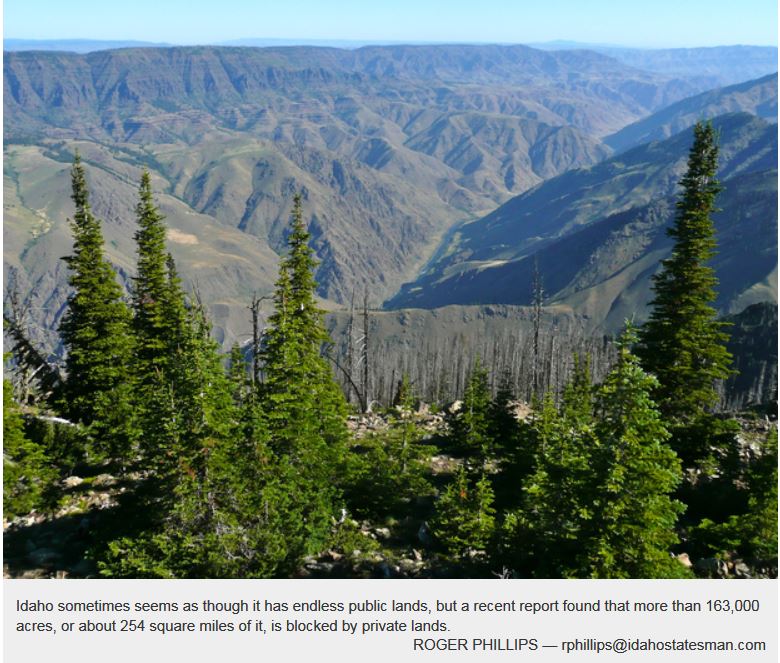
If you live in Idaho and play outdoors, chances are good you’re doing it on public land. They are critical to our quality of life. Outdoor recreation adds billions to the state’s economy and is a magnet for newcomers.
Public lands are a precious resource, and as more people go outdoors, those public lands get more pressure. We could always use more, but buying private land creates problems of its own.
What if we could get more public lands without doing that? It’s possible by getting access to public lands that are currently blocked by private lands.
According to a recent report by the Center for Western Priorities, Idaho has 163,314 acres of inaccessible public lands.
|
Excerpted from Charlie Russell—The Cowboy Years By Jane Lambert, Stevensville, MT |
Living on sourdough bread and coffee…
Con Price has a long recollection of spending the early winter (1890) with Charlie and three others. He wrote:
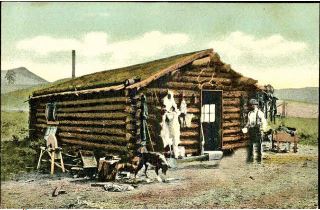
“They throwed together a log cabin on Warm Spring Creek, in the Judith Basin country… It had a dirt roof, dirt floor. Our cooking utensils were a frying pan and a coffee pot, and very little grub, as we were all broke when the winter came on.
“No stove, we cooked on a kind of fireplace we built. No table, a few tin plates, empty corn cans for cups. We lived on sourdough bread and coffee, and once in awhile we’d find a maverick. We had one horse among all of us, and we would take turns saddling that horse, and go out and look for some meat.
“There were thousands of cattle everywhere, and I don’t think we looked too close to see if an animal had a brand or not. We called it a maverick, no questions asked. The cowmen weren’t too severe about a cowboy eating a piece of their meat once in awhile, as long as they didn’t make a business of selling it. read more
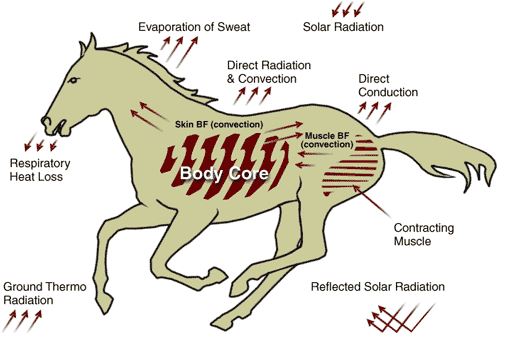 In order for a mammal to survive, internal body temperature is kept within a very narrow range. If the temperature exceeds these limits either above or below, the chemical reactions on the cellular level function improperly. Or they stop functioning at all. Fluctuations outside of the normal temperature range result in health problems or death of the animal. Mature horses maintain their internal body temperature at a range around 38℃. Foals, rapidly growing youngsters, pregnant and lactating mares have a higher norm of their internal body temperature (Hines, 2004). Most horse owners are aware of the damage and crisis inherent with fever states. Few horse owners realize how well adapted horses are to deal with cold when certain aspects of their lifestyle are in place for them.
Over thousands of years, the wild horse has spread over the entire world. Whatever place in the world they live, the horse was exposed to constantly changing temperature — through a day/night rhythm or a seasonal rhythm. Yet even today wild and semi-wild horses, as well as domestic ones, provided with species appropriate living conditions, survive perfectly any conditions Nature exposes them to. Whether it is the north of Europe, or Australian deserts, the horse is exposed to all of Nature’s changing elements — wind, sun, rain, snow, fluctuating temperature, etc. Never in nature seeking such excessive enclosed shelters as man-made stables and barns nor caves, never in nature seeking ways of covering themselves with fabric. The horse has naturally evolved ways of thriving. Read More
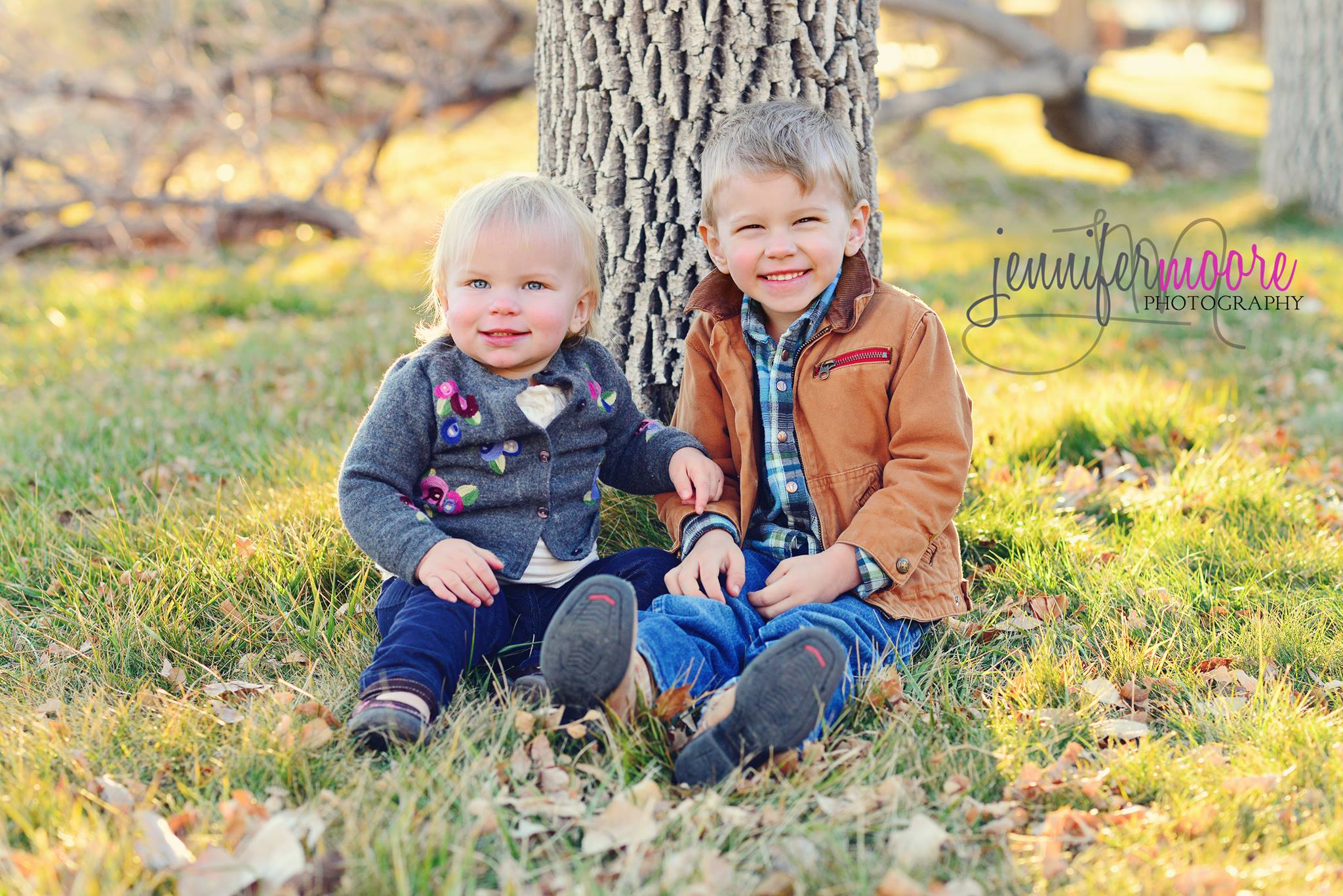
Sophia & brother Emmett
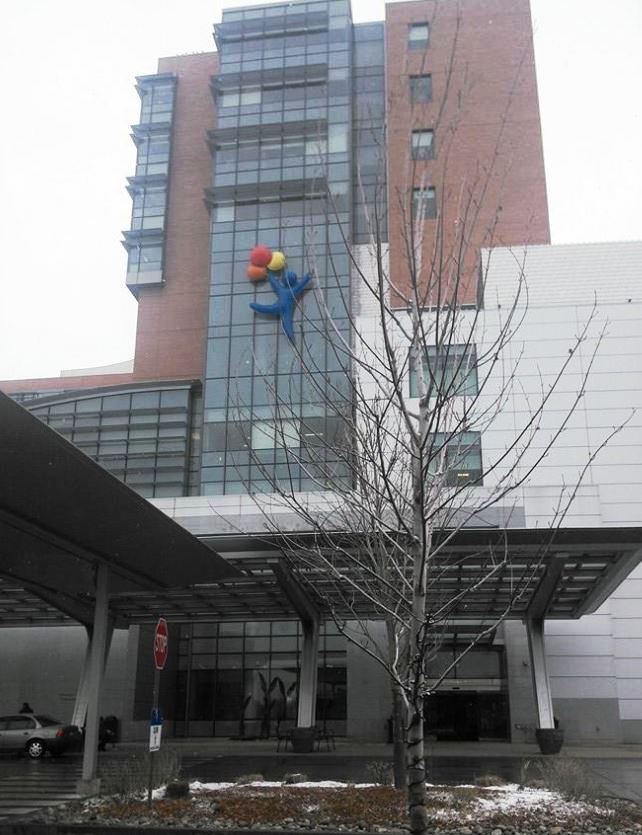
On Saturday November 23, 2013 Squaw Butte Chapter member Laurie Bryan’s granddaughter Sophia fell about 5 feet onto the concrete basement floor. She has an orbital fracture and a fractured skull and the biggest shiner ever. She is conscious though now and responding well. She recognizes everyone and seems to be healing at a remarkable pace. She is just over a year old – which is in her favor. Laurie and her daughters family are with Sophia in Denver Colorado – actually Aurora – at the Children’s hospital. They are staying at the local Ronald MacDonald house. The Squaw Butte chapter of BCHI is setting up a fund for anyone who would like to donate to help with expenses while Sophia is being treated in Denver. To donate to the Sophia fund, checks can be sent to Squaw Butte Back Country Horsemen, PO Box 293, Emmett, ID 83617 or brought to the December meeting or the end of season party.
Update December 5th– Sophia is home in Wyoming now, after extensive treatment and evaluation. She is doing very well and the doctors feel she has an excellent chance of full recovery. She will be returning to the Children’s Hospital in the new year for more evaluation and treatment.
Update December 18th – Sophia and her mother were in Denver for additional testing and treatment this week. Athena, Sophia mother said she did really well and will be completely in the clear the end of February!
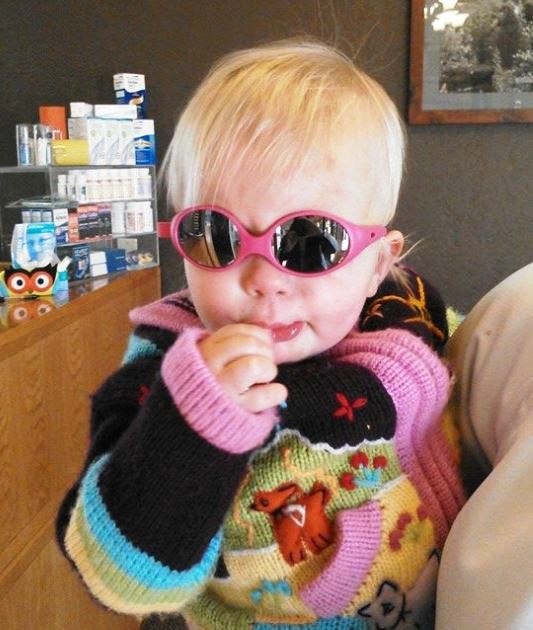
Sophia’s sporting shades after smoking the eye appointment. No hemorrhaging behind the eye and appears to have no vision damage. First of many follow ups and doing well.
Update January 17 – Sophia’s mother Athena said the Dr’s told her she will be in the clear by the end of February and can lead a totally normal life including roller derby and mutton busting.
The family wants to thank everyone who donated to the fund, your support and concern was appreciated.
In the December Issue of Western Horseman, author and photographer Jennifer Denison wrote a very interesting piece about one of the two remaining Pack Strings run by the US forest service.
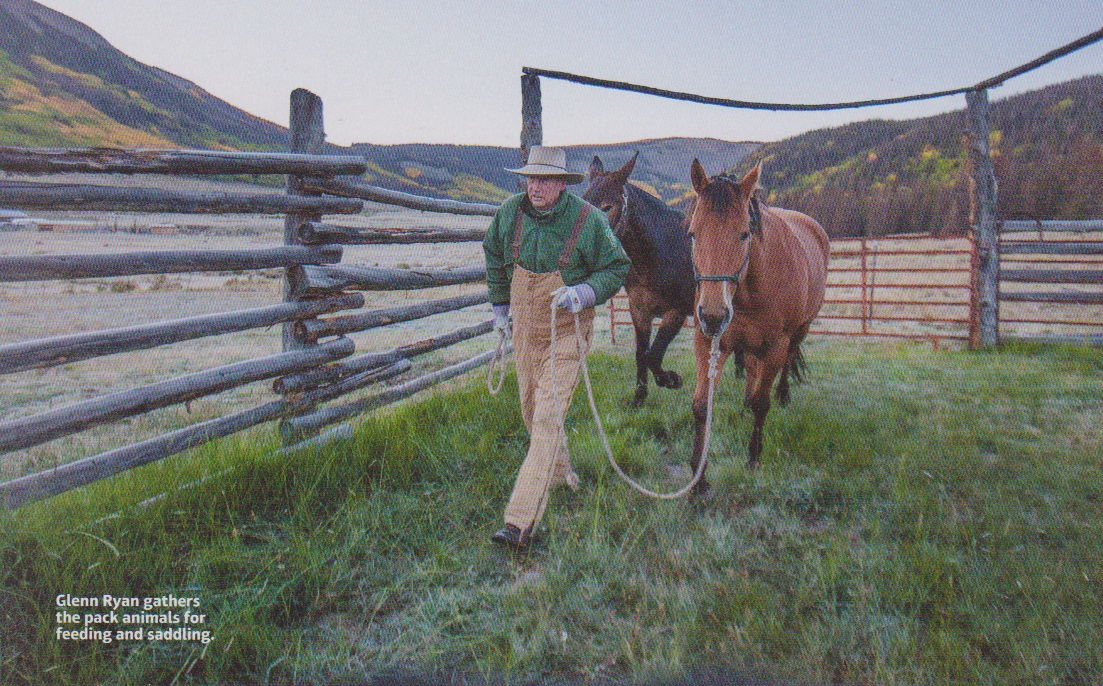 The South Platte Ranger District is home to the Rocky Mountain Specialty Pack String based at the AG Ranch in Shawnee, Colorado. Horses and mules based out of this station still ply trails and aid their packers in teaching lessons on horsemanship, packing and low impact techniques for backcountry use. The packers of the Rocky Mountain Specialty Pack String provide specialty packing and educational outreach throughout the Rocky Mountain Region.

The Rocky Mountain Region Specialty Pack String consists of eleven highly trained pack mules and two saddle horses along with their equipment and tack. Working as two mule strings, the pack string uses special packing equipment such as gravel bags, lumber racks and swivel bunks to carry loads into work sites. Able to be utilized anywhere within the United States, the RMRSPS uses two semi-tractors with 27 foot trailers to haul the mule teams.
The pack string supports a wide variety of projects on the national forests, including hauling materials and gear to support Forest Service and volunteer trail crews, assisting in building bridges and other structures, packing sand or gravel for trail maintenance and reconstruction, loading timbers, hauling junk out of backcountry areas and hauling fish to stock remote streams and lakes.The pack string is authorized two packers – a lead packer and an assistant – to accompany the string to shoe, pack, lead and care for the livestock. In addition to scheduling work to support on-ground projects, the packers also conduct a variety of classes such as packing and “leave no trace” training, as well as providing educational outreach presentations to the public about the pack string, its history, capabilities and uses. Finally, the packers and their mules support a variety of community events, such as parades, rodeos and fairs.
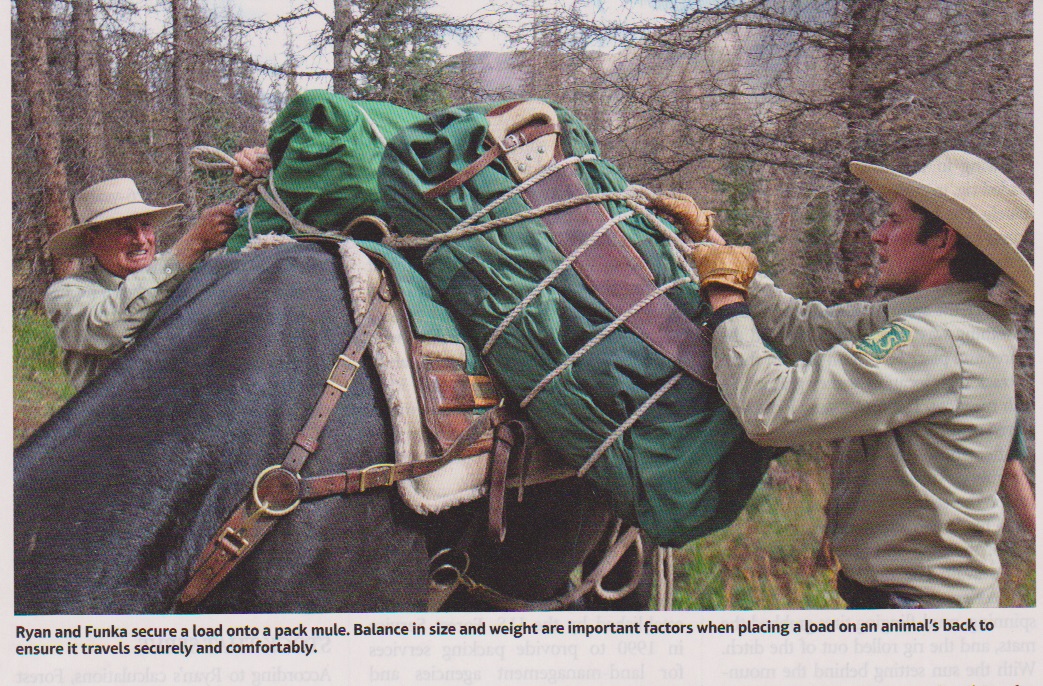 Packing a mule string … some history & background
Pack strings are valuable tools in managing the 191 million acres which make up the national forests, America’s Great Outdoors. These lands were set aside over 100 years ago to provide for the needs of the American people in ways that also protect the environment.
Today, while there are numerous smaller mule teams serving the wilderness needs of individual forests, there are only two full regional specialty pack strings serving U.S. Forest Service needs throughout multiple States: (1) the Rocky Mountain Region Specialty Pack String (Region 2), supporting forests in Colorado, Eastern Wyoming, Nebraska, Kansas and South Dakota; and (2) the Northern Region Pack Train (Region 1), serving Montana, Northern Idaho, North Dakota and Northwestern South Dakota.
Mules in the Forest Service
Cowboys, trappers and woodsmen–outdoorsmen of every variety–filled the early forest ranger ranks. A good pack animal was an equal partner in protecting the forest reserves from timber, theft and fire. Often, that animal was a mule. Mules were preferred because they possess intelligence, agility and stamina. It was only a matter of time before several pack mules were tied together, creating a working pack string. These working strings became lifelines to the crews who fought fires, carved trails, built fire towers and bridged rivers in the backcountry.
Jennifer Denisons Story in Western Horsemen / Glenn Ryan thought on use of pack string
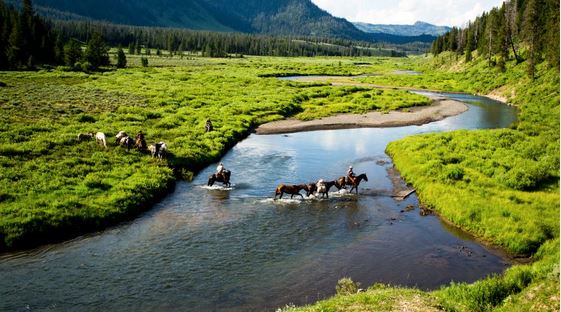
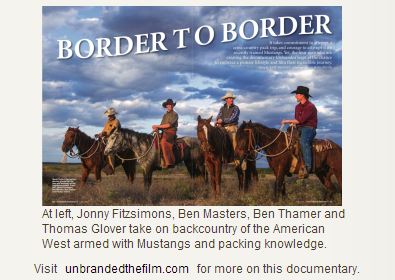
3000 miles, 12 horses, 5 states, 4 men, 1 goal: to complete a 6-‐month journey that was once a reality for the western frontiersman and still stirs in the human spirit. UNBRANDED follows four young men as they take on a monumental challenge that will change them forever.
Having recently graduated from Texas A&M, Ben Masters, Jonny Fitzsimons, Ben Thamer and Thomas Glover are delaying their entry into the job market to embark on the adventure of a lifetime. Ben Masters’ dream is to ride horses through the great American west from Mexico to Canada. It took no time to convince his college buddies to go along with him. Each one begins the adventure with his own dreams to fulfill, knowing full well that hardships and hazards come with the territory. They’ll face unrelenting heat, freezing temperatures, hail and lightning storms, rattlesnakes, Grizzly bears, raging river crossings and high mountain passes buried in snow. We will travel with them as they blaze a trail through Arizona, Utah, Idaho, Wyoming and Montana. The backdrop for this incredible journey will be our majestic public lands, including the Grand Canyon, Yellowstone, and the Bob Marshall Wilderness Complex.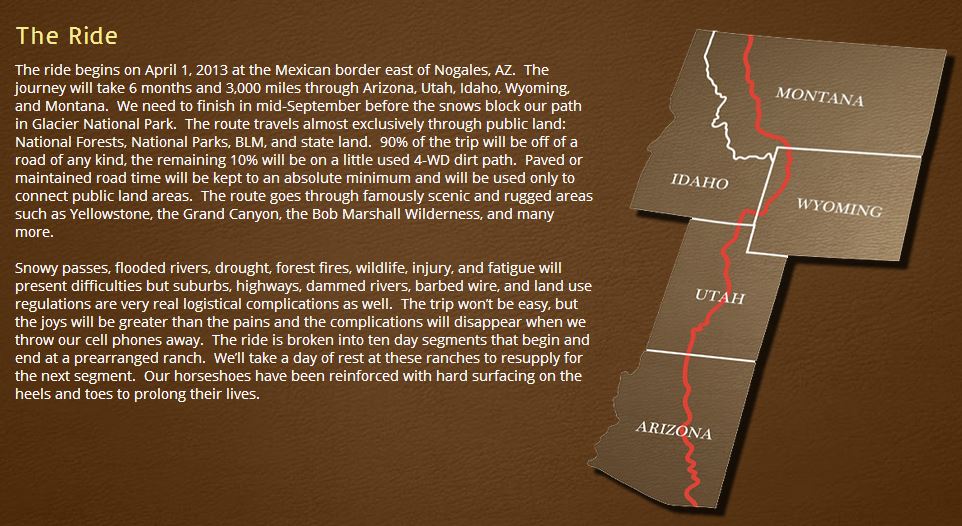 (Blog Entry) It has been a relatively smooth trip so far, and we have covered 2,000 miles of our planned 3,000 mile-plus trip. Currently, we are bedding down at Red Rock Ranch, a guest ranch on the Gros Ventre River just east of Jackson Hole, Wyoming. The sun sets over the Grand Teton Mountains here. Looking north, we’re about to go through one of the largest expanses of Wilderness in the lower 48. For the next 300 miles we will cross only two roads, see no power lines, very few people and go through some of the most incredible landscapes in the world.
Our route will take us through the Bridger-Teton National Forests, the Teton Wilderness, Yellowstone National Park, Gallatin National Forest and the Absaroka-Beartooth Wilderness. We’ll pass Hawk’s Rest—the furthest point from a road in the lower 48 at 33 miles—Yellowstone Lake, dozens of thermal hotspots, hundreds of bison, Two Ocean Pass—the only place where water splits to go to the Pacific and to the Atlantic—and arguably the best Cutthroat Trout fly fishing in North America. Excited is an understatement, this is the jewel of the trip! Read the Blog
You don’t have to own your own horse or even be a frequent trail rider to recognize the importance of conservation of horse trails. Learn how you can become involved to help protect your local riding trails in a quickly modernizing world.
by Jocelyn Pierce
Now more than ever, horse trails need support to remain accessible for the public to enjoy them. An overburdened Forest Service is unable to maintain all the recreational trails available to the public, hindering equestrians from accessing many riding trails. Horses and use of the horse are a tradition in United States culture and history that must be preserved for future generations. Only by creating an awareness of the importance of our riding trails and the danger they are facing can we have an impact on the American public and land management agencies.
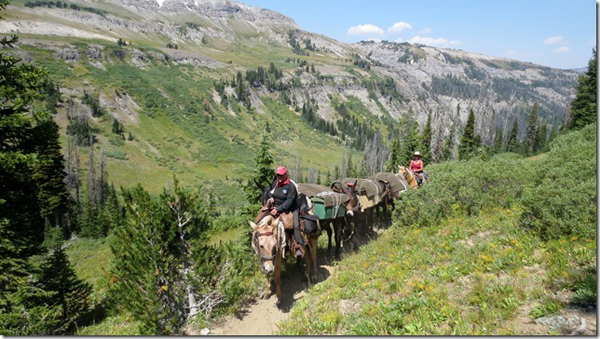
There are currently 155 national forests in the United States, with over 158,000 miles of recreational trails for horseback riders, hikers, bicyclists, and others to use. That’s roughly six times around the globe at the equator. With all those miles of trails, it’s difficult for the Forest Service to maintain all of them. The Government Accountability Office completed a study on national forest maintenance and found in 2012 only 37 percent of their 158,000 miles of trails had some level of maintenance performed and only one-quarter met the Forest Service’s standards. The Forest Service estimated their trail maintenance backlog to be $314 million in 2012.
Dennis Dailey has been involved in wilderness management for 40 years, and has seen a dramatic shift in the way trails are maintained since he began his career. Dailey worked for the Forest Service, and for Back Country Horsemen as Wilderness Advisor. He has an expert’s understanding of trail conditions. Dailey explains wilderness areas have seen much neglect over the last 60 years and some trails haven’t even been touched in ten years.
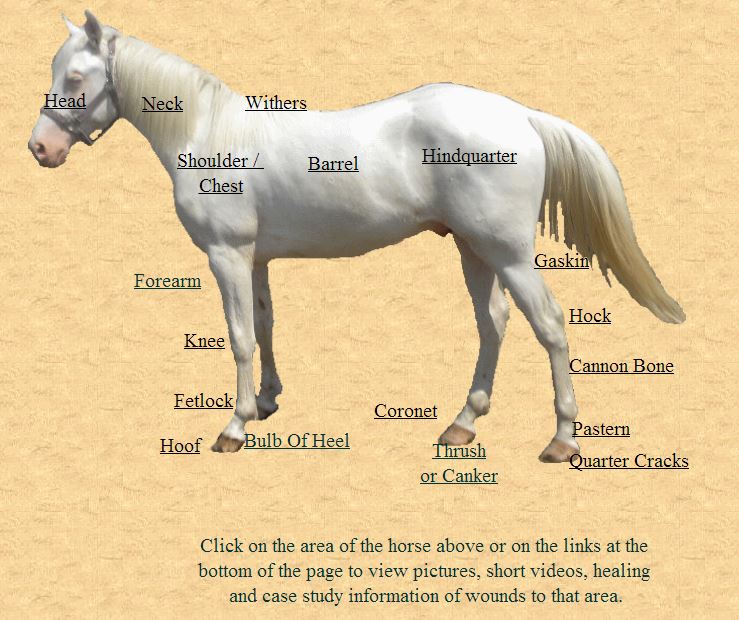 Definitions
Adhesion – ad·he·sion – A condition in which bodily tissues that are normally separate grow together. A
fibrous band of scar tissue that binds together normally separate anatomical structures.
Amniotic Sac – am·ni·o tic – A thin, tough, membranous sac that encloses the embryo or fetus of a
mammal, bird, or reptile. It is filled with a serous fluid in which the embryo is suspended.
Avascular necrotic bone – a·vas·cu·lar – ne·cro·tic – Not associated with or supplied by blood vessels. – Death
of cells or tissues through injury or disease, especially in a localized area of the body. Failure of tissues to
adhere correctly to the bone.
Catastrophic – cat·a·stroph·ic -Involving or resulting in substantial, often ruinous medical expense: a
catastrophic illness.
Suture – su·ture – The fine thread or other material used surgically to close a wound or join tissues.
Cellulitis – cel·lu·li·tis – A spreading inflammation of subcutaneous or connective tissue.
Debride – To remove debris, non-beneficial tissue, etc.
De-gloving – The peeling away of the skin and subcutaneous layer in an injury.
Epithelial border – ep·i·the·li·al – Membranous tissue composed of one or more layers of cells separated by
very little intercellular substance and forming the covering of most internal and external surfaces of the
body and its organs. The epithelial border is this tissue development along the outer edge of a wound.
Granulation bed – gran·u·la·tion – Small, fleshy, beadlike protuberances, consisting of outgrowths of new
capillaries, on the surface of a wound that is healing. Also called granulation tissue.
Laceration – lac·er·a·tion – A jagged wound or cut.
Lamina – lam·i·na – A thin scalelike or platelike structure, as one of the thin layers of sensitive vascular
tissue in the hoof of a horse
Macrophage – mac·ro·phage – Any of the large phagocytic cells of the reticuloendothelial system.
Neutrophil – neu·tro·phil – A neutrophil cell, especially an abundant type of granular white blood cell that
is highly destructive of microorganisms
Occlusive – oc·clu sive – To cause to become closed; obstruct: occlude an artery. To prevent the passage of:
occlude light; occlude the flow of blood. Chemistry To absorb or adsorb and retain (a substance).
Placental tissue – pla·cen·tal – A membranous vascular organ that develops in female mammals during
pregnancy, lining the uterine wall and partially enveloping the fetus, to which it is attached by the
umbilical cord. Following birth, the placenta is expelled.
Purulent – pu·ru·lent – Containing, discharging, or causing the production of pus: a purulent infection.
Purulent discharge.
Viable – vi·a·ble – Capable of living, developing, or germinating under favorable conditions.
Dr. David G. Jolly, DVM stepaheadfarm@yahoo.com – (501) 844-5050
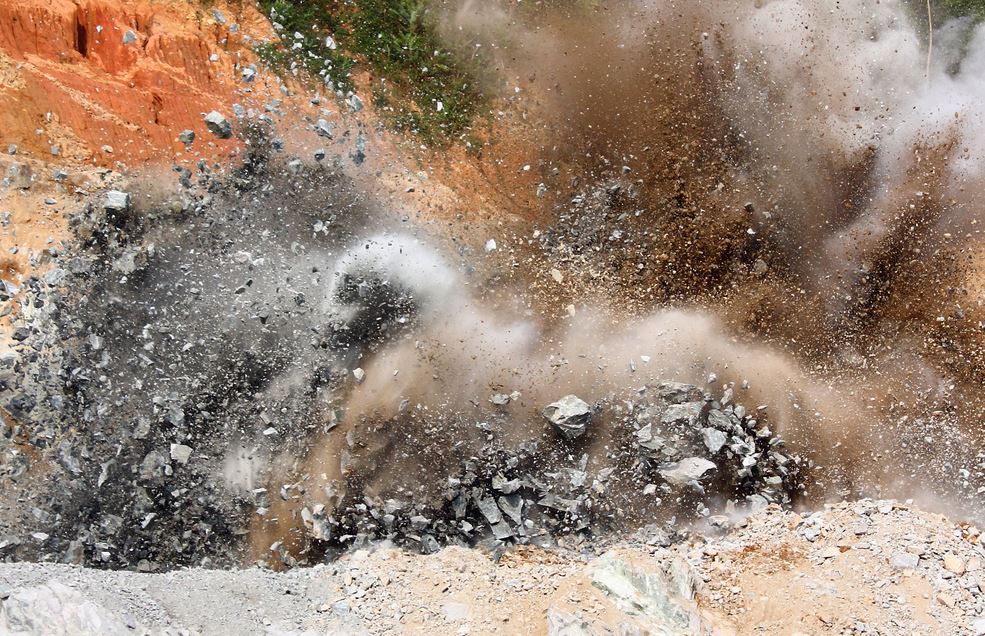
Partnering with the Bass Lake Ranger District, the Sierra Freepackers Chapter of Back Country Horsemen of California repaired a section of the Spring Cove Trail at Bass Lake in the Sierra National Forest. Their goal was to bring it up to acceptable standards by widening the trail, which required blasting out some rock that made the trail unsafe for horses. 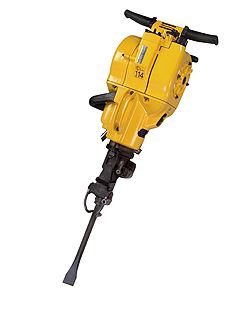
The Sierra Freepackers used mules to pack in a variety of equipment needed for the project including a specialized pionjar drill, Boulder Busters, and hand tools. The pionjar is a versatile gas powered tool used to drill holes in the rock.
Finally, don’t forget to browse through our website and our Facebook page for even more information about the SBFC.
 By ROCKY BARKER — rbarker@idahostatesman.com
MARSING – You wouldn’t have known from Owyhee County rancher Dennis Stanford’s presentation Wednesday about reseeding after a range fire that he is facing orders to remove up to half his cattle from public land.
Stanford is one of the ranchers the Bureau of Land Management told in January to reduce their seasonal grazing to meet rangeland health standards. He also is one of the key proponents of the Owyhee Initiative, formed by Owyhee County more than a decade ago to bring ranchers together with groups such as the Idaho Conservation League and the Nature Conservancy to protect wilderness and ranching.
The grazing cuts came as a result of an order by U.S. District Judge B. Lynn Winmill, who ruled in a lawsuit by Western Watersheds Project, an environmental group that opposes grazing. Winmill ordered the BLM to update the grazing permits to show the agency was meeting its standards for rangeland health, guidelines to ensure that the desert ecosystem is functioning. The standards help agency scientists determine that native grasses and shrubs are healthy, streamside areas and watersheds are thriving, and habitat for sage grouse and other endangered species is protected.
Many observers predicted the BLM’s grazing orders would break up the collaboration, which helped Republican Sen. Mike Crapo get a bill passed by Congress in 2009 to protect 517,000 acres of wilderness and provide help to ranchers and other groups.
By Marybeth Conger, one of several Squaw Butte Back Country Horseman Volunteers
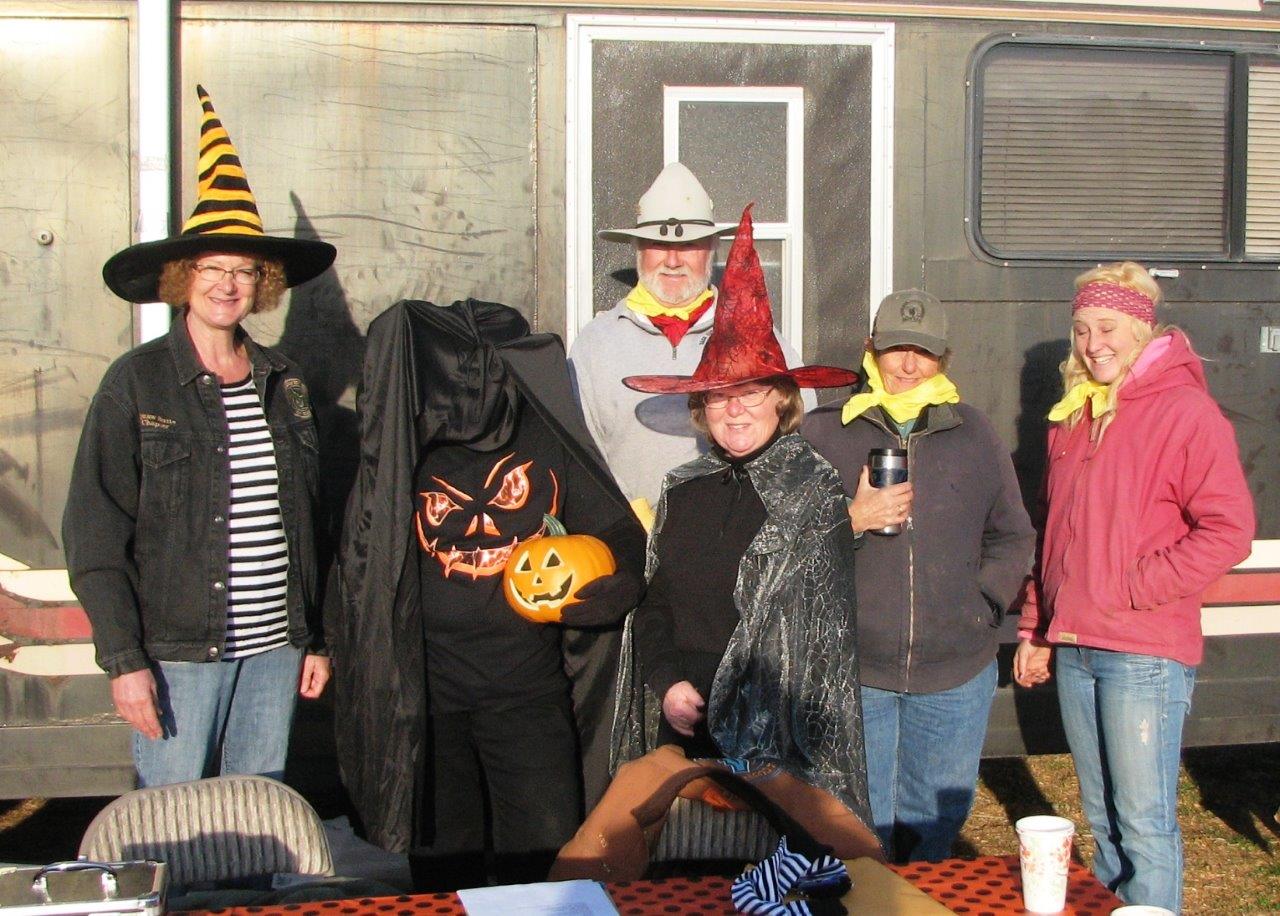
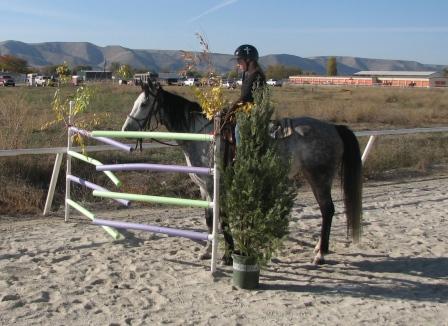
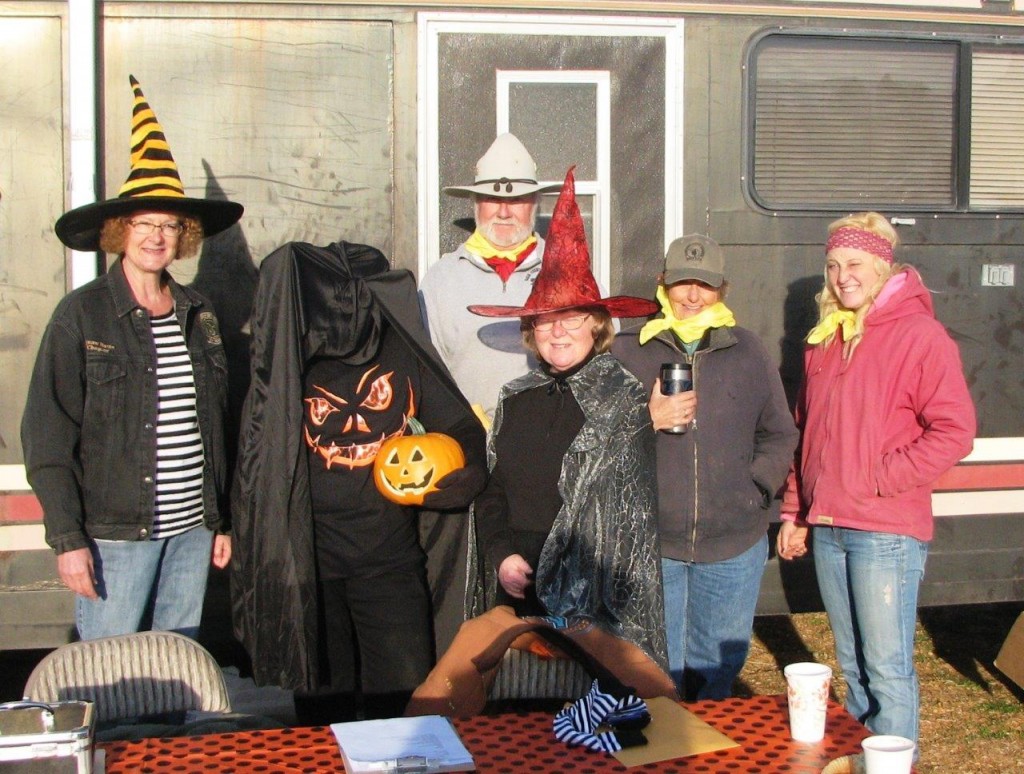
The 4-H Halloween Trail Clinic at the Gem Country Race Track in Emmett Idaho on October 19th was a great success.
Lots of Learning and some serious fun was had by all on October 19th. The Squaw Butte Chapter decided it was time to get serious and promote Backcountry Horseman to those that do not have a plethora of gray hair. Gail Duke, the 4Horse leader Superintendent, embraced Linda Erickson’s outreach offer, and the Halloween Trail Clinic evolved with the SBBCH chapter providing coaches at various obstacles and registration assistance. We also set up a booth with Backcountry Horseman of Idaho information and even had complimentary Horse Soaps from the SBBCH chapter for participants. The Peppermint Soap was by far the favorite of the participants and the horses.
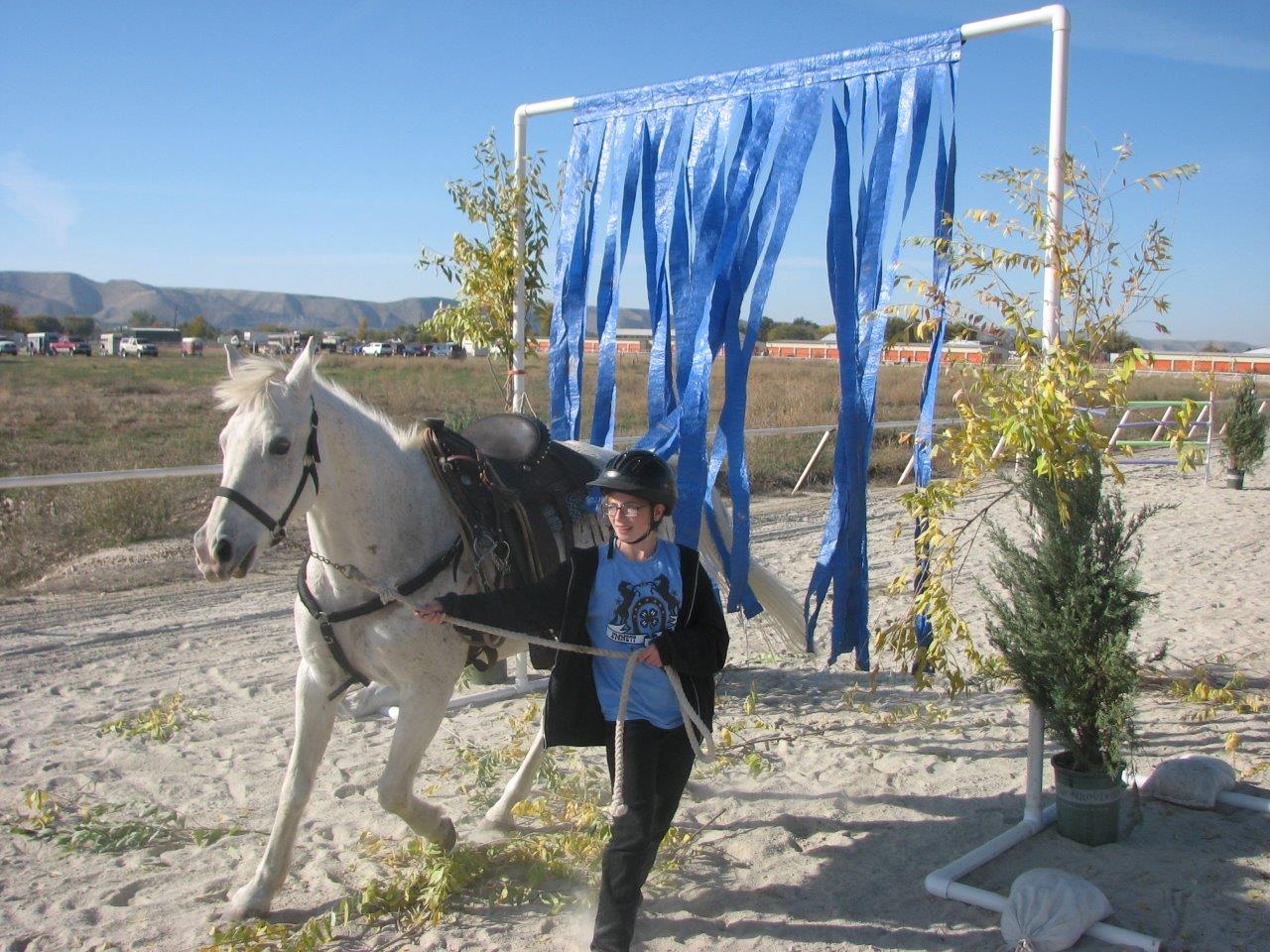
Over 30 participants went thru the obstacles at the race track where there were experienced trail riders and coaches positioned thru out the course. Morning was for intermediate and advanced riders and afternoon for beginners. These obstacles were awesome and helped to build confidence in the rider and the horse. But there was fun too, and games included a Costume contest, Trick or Treating on horseback and even Horse bobbing for apples. So Kudos should go to SBBCH members Phil and Kay Ryan, Charles and Lorraine Chick, Bill Holt, Janine Townsend, Rob Adams, and yours truly for volunteering that day and yes we made a difference. The SBBCH Chapter is starting to receive hand written Thank you cards from 4 H members who participated.
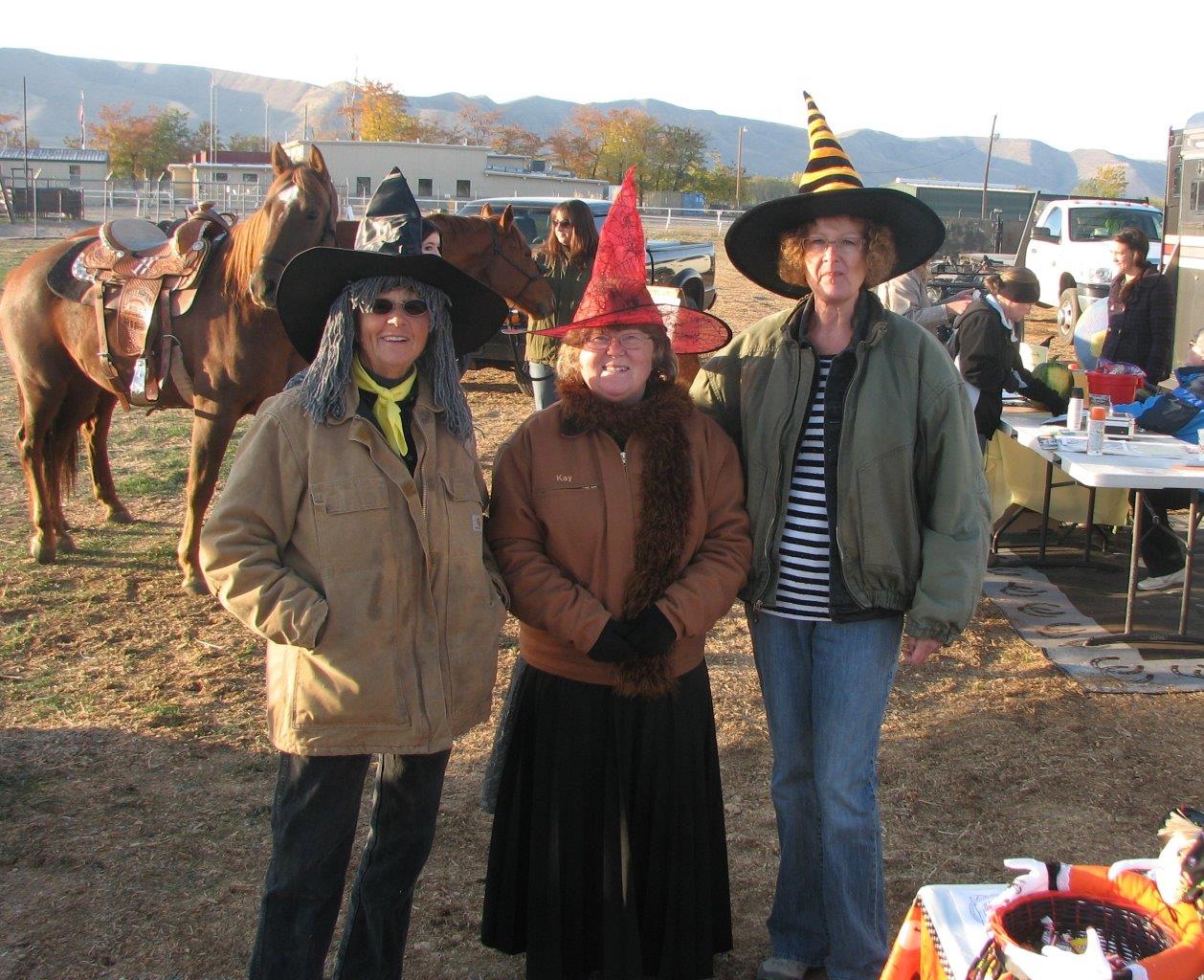
Next we are volunteering to help Gail Duke, 4h Leader Superintendent with a 4-H Trail ride so some of the Arena/ Fair horses will get a chance to get outside in the Backcountry. Since we must lead by example and the 4-H rule in Gem country is helmets, we should have some great photos. Promoting Backcountry Horseman to 4 H is a logical way for our organization to grow.
See you on the trail.
MB Conger
by Kimberly Williams- Brackett
I was taught in school that the Spanish introduced horses to the Americas. But while the Spanish did bring them, plenty of horses were here before the Spanish arrived.
“The Spanish did indeed introduce the modern horse to the Americas, although one could argue that it was a re-introduction,” said Laura Walkup, a ranger at Hagerman Fossil Beds National Monument and the Minidoka National Historic Site.
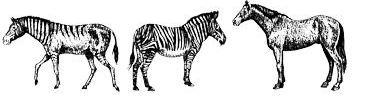
The Hagerman Horse remains mark the largest sample of this extinct species found in one area. Although remains of the same species have been found in several states, they’re all much younger. Hagerman’s is the oldest.
The first appearance of the modern genus Equus — which includes modern horses, donkeys, zebras, etc. — was Equus simplicidens, also known as the Hagerman Horse, Walkup said.
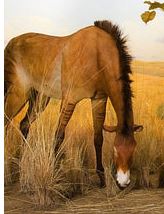 “Horses originally evolved in North America, and specimens of Equus simplicidens as well as many earlier horse ancestors have been found throughout the continent,” she said. “The first specimen of the Hagerman Horse ever described by paleontologists was not found in Idaho; it was found and named in Texas by paleontologist Edward Drinker Cope in 1892. However, the most complete specimens ever found were found here in Hagerman — hence the nickname ‘Hagerman Horse.’ Read more
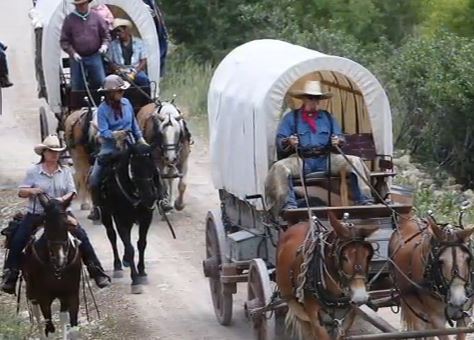
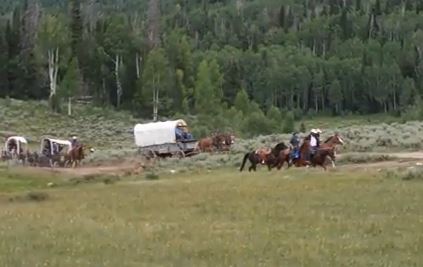
Here is the final version of video from BCHU Wagon Trek 2013 held July 27-Aug 4 in central Utah to post on BCHA website. Unfortunately… the “thank you” at end only says thanks for contributors of pictures and did not give credit to the 2 singers who provided (at no charge) the music in the video. Anyway, its a pretty good representation of the trek and the varied terrain/scenery we traveled through – about 85 miles worth – 9,400 to 4,500 elevation. Click here to see video. Sent to BCHA by Kathy Myers
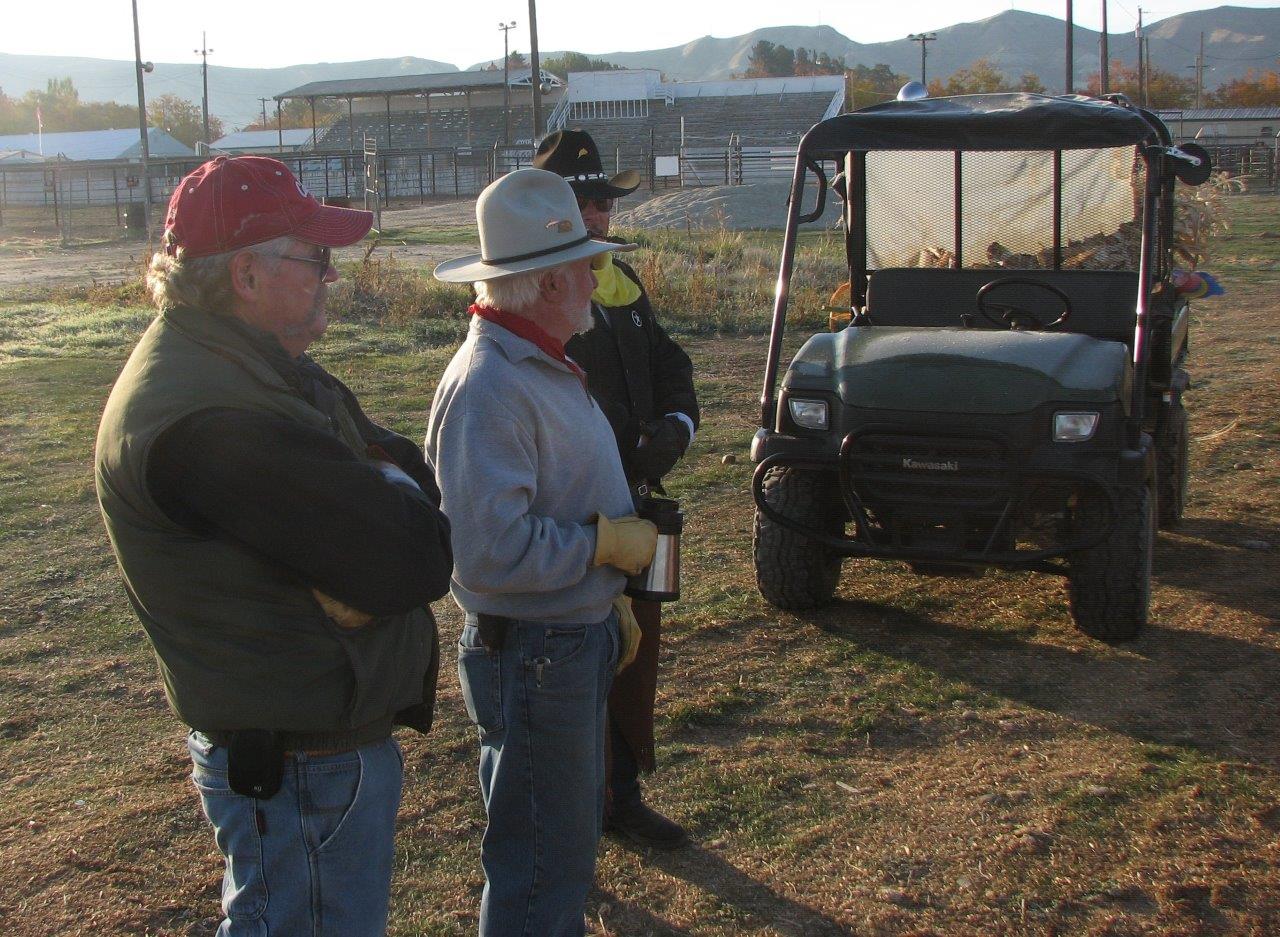
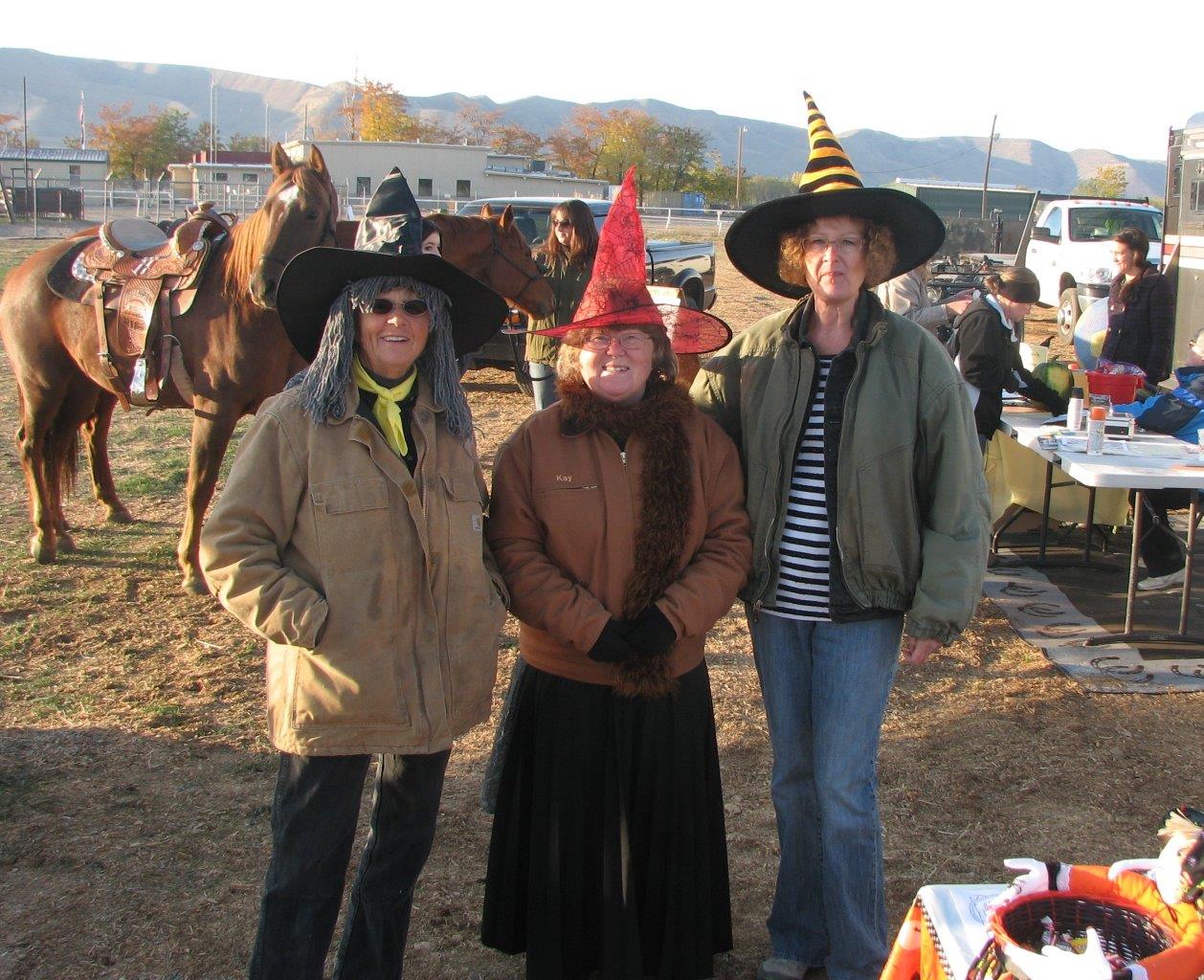
On Saturday October 19, 2013 Squaw Butte members assisted the Gem & Boise Country’s 4-H horse programs in hosting a fun trail course with a Halloween theme at the Gem Country Fair ground. The participants were to come in costume as did a number of the adults. The trail course was set up on the track and had step overs, bridges, flags, gates, simulated water hazard and a camp site the riders had to negotiate. BCHI member worked with the riders to ensure that they had fun and were safe.
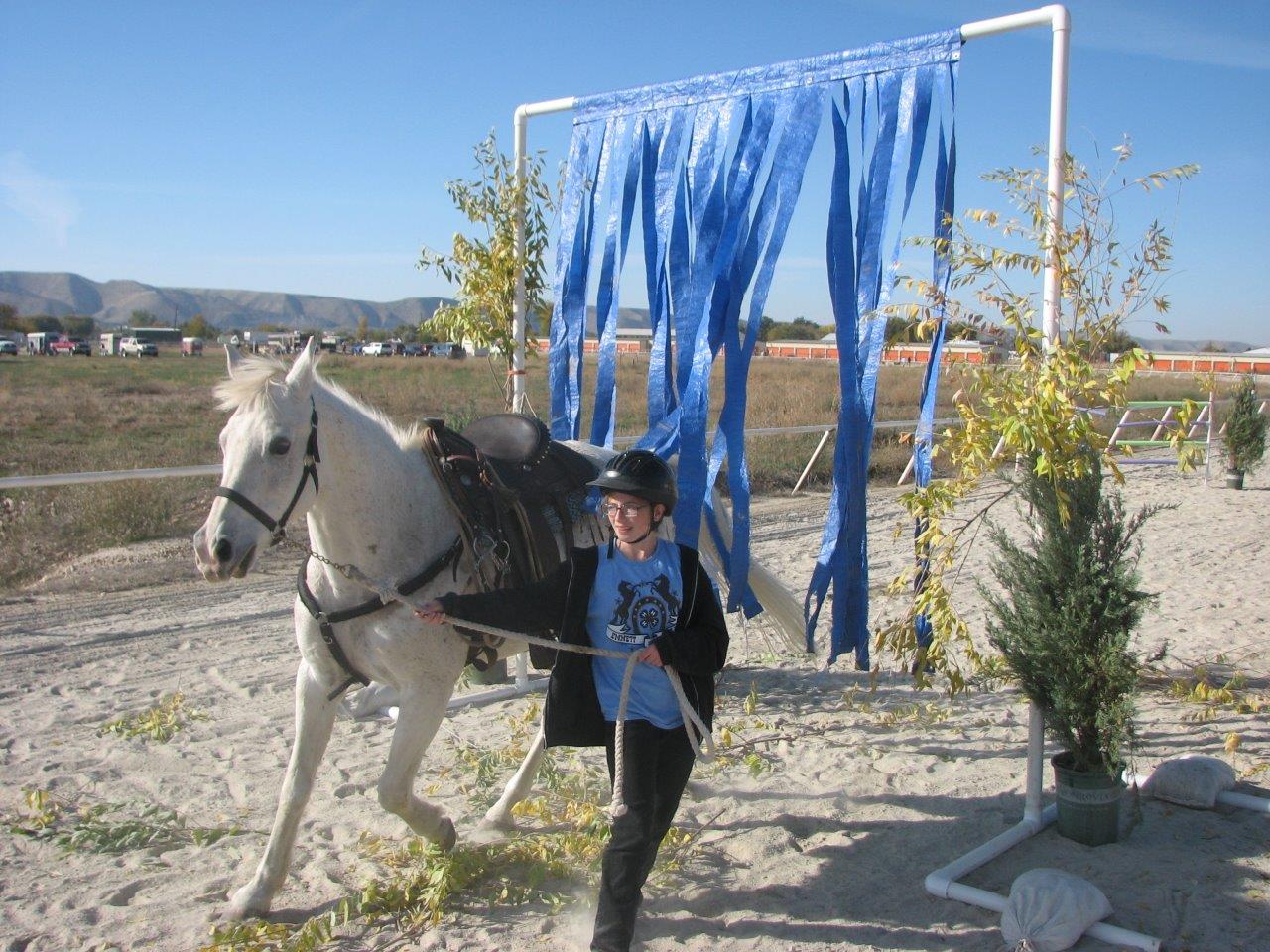
The goal of Squaw Butte and the 4-H leadership is to forge a strong relationship, that results in a couple of events each year with the goal of an annual horse camping trip, and a new generation of back country trail riders. Click here from more information on the 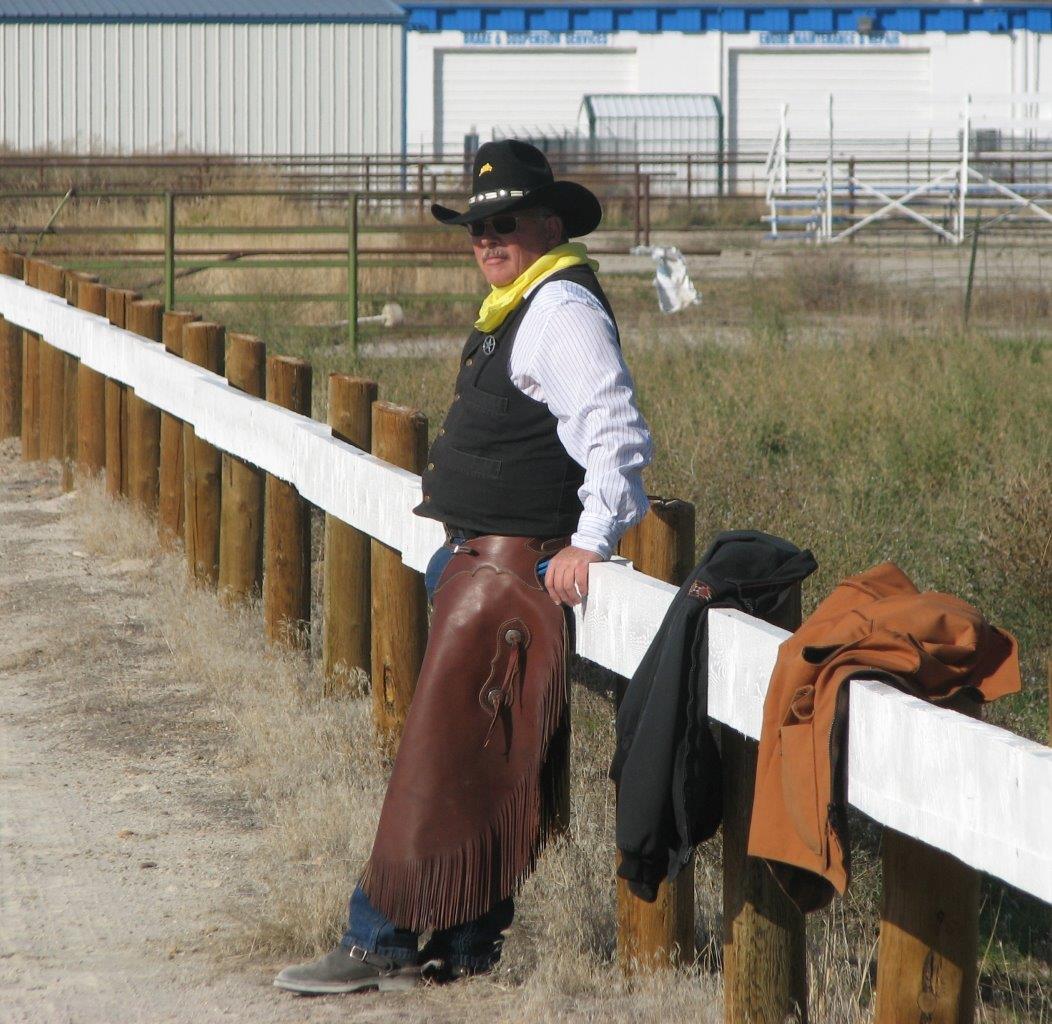 event.
Mary Beth Conger | Gail Duke | Phil Ryan | Kay Ryan | Janine Townsend | Hilary Haskins
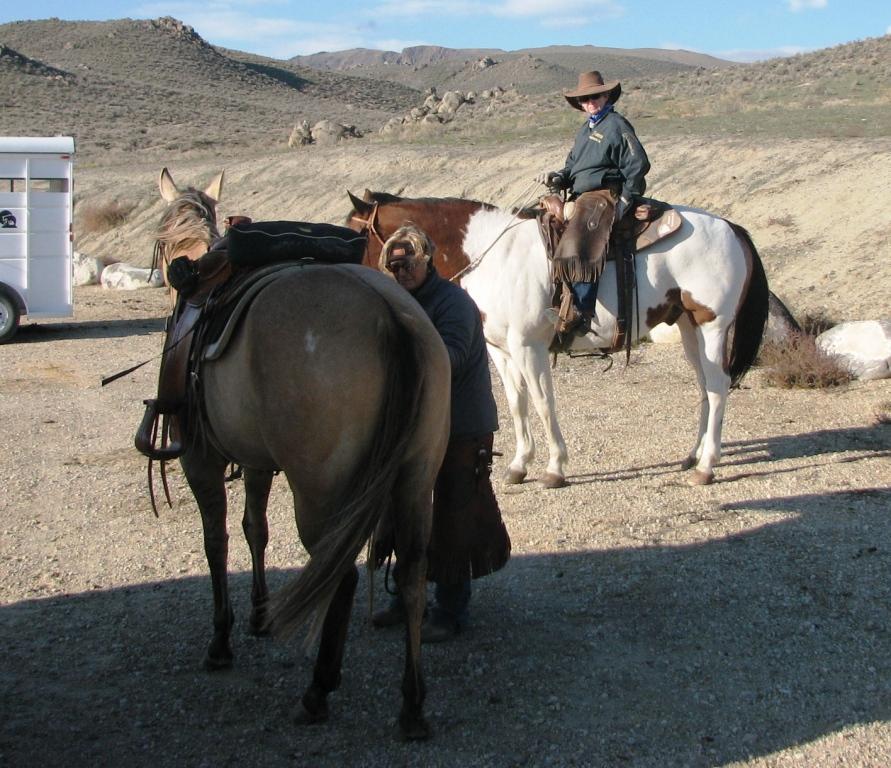 Sunday found members of the Boise Chapter, Rebekka Hankins and Carol Green, joining Squaw Butte members, Shelly Duff, Phil Ryan and Rob Adams on a fall ride out of the Wilson Creek trail head in the Owyhee’s. Due to wind, the trail of choice was Wilson Creek, which afforded protection while providing a scenic and interesting ride. While the only wildlife seen were some birds, we did encounter three woman running on the trail and two mountain bikers. In each case they stopped, stepped off the trail, we talked for a couple of minutes and each proceeded on. At the end of the ride, after we loaded our stock in their trailers, the bikers returned to the parking lot. One came zooming over the berm, realized there was a large rock in his landing zone and ended up sliding into the rock on his right side. We all rushed over to see if he was all right. His helmet protected his head from ground and rock, but he had a classic case of road rash on his right leg from knee to boot.
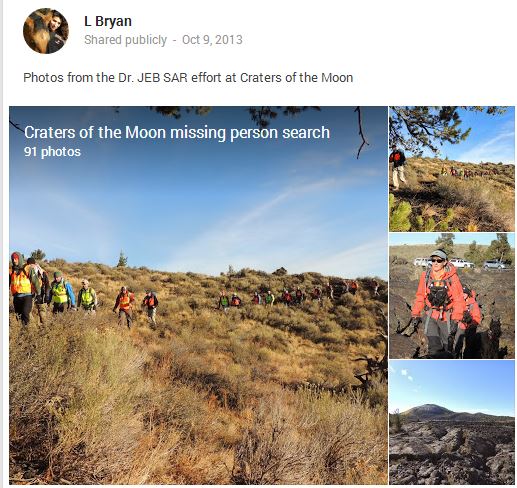 Originally reported missing on September 24th, the search for Dr. Jodean “Jo” Elliot-Blakeslee will continue this weekend, with approximately 20 searchers led by National Park Service and Butte County Sheriff’s Office personnel. See more Pictures // Location of Search The effort to find Dr. Jo and her hiking companion has been heroic, but if they had been carrying a device the size of a cell phone, and been able to press the 911 button on that device, this story likely would have had a different outcome. Help would have been dispatched sooner, and the help would have known were to look. If you ride, hike, hunt or bike in the back country, you should have a SPOT in your pocket. Idaho Statesman report 10/23/2013
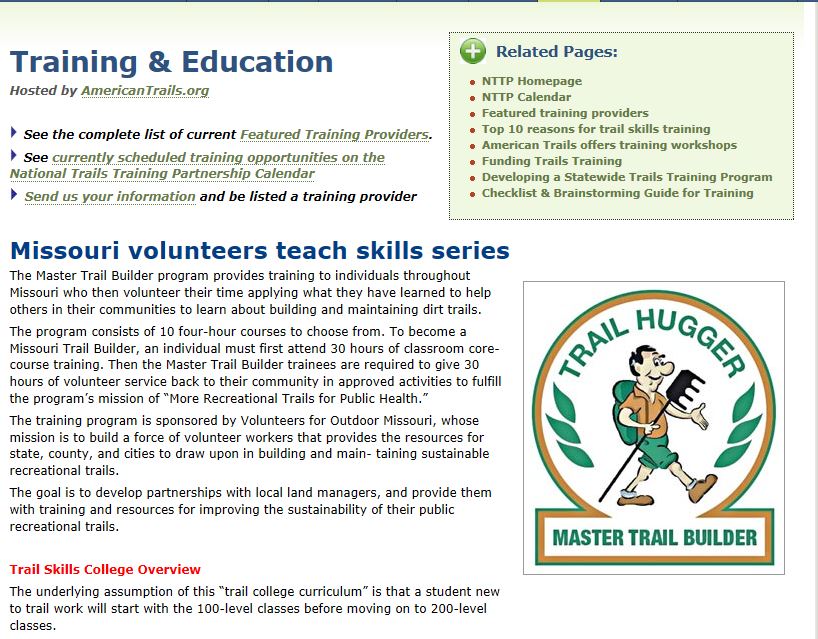 View classes // visit Missouri Volunteers Website
By ROCKY BARKER — rbarker@idahostatesman.com
Three federal agencies spent $392 million to manage 32 million acres of public land in Idaho in the 2012 budget year, a Congressional Research Service report shows.
The report shows that Idaho would have to make up for much of those costs if it succeeded in getting control over the land, as a resolution passed by the Idaho Legislature demands.
The Idaho Department of Lands has estimated that the state could raise $50 million to $75 million annually in timber receipts from federal land. But one cost not figured into the estimate could swallow that revenue by itself — $58 million in payments to counties under two programs, one that makes up for former timber revenues and another compensating for the fact that counties can’t tax federal land. read more
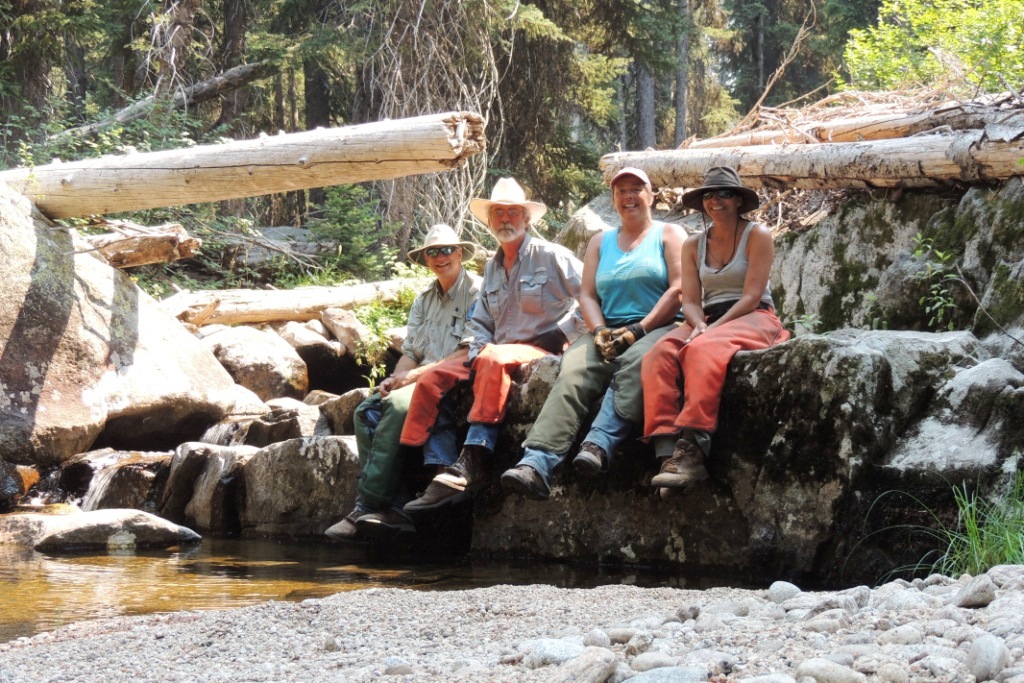 Between June 1st and September 30th 2012 Squaw Butte supported eight trail maintenance and packing projects. These projects covered a large section of south western Idaho, taking place in the Boise & Payette National Forests. They were in partnership with the Emmett, Cascade and Weiser Ranger Districts.
The work covered a large spectrum of activities, from packing, to rock rolling, but mostly entailed the removal of a very large amount of blow down and pruning. While these are “work” project, members attending also have a great deal of fun. If you didn’t make a project this season, plan on attending one in 2014.
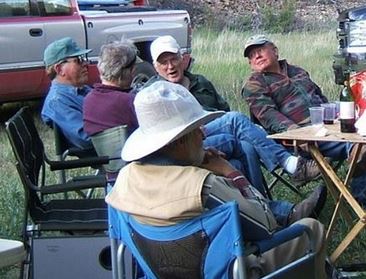
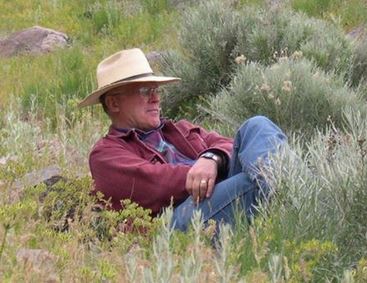
Back Country Horsemen of America leads the nationwide effort to preserve trails for horse use, not only for today’s equestrians, but also for tomorrow’s. They seek to leave an inheritance to future generations; a legacy of responsible enjoyment of America’s wild lands the way our forefathers did: by horseback.
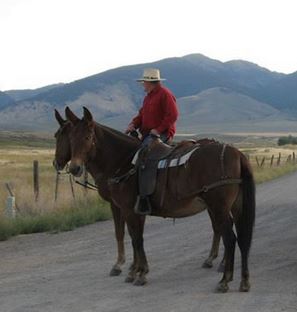
With that goal in mind, Back Country Horsemen of America selects an individual member each year whose numerous contributions, made over many years of dedicated membership, exemplify their mission and values. In 2012, BCHA chose Val B. Johnson of the Salmon River Chapter of Back Country Horsemen of Idaho. BCHA Legacy Award
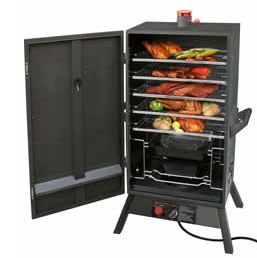
Hello and welcome to another edition of the smoking meat newsletter and it’s time again for my answers to your most pressing smoking meat questions. I have selected some questions that get asked time and time again and delved into them with some clear and straight-forward answers. I hope you enjoy this and most of all, I hope you learn something that you did not know before.
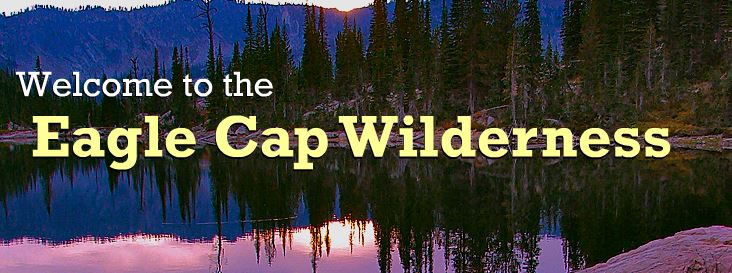
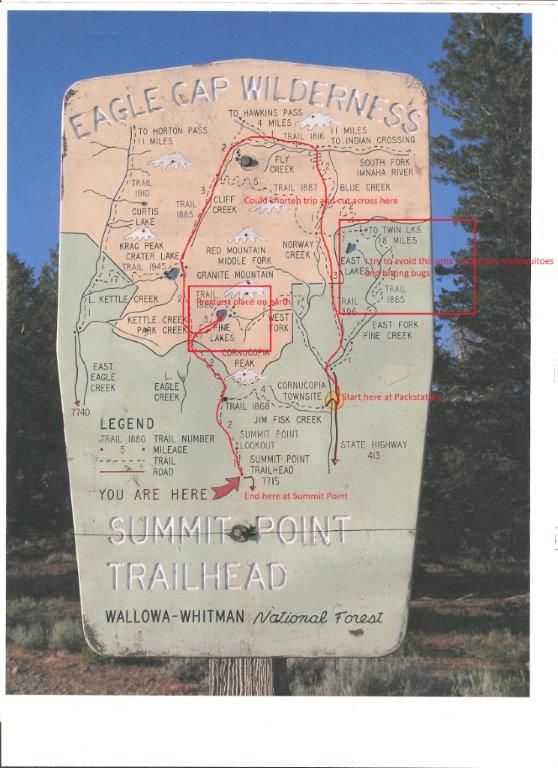
In September Laurie Bryan, Rob Adams and Bob Hamlin drove to Halfway, OR to spent four days doing a loop from Cornucopia an old mining ghost town to Crater lake exploring 26 miles around Red Mountain of the south-eastern section of the wilderness. We parked near the pack station in Cornucopia and rode north-west on Jim Fisk Creek trail which is steep and rocky to Snyders Cabin. Read Story View pictures
From Marybeth Conger, BCHI Education Committee member
This year we have grown into a committee which is a great way to mentor members while accomplishing more on our Education agenda. The Committee consists of Bonnie Fox – Treasure Valley BCH, Joseph Brinkman- Eagle Rock BCH, Cindy Walker- Salmon River BCH and Marybeth Conger- Squaw Butte BCH, so there is some great geographic representation. At our recent meeting in Nampa, ID we set forth the following Education areas of importance, in random order.
First let’s talk about Volunteers hours. Keeping track of all our volunteer efforts is one of the most important things we can do in our efforts to keep our access to riding areas. So, we will be redistributing Volunteer Hour Reporting Guides to all chapters to increase awareness and both the number and type of hours reported. Plus we are bringing a FUN Volunteer Hours puzzle to the 2014 Convention, so please come and get your name in the hat to win a fabulous Education prize.
Second, we will be updating The Education and Public Relations section of the Backcountry Horseman of Idaho Planning Guide. I know, this sounds a bit dry and perhaps boring, but updating this guide with education items accomplished and identifying new ones, helps the committee stay focused on the preamble set forth in the Backcountry Horseman of Idaho bylaws.
Third we will be asking for chapter input to Identify Education needs and ask for mentors willing to help with education. A list of available mentors will then be made available to all chapters. Yes, we will be communicating with each chapter’s Education chair or the President if none is listed on the officer register. So, chapter President’s if you haven’t had time to get someone for the Education position, please do, and don’t forget to the State Secretary know too.
Lastly one of our committee members recently completed a Nine Mile Leave No Trace Master Training session, so it is a perfect time to review the Leave No Trace information in the Backcountry Horseman Education manual found on our website. We want to make sure the BCHI.org website has the latest and greatest information, for your use when teaching, preparing, and conducting Educational & Leave No Trace clinics, reports, seminars, etc. or while you are actively attending or presenting at Public meetings relating to BCH activities’ or issues.
All for now and hope to see you on the trail.
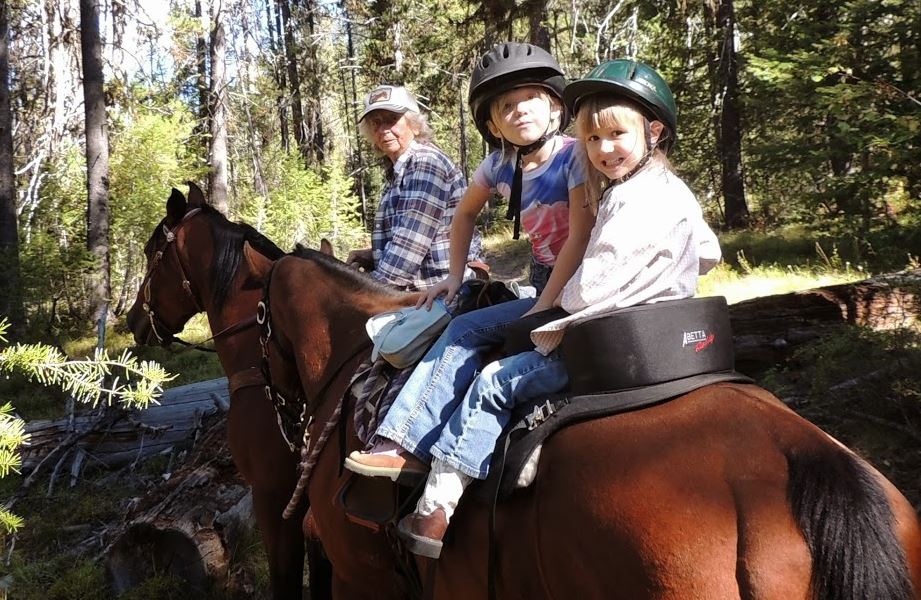
There’s more to backcountry horseman than a bunch of old people running around in the woods clearing trail. We are also concerned with fostering relationships with the future of our organization – the youngsters.
The average age for a SBBCHI member is somewhere around 62 years of age. Most of us are pretty tough and I suspect most will be running around in the woods sawing trees well into our 90’s – however, nature being what it is, we won’t live forever. It is a solemn fact that if we do not recruit the younger generation – the Backcountry Horsemen of America will eventually die off…or if you’d rather; ride the final trail into the great backcountry wilderness in the sky.
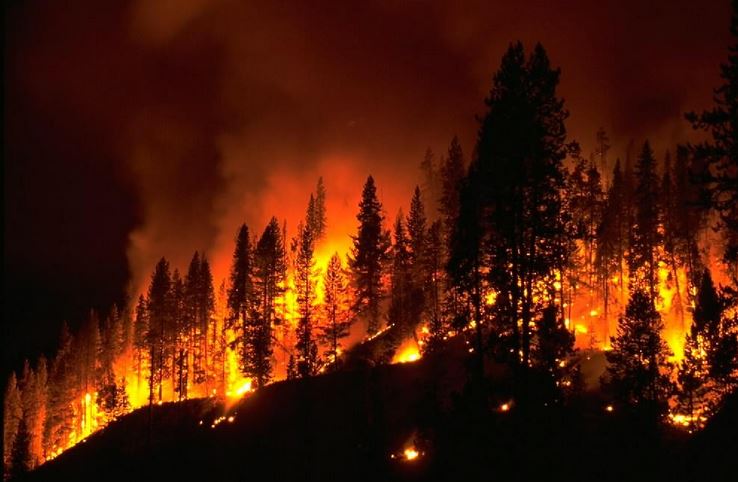
Wild fires burned 69 percent of the Payette National Forest and more than 50 percent of the Boise National Forest since 1985, a new report issued by the Idaho Conservation League shows.
Most of the acres burned in six years of when conditions were dry and temperatures high, the report said. And 64 percent burned on the two southwest Boise national forests and the Salmon-Challis National Forest.
These three forests are dominated by drier, lower-elevation ponderosa pine and Douglas-fir forests as contrasted to the high elevation, wetter forests of north and east Idaho which are dominated by lodgepole. The low elevation forests historically had frequent fires, and the trees and other species had adapted.
“While none of us want to breathe smoke or see flames from our doorstep, there’s no way to remove fire from Idaho entirely,” said Jonathan Oppenheimer, of the Idaho Conservation League and author of the report. “Our challenge is to live with, and prepare for, inevitable fires.”
Oppenheimer analyzed the 2012 fire season and the history of fire in Idaho. Here are some of his key findings:
• Nearly two-thirds (64 percent) of the national forest acres burned fires were low severity or untouched. Forest Service experts said only 13 percent were “high severity.”
• Large fires consumed a disproportionate share of fire costs, with the five largest fires consuming $145 million, 68 percent of the total cost of suppression.
• Nearly 20 years after policies were updated to restore the natural role of fire, the Bureau of Land Management in Idaho has failed to implement any plans to manage natural fires for resource benefit.
• The Charlotte Fire raced through the Mink Creek and Gibson Jack areas of Pocatello and destroyed 66 homes and 29 outbuildings, making it one of the most destructive Idaho fires since the Big Burn of 1910.
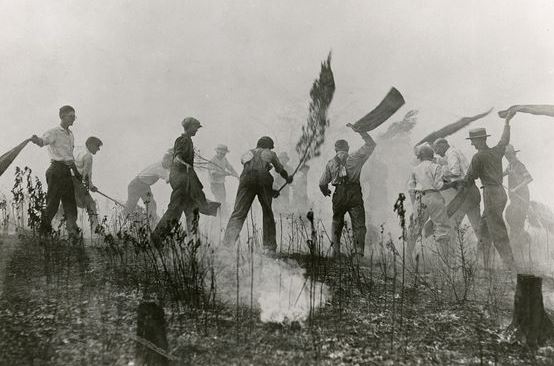
1925 fire fighters
Oppenheimer is advocating essentially what firefighters actually have been doing in Idaho, staying out of the way when fires are big and attempting to restore fire to the ecosystem on our terms. To do that communities need to feel safe.
“The wise way forward is to focus thinning around communities, carefully restore fire where it belongs and keep new homes out of dangerous areas,” Oppenheimer said. “Anything that detracts from that is part of the problem, not part of the solution.”
Tom Bonnickson, professor emeritus of forest science at Texas A&M University and a former park ranger challenged this view in a guest opinion recently in the Calaveras (Calif.) Enterprise. Bonnickson was one of our speakers at the 2000 conference the Idaho Statesman co-convened with the Andrus Center for Public Policy: The Fires Next Time.
“We can thin little trees and use prescribed burns to reduce fuels, but that is not enough,” Bonnickson said. “We must use history as a guide and restore the natural immunity of our forests to monster fires. That means cutting whatever trees are necessary, big or small, to recreate the patchiness and diversity of historic forests that kept fires gentle and helpful.”
Oppenheimer quotes Penny Morgan, director of the University of Idaho Wildland Fire Program, who noted that Idaho has led national thinking about fire management for more than 100 years.
“While fire is naturally part of Idaho summers, things are changing in our forests and rangelands,” she said. “Idaho should remain at the forefront of creative solutions to restore forests and keep communities safe.”
And his press release includes Erich Zimmermann, Senior Policy Analyst at Taxpayers for Common Sense. He says its not just a safety and environmental issue but also about saving federal dollars.
“We know that putting out every fire is misguided in places like the backcountry of Idaho,” Zimmermann said. “Experts tell us we can help save money and restore our forests by allowing fire to play a more natural role.”
By Rocky Barker – Blog September 16, 2013
Additional information

The members of the Squaw Butte Chapter want to thank Robbin Schindele for doing “all the work” putting together a grant proposal and working with Jill Murphey, of Idaho Parks and Rec shepherding the proposal through to a successful outcome. We would also like to thank the BLM and the BNF & PNF ranger districts that provided letters of support.
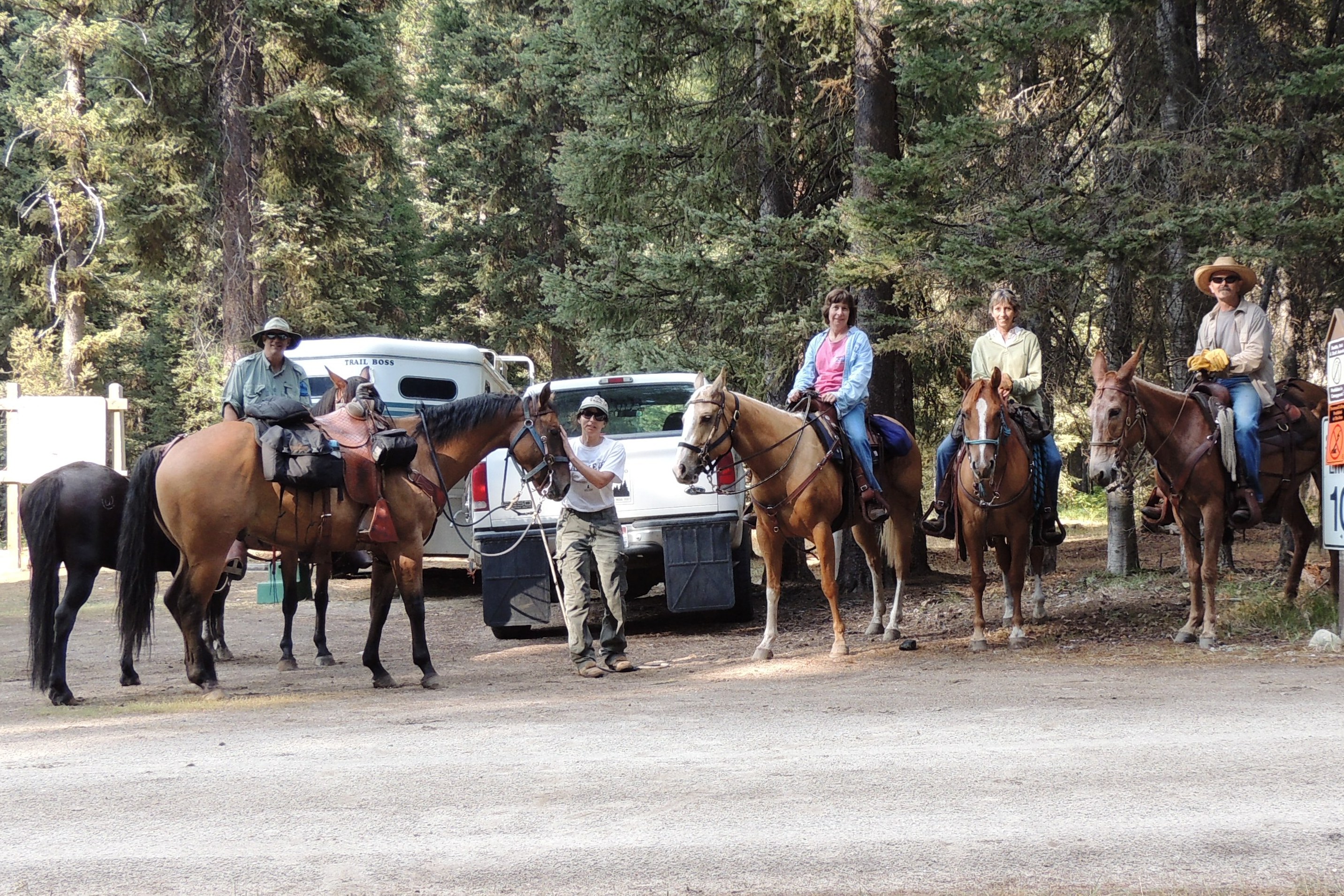
I have to admit, I was a little disgruntled when I heard the Cabin Creek project had been moved to Needles Trail above Kennally Creek Campground. I knew how to get to Cabin Creek. I drove up a week earlier to scope it out. My new smart phone’s GPS, “Andy” took me right to the campground without missing a beat or expecting me to drive down game trails. The area seemed ok to me. There was ample room to park for several big rigs and stock water was close enough to make due. I took note of the amenities, cut a load of wood on the way out and followed Andy’s directions for the quickest way home.
Unbeknownst to me, Rob was scoping out the area at the same time. He wasn’t happy with the old logging road trail that wound through a burn or the less than ideal water situation. He was right, it wasn’t the prettiest place on the mountain and if you’re going to spend the weekend working your butt off it might as well be on trails with at least minor aesthetic appeal. I grumbled and frowned when I read the email from Rob that he had moved the project. For the first time since joining the chapter I had a heads up on where I was going and how to get there and Rob goes and jerks the rug out. Later I was glad he did.
Jon Seel and I had the opportunity to ride the Eagle Caps Wilderness in Eastern Oregon last week. We spent four days riding the Minum River area. We Left Emmett on a Friday afternoon and headed west to the little town of Cover Oregon. There is a great little tavern and food place there, Great Steaks!. We ended up at the Moss Springs Trailhead. (Idaho should have such trailheads.)
Saturday morning we packed our animals and headed down the seven miles to Reds Horse Ranch, and Minum Lodge. These are areas set aside as private when it became a wilderness much like the airstrips in the Frank Church Wilderness. We spent the night next to a Fish and Game cabin by the airstrip, good feed for the horses. Next day we fished the Minum River and had a great supper that evening. We packed up the next morning and headed up stream trying to find our trail so we could make a loop and eventually get back to the Moss Springs Trailhead. Lucky for us we met two Oregon Fish and Game Wardens who informed us that the trail we were looking for had been washed out for years and was nonexistent. We made a great camp next to the river, decided that a return trip the way we had come was in order for the next day, fixed dinner, finished off the whiskey, and crashed for the night.

I am finding out that the trail systems in all our area wildernesses have major trail problems and we really need to have the Forest Service make a better effort to clear those trail for everyone. We made it back to the Trailhead the next morning and headed home. If you plan to ride in any of the wildernesses please contact the district ranger office to find out the condition of the trails first.
By Phil Ryan
Horse & mule packer are not the only ones using back country trails, there are other ways to get your stuff from trail head to great locations in the mountains of Idaho. As stock packers we should know a bit about the other types of pack stock, and how they view us.
Encountering pack stock on a trip from a goat packers point a view is a good example:
(Note: We do not dislike horses per say, any derogatory sounding comments are based solely on personal observations of them and their reactions to us with our goats.)
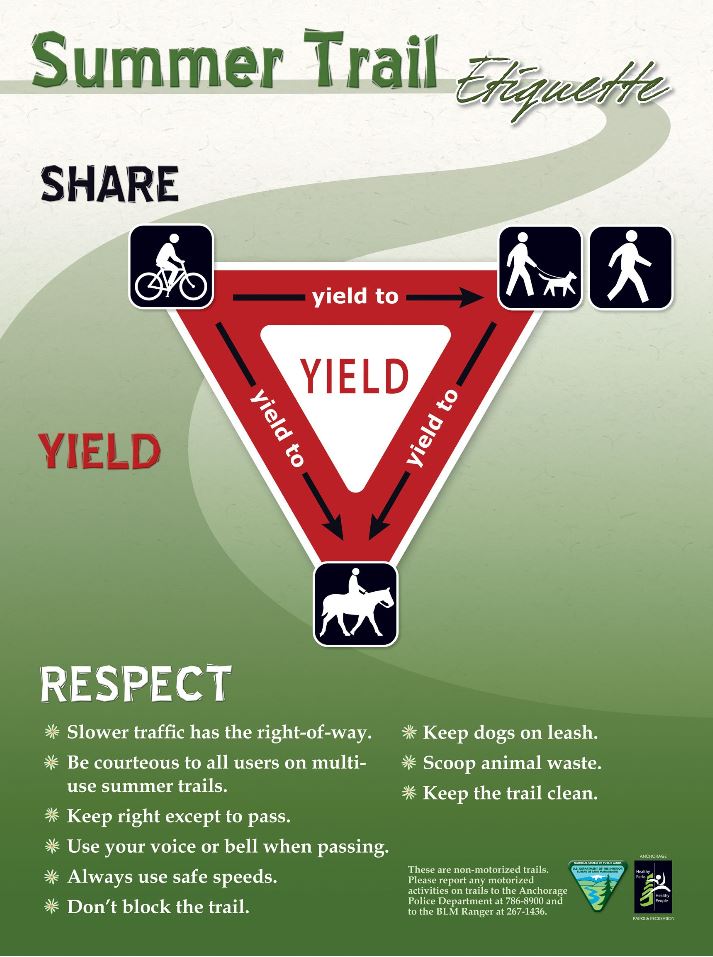
It is our experience that very few back country users know the answer to this question. Thankfully our boys are familiar with both backpacks on people and horses, so are total unconcerned beyond there natural wilderness alertness. Most hikers hate the idea, but as the most mobile they should get off the trail on the low side. In a goats vs horses the same rule applies. We move to the low side as the goats are much more agile than the horses. (Horses are much easier for the rider to control on the high side of the trail. Move approximately 30 feet off the trail for horses). We have decided that horses think people with packs are bears, and llamas/goats with backs are devils from their darkest nightmares. With horses it is a excellent idea to keep talking to the riders as they pass, as this helps the horse with their tiny little brains identify you as a person rather then a scary unknown.
There are times when passing is not an option. (The east fork of the Duchesne comes to mind. A 1/4 mile, six inch ribbon of trail across a 70 degree slope of loose dirt.) In these situations the most mobile should back up to a safe place to pass.
Pack strings of any sort should be given consideration over any kind of person with a lone creature. But we seldom argue with a spooky horse and just give way. And our boys watch the horse dance fitfully past with silly grins on their faces.
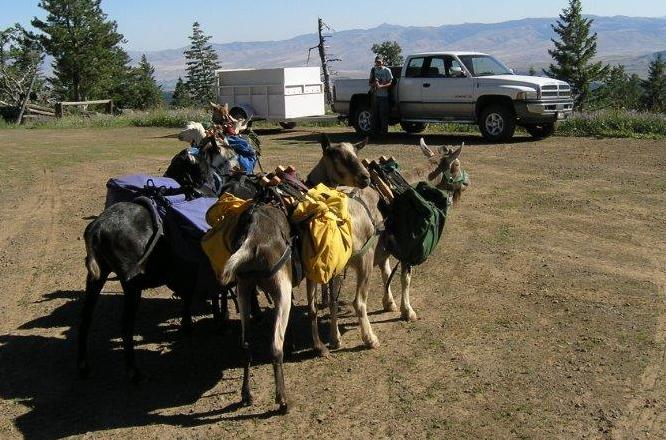
To lean a bit more about goat packing, check out the following web sites:
Shelly Duff Squaw Butte’s newest member
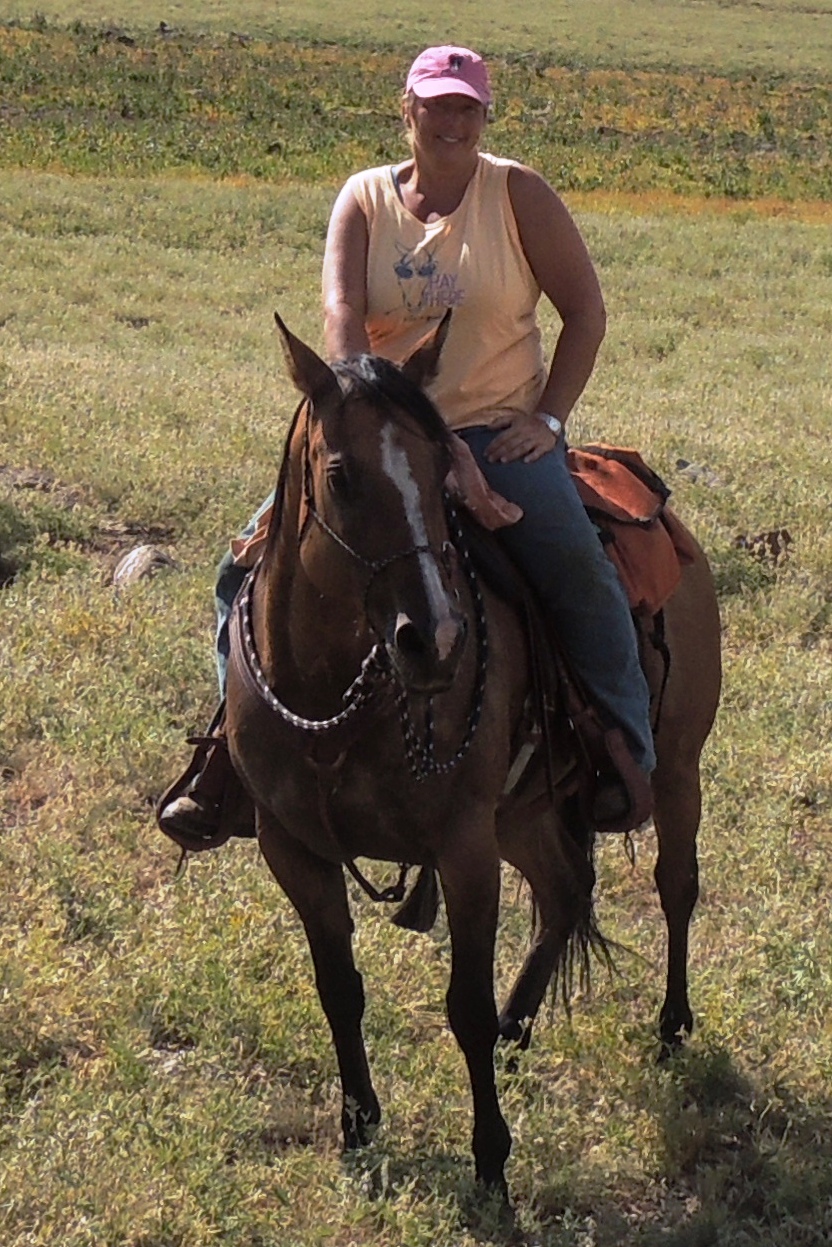
Shelly and Lilly
For anyone thinking about joining the BCH I would shout “DO IT”! This last weekend I joined the SBBCH on a work project. It was not anything like I expected (which was a good thing). I expected to work on trails (which we did) but, I was pleasantly surprised at how much fun I had. Rob and Laurie and Terry were patient and helpful and they made it very easy for me to join in without feeling like I was in the way. I saw country I did not know existed in Idaho. The most tiring thing I did was mount and dismount my horse, but I managed with the help of a few stumps and many rocks. I am looking forward to the next work project that I can fit into my schedule and plan on getting to know as many of you as I can.
I had a great time,
Shel Duff
“Newbie”
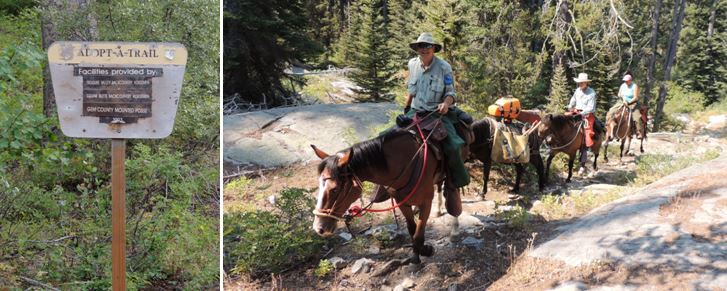
~How to break in a new member of the SBBCHI~
“Is there an App for that?”
What is the best way to break in a new member of the SBBCHI? Strap a pair of saw chaps on her and send her up one of the most technical trails on the mountain. Enter – Squaw Creek TR 131 and Shelley Duff – Squaw Butte’s newest member.
The original plan was to clear Poison Creek Trail on Saturday and loop down Squaw Creek or pick up Squaw Creek on Sunday. We rode Poison Creek last year and made it a short distance past the bridge before encountering a massive tangle of blow downs obliterating the trail. We didn’t have the saws or the girl-power to put a dent in that one. I say “girl-power” only because our small group consisted of a woman to man ratio of 2:1.
The Ranger District notified Rob that a trail crew had already cleared Poison Creek. Change in plans. We would concentrate on Squaw Creek Trail Saturday and check out Poison Creek on Sunday.
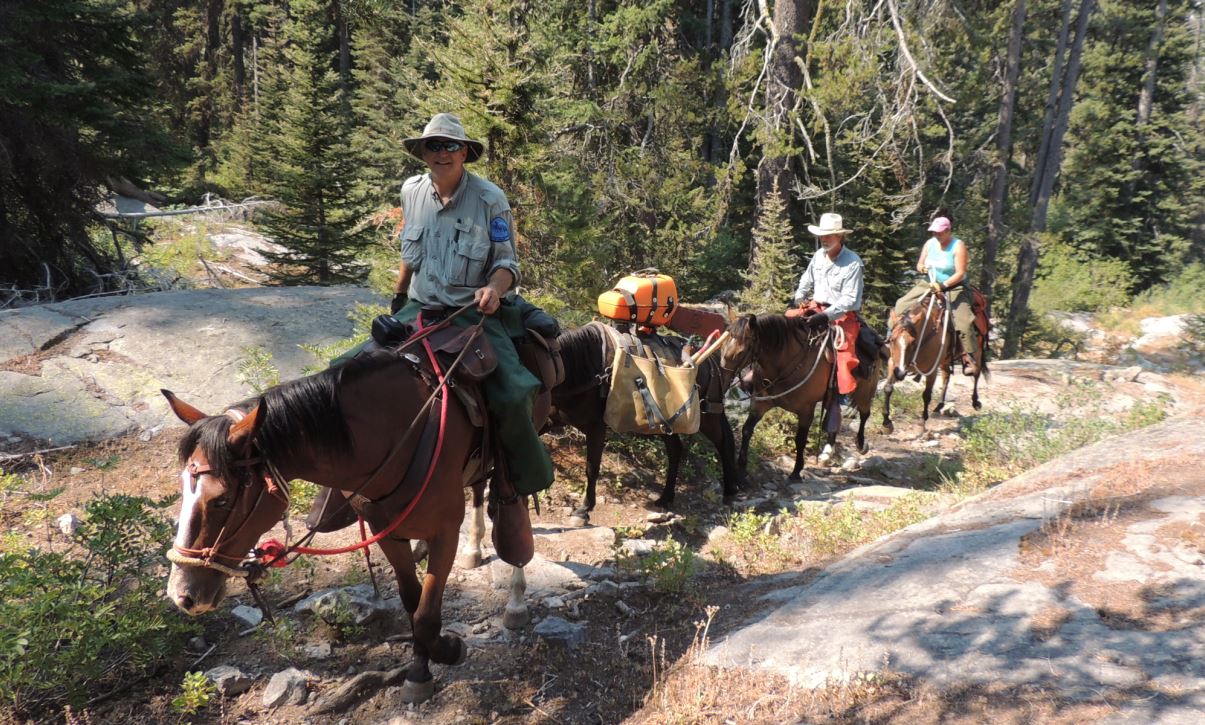
From time to time members ask me about how a trail should be rated. Rating mean
different things depending on if you’re hiking or riding a mountain bike. On horse back it
means something else. Also, the perception of how difficult a trail should be rated is
influenced by the experience of the one rating it. Time of year or weather conditions – a
trails difficulty can change drastically. A level 3 or 4 trail can easily turn into something
altogether more technically with the addition of snow, rain, wind, high water… etc
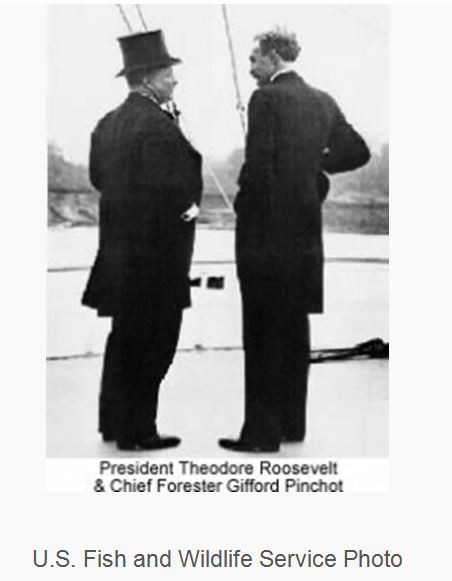
I looked backed at the writings between Idaho’s Republican Senator Weldon Heyburn and President Theodore Roosevelt in 1905 about Idaho’s forest reserves to prepare for the covering the Idaho Legislature’s Interim Committee on Federal Lands Friday at 9 a.m. at the Capitol.
These two Republicans had clear differences about the value of the reserves and their role in American life. Heyburn saw the reserves as an affront to the state’s ability to choose the remaining 50,000 acres the federal government promised it would get under the Admissions Act.
At statehood in 1890, Idaho received federal grants of 3.65 million acres but it took a few years to identify all the lands it wanted. Today the state has 2.46 million acres.

The BLM Wild Horse Program & Oregon teens team up to take on training wild mustangs! These kids do a great job gentling their Mustangs and then adopt these horses out to the public.
By Sarah Wynne Jackson
As the leader in protecting our right to ride horses on public lands, Back Country Horsemen of America is proud of their record of service. For 40 years, they have volunteered their time, skill, and resources towards keeping trails open to horse use and promoting responsible recreation in a myriad of ways.
BCHA commends its members across the nation who continue to make public service a priority, despite economic and weather-related difficulties. In fact, 2012 was their best year yet, with a total of $12,515,563 in annual volunteer value donated; the highest in the history of the organization.
Is There Anything They Don’t Do?
What can twelve-and-a-half million dollars of sweat, skill, and time do? We’re glad you asked! As they have every year since 1973, BCHA’s now 13,000 members from over 185 chapters and affiliates in 26 states spent the last year clearing trails of deadfall after storms, repairing gates and fences, building bridges, hauling gravel to fill washouts, and creating new trails.
Phil Ryan – July 2013
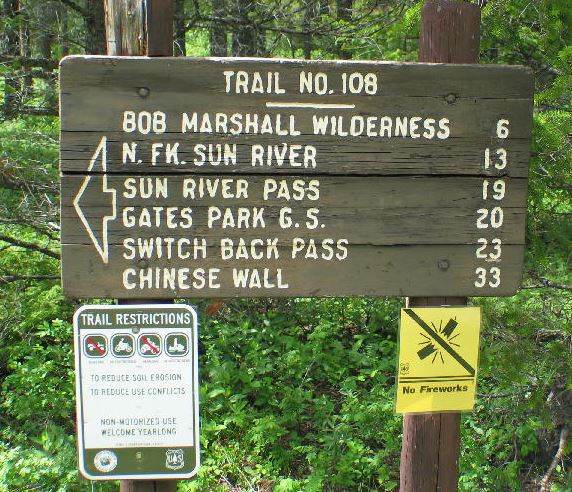
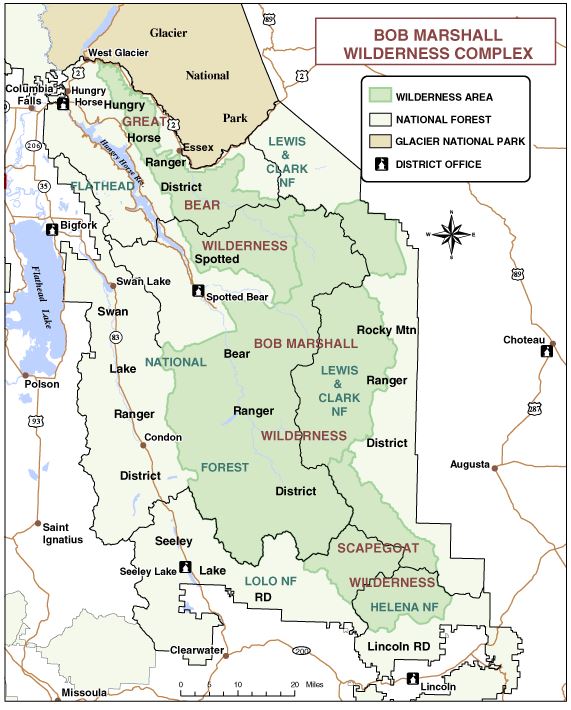
If you ever get a chance to ride the Bob Marshall Wilderness in Montana don’t pass up the opportunity. Bill Conger and I have ridden the “BOB” for the past two summers and each time it has been a great trip. Bill and MB have ridden that wilderness for years before they moved to sunny (hot) Idaho so he knew the trails and trail heads quite well. This year we decided to go into the wilderness from the East side out of The Benchmark trail head. That is out of the town of Augusta. That way we would ride up the South Fork of the Sun River, make a ride up to Prairie Reef and along the edge of the China Wall and come back down the North Fork of the Sun and back to the trail head, a total of seven days.
A wonderful twelve hour truck ride got us there and we spent the evening having a steak dinner, beans and beer. The next morning we loaded Bill’s two mules, our horses and set off down the trail. The first thing you come to is a swinging bridge over the river. Bill’s new horse “scout” wanted no part of that so my old horse “Sam” took the lead. We did this two times and his horse got the idea and away we went. As you go down the trail there are Forest Service signs saying “Alert” bear in the area, STAY ON THE TRAIL” so we did. Further down the Trail is another Forest Service sign “BE ALERT” BEARS (plural) eating on a mule carcass. Now that gets your attention and you make the horse move faster and you scan both sides of the trail wondering which outfitter scarified a mule so he could get down the trail and out of harm’s way. Anyway we made it and saw no bear (that day).
We traveled on and came to the South Fork of the Sun River and another swinging Bridge, no problem. Three hours of riding got us to our first campsite where the trail takes off to Prairie reef. We ford the river and set up a nice camp. Good grass and water for the stock. After a meal of MB’s ready made goodies, I went fishing, caught a Bull Trout, first time for that. The next morning after a breakfast burrito and coffee we saddled the horses and up we went. Now the trails in the “BOB” are well laid out with great switchbacks, but it was up and up and up, but the trip was well worth it. At the top of the mountain “Prairie Reef” is a fire lookout, and you can see the rest of the world, or at least most of Montana. One side is sheer cliffs for thousands of feet down. You can see all the way to Montana’s flat prairies on one side and the China Wall and snow covered mountains on the other side. We saw eight Mountain Goats on the cliffs below us and one crashed airplane (from the 1980’s) Bill told me. When we returned to camp it was a six hour ride and the horses were spent.
The next day we loaded up and made the ride under the China Wall, over the pass and down Moose Creek looking for a good campsite. We wanted to go down Rock Creek, but there was a really big fire there and the Rangers had closed all trails leading into that area. I spotted a really nice bear as we rode, don’t know if it was a Grizzly or not, but it was bigger than any bears I have seen here in Idaho so we continued further down the trail to find a camp. Seven hot dusty, horse fly infested hours later we made camp in a nice shaded glade, good food and water for the horses and a well-deserved drink of whisky for me and Bill. Next morning off we went down the canyon and to the North Fork of the Sun River. Wonderful meadows, lots of grass for the animals, good fishing. We laid over for a day there giving the animals lots to eat and time to play cribbage and me to catch some fish to eat. We decided to ride out on the sixth day because we couldn’t get up rock Creek or the Gates Park Ranger station so we headed out in dense smoke from the fire. We met an outfitter who had just been in the Rock Creek area and was only six hundred yards from the fire when it topped over the ridge above his camp, he said it was hot for a time while he got his equipment and stock to a much safer location. The Forest Service had sent a helicopter in searching for him to warn him to get out of that area.
On the ride down the North Fork of the Sun River we saw a gray wolf. We made it out in about four and a half hours to the trail head, loaded the stock, went to Augusta for cold drinks and chips and headed the truck south and made it home about twelve thirty Sunday morning.
Another great trip, I may never get to see that area again in my life, but the memories are ones that will last a lifetime.
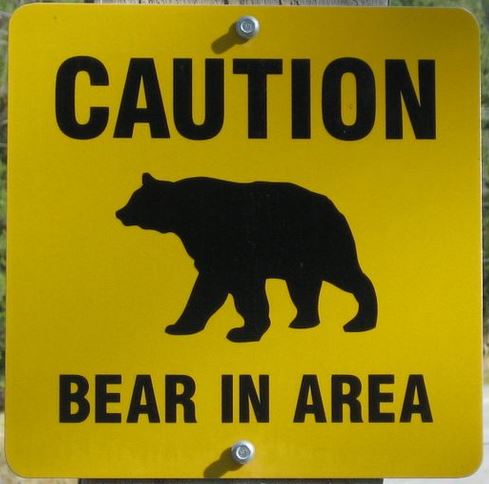
P.S Watch out for the BEARS!!!!!
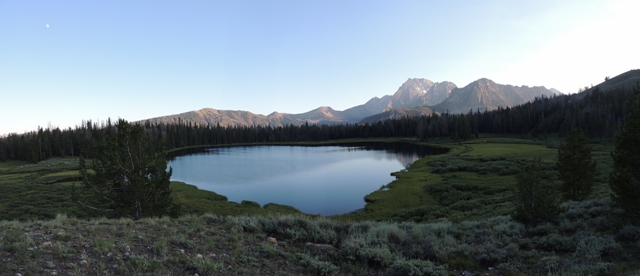
Panoramic view of Frog Lake.
“Sawtooth’s or BUST!”
Eleven horses, nine humans, five mules and a dog pulled out of Rob and Linda Adam’s place in Sweet Idaho, Wednesday, July 17. The five rig caravan loaded with enough provisions for five days in the White Cloud recreational area looked like a modern day migration of homesteaders. Plans laid by our particular group of backcountry horseman are seldom strictly adhered to, but we try to make them anyway. Ours loosely consisted of driving to Livingston Mill trailhead two hours outside of Stanly Idaho, spend the night at the TH and be geared up and mounted early Thursday morning for the ride into Frog Lake. Rob Adams, organizer, project coordinator, self proclaimed “Trail Boss” and all around nice guy – doled out the individual responsibilities for the trip well in advance. Rob would plan and execute the evening meals. Janine Townsend would take care of breakfasts. Robbin Schindele would do lunches. The Chicks, Bob and Lorraine, were responsible for the wine. Bill Selkirk and Kate Miller would be our entertainment directors for the week. I would do desserts. I don’t know if I’m becoming famous for my Dutch Oven desserts or everyone’s afraid they will get Beanee Weenees three times a day if given anything but desserts. My bet is on the latter. We arrived in Stanley shortly after 12:00 PM for fuel and a bite for lunch. What happened next was to unfold into every horseman’s worst nightmare. Willow, Rob’s trail horse of more than a dozen years, went down in the trailer with severe colic. The events leading to the tragic loss of a beloved trail partner and friend can be found by following this link written by Rob. I will not hash out the heart wrenching details of Willow’s passing further except to say that he will be sorely missed. Without Willow, the Squaw Butte Backcountry Horsemen are less than what we were. Though he cannot physically be with us, I know we will carry Willow within our hearts until the very last backcountry horseman draws their final breath. Willow will not be forgotten. We could quit and go home or figure out a way to continue on with one less animal. Backcountry horsemen don’t quit. I offered up my new pack horse, König, as a riding horse for Bill Selkirk. I’d recently acquired König and although he had all the potential for a great little pack horse, I had no idea how versatile he would turn out to be. This made us short one pack horse. The wheels turning in Rob’s head were all but audible. He could make this work. We’d cut down on the gear and take only what was necessary. Heck, we had twice as much as we needed anyway. I chuckle at what we chose to take and what we left behind. Left behind were fire starter, duplicate first aid-kits, extra tarps, rope, high-lines, various cooking utensils, solar showers and duct tape – but damn it – we didn’t leave behind dessert or the wine. There is a limit to adaptability and ours ended with the peach cobbler and boxed Cabernet.