
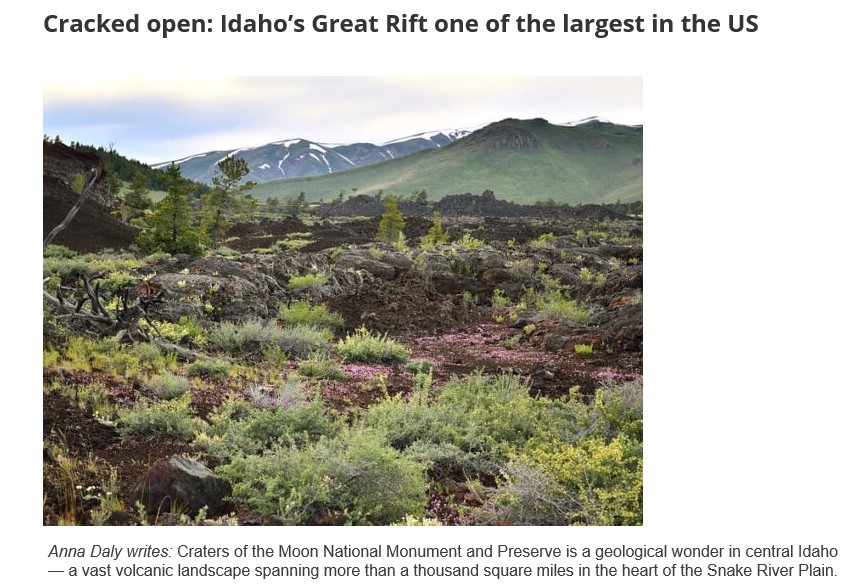
And within it lies something just as remarkable: the Great Rift — a chain of deep volcanic cracks and fissures stretching across the landscape.
According to the Bureau of Land Management, it’s considered one of the largest and most recently formed volcanic rift systems on land in the continental United States.
“At 635 square miles, it is considered to be the largest, deepest, and most recent volcanic rift system in the continental United States,” the agency notes. “Many of Idaho’s most fascinating geological features lie along this potential wilderness.”
Idaho’s Great Rift is one of only a few known volcanic rift systems of its kind on Earth. Another, far more expansive rift, stretches from Ethiopia to Mozambique in eastern Africa.
“The Great Rift System is a volcanic rift zone that consists of eruptive fissures, cinder cones and other volcanic vents, non-eruptive fissures, and faults confined to a narrow belt,” the National Park Service’s website notes. “Most of the recent volcanic activity on the Snake River Plain is located along volcanic rift zones, which trend roughly perpendicular to the axis of the Snake River Plain.”
The Great Rift begins at Craters of the Moon — the northernmost lava field. The rift cuts down over 50 miles southeast from the Pioneer Mountains, landing at the Wapi Lava Field.
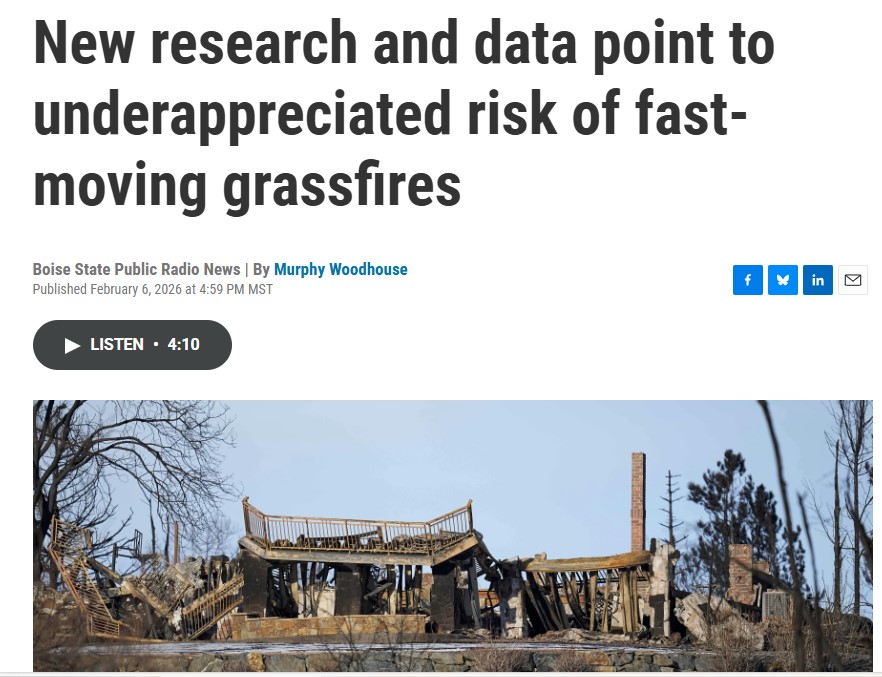
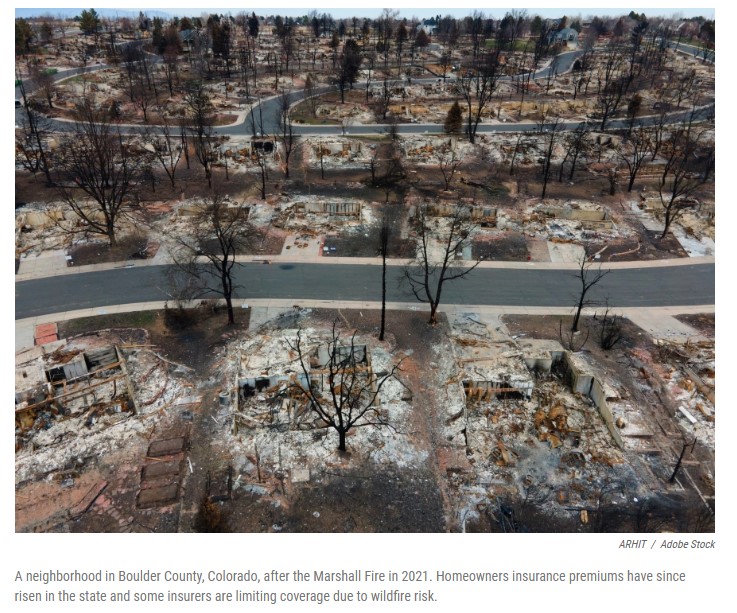
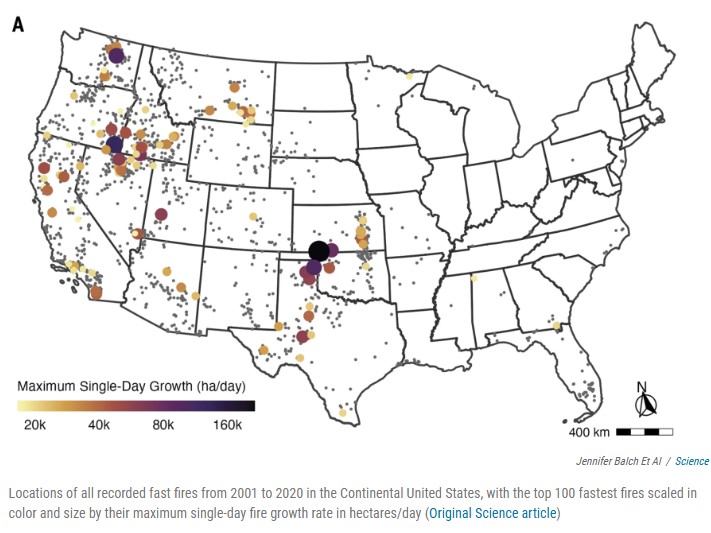
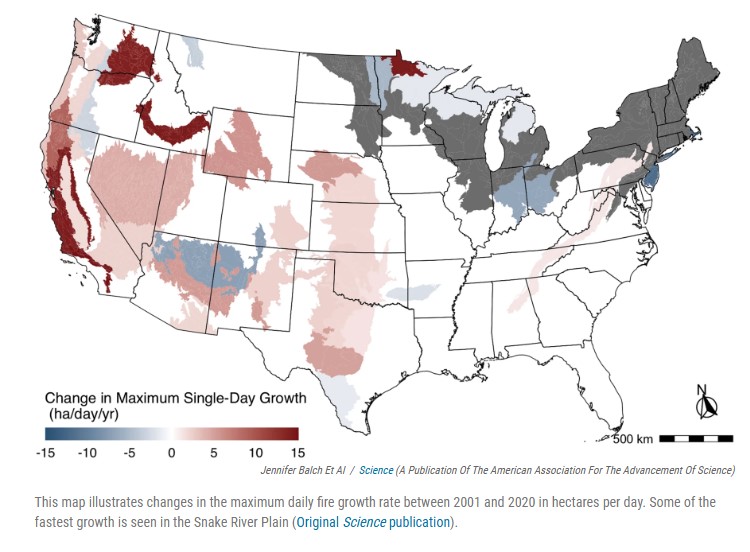 Something wicked nearly returned to the Colorado Front Range as 2025 drew to a close. Records were being set throughout December, with temperatures reaching well into the 70s.
And then the winds came.
“We have wind potential that could gust up to 100mph for some folks today,” CBS News Colorado’s Alex Lehnert told her viewers on Dec. 19.
For the first time in Colorado history, the National Weather Service declared a “Particularly Dangerous Situation” for Boulder County and other nearby communities. Standard red flag wildfire warnings were issued for a long swath that stretched north into Wyoming.
The extreme weather posed “a significant threat to life and property in the event of a wildfire start,” the Boulder County Sheriff’s Department warned residents. “New or existing fire ignitions will have a high risk for very rapid fire spread.” READ FULL STORY: MWNB – Fast Moving Grassfires