31. January 2018 · Comments Off on Utah’s approach to public lands won’t work · Categories: Public Lands

New Mexico exemplifies the risk of managing lands at the whim of local interests.

by Tom Ribe  Link to online Posting

Tom Ribe is a contributor to Writers on the Range, the opinion service of High Country News. He writes from his office in the wildland-urban interface in Santa Fe, New Mexico.

Two days after President Donald Trump signed an executive order reducing Grand Staircase-Escalante National Monument by half, Utah Republican Rep. Chris Stewart introduced a bill in the House that would put local politicians in charge of the public lands cut away from the monument.

One tenet of conservative public-land policy orthodoxy is that local control of public lands will improve the wellbeing of local residents. Yet the movement to auction off federal lands or transfer them to state or county control has repeatedly run aground because public lands are overwhelming popular among Americans. Other conservative efforts have been sought to neutralize federal agencies.

Stewart’s Grand Staircase-Escalante Enhancement Act is one of these new approaches. If passed by the House, it would create a ‘management council’ made up of seven local county commissioners and state legislators appointed by the president of the United States. One member would come from the Department of the Interior. The management council would set policy for two small Bureau of Land Management national monuments and one new national park and preserve under the jurisdiction of the National Park Service. The three areas lie within what once was the Grand Staircase-Escalante National Monument created by President Bill Clinton and managed by the BLM.

Stewart’s legislation states that federal land managers “shall adhere” to management plans created by the management council. If recent experience with a similar scheme at the Valles Caldera National Preserve in northern New Mexico is any guide, this approach is doomed to failure. Valles Caldera: About 1.25 million years ago, a spectacular volcanic eruption created the 13-mile wide circular depression now known as the Valles Caldera.  The preserve is known for its huge mountain meadows, abundant wildlife, and meandering streams. The area also preserves the homeland of ancestral native peoples and embraces a rich ranching history.

In 2000, after a 100,000-acre private parcel surrounded by Forest Service and National Park Service land came up for sale near Santa Fe, public pressure encouraged the New Mexico congressional delegation to buy it for the public. But Sen. Pete Domenici, R-N.M., insisted that a presidentially appointed, mostly private-sector board of trustees set policy for the new preserve as an “experiment” in management. Federal employees would carry out the board’s policy.

Problems dogged the experiment from the start. Having the president appoint board members politicized the board. When Republicans controlled the House of Representatives, ranching-oriented board members were selected; when Democrats controlled the House, conservationists and academics ran the board. The federal staff had to answer to nine ever-changing bosses whose edicts sometimes conflicted with the federal laws that apply to public lands.

Stewart’s bill would ensure that only Republicans would be appointed to the management board — unless some seismic shift were to happen in Utah politics. Lands owned by all Americans would be governed by local people with local interests, and if the management council mandated policies that violated federal laws, the federal staff would have a choice of either violating the law or disobeying their local bosses. One can imagine the lawsuits likely to follow.

Stewart would clearly prefer to transfer these lands to county ownership. But that would run counter to strong public support for federal land management, and it would upset the tourism-oriented businesses that have thrived ever since Grand Staircase-Escalante National Monument began drawing tourists and boosting property values.

Stewart is hoping to mollify these business interests by creating a new little national park. Yet this so-called park mandates livestock grazing and hunting and trapping, and it would be controlled by state game officials and members of the management council. The mandates could force the National Park Service to violate its own Organic Act, opening up both the management council and the federal government to lawsuits.

Stewart’s bill, which has three co-sponsors from Utah, mandates livestock grazing “in perpetuity” on all the lands in question, but makes no mention of administrative costs or the collateral damage of livestock grazing in a rocky desert where little forage grows. Grazing can be mandated, but what happens when there’s a drought?

The public in New Mexico, after 15 years, was frustrated with the “seat of the pants” decision-making by the board of trustees at the Valles Caldera National Preserve. In 2015, Congress transferred the preserve to the National Park Service, which imposed its standard management structure.

Stewart’s bill, combined with Trump’s evisceration of the Grand Staircase-Escalante National Monument, may advance conservative public-lands ideology. But neither action advances the interests of the public, and both create far more problems than they pretend to solve.

29. January 2018 · Comments Off on What are Public Lands · Categories: Public Lands

There has been a lot of attention recently about Public Lands and where America is headed with the management of those lands. Further, anyone who recreates on Americas public lands is often exposed to unfamiliar terms and may not understand the differences. Following is a brief description to give you a working understanding of the differences and what that means to you.

First, what are “Public Lands”? These are the lands that are owned “equally” by all Americans. There are 618 million acres of public land across the U.S., with a significant portion in Alaska and the western U.S. The total U.S. land base is 2.27 billion acres in size. These federal public lands are managed in trust for us, (citizens of the U.S.) by the Forest Service, Bureau of Land Management, Park Service and the Wildlife Refuge System for current and future generations.

“Front country” is not a commonly used term, but is generally any public lands that are relatively accessible by means such as motor vehicles, boats, bicycles, hiking, horseback and aircraft and are usually within a short distance of roads. Generally, these lands provide a multitude of recreational activities. Camping may be in developed or dispersed/undeveloped areas. Logging, grazing and mining are often permitted on these lands as well. These are often highly used areas where it is common to see other people and activities.

“Backcountry” is generally the area beyond what is Front country. Pretty vague, but accurate. There is no specific line or map designation where this starts or ends. Access is more challenging and is usually by a trail or cross-country travel and at a further distance from roads and trailheads. Access may be allowed by the same list as above, but with greater responsibility on the user as trails receive less maintenance. In addition, the safety and welfare of each recreationist to care for themselves is increased. Camping is usually in dispersed sites. You would expect to see fewer people and activities than in the Front country.

“Roadless Areas” had their beginnings when Primitive Areas were established in the 1920’s. The idea was to preserve some lands in a roadless condition at a time when automobiles and road building was rapidly expanding. As time progressed, Roadless Areas have been challenged legally and politically as to which lands should remain or be opened. Currently, there is about 58 million acres of unroaded forests. There is about 380,000 miles of roads on Forest Service lands. In comparison, the Interstate Highway system has about 47,000 miles of road.

Unlike Front country and Backcountry, “Wilderness” is defined and receives that highest level of land protection. While some may get a “wilderness experience” in the Front country or Backcountry or a Park, true Wilderness is a specific geographic area and can only be established or “Designated” by an act of Congress. The Wilderness Act of 1964 put into law what is required to be a “Designated Wilderness”. It states how it will be managed and what modes of access or travel are acceptable. The Act requires that it be managed to protect its natural condition, where it is untrammeled by man. It is to maintain its primeval character, shaped by the forces of nature with man’s work substantially unnoticeable. The purposes will be to provide solitude, and escape from mechanized use and maintain historic uses.

Three more terms that you may hear. “Recommended Wilderness” is generally lands identified on Forest Plans or agency plans that recommend specific areas for Wilderness Designation by Congress. “Proposed Wilderness” is generally lands that have been submitted to Congress for Wilderness consideration, a step closer than recommended. However, these two terms can mean the same thing depending on the agency. Finally, “Wilderness Study Areas” or WSA’s are areas that are inventoried and undergoing the Wilderness review process. They are lands that should be managed to preserve the character or special attributes that made them a WSA.

Parks generally have defined geographic areas which are indicated on maps. The recreational uses within a Park are often highly regulated due to a significant amount of visitor use. There are 58 National Parks, and most are associated with a specific national treasure. Interestingly, some iconic National Parks like Yellowstone, Grand Teton and Glacier and others are NOT designated Wilderness. They are “recommended wilderness” but to date, Congress has not given them the additional level of protection.

Parks can be managed by a city, state, private or federal entity. The simplest definition comes from Wikipedia: A “Park” is an area of natural, semi-natural or planted space set aside for human enjoyment and recreation or for the protection of wildlife or natural habitats. It may consist of grassy areas, rocks, soil and trees, but may also contain buildings and other artifacts such as monuments, fountains or playground structures.

The vast majority of our public lands are managed under the multi-use designation that includes both the Front country and Backcountry. This allows for a multitude of activities to be offered on the majority of our Public Lands. Only about 3% of the lower 48 states land base is designated Wilderness.

Submitted by: Mack Long
Mission Valley BCH, BCH Montana, Education Chairman BCH of America

23. January 2018 · Comments Off on IWF – Currently, Your Right To Access Public Areas is Not Protected · Categories: Public Lands


You read that right! There currently exists no Idaho law protecting your right to access public areas that you pay for. That means anyone can barricade a public tract and prevent your horse, ATV, or motorcycle from passage without fear of repercussion.  And even more common, Idaho sportsmen are running into “NO TRESPASSING” signs on public lands and waters that they have every right to access.  Don’t believe it?  Check out this news story and the video of an encounter with an armed security guard patrolling a Forest Service road.
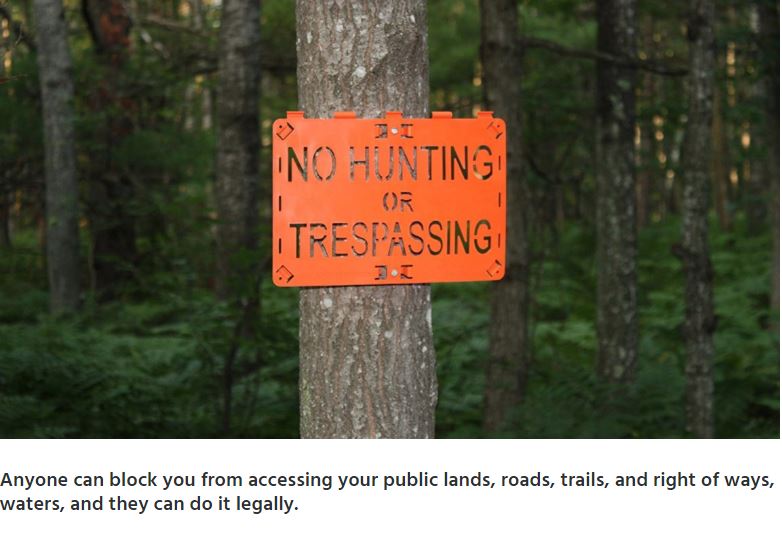
Right now, for instance, public funds can be used to purchase and maintain permanent, motorized public access on a road.  Anyone can physically obstruct that road and block your access without fear of repercussion. Imagine your disappointment when you draw a coveted elk tag only to show up on opening day to find a locked gate across a public road.  Sure you can call the local sheriff.  But with extremely limited funding, and perpetrators with deep pocketbooks, local law enforcement simply can’t prioritize prosecuting these types of cases.

The scenarios are endless, but one thing is for sure, your right to access public property is not secure.  IWF has been working with legislators, motorized recreation groups, and sportsman groups to close this loophole and create a succinct amendment to an existing law that will put the power of protecting public access in the people’s hands. To review the most updated version of the proposed legislation click here.

Have you ever seen signs or physical barriers to impeding access your public lands? Submit your story below and we will deliver your comments to our legislators.  Link to IWF website

Rep. Labrador Co-Sponsors Bill To Cease Creation of New Salmon Recovery Plans
Federal Bill Will Block Idaho Salmon and Steelhead Recovery
With D.C. Vote, Idaho’s Rep. Labrador Reveals Intentions With Public Lands
16. January 2018 · Comments Off on Trail Bridge Catalog – USFS/BLM · Categories: Public Lands, Work Parties and Projects

Standard Trail Bridge Drawings and Design Aids

The Forest Service has standard drawings and design aids for the construction of trail bridges. The standard drawings/design aids have been designed and developed in accordance with Forest Service Manual and Forest Service Handbook directions. The following information is provided FOR REFERENCE ONLY.

All bridge drawings should be approved for each specific bridge by a qualified engineer with trail bridge design experience. Drawings are intended to provide ideas for layout and detailing. No drawing or detail should be used for construction without design review by a qualified engineer. Forest Service bridges must be approved and/or designed by the Forest Service engineer or manager responsible for engineering.

The drawings are not meant to be used as individual sheets and should not be used by themselves. A complete drawing package should be downloaded so that the designer has all the required information for reference. All drawings are in PDF format and can be viewed with Adobe Acrobat Reader.

Currently, only four regions within the Forest Service have standard drawings/design aids. These are Northern Rockies Region (R1), R6 Pacific Northwest Region (R6), Eastern Region (R9), and Alaska Region (R10).

There are two different ways to download the standard drawings/design aids.

The first way is to download a complete set of drawings in a single PDF. This method should only be used with a high-speed Internet connection.

The second way is to download each individual drawing in PDF. This method is recommended for dial-up connections.

Additional Trail Bridge Resources

The following resources give additional information on planning, siting, designing, constructing, inspecting and maintaining trail bridges. All of these items should be included in the decision process to select the best structure for aesthetic design, sustainability and longevity.

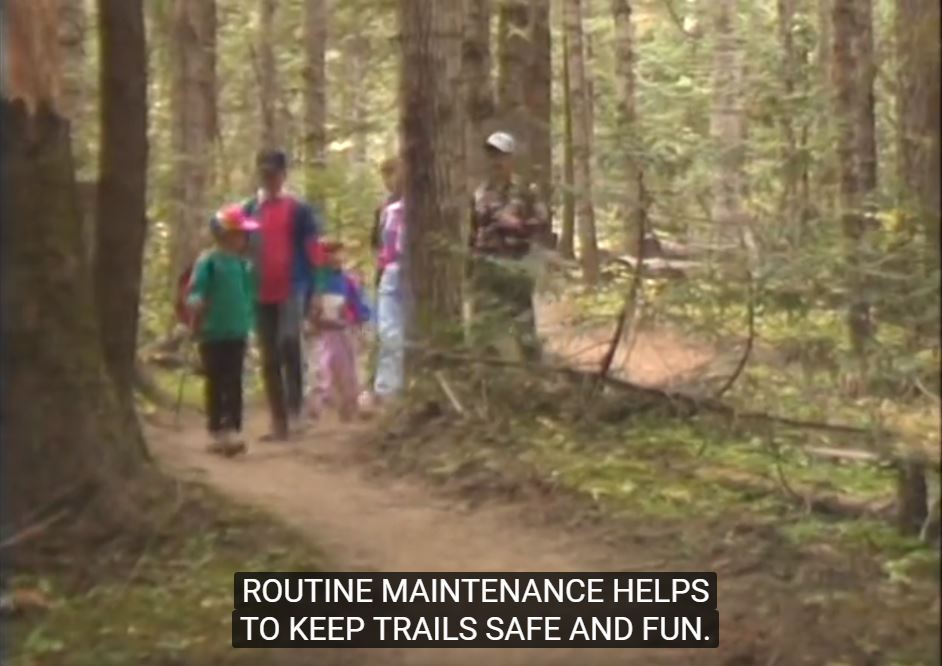
13. January 2018 · Comments Off on Basic Trail Maintenance · Categories: Public Lands

Watch Video

13. January 2018 · Comments Off on Interactive: Tracking Trump’s anti-public lands crusade · Categories: Public Lands

Wilderness Society
Interactive: Tracking Trump’s anti-public lands crusade
After a chaotic first year, the Trump administration has made it abundantly clear that one goal is to systematically sell out America’s public lands to the fossil fuel industry.

This interactive timeline examines all the actions taken by President Trump and Interior Secretary Ryan Zinke to give away our nation’s heritage to energy companies for unfettered drilling, fracking and mining.

How to use the timeline:
Use the bar at the bottom of this page to scroll through our timeline then click on each box for more info.

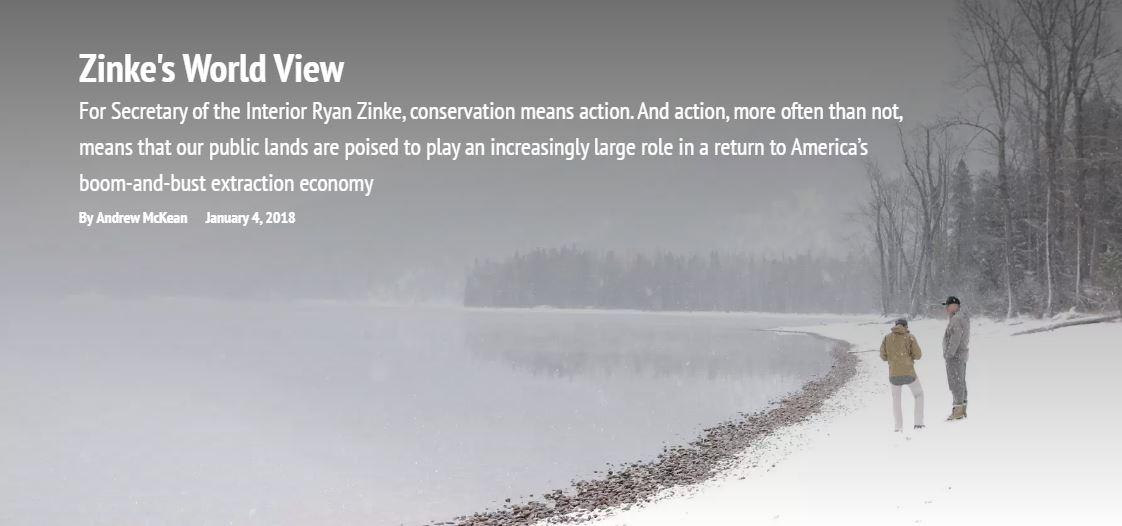
06. January 2018 · Comments Off on Zinke’s World View · Categories: Current Events, Public Lands

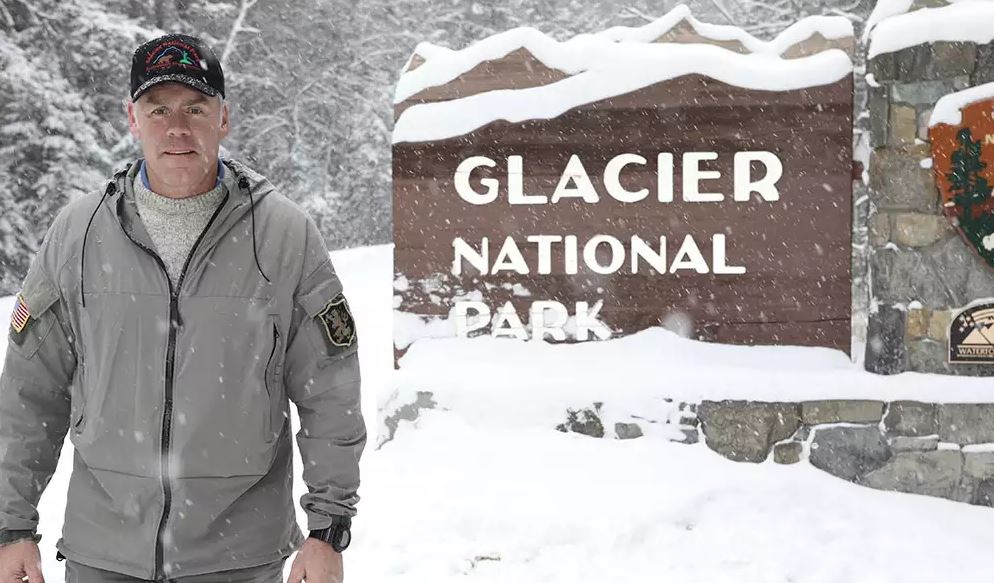
We’re not long into our hike along the snowy shoreline of Glacier National Park’s Lake McDonald when I pop the question I’ve been wanting to ask Ryan Zinke since he was confirmed as Secretary of the Interior back in March. The way I intended to frame the question had both reach and context, even if it was a little wordy:

“You consistently identify yourself as somebody who models himself on Theodore Roosevelt,” was how I had written the query in my notebook. “You’ve repeatedly called yourself a ‘Teddy Roosevelt guy.’ Roosevelt’s legacy is based on his use of the structure and authority of the federal government to protect landscapes for future generations and to promote multiple use of our public lands. So far in your administration, you’ve made headlines for rolling back protections of federal land under your jurisdiction, most recently national monuments in Utah. Can we expect to see initiatives modeled around Roosevelt’s conservation ethic in the future?”

But what came out of my mouth was: “So, when does TR show up?”  READ MORE

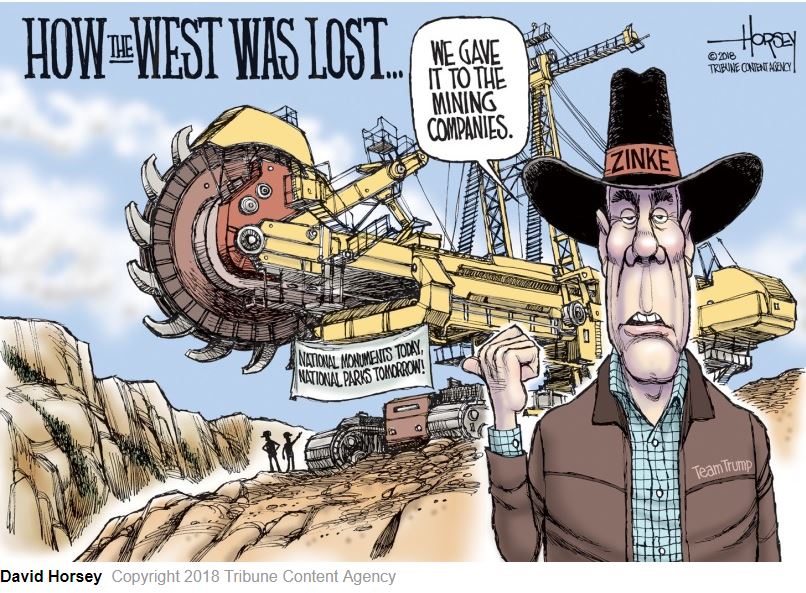
05. January 2018 · Comments Off on How the West was Lost · Categories: Public Lands

05. January 2018 · Comments Off on Selway Bitterroot Frank Church Foundation Fall Round-up · Categories: Current Events, Public Lands

SBFC News Fall 2017

04. January 2018 · Comments Off on Idaho Wildlife Federation 2017 Year in Review · Categories: Current Events, Public Lands


IWF-2017-Holiday-Letter-Final

25. December 2017 · Comments Off on House Advances Bill That Would Allow Mountain Biking In Wilderness Areas · Categories: Current Events, Public Lands

  DEC 19, 2017

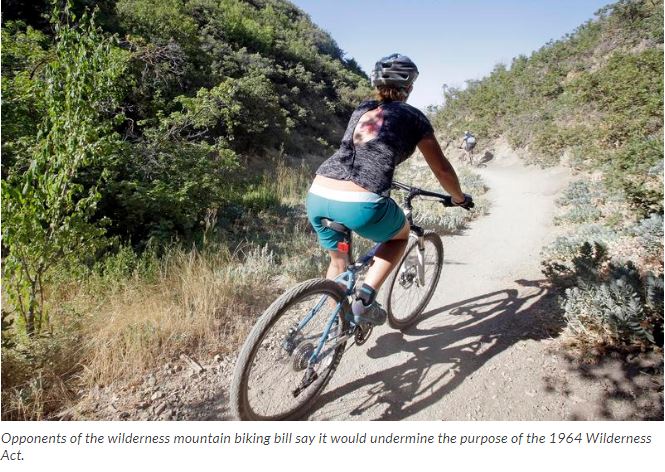
There’s a new push in Congress to allow mountain bikers access to wilderness areas.

Last week, a house committee approved a measure that would amend the Wilderness Act. The bill would allow mountain bikes in wilderness areas, setting up another legislative battle about shared use on public lands.

The Wilderness Act of 1964 has allowed the protection of millions of acres across the United States. Idaho has several areas within its borders, earning it the title of “the wilderness state.”

But to Craig Gehrke with the Wilderness Society, letting mountain bikers recreate in these areas could erode the purpose of the 53-year-old law.

“These are places we set aside for their primitive nature,” says Gehrke. “And for people to go in and experience them not in a mechanical way but basically on foot or on horseback, kind of a preservation of the first experiences pioneers had in these places.”

Gehrke points out that the law explicitly bars “mechanical transport.”

But some Idaho groups are cheering the bill. The Idaho Statesman reports the president of the Southwest Idaho Mountain Bike Association says the measure would bring younger mountain bikers into the conservation movement.

It’s not clear when the bill may come up for a vote on the House floor, but Gehrke says the Wilderness Society will lobby Congressman Mike Simpson to vote against it.

19. December 2017 · Comments Off on FY 2017 Boise National Forest North Zone Trails Program Accomplishments · Categories: Around The Campfire, Public Lands

FY 2017 BNF NZ Trails Accomplishments 10.31.2017

09. December 2017 · Comments Off on BCH States submit testimony on H.R. 1349 · Categories: Current Events, Public Lands


To: National Board Members

Your help needed to ensure that BCH States submit testimony on H.R. 1349. Deadline: No later than noon, Eastern time,Dec. 7th.

Dear BCHA National Board Member,

I seek your help in following through with BCH state presidents to make sure they are able to submit testimony prior to the Dec. 7th congressional hearing on H.R. 1349 (bikes in Wilderness) conducted by the Federal Lands Subcommittee.
As you will see below in an email sent yesterday, state presidents have been provided a template on which to base their state letters. They have been asked to submit their testimony, on BCH state letterhead, via email to brandon.bragato@mail.house.gov. Brandon’s email is for submitting organizational testimony only (i.e., from BCH state or chapter representatives) and is not to be used for individual or personal letters or testimony.

Can you please act to ensure that this important task has been accomplished? And could you please forward to me a copy of the testimony submitted by your state for our records? We will need these letters to use with members of Congress if H.R. 1349 continues to move forward.
Thank you!
________________________________________
December 5, 2017

To: State Presidents and Chairmen

BCH State and Chapter Testimony Needed by Dec. 6, Close-of-Business, to U.S. House of Representatives, Subcommittee on Federal Lands
Dear BCH state and chapter presidents,

This is an updated alert containing a specific email address for sending BCHstate and chapter comment letters(i.e., testimony, not individual letters) prior to theDec. 7 thhearing.

A full template on which to base your state and chapter letter can be found here. HR_1349_TWS_BCHA_Testimony

In addition to any letter you’ve already submitted to your member of Congress, please send a copy of your state and chapter letter using the template to House Subcommittee on Federal Lands professional staff person, Brandon Bragato at brandon.bragato@mail.house.gov.

Please email to Brandon only testimony from your BCH state or chapter.
Include your state/chapter logo at the top of your testimony.

The House Natural Resources Federal Lands Subcommittee will hold a hearingDec. 7 thin Washington, DC, on H.R. 1349. The bill represents an unprecedented assault on the 1964 Wilderness Act, wilderness areas across the country, and poses a significant danger to users of pack and saddle stock.

This issue is among the highest priorities for BCHA. Please email Brandon with your state or chapter’s testimony today!

Freddy Dunn
BCHA National Chairman

05. December 2017 · Comments Off on The Public-Land Bills We Can All Agree On · Categories: Current Events, Public Lands

Two bipartisan bills show how the left and the right can converge on public land policy
Outside Magazine – Jake Bullinger

It would seem Republicans and Democrats are wholly divided on public land policy. During the 2016 campaign, the GOP platform called on Congress to “immediately pass universal legislation” to “convey certain federally controlled public lands to states,” while Democrats sought “policies and investments that will keep America’s public lands public” by prioritizing access and environmental safeguards.

But, believe it or not, some consensus exists. A pair of bills introduced this year—including one that would make it easier to transfer federal land to states—shows that Republicans and Democrats can actually agree on certain aspects of public land management.

The land transfer bill, dubbed the Advancing Conservation and Education Act, was introduced on November 6 in the House by Chris Stewart, a Utah Republican, and Jared Polis, a Colorado Democrat. An identical measure in the Senate is backed by Democrat Martin Heinrich of New Mexico and Arizona Republican Jeff Flake. The bill would allow western states to ask the Department of the Interior to swap state-held trust lands surrounded by federal conservation plots for federal parcels that are easier to develop.

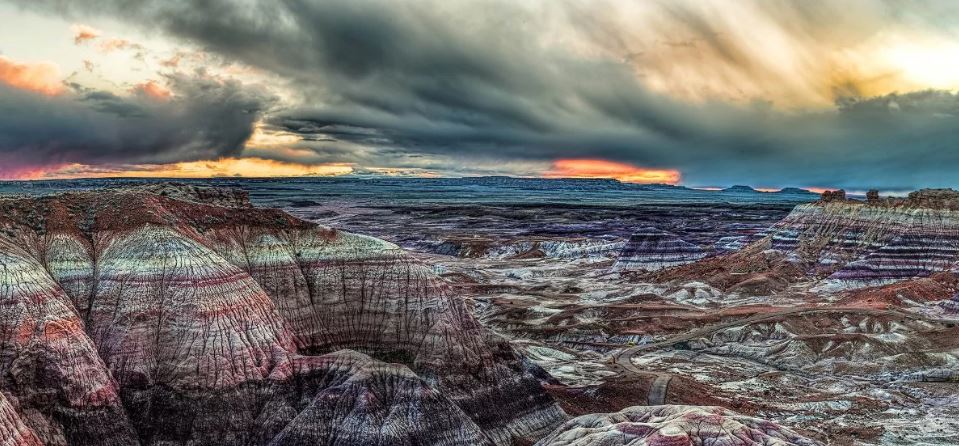
Here’s the issue: Western land is divvied up into a grid of state, tribal, federal, and private ownership. Occasionally state trust lands, which are designated to generate revenue for public schools, are surrounded by national parks, national monuments, or wilderness areas. Consider Arizona’s Petrified Forest National Park. Peppered throughout the park is trust land deeded to Arizona for the purpose of generating money for schools. Arizona has the legal authority to lease those parcels, but running cattle or setting up a pump jack on a 160-acre plot surrounded by stringent national park regulations would be impractical for any rancher or driller. It’s a lose-lose for the state and the feds: Arizona is unable to tap into those dollars, and the national park lacks consistent management within its borders.  READ MORE

02. December 2017 · Comments Off on 3 candidates for Idaho governor answers on Idaho wildlife & public lands · Categories: Public Lands

BY CYNTHIA SEWELL
DECEMBER 02, 2017

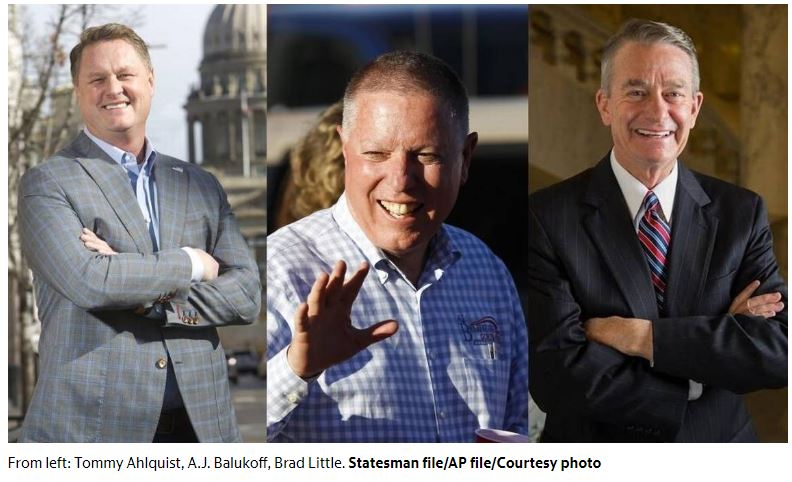
Three of the contenders to become Idaho’s next governor shared remarkably similar views Saturday on wildlife conservation, fishing, hunting and access to public lands.

In questions posed at a forum at Boise State University, Democrat A.J. Balukoff and Republicans Tommy Ahlquist and Brad Little differed mainly on the handling of the state’s sage grouse management plan, and over the idea of breaching four Snake River dams in Washington state to recover endangered salmon and steelhead populations.

Ahlquist Clarifies Breaching Dams Stance After Forum (Dec 15, 2017)

The forum was sponsored by the Idaho Wildlife Federation and 17 other sportsmen and wildlife groups. Each candidate spoke separately for about 30 minutes to a crowd of about 100 people clad in flannel, jeans and camo.

The three have quite different backgrounds: Little, a native Idahoan, is a longtime politician and rancher who currently serves as Idaho’s lieutenant governor. Ahlquist is a doctor, developer and political newcomer best known for recent Boise projects such as the Eighth & Main building. Balukoff is a CPA, businessman and longtime trustee on the Boise school board who ran unsuccessfully against Gov. Butch Otter in 2014.

Absent among the leading candidates was Republican Congressman Raul Labrador, who declined to participate. That garnered a chorus of hisses and boos from the audience.

“We do have a spot reserved for him right up front in case he shows up,” said Brian Brooks, Idaho Wildlife Foundation executive director. “So, if you see him, would you please direct him to his empty seat.”

Some topics that each of the three addressed:

Hunting and fishing: All three said they are outdoorsmen and hold Idaho hunting and fishing licenses. Ahlquist talked about fishing last week with his father-in-law. Balukoff discussed getting his annual wild turkey and a recent failed antelope hunt. Little recounted how for four generations, his family has held an annual upland bird hunt.

Public lands: The candidates said they are not in favor of the state taking ownership of federal land in Idaho, mainly because it would be too cost-prohibitive. But they do want the state to have more of a role in how federal land is managed, and better public access to federal lands.

“Thirty-three million acres is a lot of land,” said Balukoff. “There is enough space to meet needs. If we want wild and scenic areas that are primitive … (or) areas we can designate for use of ATVs – there is room to do multiple uses on our public lands.”

Salmon and steelhead recovery: All agree the federal plan in play for the last 25 years is failing.

“Our rural communities need this industry,” Ahlquist said. “We need to figure this out. … We need to protect Idaho’s interests, Idaho industries, Idaho fish.”

Wildlife management: Political leaders need to listen to professional wildlife managers and biologists. And, all three said, the Idaho Fish and Game Commission should not be politicized.

Endangered species: The candidates said we should follow the advice of biologists and wildlife managers to ensure that Idaho keeps sustainable populations to avoid federal intervention.

The candidates did have a few differences on issues.

Breaching Snake River dams: Ahlquist and Balukoff said they would consider it as a possibility. Little said he would not, but he would consider looking at how that water is managed, including adjusting flows or releasing more water over spillways instead of through turbines.

Sage grouse: All agree that any management plan needs to be collaborative. Ahlquist and Balukoff do not support Idaho’s efforts to fight an Obama-era grouse management plan in court. Little said such an action sometimes is necessary if the federal government does not uphold its end of the deal.

The entire 90-minute forum can be viewed on the Idaho Wildlife Federation’s Facebook page.

27. November 2017 · Comments Off on Public access to trust lands varies widely from state to state · Categories: Public Lands

Emily Benson Nov. 27, 2017

How much is hunting and fishing access to 3.4 million acres of land in Utah worth? Last year, the answer was $776,000. That was the amount the Utah Department of Natural Resources paid another state agency, the School and Institutional Trust Lands Administration (SITLA), to secure public access to state trust lands, granted to Western states by the federal government to generate money for schools and other public institutions.

This fall, however, the deal between the Natural Resources Department and SITLA expired. In negotiating its renewal, SITLA wanted to raise its fee to market rates, estimated at $1.8 to $3.9 million a year for the 1 million acres that have commercial hunting value. If the department didn’t pay up, SITLA seemed ready to lease exclusive access to beloved places like the Book Cliffs — a vast wilderness of rugged bluffs and forested valleys teeming with elk, mule deer and cutthroat trout — to wealthy hunters. Access to prime areas would be scooped up mainly by customers willing to pay thousands of dollars for a single hunt, with only a handful of permits issued through a public lottery.

Kim Christy, SITLA’s deputy director, argued that the agency was merely fulfilling its obligation under the state Constitution to optimize revenue. But many sportsmen saw it differently. Bill Christensen of the Rocky Mountain Elk Foundation says access to state lands shouldn’t be reserved for the highest bidders. And SITLA’s demands underscored his fears about what could happen should federal lands be transferred to state control: privatization and loss of access. “I have been very concerned about how greedy SITLA has been in recent years,” Christensen says.

State trust lands are owned by public entities, but they aren’t “public” the way federal lands are. Most states don’t have to manage them for multiple uses, so there’s no guarantee of public access for hunting, hiking and camping. Instead, these lands are managed to make money, traditionally by leasing them for grazing, mining, timber or energy development. Sometimes the land is sold outright.

“The mandate that states have is often interpreted as this really rigid thing,” says Shawn Regan, a research fellow at the Property and Environment Research Center, a Montana-based free-market think tank. But hunting, especially, can be a source of revenue for state trusts. “There are ways to allow access or provide conservation benefits while still meeting the requirement to benefit the trust.”

Public access to trust lands varies widely from state to state. Idaho and Wyoming allow free access, while New Mexico and Colorado have interagency payment schemes similar to Utah’s. Still, access is provided primarily at the discretion of state agencies, leaving the public with little say in whether certain parcels are put up for sale, threatened with development or closed to the public. Read More

19. November 2017 · Comments Off on Is Karen Budd-Falen unfit to lead the Bureau of Land Management? · Categories: Current Events, Public Lands


With a career dedicated to undermining public lands and public servants, Budd-Falen is uniquely unqualified for the director’s post

Budd-Falen is uniquely unqualified to oversee the BLM, a department charged with managing 258 million acres of America’s public lands — and nearly 700 million acres of oil, gas, and other minerals — on behalf of the American public. She has spent her career fighting against the very existence of U.S. public lands, filing frivolous lawsuits against the BLM, working to subvert public land managers, supporting unpopular efforts to dispose of public lands, and even aligning herself with fringe extremists.

Here are three important reasons Interior Secretary Ryan Zinke and the Trump administration should look elsewhere rather than nominate Budd-Falen to run one of America’s most important agencies. Read More

Wyoming lawyer architect of public land disposal movement

Budd-Falen is uniquely unqualified to oversee the BLM

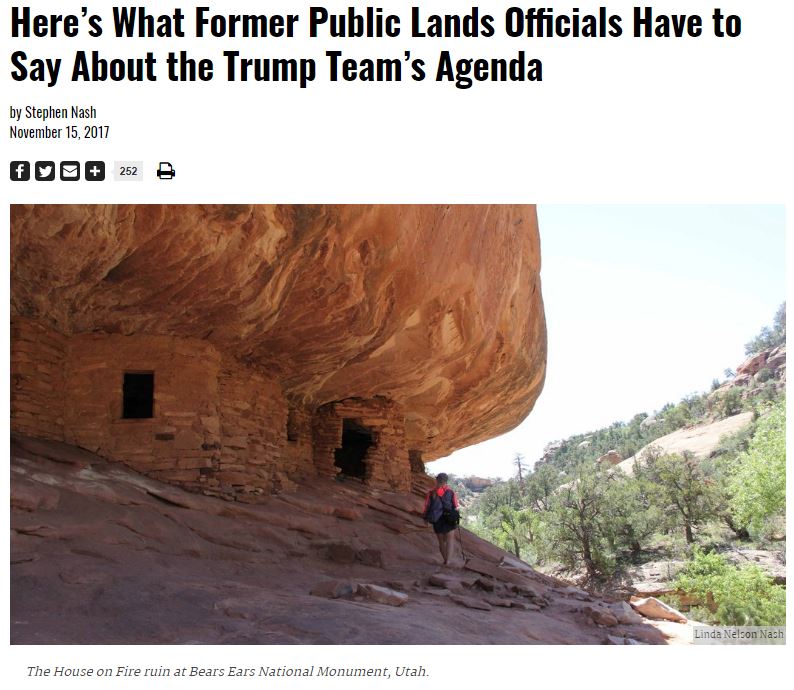
18. November 2017 · Comments Off on Former Public Lands Officials speak out · Categories: Around The Campfire, Current Events, Public Lands

Many visitors to U.S. national parks and monuments—a record 331 million in 2016—seek a hiatus, however fleeting, from the daily grind. But increasingly, they may find themselves face-to-face with some of the things they are trying to escape.

The Trump Administration’s quick-step public lands agenda for 2017 includes budget cuts, expanded resource extraction (mining, logging, drilling, and grazing), shrinking national monument boundaries, and a relaxation of restrictions on problematic activities like the use of plastic bottles.

At Dinosaur National Monument, for example, the Bureau of Land Management plans to auction public land for oil and gas drilling. The drilling site is near the park’s entrance road and will be visible from the visitor center. The BLM says it will take steps to minimize the impact, including light shields, noise mufflers, and “placement of exhaust systems to direct noise away from noise sensitive areas” and “avoiding unnecessary flaring of gas.”

But Mike Murray, who worked as a national park administrator and ranger at Dinosaur National Monument for thirty-four years, calls the decision to auction drilling rights there “indefensible.” The monument’s pitch-black night skies and silent soundscapes have been protected by the Park Service since Woodrow Wilson’s presidency, Murray says in an interview. Visitors, he notes, will now witness “oil rigs instead of a pristine landscape.” And the Trump team’s “total priority” on mining and drilling threatens other values, like “protecting parks for future generations and for wildlife.”  Read More