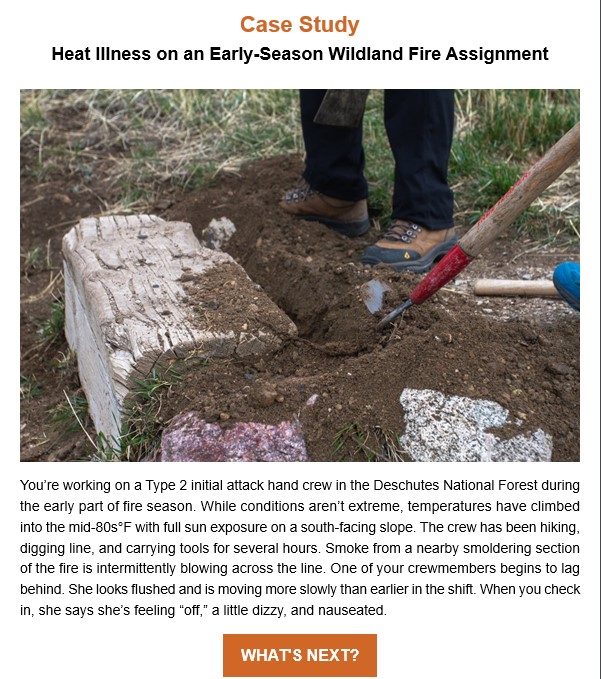
Case Study: Heat Illness on an Early-Season Wildland Fire Assignment – NOLS


The Setting

You are working on a Type 2 initial attack handcrew in the Deschutes National Forest during the early part of fire season. It’s one of the first assignments of the year, and while conditions aren’t extreme yet, temperatures have climbed into the mid-80s°F with full sun exposure on a south-facing slope.

The crew has been hiking, digging line, and carrying tools for several hours. Many members are new and this is the crew’s second week together. Smoke from a nearby smoldering section of the fire is intermittently blowing across the line.

Around mid-afternoon, one of your crewmembers, a 26-year-old female named Taylor, begins to lag behind. You notice she looks flushed and is moving more slowly than earlier in the shift. When you check in, she says she’s feeling “off,” a little dizzy, and nauseated. She also mentions her eyes are irritated from the smoke and that her contact lenses are bothering her.

You are the crew’s designated Wilderness First Responder (WFR). You decide to stop and perform an assessment.
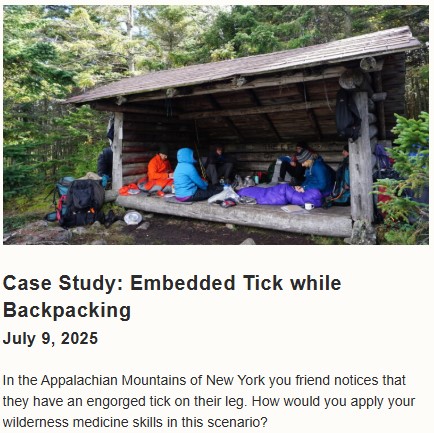
 

https://www.nols.edu/blog/case-study-embedded-tick-while-backpacking/

The setting

You’re on day 6 of a week-long backpacking trip on the Appalachian Trail in New York. The last few days have been beautiful, and you’re so glad to be enjoying this time outside. You and your friends decide it’s time for a break, so you sit down to enjoy some cool water and a snack. All of the sudden, one of your friends says, “Hey, I think there is a tick on me.” You wander over and offer to help out.
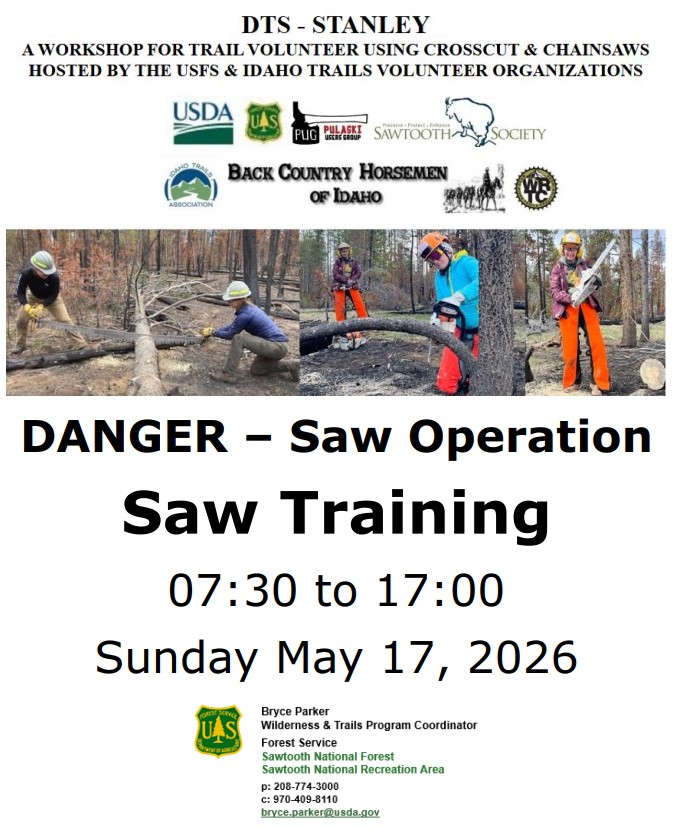
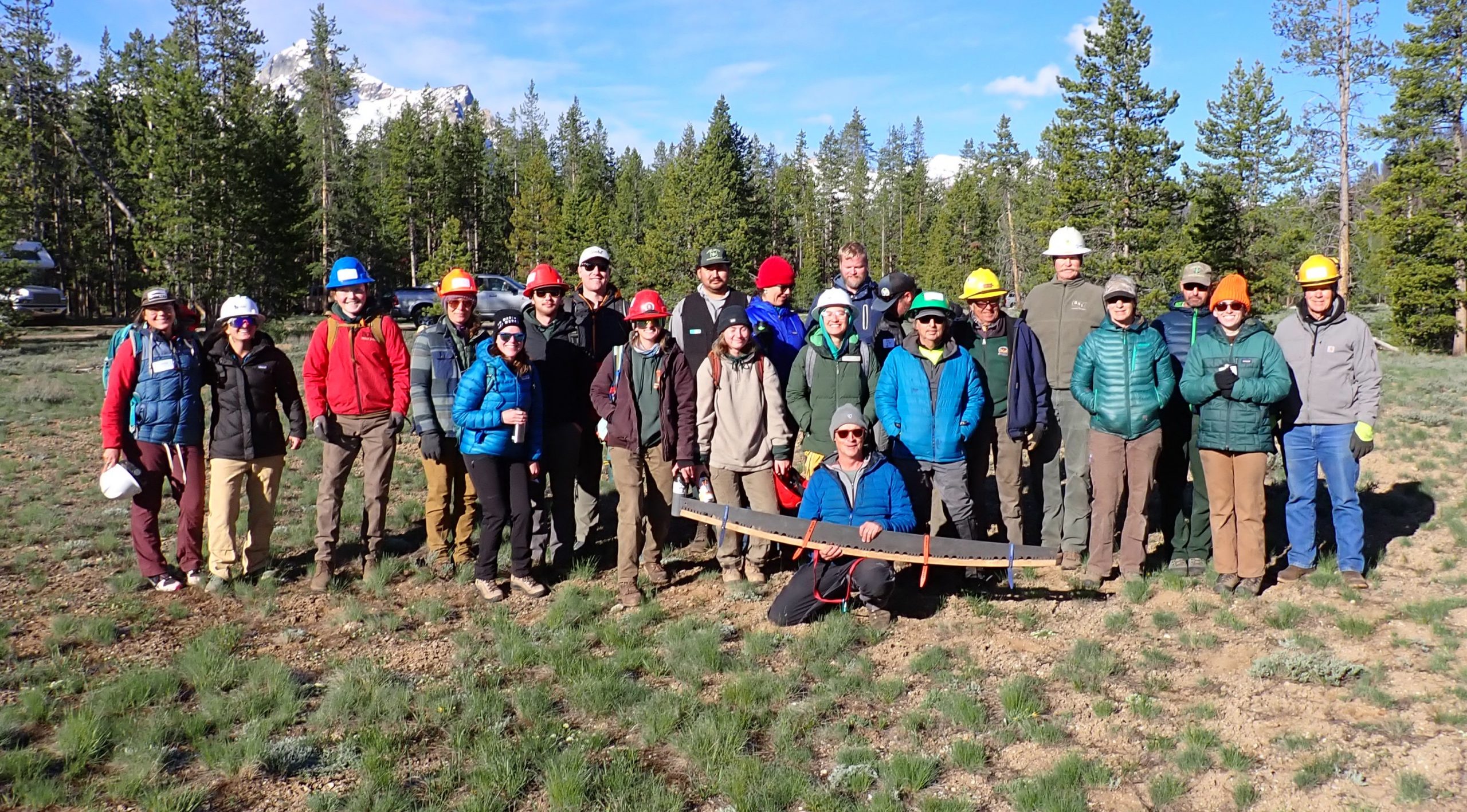
09. June 2026 · Comments Off on Education: DTS Stanley 2026 · Categories: Around The Campfire, Education


DTS Stanley 2027

09. June 2026 · Comments Off on Education – Students of the Crosscut Saw · Categories: Current Events, Education

Students of the Crosscut Saw

Wilderness & Trails Intern

Training, 5/18-5/22/2026

Nez Perce-Clearwater National Forests

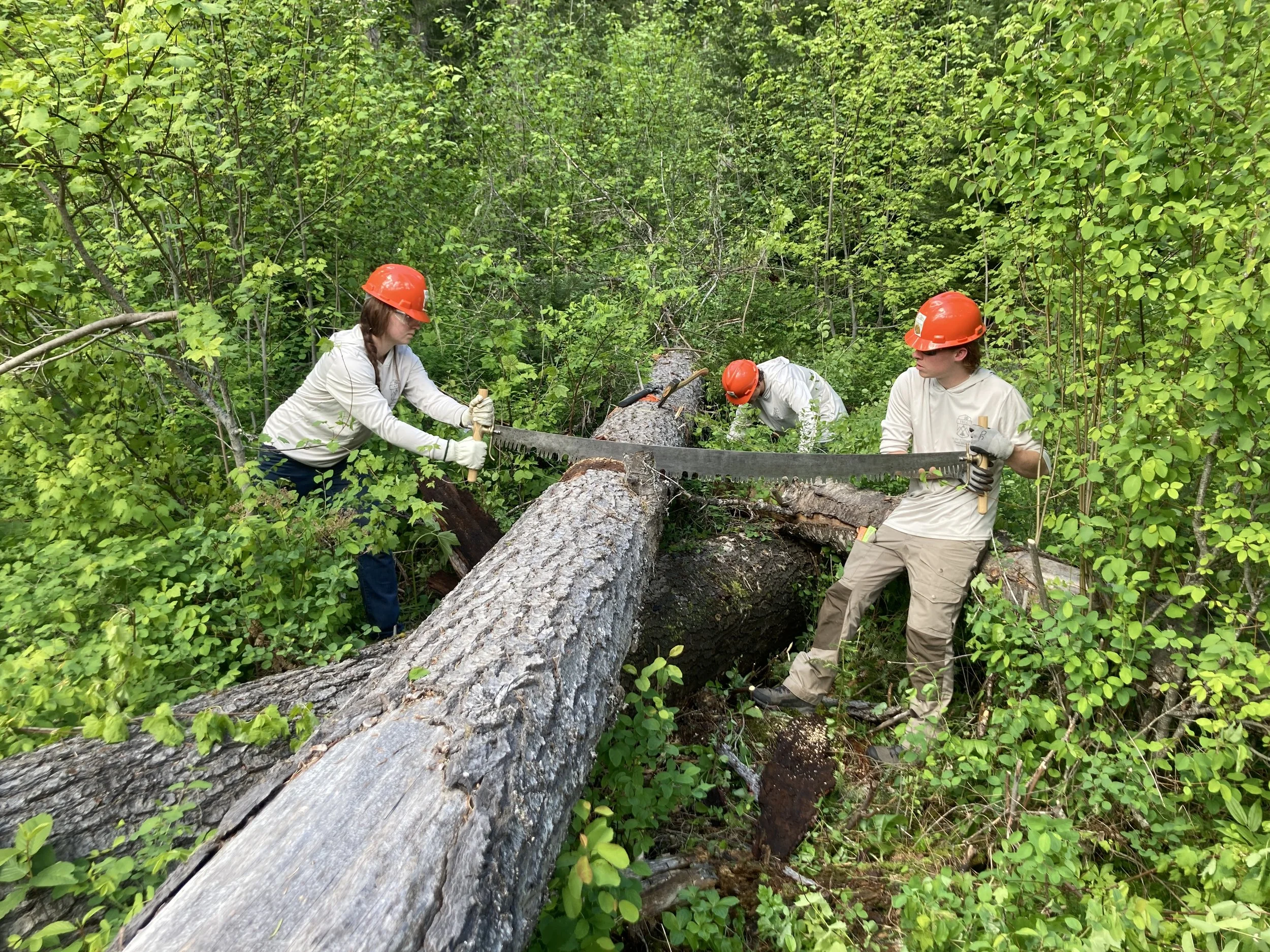
Two SBFC interns learning to use a crosscut saw at the NRWSI in May.

People of all backgrounds came together to attend the Northern Rockies Wilderness Skills Institute at the historic Powell Ranger Station along the Lochsa River, with at least one common interest: dedicating their summer to the conservation of public lands. Recognized for their continued dedication, people like Adam Washbeck, Regional Saw Program Manager for the United States Forest Service, and Todd Brown Backcountry Horsemen of Idaho,  led the instruction of a budding workforce that has arrived for the season.

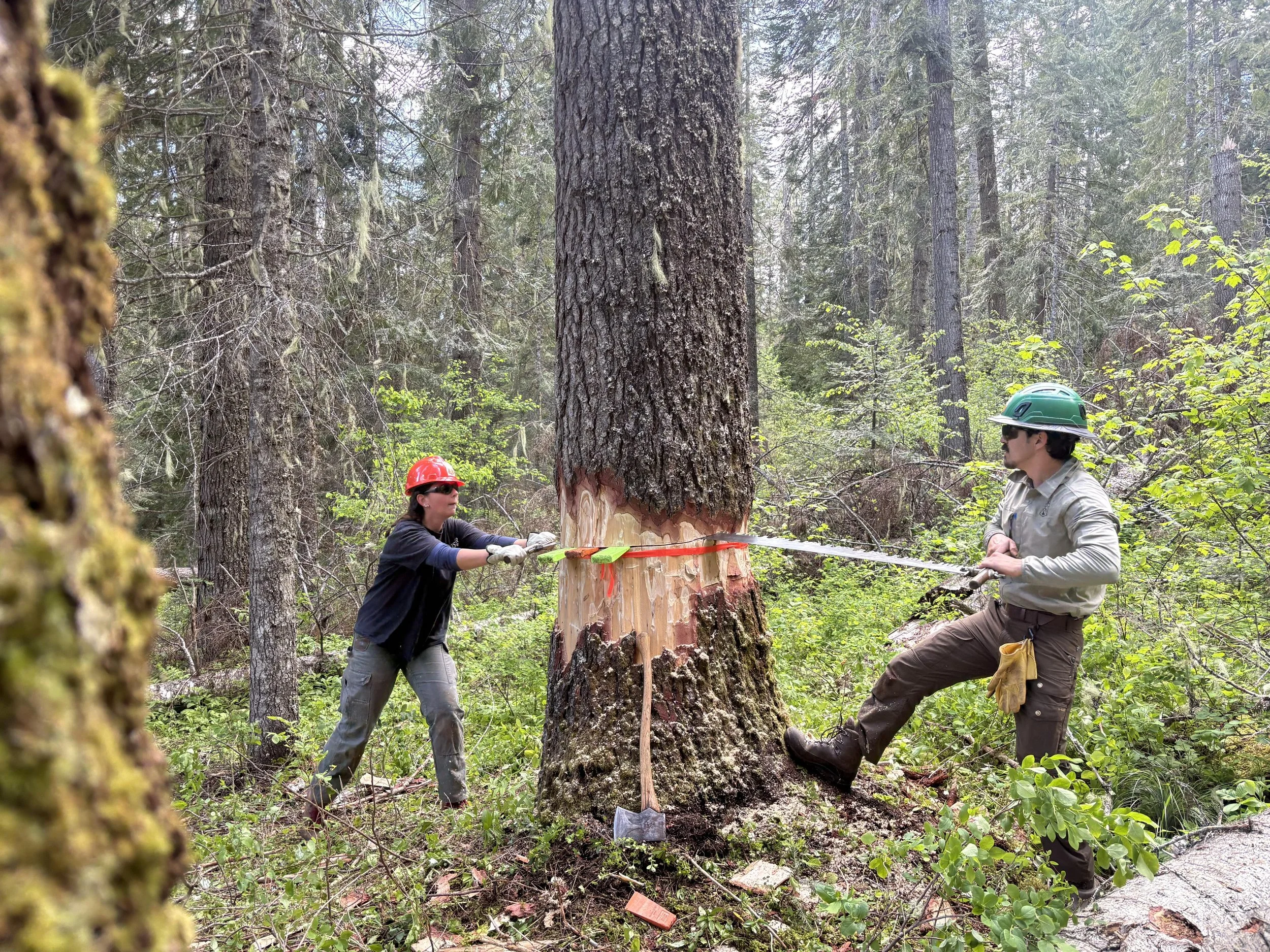
Josh and WTIntern, Darby, near completing the back cut on a large Grand Fir. In rising a little too high for their preferred stump shot, they learn just how much lift wedges can provide!

While the widespread use of chainsaws for logging evolved from the crosscut saw, the crosscut saw survives on a niche in wilderness conservation, cut out for itself by its primitive qualities. The Wilderness Act of 1964 deemed motorized use a threat to congressionally designated wilderness areas, sparing the non-motorized crosscut saw from extinction. Passing on the knowledge of how to use such a tool effectively in the field was critical. Commercial manufacturing of crosscut saws in America ceased during the 1950s. Therefore, the saws we hold in our hands are also relics that need to be maintained properly to ensure their preservation. Without them, the sprawling network of trails leading the public into wilderness would remain inaccessible, by trees that have yielded their position in the sky, but not on the ground, to any force other than a saw.

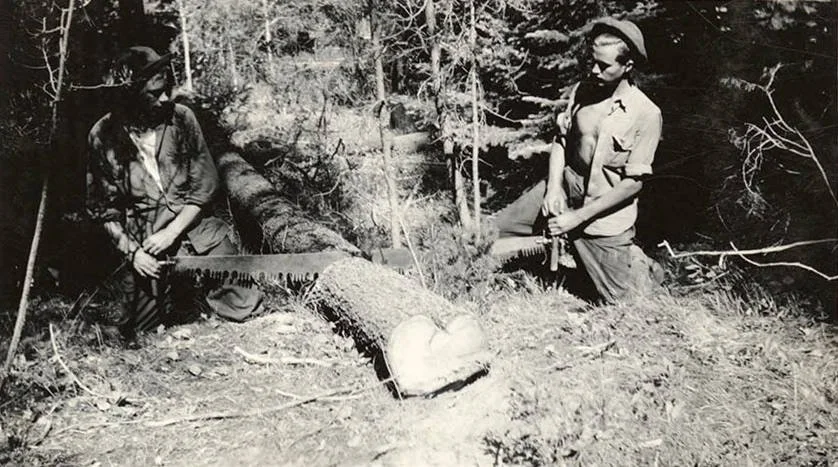
Two CCC men cross-cutting a log with a saw in 1939. (“CCC Men and Crosscut Saw”, Civilian Conservation Corps in Idaho Collection, University of Idaho Library Digital Collections, https://www.lib.uidaho.edu/digital/cccidaho/items/cccidaho1007.html”)


Andrew Ehms

Webster, NY

SUNY: Geology

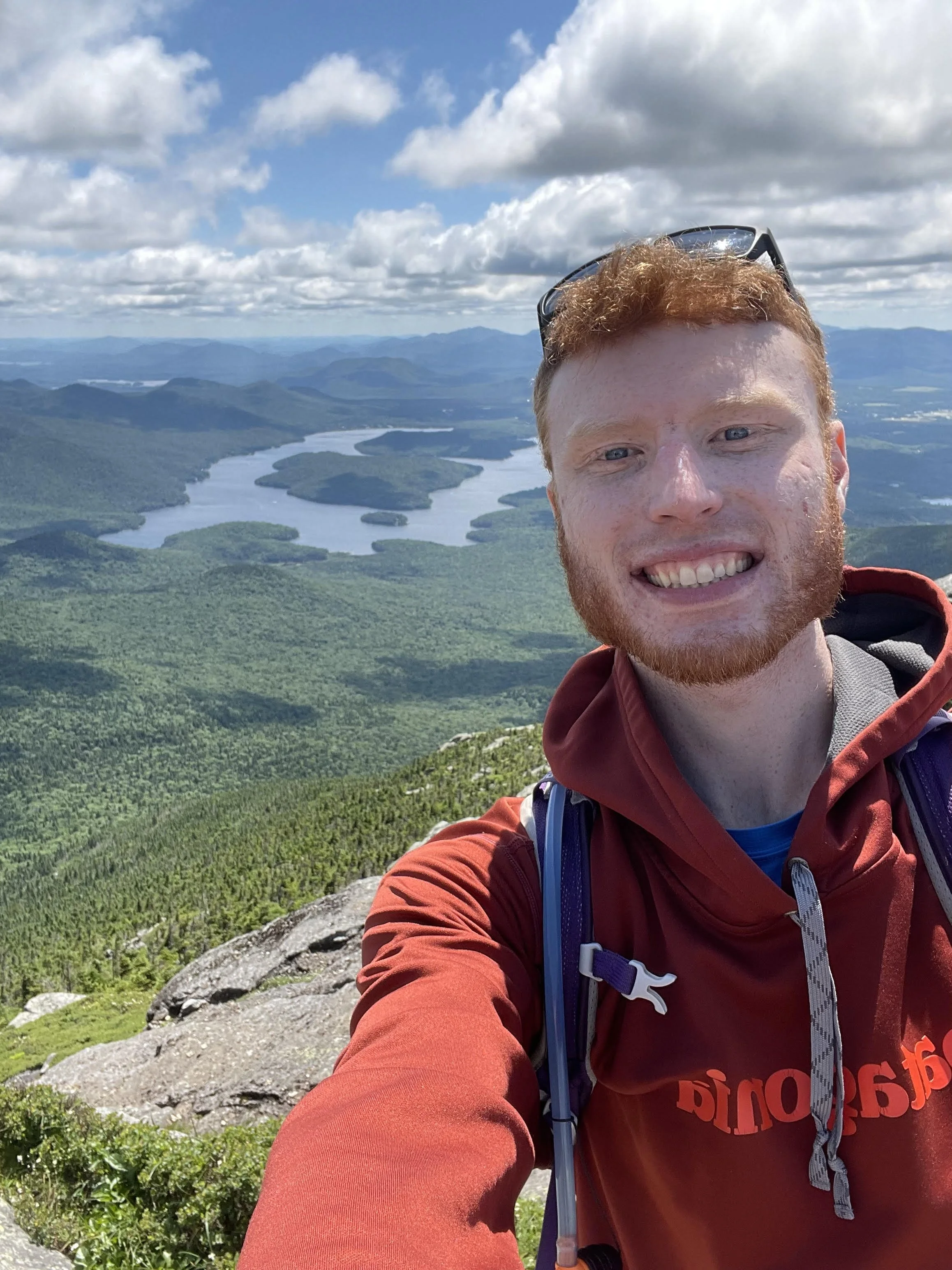
Andrew attended New York state college to study geology. Field courses required for professional licensure introduced Andrew to Montana for the first time. He is returning to Montana after trail maintenance for the SCA in the Adirondack Park as well as land stewardship for the Appalachian Trail Conservancy in Virginia.


02. June 2026 · Comments Off on Public Lands – President signed an executive order that could fundamentally change public lands · Categories: Current Events, Public Lands

This came from Backcountry Hunters and Anglers.

Friday night, the President signed an executive order that could fundamentally change public lands as we know them.

Decades of underlying policy allowing agencies to govern motorized vehicle use on federal land? Gone. Agencies have been directed to rescind or rewrite policy that has regulated ORV use on public lands for the past 50 years.

We, the BHA community, already know the implications: Unchecked motorized travel on public lands can harm access for everyone in the long run. It changes wildlife behavior, fragments habitat & trades the quiet for the noise.

Access matters & we fight for it every day. But access & motorization are NOT the same thing.
Not every acre of public land should be managed for maximum motorized access. The ability to reach public lands should not come at the expense of the wild qualities that make those places worth visiting in the first place.

We’re dissecting every detail of this order and continuing to advocate for the backcountry in the halls of Congress. More to come.
~~

The draft is to not allow any restrictions on motorized access to national forests, you can’t tell a motorcyclist they can’t ride there or stop ATV or UTV access to anywhere.  They want to “open and improve” airstrips in the backcountry, the Big Creek 4 are right there on top of the list.  They want to rewrite the wilderness act to allow chainsaws across the board, which opens the door for mechanized travel and motorized travel in Wilderness.  That chainsaws in Wilderness push was just the foot in the door for eliminating what we know as big W Wilderness.  Trump is piling this on faster than we can fight it.  I am still involved in fighting the chainsaw thing and a lawsuit is being drafted, those folks that are OK with using chainsaws have just opened the door for the full on removal (or updating as IOGA calls it) of the Wilderness Act. Jeff Halligan

02. June 2026 · Comments Off on PNW – The story of people and the lower Columbia River · Categories: Current Events, Education

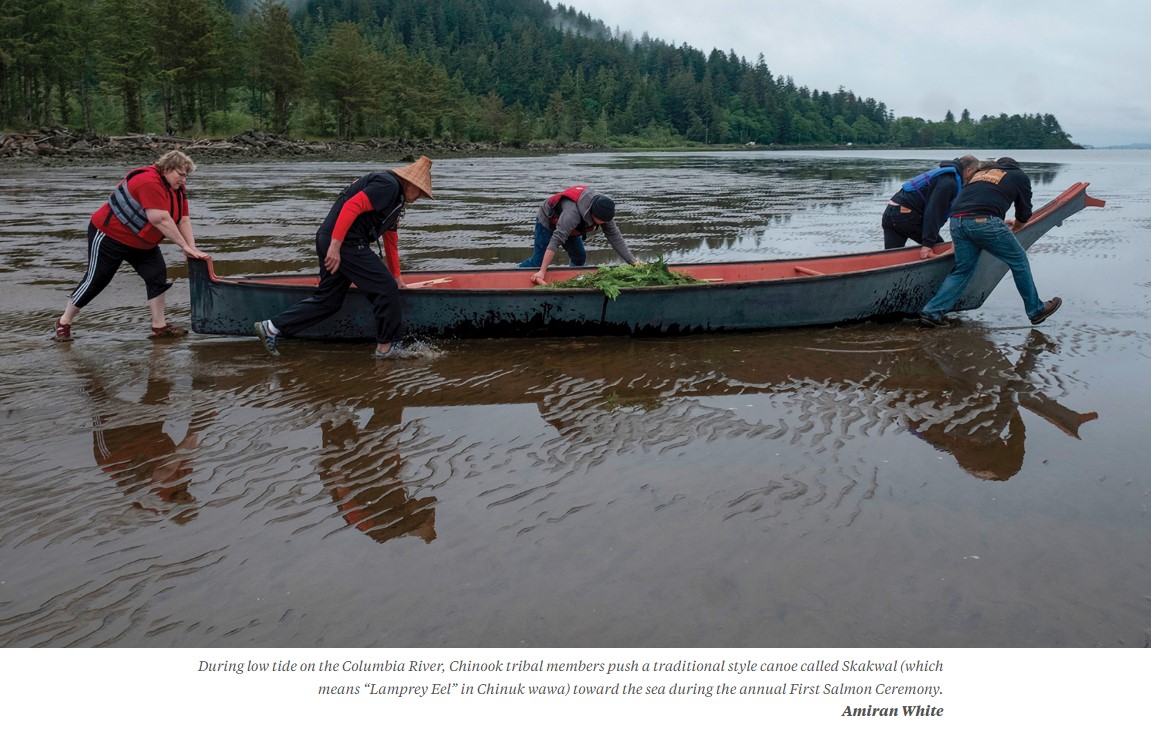
The story of people and the lower Columbia River has always centered around canoes. Varying shapes and styles were built to navigate the river’s varying shapes and elements. There were canoes for shallow water and deep water, canoes to cut through currents and travel upstream, canoes for clamming, fishing and whale hunting.

Chinookan canoe construction reflected the diversity of the region’s people and the lower Columbia, comprising a vast 146-mile estuary from the river’s mouth to the western Columbia River Gorge. The most famous and largest canoes measured up to 60 feet long, designed to navigate powerful wind and waves near the river’s mouth and big enough for three tons of people and cargo. Among the smallest were 10- to 14-foot canoes made for gathering wapato, a wetland plant with emerald, arrowhead-shaped leaves and edible potato-like tubers. The boats were sleek, light enough to carry under one arm and ideal for the slow-moving shallow waters around present-day Portland, where wapato thrived.

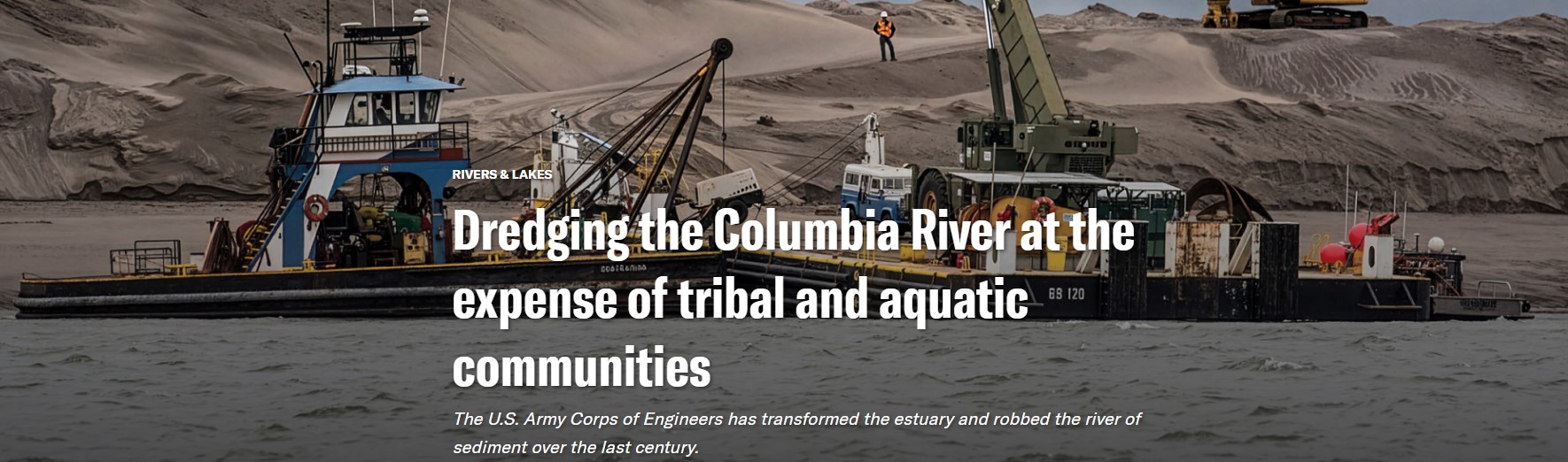
Canoes decorated the river’s sandy shorelines. Villages lined its banks. Before the 1800s, no levees separated the waterway from the floodplain. No dams blocked salmon. Cold water roared over rapids and sighed through the estuary. Braided channels thick with insects and songbirds curved through marshy bottomlands. Minnows, suckers and sturgeon filled the clear backwater tidal sloughs. These extensive channels snaked through the broad estuary like veins from the region’s heart, the Columbia, known as wimaɬ to upper Chinookan peoples and iyagaytɬ imaɬ to the lower Chinookans at the river’s mouth. The habitat supported one of the world’s largest salmon runs, when 10 to 16 million salmon and steelhead returned from the ocean to spawn in their ancestral rivers.    Dredging the Columbia River at the expense of tribal and aquatic communities

01. June 2026 · Comments Off on Public Lands – Repeal of Travel Management · Categories: Around The Campfire, Current Events, Public Lands

May 29, 2026 – FOR IMMEDIATE RELEASE

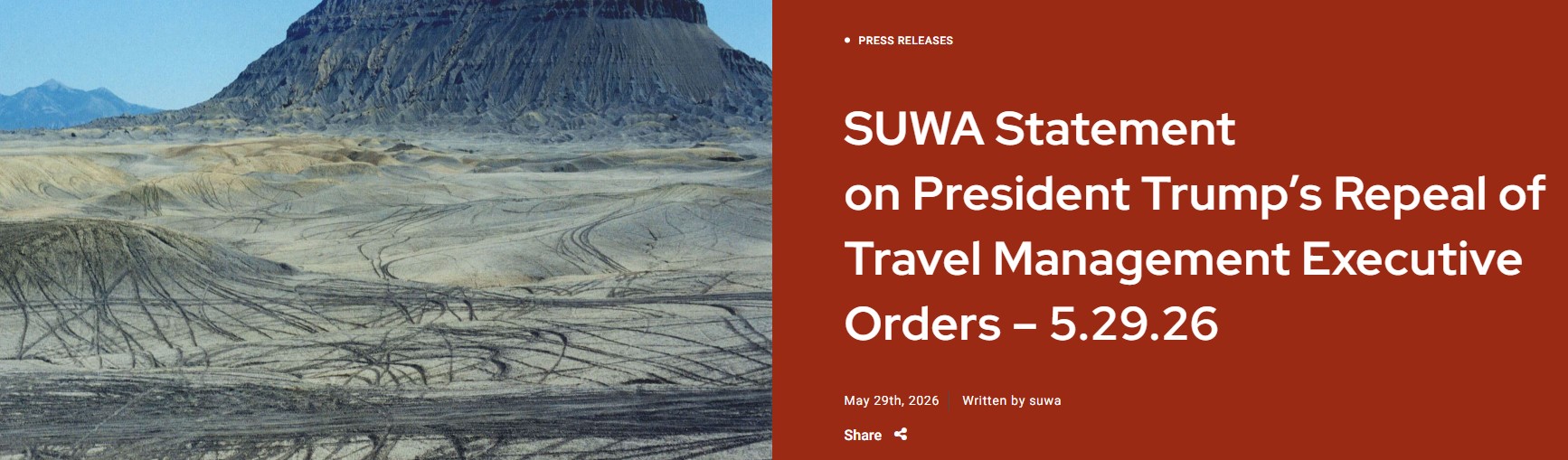
SUWA Statement on President Trump’s Repeal of Travel Management Executive Orders – 5.29.26

Will bring unregulated motorized recreation and chaos across public lands  

Contacts:
Grant Stevens, Communications Director, Southern Utah Wilderness Alliance (SUWA); (319) 427-0260; grant@suwa.org

Washington, DC – Friday evening, in his latest attack on federal public lands, President Trump announced the repeal of Executive Order 11644 of February 8, 1972 (Use of Off-Road Vehicles on the Public Lands), and Executive Order 11989 of May 24, 1977 (Off-Road Vehicles on Public Lands). He further directed federal land management agencies including the Bureau of Land Management and Forest Service to rescind or revise their regulations implementing these Orders. Below is a statement from SUWA Legal Director Steve Bloch and additional information.

“The reality is that there are tens of thousands of miles of dirt roads and trails in Utah’s canyon country open today to motorized vehicles. Far from motorized vehicles being kept out of public lands, it’s quite the opposite: it’s the wildlife and visitors trying to picnic or camp with their families that are being chased out at every turn,” said Steve Bloch, Legal Director at the Southern Utah Wilderness Alliance (SUWA). “These executive orders provided the foundation for common-sense management of motorized vehicles on public lands. They recognized the destructive impact unmanaged motor vehicles have on our public lands and required federal agencies to minimize the damage. The impacts of today’s Order will be significant, long-lasting, and devastating.”

About Executive Orders 11644 and 11989

Presidents Nixon and Carter issued Executive Orders 11644 and 11989 in 1972 and 1977, respectively, in response to the growing use of dirt bikes, snowmobiles, all-terrain vehicles, and other off-road vehicles (ORVs) and corresponding environmental damage and conflicts with non-motorized recreationists. These executive orders require federal land managers to plan for ORV use to protect resources and other recreational uses. Specifically, the executive orders require that, when designating areas or trails available for ORV use, the agencies locate them to:

(1) minimize damage to soil, watershed, vegetation, and other resources of the public lands;

(2) minimize harassment of wildlife or significant disruption of wildlife habitats; and

(3) minimize conflicts between off-road vehicle use and other existing or proposed recreational uses of the same or neighboring public lands.

SUWA Statement on President Trump’s Repeal of Travel Management Executive Orders – 5.29.26