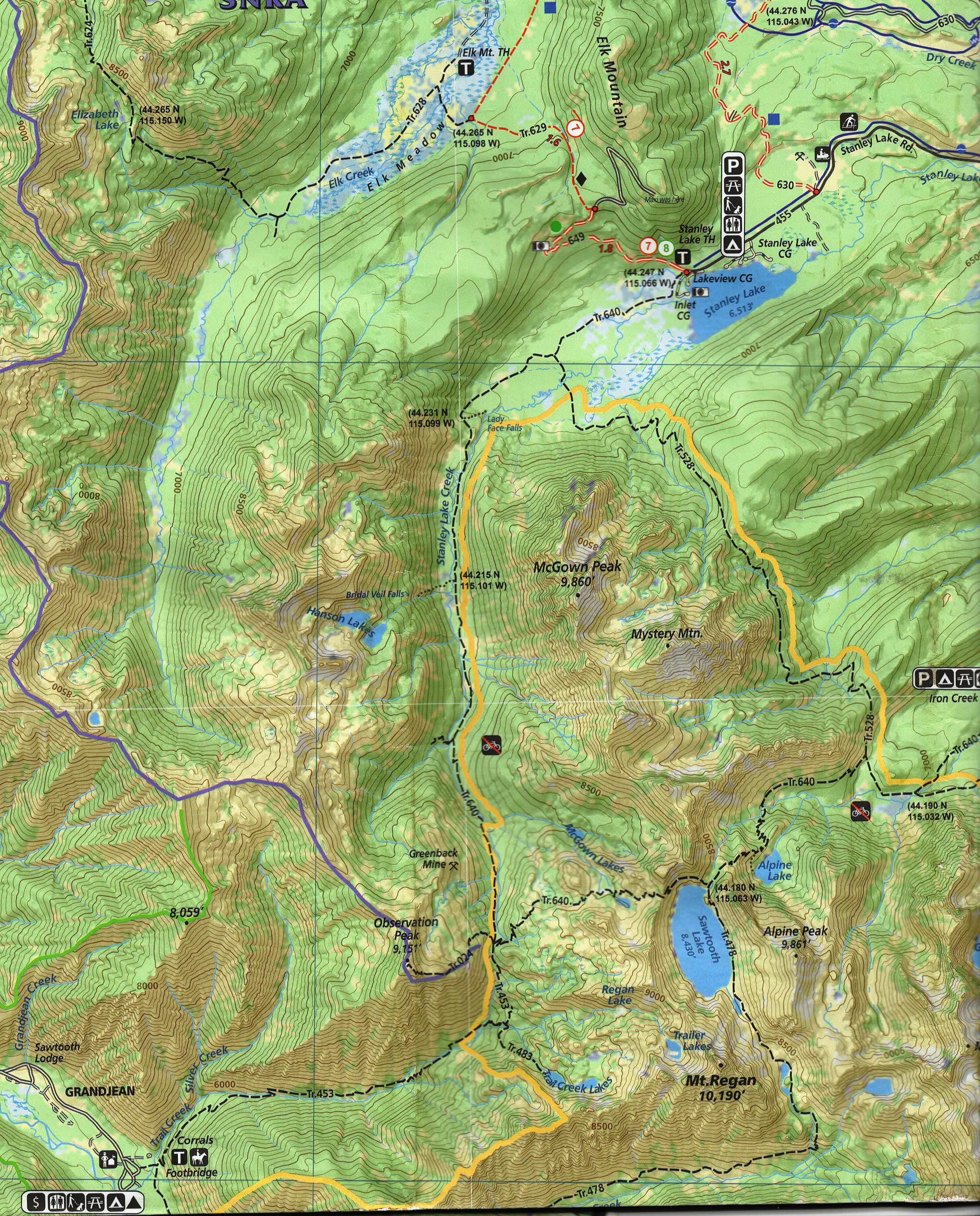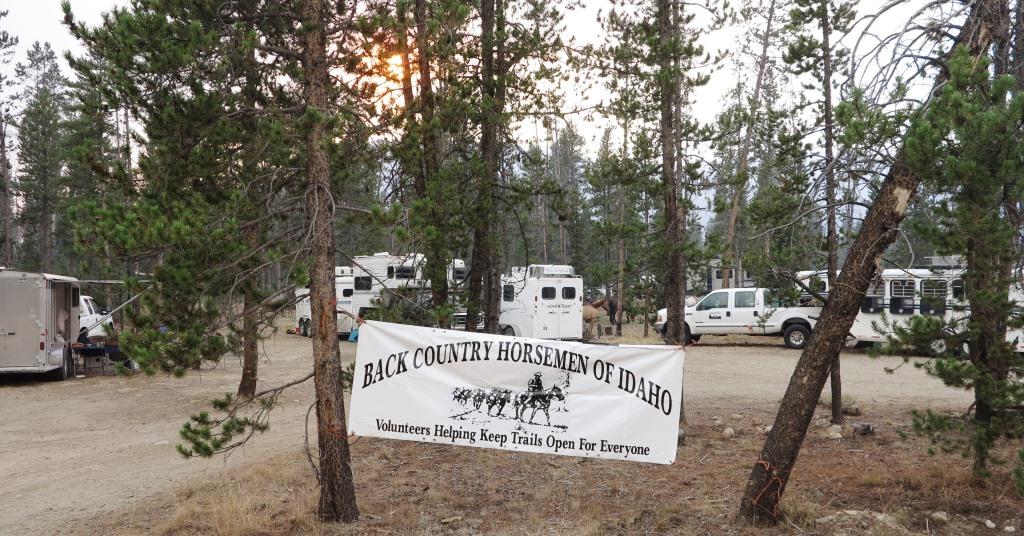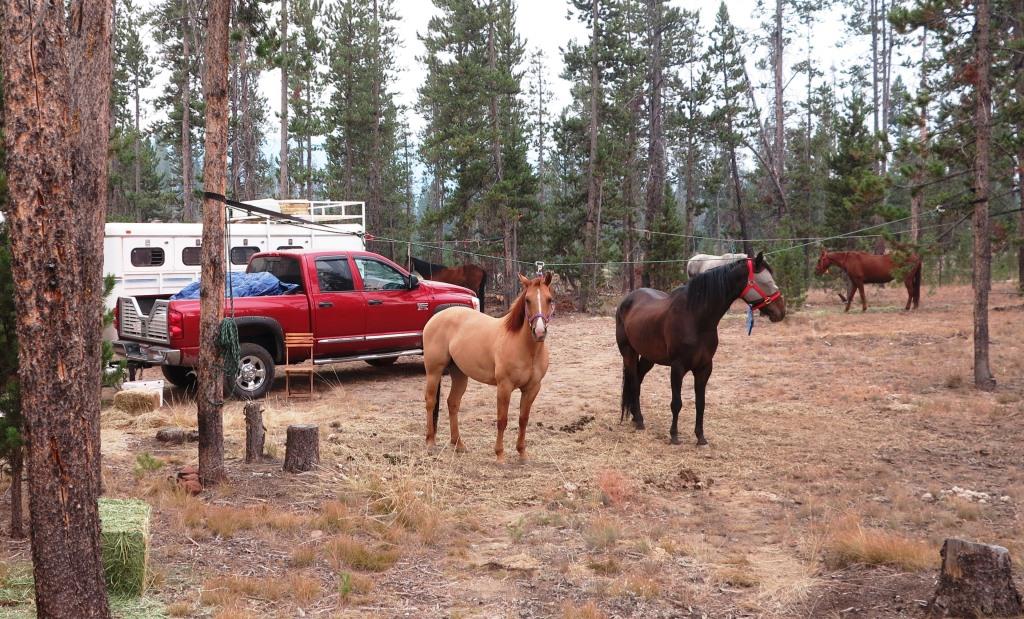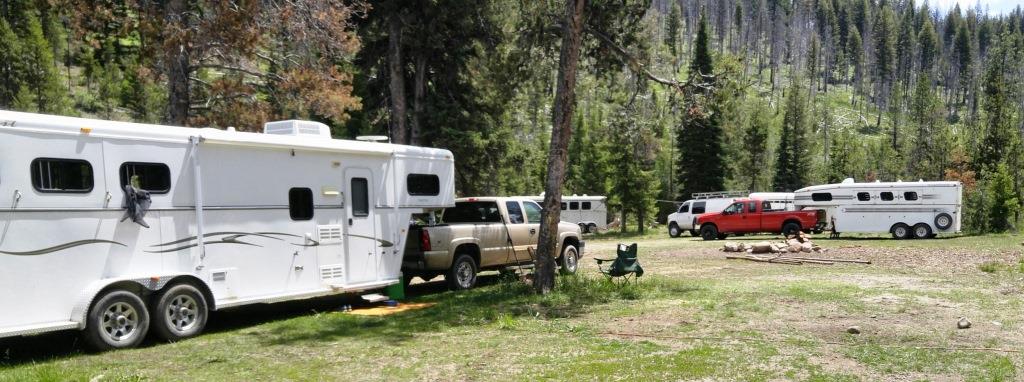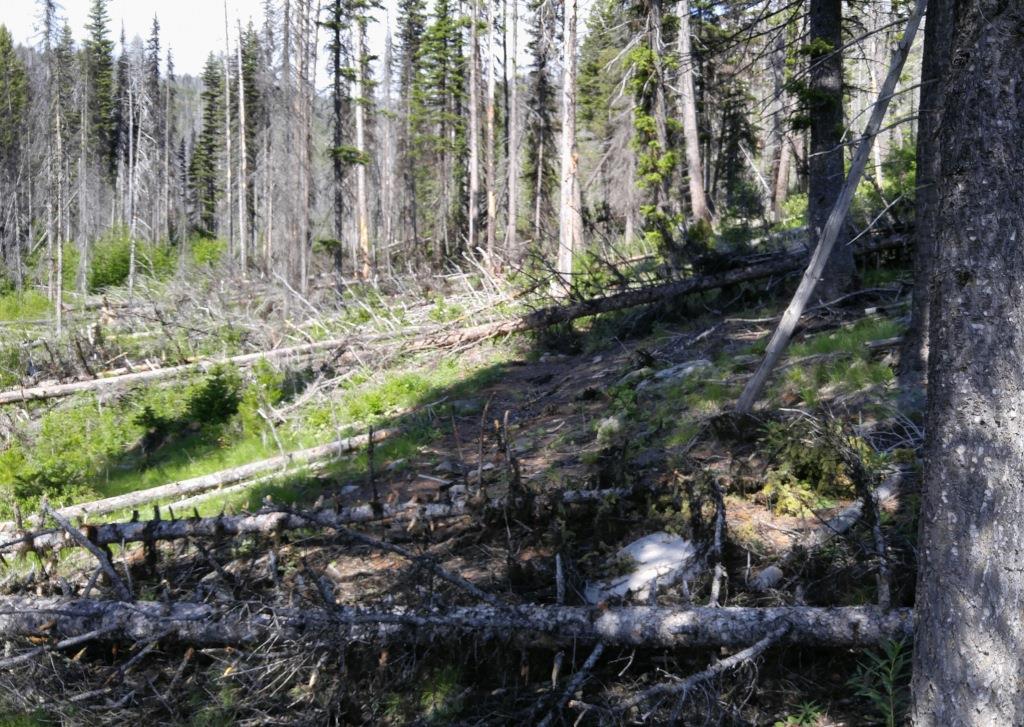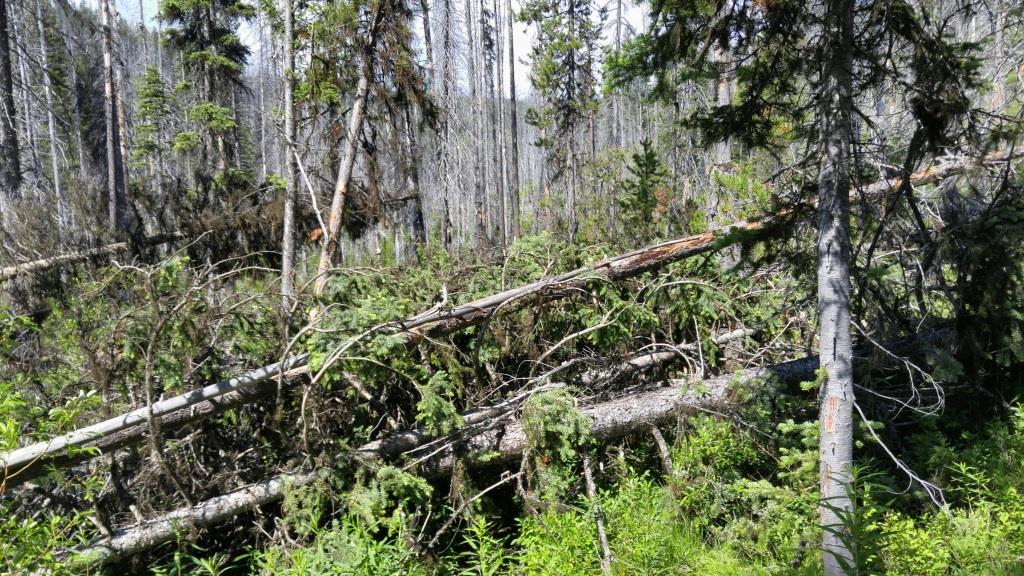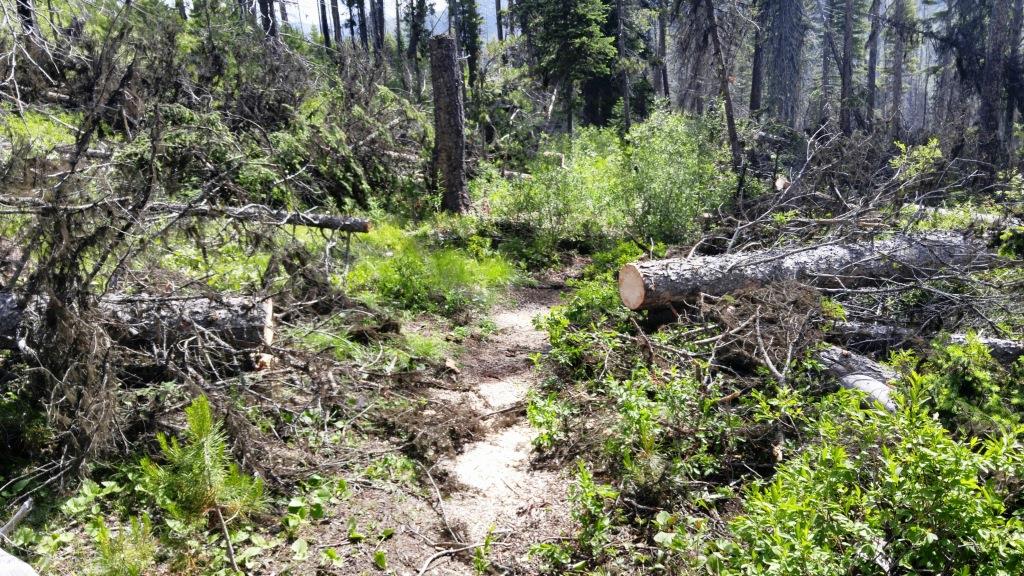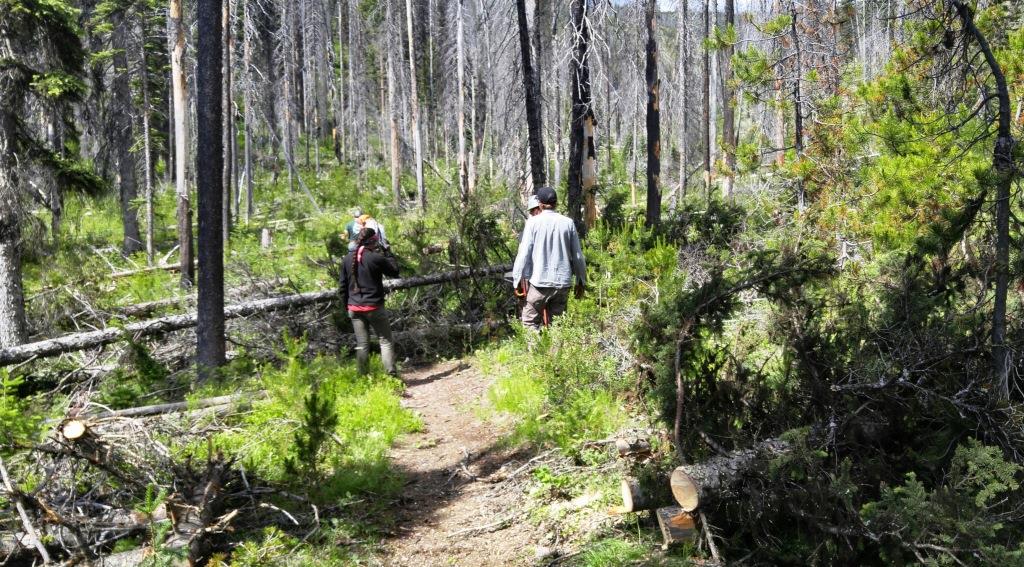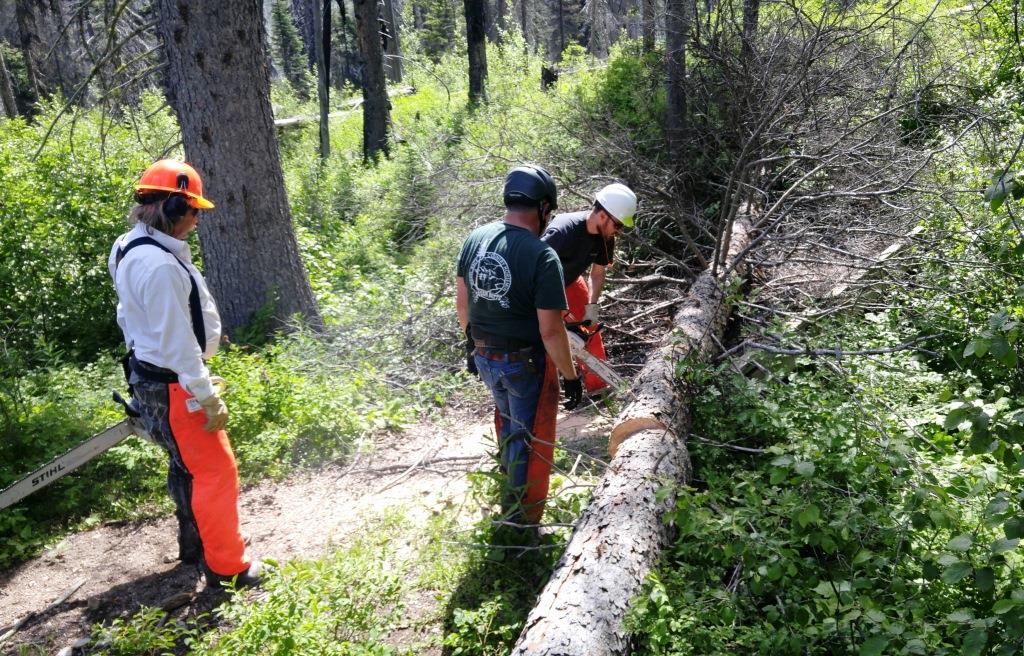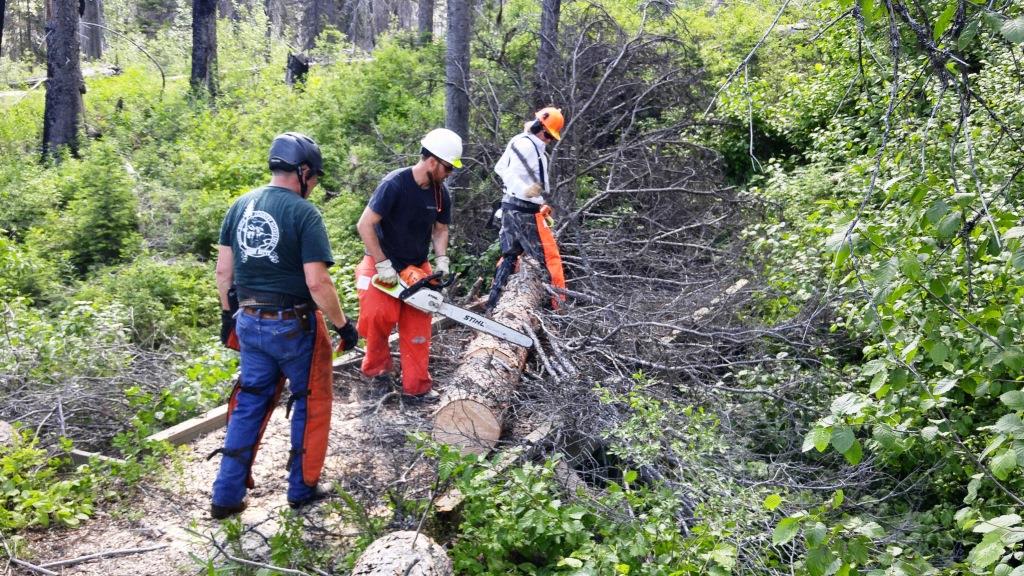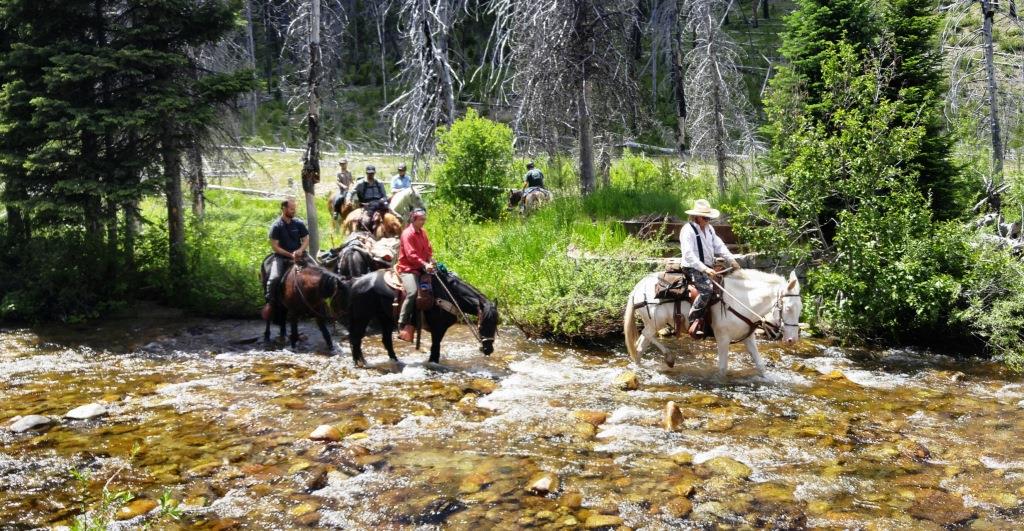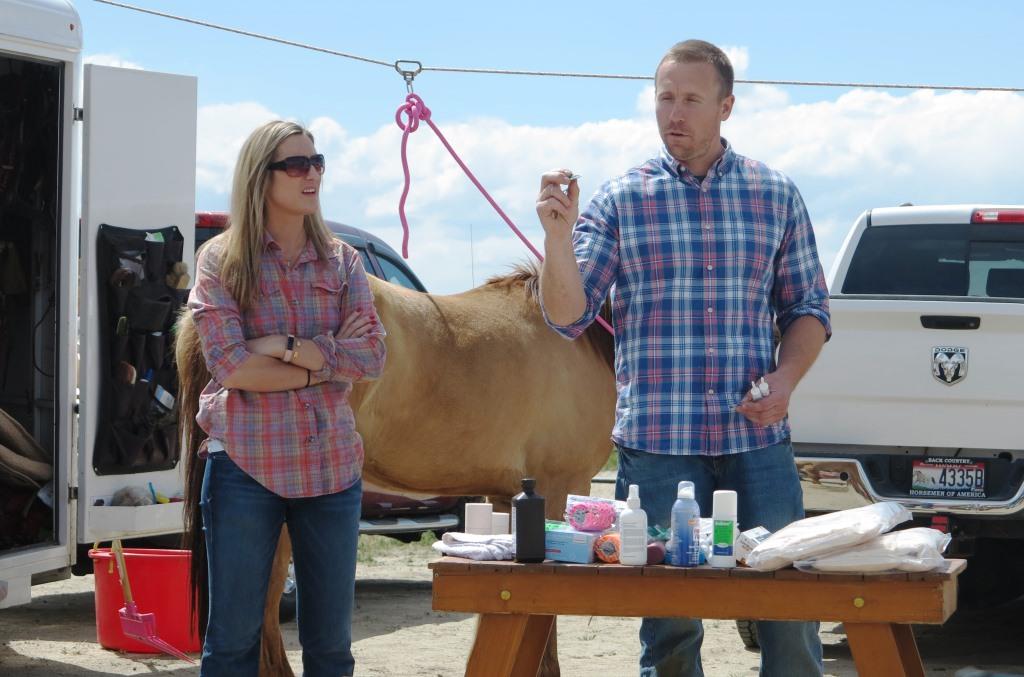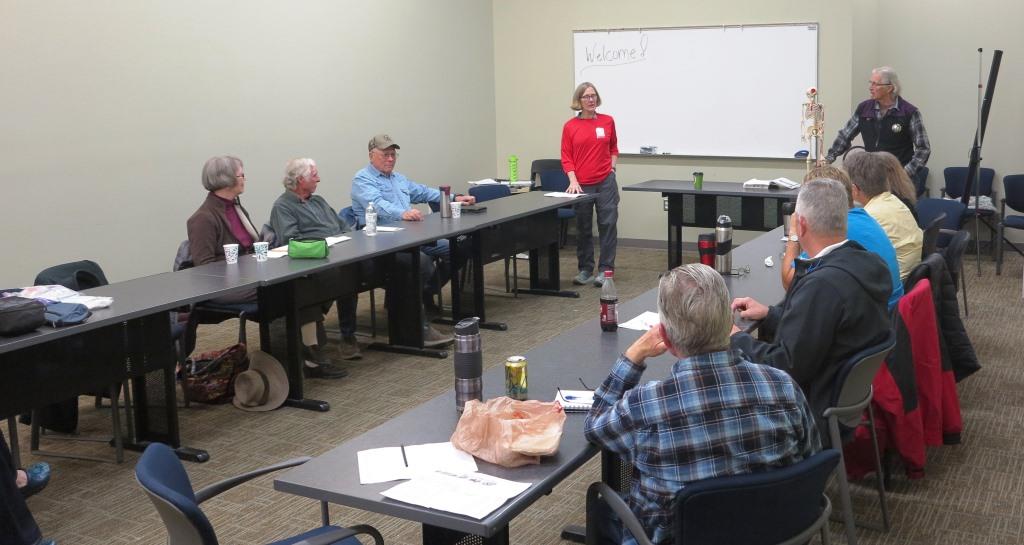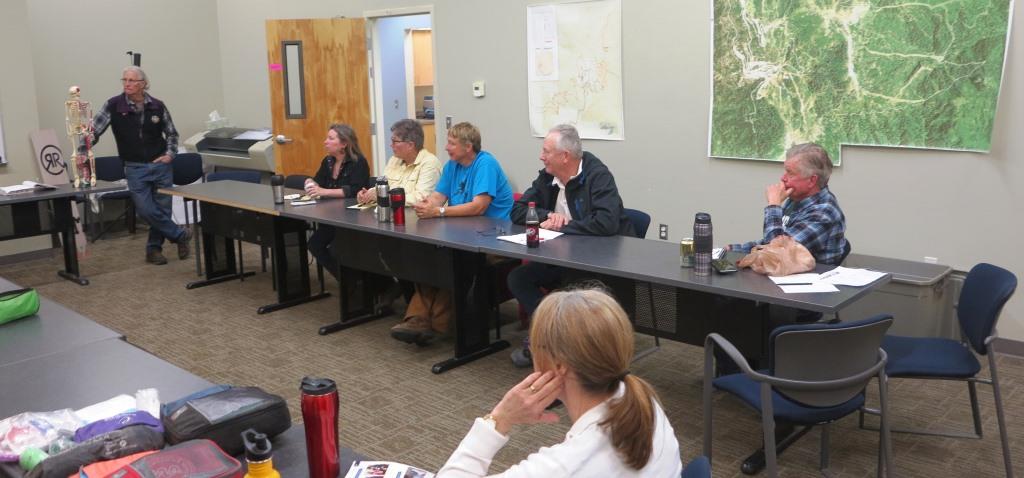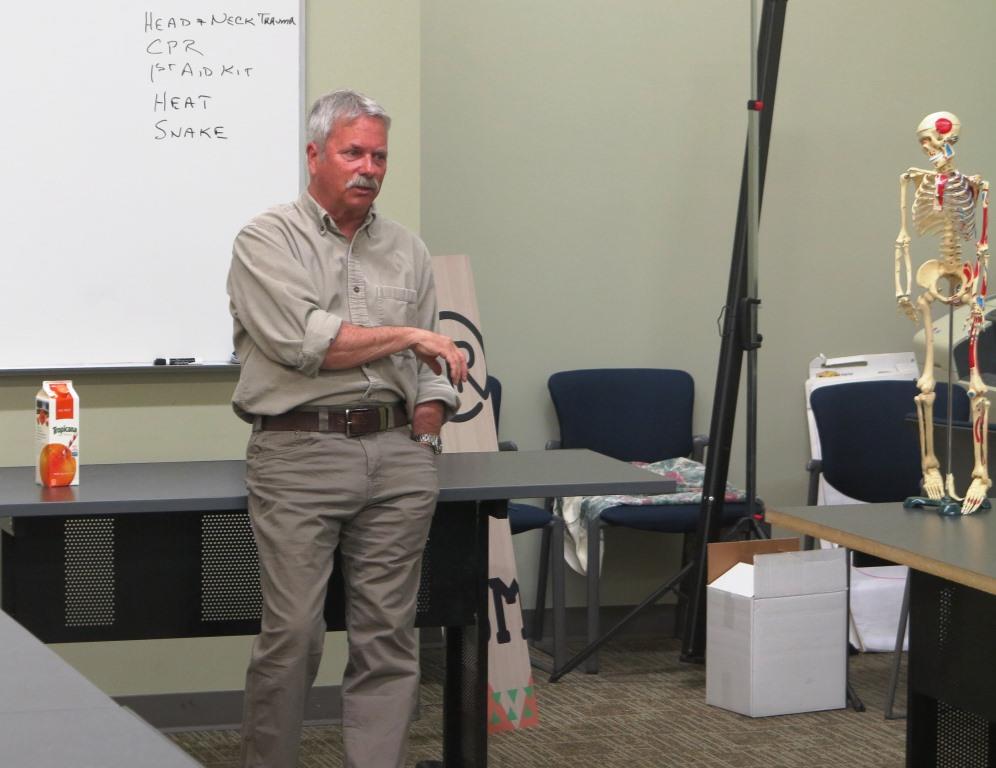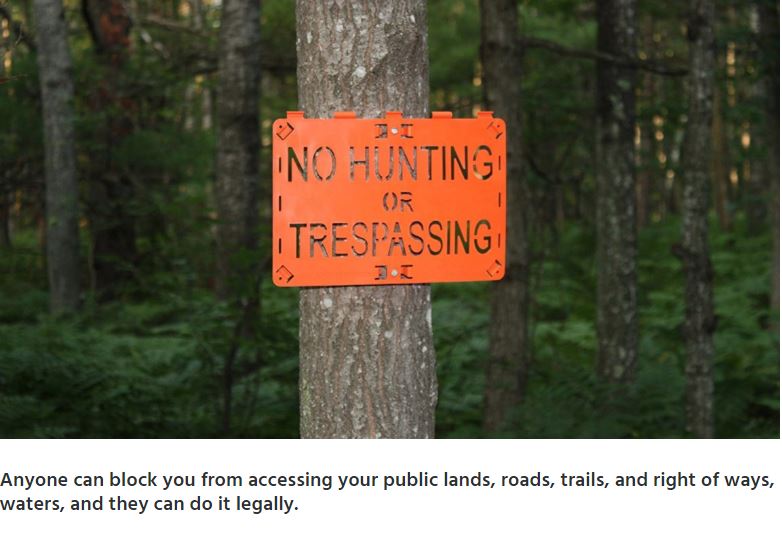
There has been a lot of attention recently about Public Lands and where America is headed with the management of those lands. Further, anyone who recreates on Americas public lands is often exposed to unfamiliar terms and may not understand the differences. Following is a brief description to give you a working understanding of the differences and what that means to you.
First, what are “Public Lands”? These are the lands that are owned “equally” by all Americans. There are 618 million acres of public land across the U.S., with a significant portion in Alaska and the western U.S. The total U.S. land base is 2.27 billion acres in size. These federal public lands are managed in trust for us, (citizens of the U.S.) by the Forest Service, Bureau of Land Management, Park Service and the Wildlife Refuge System for current and future generations.
“Front country” is not a commonly used term, but is generally any public lands that are relatively accessible by means such as motor vehicles, boats, bicycles, hiking, horseback and aircraft and are usually within a short distance of roads. Generally, these lands provide a multitude of recreational activities. Camping may be in developed or dispersed/undeveloped areas. Logging, grazing and mining are often permitted on these lands as well. These are often highly used areas where it is common to see other people and activities.
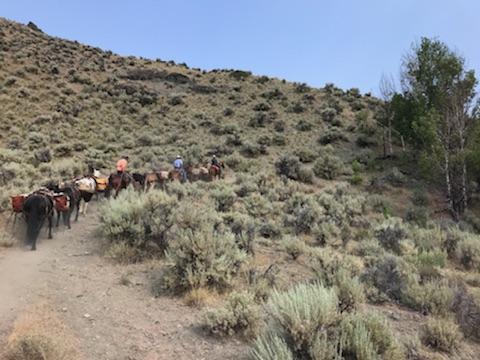
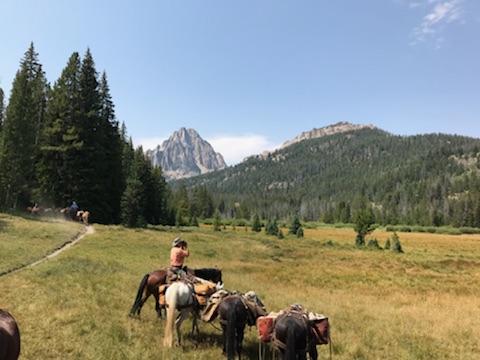
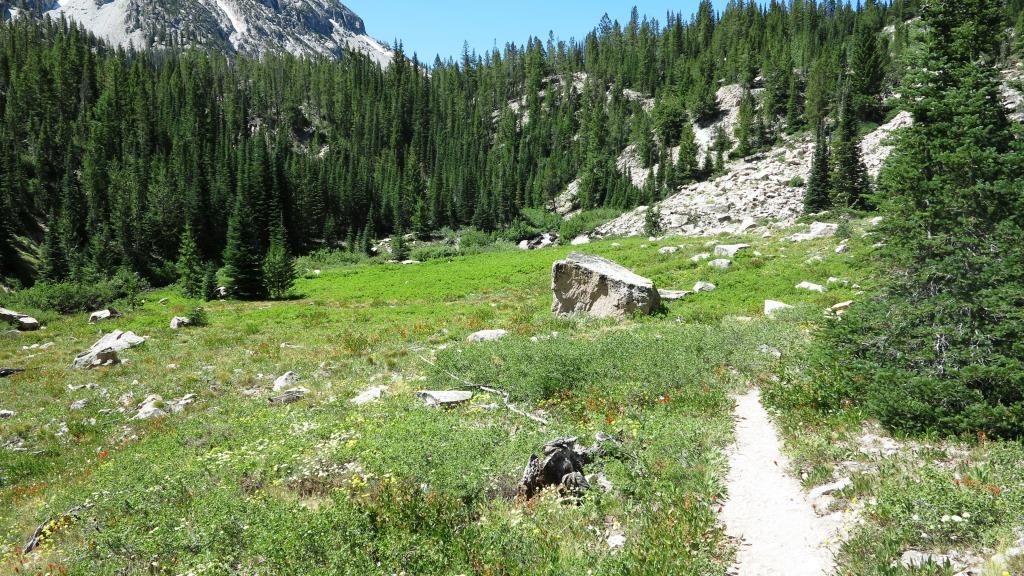
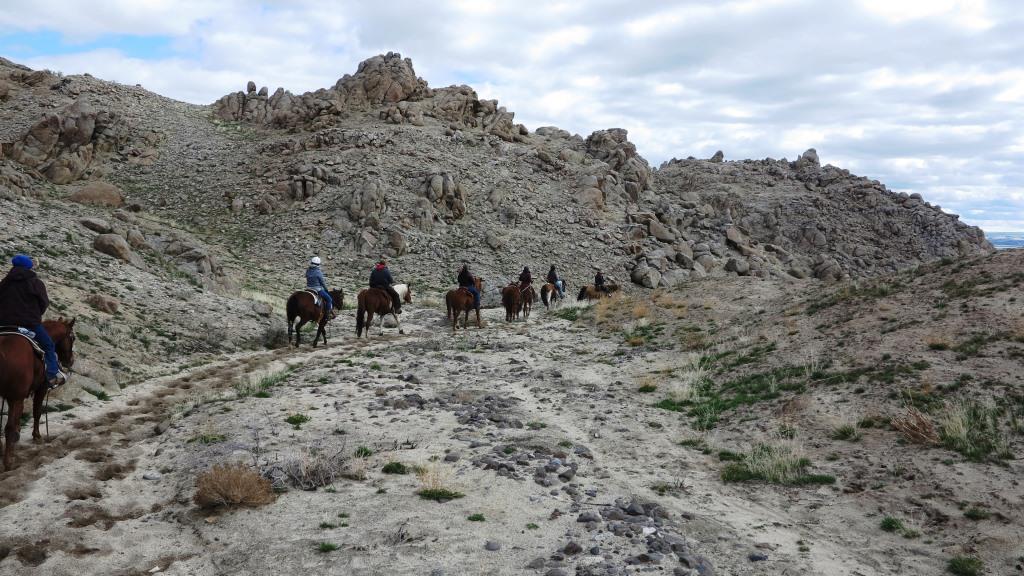
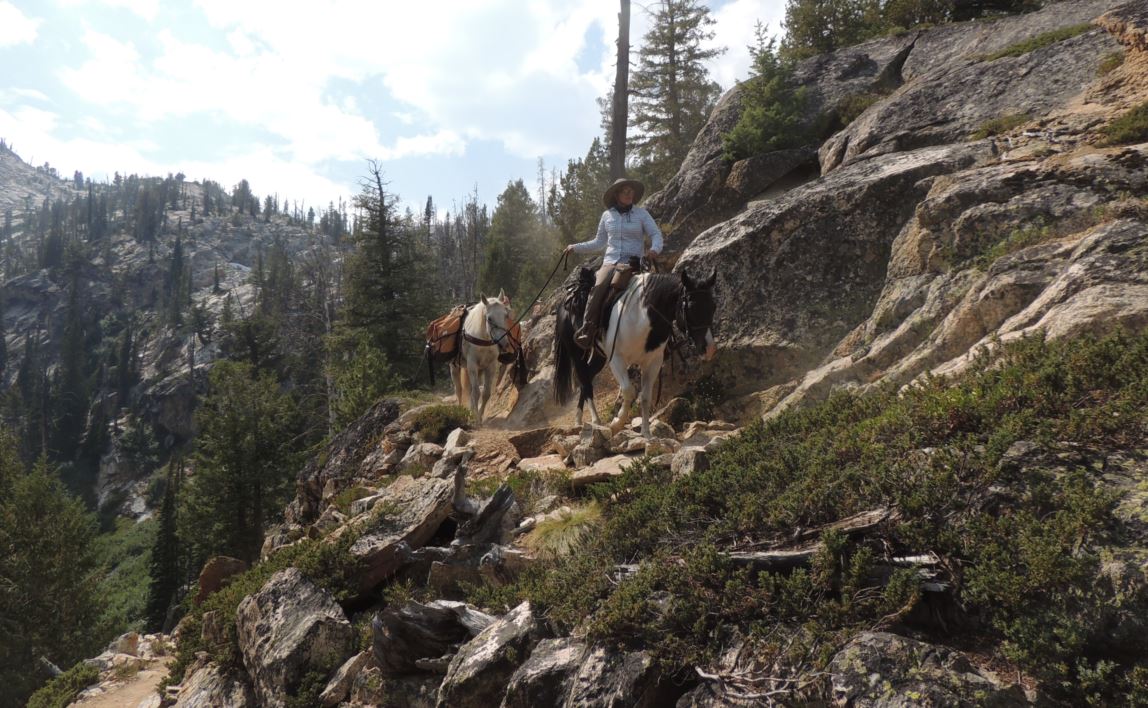
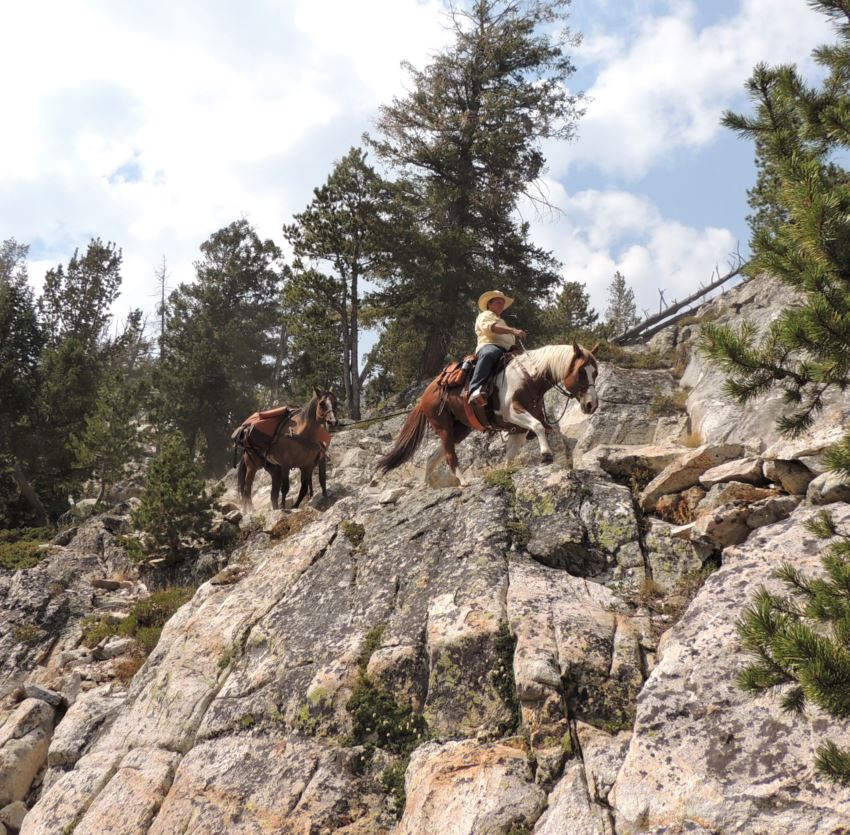
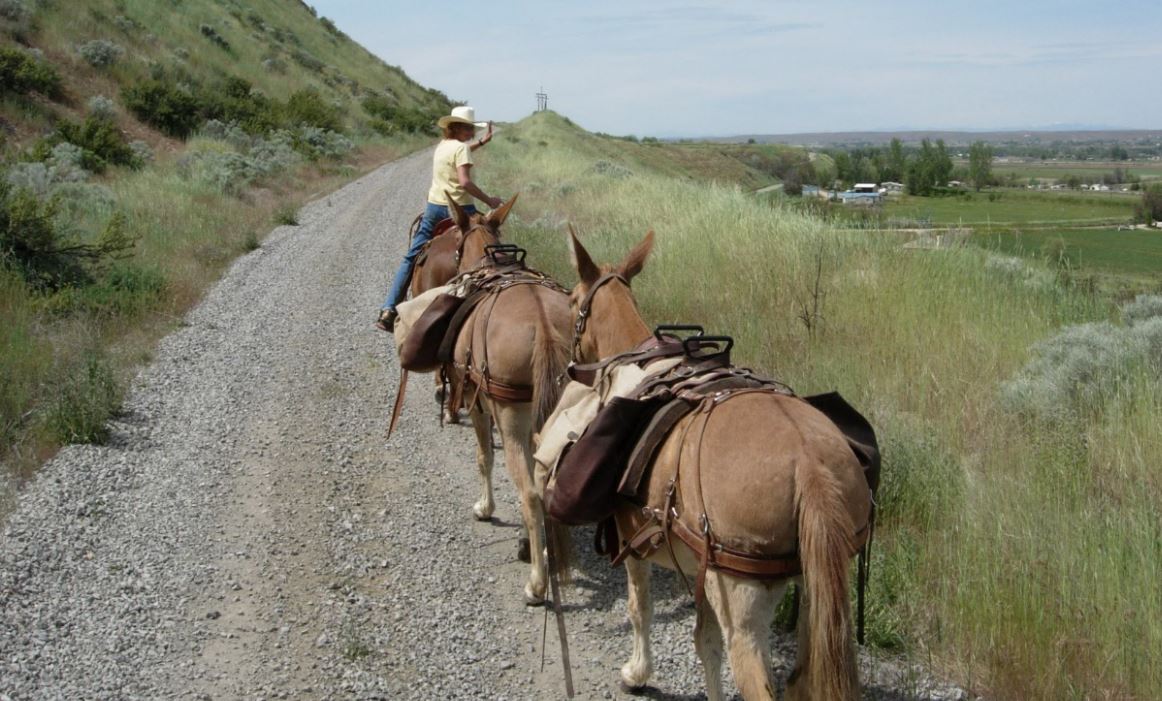
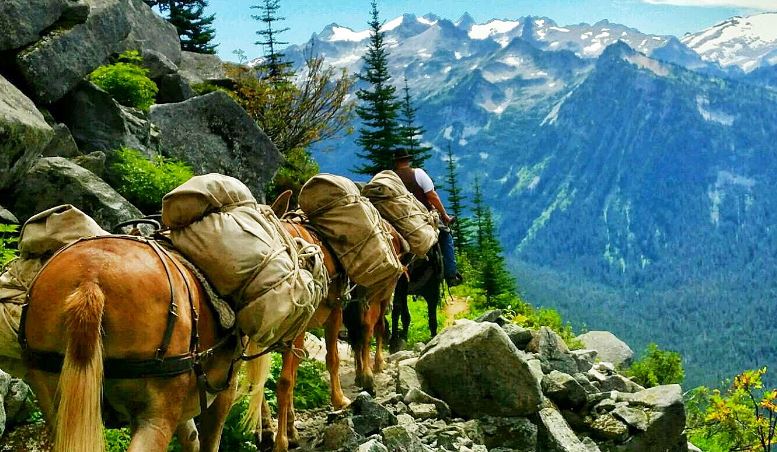
“Backcountry” is generally the area beyond what is Front country. Pretty vague, but accurate. There is no specific line or map designation where this starts or ends. Access is more challenging and is usually by a trail or cross-country travel and at a further distance from roads and trailheads. Access may be allowed by the same list as above, but with greater responsibility on the user as trails receive less maintenance. In addition, the safety and welfare of each recreationist to care for themselves is increased. Camping is usually in dispersed sites. You would expect to see fewer people and activities than in the Front country.
“Roadless Areas” had their beginnings when Primitive Areas were established in the 1920’s. The idea was to preserve some lands in a roadless condition at a time when automobiles and road building was rapidly expanding. As time progressed, Roadless Areas have been challenged legally and politically as to which lands should remain or be opened. Currently, there is about 58 million acres of unroaded forests. There is about 380,000 miles of roads on Forest Service lands. In comparison, the Interstate Highway system has about 47,000 miles of road.
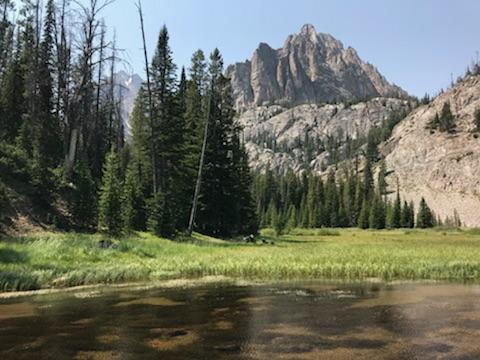
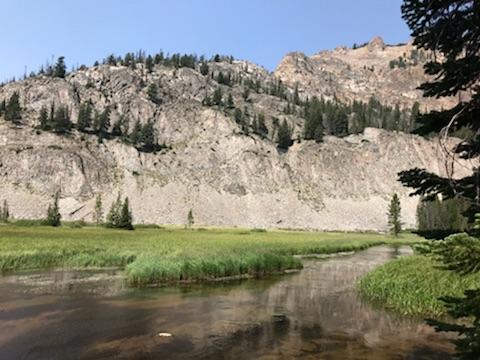
Unlike Front country and Backcountry, “Wilderness” is defined and receives that highest level of land protection. While some may get a “wilderness experience” in the Front country or Backcountry or a Park, true Wilderness is a specific geographic area and can only be established or “Designated” by an act of Congress. The Wilderness Act of 1964 put into law what is required to be a “Designated Wilderness”. It states how it will be managed and what modes of access or travel are acceptable. The Act requires that it be managed to protect its natural condition, where it is untrammeled by man. It is to maintain its primeval character, shaped by the forces of nature with man’s work substantially unnoticeable. The purposes will be to provide solitude, and escape from mechanized use and maintain historic uses.
Three more terms that you may hear. “Recommended Wilderness” is generally lands identified on Forest Plans or agency plans that recommend specific areas for Wilderness Designation by Congress. “Proposed Wilderness” is generally lands that have been submitted to Congress for Wilderness consideration, a step closer than recommended. However, these two terms can mean the same thing depending on the agency. Finally, “Wilderness Study Areas” or WSA’s are areas that are inventoried and undergoing the Wilderness review process. They are lands that should be managed to preserve the character or special attributes that made them a WSA.
Parks generally have defined geographic areas which are indicated on maps. The recreational uses within a Park are often highly regulated due to a significant amount of visitor use. There are 58 National Parks, and most are associated with a specific national treasure. Interestingly, some iconic National Parks like Yellowstone, Grand Teton and Glacier and others are NOT designated Wilderness. They are “recommended wilderness” but to date, Congress has not given them the additional level of protection.
Parks can be managed by a city, state, private or federal entity. The simplest definition comes from Wikipedia: A “Park” is an area of natural, semi-natural or planted space set aside for human enjoyment and recreation or for the protection of wildlife or natural habitats. It may consist of grassy areas, rocks, soil and trees, but may also contain buildings and other artifacts such as monuments, fountains or playground structures.
The vast majority of our public lands are managed under the multi-use designation that includes both the Front country and Backcountry. This allows for a multitude of activities to be offered on the majority of our Public Lands. Only about 3% of the lower 48 states land base is designated Wilderness.
Submitted by: Mack Long
Mission Valley BCH, BCH Montana, Education Chairman BCH of America

You read that right! There currently exists no Idaho law protecting your right to access public areas that you pay for. That means anyone can barricade a public tract and prevent your horse, ATV, or motorcycle from passage without fear of repercussion. And even more common, Idaho sportsmen are running into “NO TRESPASSING” signs on public lands and waters that they have every right to access. Don’t believe it? Check out this news story and the video of an encounter with an armed security guard patrolling a Forest Service road.
Right now, for instance, public funds can be used to purchase and maintain permanent, motorized public access on a road. Anyone can physically obstruct that road and block your access without fear of repercussion. Imagine your disappointment when you draw a coveted elk tag only to show up on opening day to find a locked gate across a public road. Sure you can call the local sheriff. But with extremely limited funding, and perpetrators with deep pocketbooks, local law enforcement simply can’t prioritize prosecuting these types of cases.
The scenarios are endless, but one thing is for sure, your right to access public property is not secure. IWF has been working with legislators, motorized recreation groups, and sportsman groups to close this loophole and create a succinct amendment to an existing law that will put the power of protecting public access in the people’s hands. To review the most updated version of the proposed legislation click here.
Have you ever seen signs or physical barriers to impeding access your public lands? Submit your story below and we will deliver your comments to our legislators. Link to IWF website

Rep. Labrador Co-Sponsors Bill To Cease Creation of New Salmon Recovery Plans
Federal Bill Will Block Idaho Salmon and Steelhead Recovery
With D.C. Vote, Idaho’s Rep. Labrador Reveals Intentions With Public Lands
Standard Trail Bridge Drawings and Design Aids
The Forest Service has standard drawings and design aids for the construction of trail bridges. The standard drawings/design aids have been designed and developed in accordance with Forest Service Manual and Forest Service Handbook directions. The following information is provided FOR REFERENCE ONLY.
All bridge drawings should be approved for each specific bridge by a qualified engineer with trail bridge design experience. Drawings are intended to provide ideas for layout and detailing. No drawing or detail should be used for construction without design review by a qualified engineer. Forest Service bridges must be approved and/or designed by the Forest Service engineer or manager responsible for engineering.
The drawings are not meant to be used as individual sheets and should not be used by themselves. A complete drawing package should be downloaded so that the designer has all the required information for reference. All drawings are in PDF format and can be viewed with Adobe Acrobat Reader.
Currently, only four regions within the Forest Service have standard drawings/design aids. These are Northern Rockies Region (R1), R6 Pacific Northwest Region (R6), Eastern Region (R9), and Alaska Region (R10).
There are two different ways to download the standard drawings/design aids.
The first way is to download a complete set of drawings in a single PDF. This method should only be used with a high-speed Internet connection.
The second way is to download each individual drawing in PDF. This method is recommended for dial-up connections.
- Forest Service Standard Drawing/Design Aid Instructions
- Single Log Stringer Trail Bridge
- Multiple Log Stringer Trail Bridge
- 2×12 Sawn Lumber Trail Bridge
- Solid Sawn Timber Stringer Trail Bridge
- Parallam Stringer Trail Bridge
- Glued-Laminated Timber Stringer Trail Bridge
- Glued-Laminated Longitudinal Slab Trail Bridge
- Nail-Laminated Longitudinal Slab Trail Bridge
- Steel Stringer Trail Bridge
- Prefabricated Steel Truss Bridges
- Packable Timber Trail Bridges
- Snowmobile Trail Bridge
- Typical Abutment Details
Additional Trail Bridge Resources
The following resources give additional information on planning, siting, designing, constructing, inspecting and maintaining trail bridges. All of these items should be included in the decision process to select the best structure for aesthetic design, sustainability and longevity.
By Education Chair Marybeth Conger

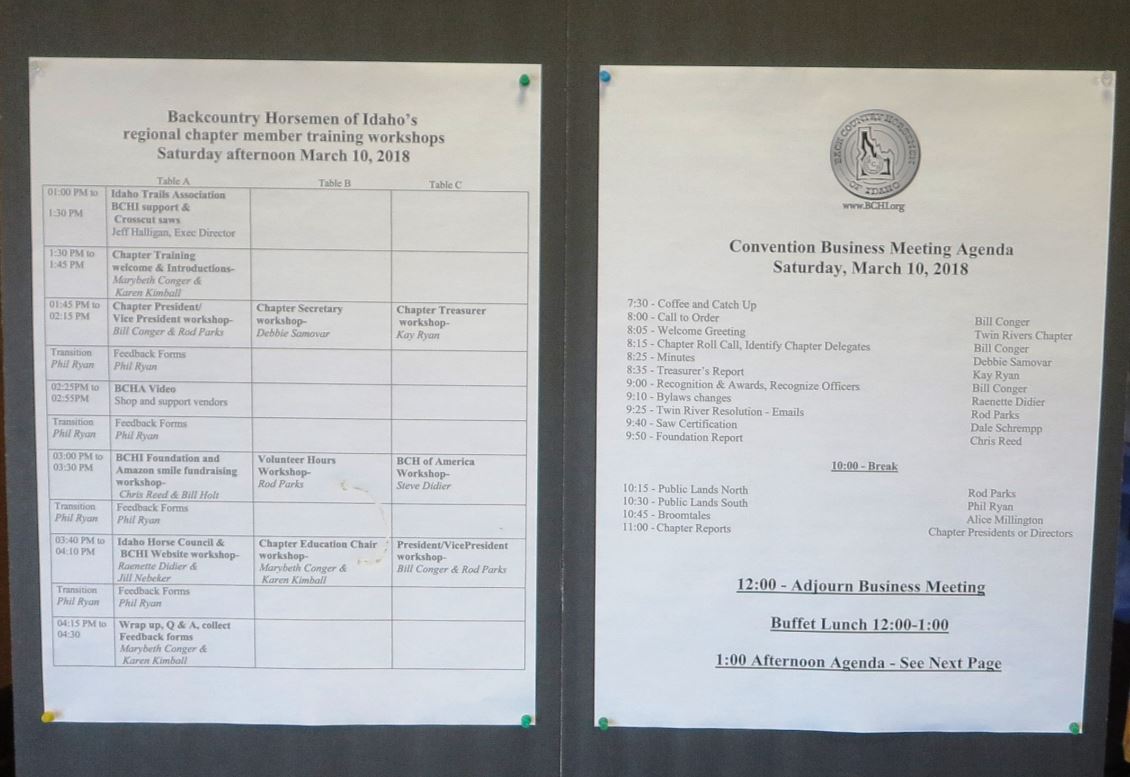
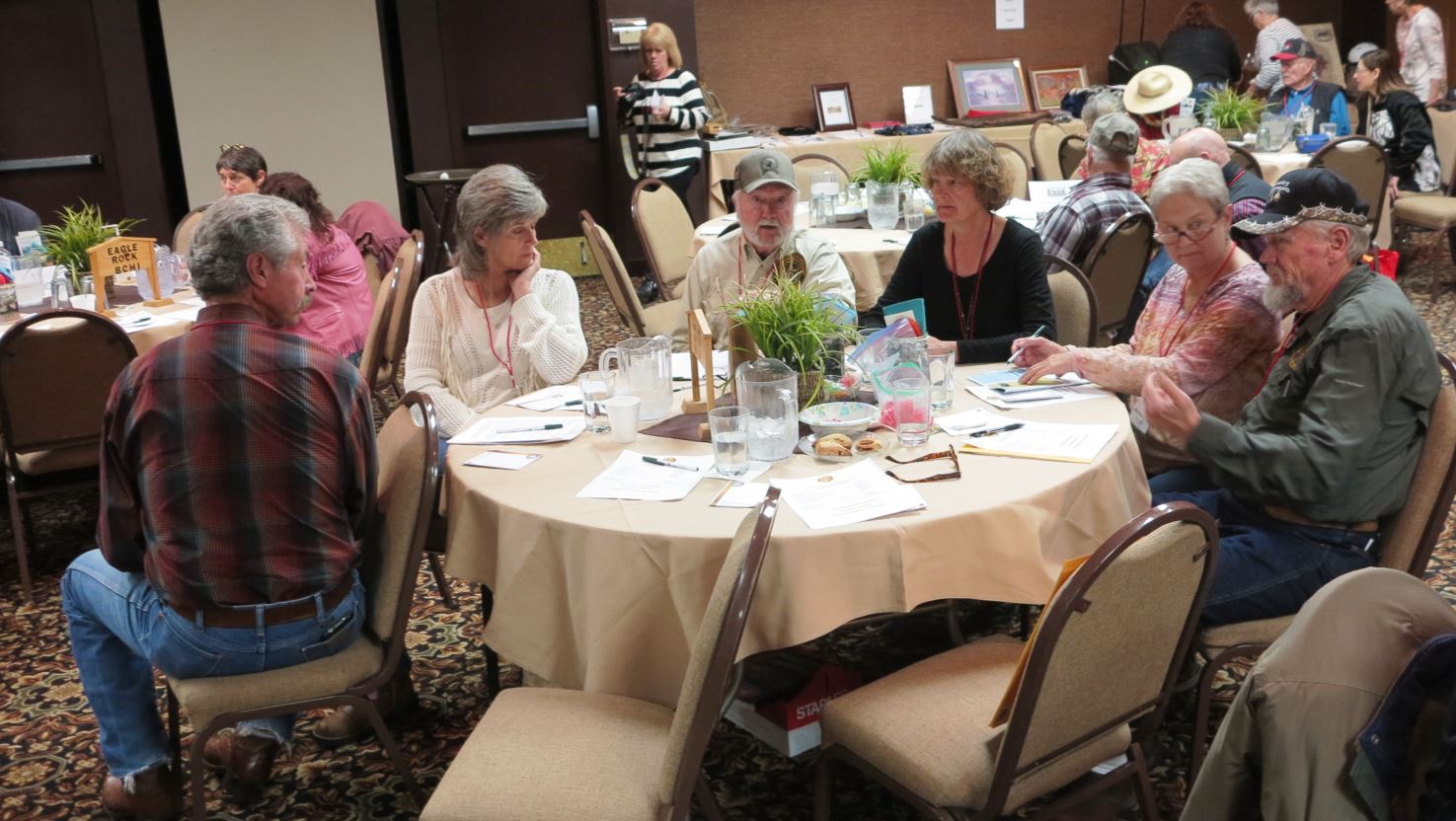
If you are still thinking about attending the Back Country Horseman of Idaho 2018 Directors meeting and Annual convention, please consider that chapter member education has been added to this amazing event. On Saturday March 10, the first ever, BCHI chapter training will be held in the afternoon. Presented by various volunteers, these educational workshops and presentations are open for all members to attend. What a great way to learn more about your current chapter position, or find out details about something you may be interested in the future. Some workshops even cover topics to help us better understand things and help BCHI grow in both numbers and membership development. With your attendance and feedback, we can make this training an annual BCHI event and improve, meeting your educational needs. Get your registration form completed and experience some fun learnings and comradery in additional to all of the other fantastic activities scheduled at the 2018 convention. Hope to see you all there!
April 13 – 15 marks the date for the 2018 Idaho Horse Expo held at the Ford Idaho Park. SBBCH members Bill and Marybeth Conger are some of the clinicians at this year’s event. Their pretentions will cover lightweight recreational packing and camping techniques. In addition, local BCH chapters will again man a BCHI booth. These types of public outreach events help the BCHI organization to grow and educate the public on the wise and sustaining use of our backcountry resource. So come join us if you can!
Karen Kimball graciously volunteered to be a BCHI education co-chair to help coordinate education efforts up north. Making sure chapter education chairs are familiar with all of the relevant education materials maintained by BCHA and its member states is one way for her to accomplish this. Thank you Karen!
Please let the education team know what you plan to accomplish in 2018 so we can spotlight more chapter activities. Education updates on the BCHI website are starting to happen and expect to see more once Marybeth successfully completes the Master Educator course. Well this covers the first quarter and then some. Happy Trails! 
Wilderness Society
Interactive: Tracking Trump’s anti-public lands crusade
After a chaotic first year, the Trump administration has made it abundantly clear that one goal is to systematically sell out America’s public lands to the fossil fuel industry.
This interactive timeline examines all the actions taken by President Trump and Interior Secretary Ryan Zinke to give away our nation’s heritage to energy companies for unfettered drilling, fracking and mining.
How to use the timeline:
Use the bar at the bottom of this page to scroll through our timeline then click on each box for more info.
We’re not long into our hike along the snowy shoreline of Glacier National Park’s Lake McDonald when I pop the question I’ve been wanting to ask Ryan Zinke since he was confirmed as Secretary of the Interior back in March. The way I intended to frame the question had both reach and context, even if it was a little wordy:
“You consistently identify yourself as somebody who models himself on Theodore Roosevelt,” was how I had written the query in my notebook. “You’ve repeatedly called yourself a ‘Teddy Roosevelt guy.’ Roosevelt’s legacy is based on his use of the structure and authority of the federal government to protect landscapes for future generations and to promote multiple use of our public lands. So far in your administration, you’ve made headlines for rolling back protections of federal land under your jurisdiction, most recently national monuments in Utah. Can we expect to see initiatives modeled around Roosevelt’s conservation ethic in the future?”
But what came out of my mouth was: “So, when does TR show up?” READ MORE

By FRANKIE BARNHILL • DEC 19, 2017
There’s a new push in Congress to allow mountain bikers access to wilderness areas.
Last week, a house committee approved a measure that would amend the Wilderness Act. The bill would allow mountain bikes in wilderness areas, setting up another legislative battle about shared use on public lands.
The Wilderness Act of 1964 has allowed the protection of millions of acres across the United States. Idaho has several areas within its borders, earning it the title of “the wilderness state.”
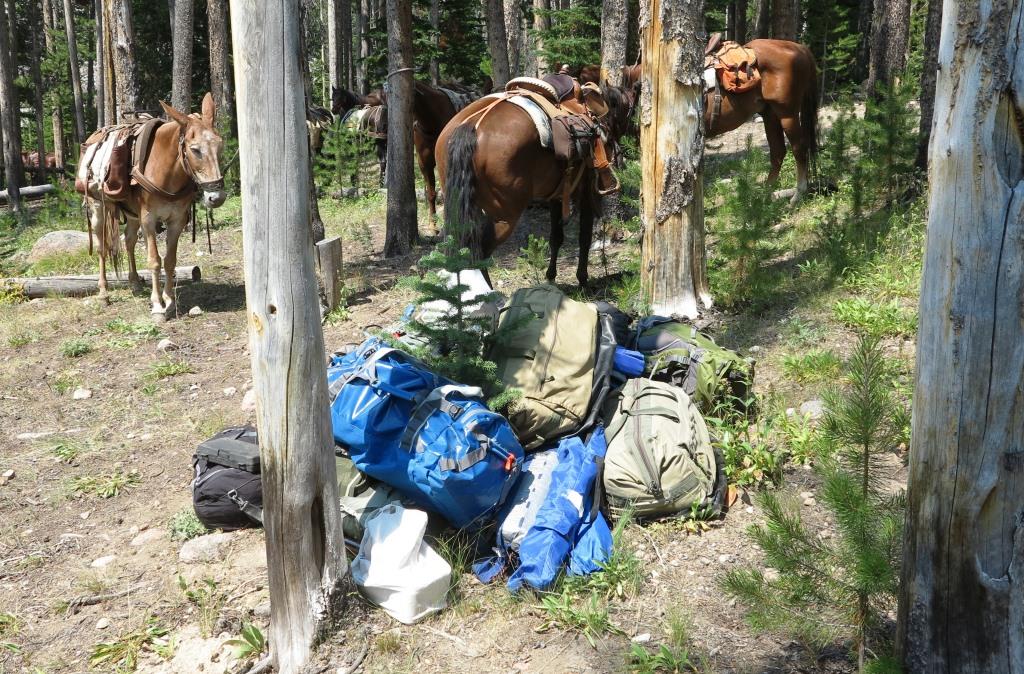
But to Craig Gehrke with the Wilderness Society, letting mountain bikers recreate in these areas could erode the purpose of the 53-year-old law.
“These are places we set aside for their primitive nature,” says Gehrke. “And for people to go in and experience them not in a mechanical way but basically on foot or on horseback, kind of a preservation of the first experiences pioneers had in these places.”
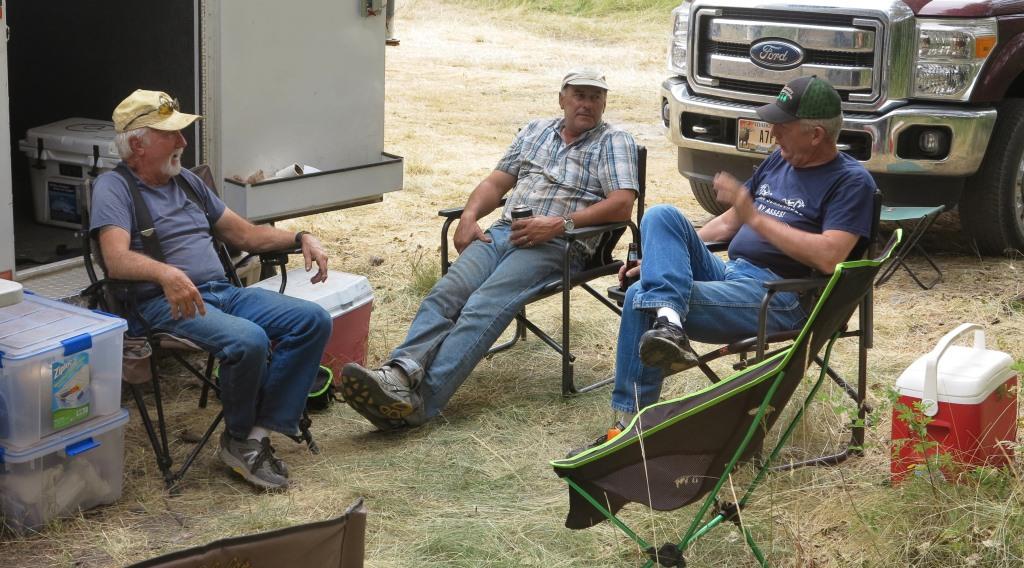
Gehrke points out that the law explicitly bars “mechanical transport.”
But some Idaho groups are cheering the bill. The Idaho Statesman reports the president of the Southwest Idaho Mountain Bike Association says the measure would bring younger mountain bikers into the conservation movement.
It’s not clear when the bill may come up for a vote on the House floor, but Gehrke says the Wilderness Society will lobby Congressman Mike Simpson to vote against it.
Saturday December 16, 2017 was a good day. Boise States football team came to play at their bowl game and made Oregon fans sit through a painful three hours. After the game, a number of members and guest enjoyed excellent company and great food. Thanks goes to Nancy Smith, Arlynn Hacker & Shannon Schantz for doing all the hard work getting the party organized.
Charles and Lou Ann are checking out the fancy shoes Charles received in the gift exchange.
High Country Plastics primary goal is to provide safe and durable products for their customers and animals.
High Country Plastics takes great pride in keeping their product line creative and efficient to save customers time and money.
Our built-to-last products are known for their durability, quality, strength, innovation, warranty, FDA approval, safety, and satisfaction guaranteed – that’s the High Country Way.
For additional information, please visit our Contact Us page and let us know what we can help you with.
From: Equestrian Design Guidebook for Trails, Trailheads and Campgrounds
![]() |
Back | Next – Return to TOC | ![]() |
Understanding Horses and Mules
In addition to the usual planning considerations, equestrian recreation trails and facilities require attention to the behavior and physical characteristics of horses and mules. The success of horse trails and recreation sites depends on how well planners and designers understand these animals.
An Evolutionary Perspective
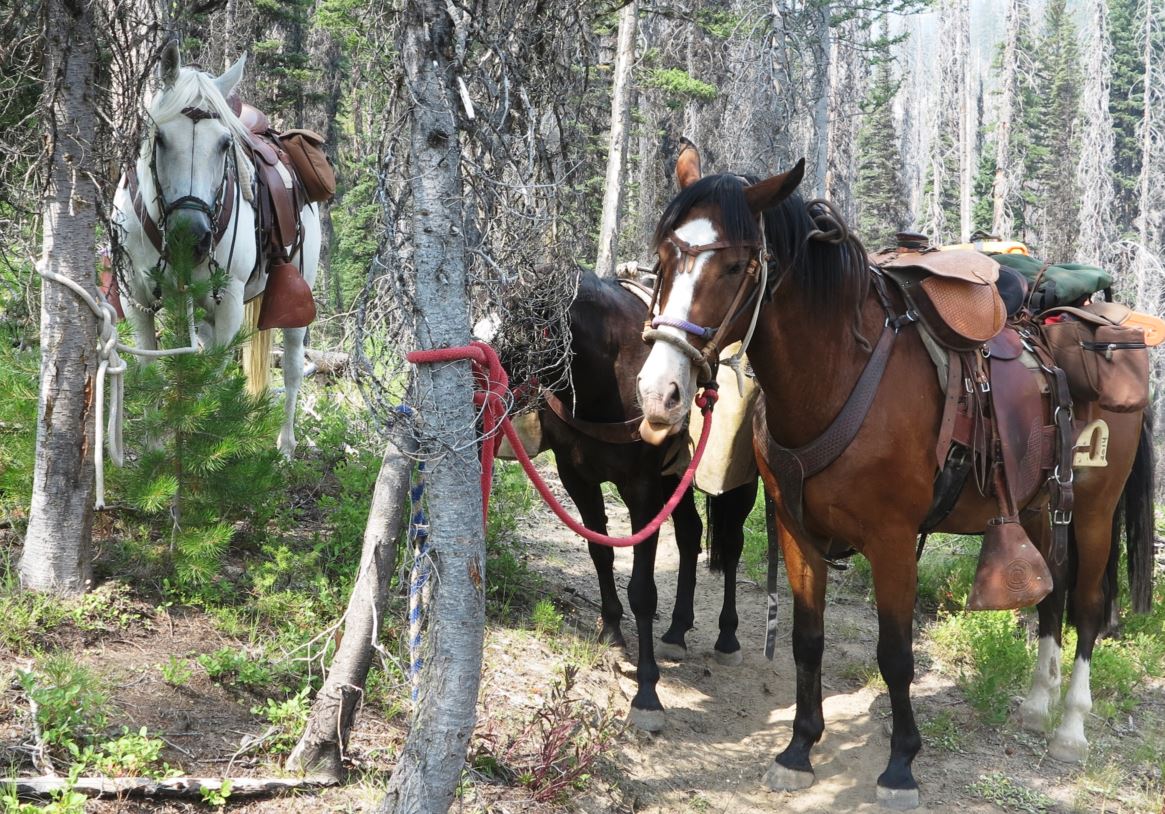
Essentially, horses and their kin are prey animals. They developed behavior patterns and physical characteristics over millions of years spent in wide open spaces. Flight is their primary defense. They use their strength, stamina, agility, and speed to escape predators, notably large cats–such as cougars–and wild dogs–such as dingos. Horses and mules constantly monitor their surroundings and are always aware of available escape routes. They may become nervous when routes are narrow or blocked. Horses and mules also prefer to see what they hear or smell.
The Startle Factor
What frightens horses and mules is not always obvious. Anything that moves suddenly or makes an unexpected noise can rouse an animal’s survival instincts and prime it to bolt. This natural reaction–often referred to as a startle reflex–is the result of remarkably acute senses.
Horses and mules have excellent vision, hearing, and tactile senses. They are even capable of feeling vibrations through their hoofs, which often alert them to others long before the rider becomes aware. Horses and mules need a comfortable operating space. When they can see something suspicious from afar, they can more easily evaluate the danger and react accordingly. There is a fine line between what is comfortable for horses and mules and what seems dangerous.
In addition to confined spaces and predators, things that can startle a horse or mule include:
- Loud or unexpected noises–Buzzing model airplanes, exploding firecrackers, batting practice, or a falling tree
- Quick or unexpected movements–Fast-moving bicycles, inquisitive children, running animals, or birds rustling in the underbrush
- Things in unusual combinations–Hikers with large backpacks or vehicles with strange loads
- Highly contrasting or reflective surfaces–A light colored tread near dark soil, freshly cut logs, black or white rocks, or a manmade object in a natural setting
- Unfamiliar situations–Activity at a golf driving range or a train nearby
- Wild or unfamiliar domestic animals–Mountain lions, moose, emus, pigs, or llamas (figure 1-3) Narrow or constricted spaces–Bridges, gates, or tight passages
- Unexpected trail obstacles–Litter, fallen trees, or boulders

Figure 1-3–Anything that appears suddenly, makes an unexpected noise, or is unfamiliar engages a horse’s survival instincts. On the trail,
horses and mules are particularly wary of llamas, hikers with bulky backpacks, and bicycles.
So, what happens when horses and mules are startled? They have a range of responses, from remaining calm to becoming severely frightened. The more conditioned the animal is to uncomfortable situations, the more likely its response will be subdued. When something makes it nervous, an animal may dance around, inadvertently step on things, or balk. Horses or mules that are severely unnerved may run, jump, spin, or do a creative combination of all these things. When horses and mules feel the need to protect themselves, they may kick, bite, or strike. Experienced riders can hold a well-trained animal in check under most circumstances. There is a point, though, where a stimulus becomes so great that even the best conditioning will not override the animal’s innate fight-or-flight instincts.
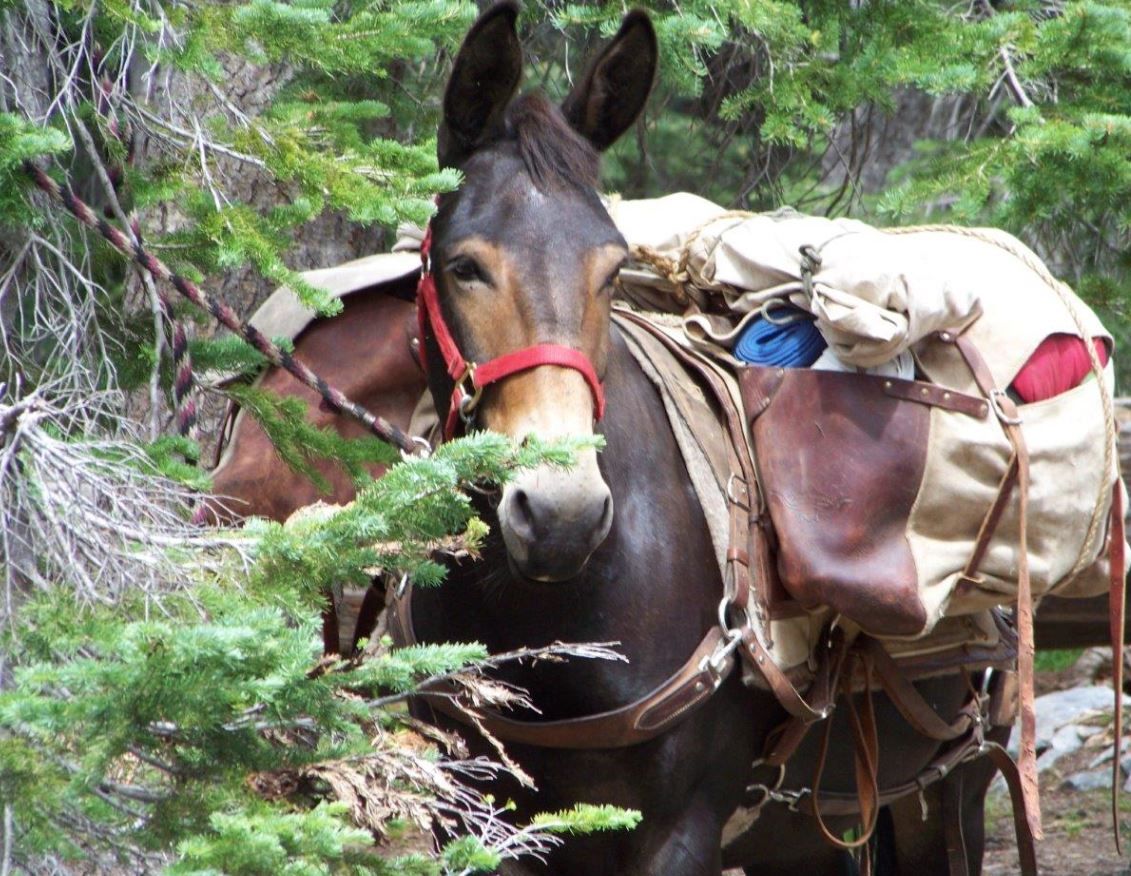
Trail stock–especially mules–have highly developed memories for pleasure, pain, fear, people, and places. Many trail animals recognize a previously visited location or trail route (figure 1-4). Once a horse or mule has had a particularly unpleasant or painful experience, the animal will try to avoid that location, condition, or object forever. Recreationists in many areas minimize potential conflicts by practicing trail etiquette that favors needs of horses and mules. Chapter 12– Providing Signs and Public Information lists ways to communicate a trail animal’s needs to other trail users.

Figure 1-4–Horses and mules have excellent memories and can easily retrace routes they have traveled in the past. They avoid areas they associate with unpleasant experiences.
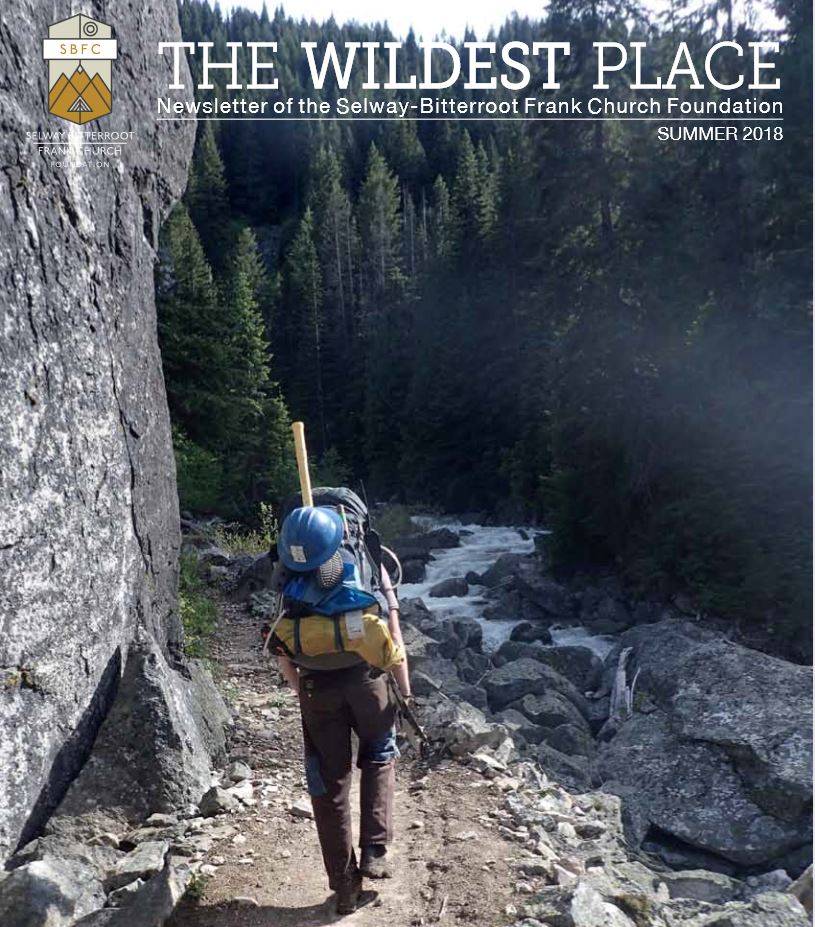
2018 Wilderness Ranger Internship
Overview
The goals of the SBFC Wilderness Ranger Intern (WRI) program are to train, educate, mentor and provide employment development opportunities for the next generations of wilderness professionals and provide skilled support to the Forest Service for accomplishing priority wilderness work.
This is a 14-week internship for military veterans and college students doing under-graduate or graduate work in conservation, resource management, wilderness, recreation or related fields. The internship offers 2 full weeks of wilderness skills training—crosscut saw use and certification, hand tool use, stock handling and packing, Leave No Trace and Wilderness First Responder training, followed by 12 weeks working in the Selway-Bitterroot and Frank Church Wilderness areas, with trained wilderness professionals, US Forest Service managers and volunteers.
The WRI will also learn about the Wilderness Act and how it established an overarching framework for wilderness stewardship, what wilderness character is and how to conduct wilderness character monitoring.
In 2018, WRIs will receive an AmeriCorps award.
The application will close on February 16, 2018 at 5pm MST. Apply Now!
Your help needed to ensure that BCH States submit testimony on H.R. 1349. Deadline: No later than noon, Eastern time,Dec. 7th.
Dear BCHA National Board Member,
I seek your help in following through with BCH state presidents to make sure they are able to submit testimony prior to the Dec. 7th congressional hearing on H.R. 1349 (bikes in Wilderness) conducted by the Federal Lands Subcommittee.
As you will see below in an email sent yesterday, state presidents have been provided a template on which to base their state letters. They have been asked to submit their testimony, on BCH state letterhead, via email to brandon.bragato@mail.house.gov. Brandon’s email is for submitting organizational testimony only (i.e., from BCH state or chapter representatives) and is not to be used for individual or personal letters or testimony.
Can you please act to ensure that this important task has been accomplished? And could you please forward to me a copy of the testimony submitted by your state for our records? We will need these letters to use with members of Congress if H.R. 1349 continues to move forward.
Thank you!
________________________________________
December 5, 2017
To: State Presidents and Chairmen
BCH State and Chapter Testimony Needed by Dec. 6, Close-of-Business, to U.S. House of Representatives, Subcommittee on Federal Lands
Dear BCH state and chapter presidents,
This is an updated alert containing a specific email address for sending BCHstate and chapter comment letters(i.e., testimony, not individual letters) prior to theDec. 7 thhearing.
A full template on which to base your state and chapter letter can be found here. HR_1349_TWS_BCHA_Testimony
In addition to any letter you’ve already submitted to your member of Congress, please send a copy of your state and chapter letter using the template to House Subcommittee on Federal Lands professional staff person, Brandon Bragato at brandon.bragato@mail.house.gov.
Please email to Brandon only testimony from your BCH state or chapter.
Include your state/chapter logo at the top of your testimony.
The House Natural Resources Federal Lands Subcommittee will hold a hearingDec. 7 thin Washington, DC, on H.R. 1349. The bill represents an unprecedented assault on the 1964 Wilderness Act, wilderness areas across the country, and poses a significant danger to users of pack and saddle stock.
This issue is among the highest priorities for BCHA. Please email Brandon with your state or chapter’s testimony today!
Freddy Dunn
BCHA National Chairman
Two bipartisan bills show how the left and the right can converge on public land policy
Outside Magazine – Jake Bullinger
It would seem Republicans and Democrats are wholly divided on public land policy. During the 2016 campaign, the GOP platform called on Congress to “immediately pass universal legislation” to “convey certain federally controlled public lands to states,” while Democrats sought “policies and investments that will keep America’s public lands public” by prioritizing access and environmental safeguards.
But, believe it or not, some consensus exists. A pair of bills introduced this year—including one that would make it easier to transfer federal land to states—shows that Republicans and Democrats can actually agree on certain aspects of public land management.
The land transfer bill, dubbed the Advancing Conservation and Education Act, was introduced on November 6 in the House by Chris Stewart, a Utah Republican, and Jared Polis, a Colorado Democrat. An identical measure in the Senate is backed by Democrat Martin Heinrich of New Mexico and Arizona Republican Jeff Flake. The bill would allow western states to ask the Department of the Interior to swap state-held trust lands surrounded by federal conservation plots for federal parcels that are easier to develop.
Here’s the issue: Western land is divvied up into a grid of state, tribal, federal, and private ownership. Occasionally state trust lands, which are designated to generate revenue for public schools, are surrounded by national parks, national monuments, or wilderness areas. Consider Arizona’s Petrified Forest National Park. Peppered throughout the park is trust land deeded to Arizona for the purpose of generating money for schools. Arizona has the legal authority to lease those parcels, but running cattle or setting up a pump jack on a 160-acre plot surrounded by stringent national park regulations would be impractical for any rancher or driller. It’s a lose-lose for the state and the feds: Arizona is unable to tap into those dollars, and the national park lacks consistent management within its borders. READ MORE
BY CYNTHIA SEWELL
DECEMBER 02, 2017
Three of the contenders to become Idaho’s next governor shared remarkably similar views Saturday on wildlife conservation, fishing, hunting and access to public lands.
In questions posed at a forum at Boise State University, Democrat A.J. Balukoff and Republicans Tommy Ahlquist and Brad Little differed mainly on the handling of the state’s sage grouse management plan, and over the idea of breaching four Snake River dams in Washington state to recover endangered salmon and steelhead populations.
Ahlquist Clarifies Breaching Dams Stance After Forum (Dec 15, 2017)
The forum was sponsored by the Idaho Wildlife Federation and 17 other sportsmen and wildlife groups. Each candidate spoke separately for about 30 minutes to a crowd of about 100 people clad in flannel, jeans and camo.
The three have quite different backgrounds: Little, a native Idahoan, is a longtime politician and rancher who currently serves as Idaho’s lieutenant governor. Ahlquist is a doctor, developer and political newcomer best known for recent Boise projects such as the Eighth & Main building. Balukoff is a CPA, businessman and longtime trustee on the Boise school board who ran unsuccessfully against Gov. Butch Otter in 2014.
Absent among the leading candidates was Republican Congressman Raul Labrador, who declined to participate. That garnered a chorus of hisses and boos from the audience.
“We do have a spot reserved for him right up front in case he shows up,” said Brian Brooks, Idaho Wildlife Foundation executive director. “So, if you see him, would you please direct him to his empty seat.”
Some topics that each of the three addressed:
Hunting and fishing: All three said they are outdoorsmen and hold Idaho hunting and fishing licenses. Ahlquist talked about fishing last week with his father-in-law. Balukoff discussed getting his annual wild turkey and a recent failed antelope hunt. Little recounted how for four generations, his family has held an annual upland bird hunt.
Public lands: The candidates said they are not in favor of the state taking ownership of federal land in Idaho, mainly because it would be too cost-prohibitive. But they do want the state to have more of a role in how federal land is managed, and better public access to federal lands.
“Thirty-three million acres is a lot of land,” said Balukoff. “There is enough space to meet needs. If we want wild and scenic areas that are primitive … (or) areas we can designate for use of ATVs – there is room to do multiple uses on our public lands.”
Salmon and steelhead recovery: All agree the federal plan in play for the last 25 years is failing.
“Our rural communities need this industry,” Ahlquist said. “We need to figure this out. … We need to protect Idaho’s interests, Idaho industries, Idaho fish.”
Wildlife management: Political leaders need to listen to professional wildlife managers and biologists. And, all three said, the Idaho Fish and Game Commission should not be politicized.
Endangered species: The candidates said we should follow the advice of biologists and wildlife managers to ensure that Idaho keeps sustainable populations to avoid federal intervention.
The candidates did have a few differences on issues.
Breaching Snake River dams: Ahlquist and Balukoff said they would consider it as a possibility. Little said he would not, but he would consider looking at how that water is managed, including adjusting flows or releasing more water over spillways instead of through turbines.
Sage grouse: All agree that any management plan needs to be collaborative. Ahlquist and Balukoff do not support Idaho’s efforts to fight an Obama-era grouse management plan in court. Little said such an action sometimes is necessary if the federal government does not uphold its end of the deal.
The entire 90-minute forum can be viewed on the Idaho Wildlife Federation’s Facebook page.
Emily Benson Nov. 27, 2017
How much is hunting and fishing access to 3.4 million acres of land in Utah worth? Last year, the answer was $776,000. That was the amount the Utah Department of Natural Resources paid another state agency, the School and Institutional Trust Lands Administration (SITLA), to secure public access to state trust lands, granted to Western states by the federal government to generate money for schools and other public institutions.
This fall, however, the deal between the Natural Resources Department and SITLA expired. In negotiating its renewal, SITLA wanted to raise its fee to market rates, estimated at $1.8 to $3.9 million a year for the 1 million acres that have commercial hunting value. If the department didn’t pay up, SITLA seemed ready to lease exclusive access to beloved places like the Book Cliffs — a vast wilderness of rugged bluffs and forested valleys teeming with elk, mule deer and cutthroat trout — to wealthy hunters. Access to prime areas would be scooped up mainly by customers willing to pay thousands of dollars for a single hunt, with only a handful of permits issued through a public lottery.
Kim Christy, SITLA’s deputy director, argued that the agency was merely fulfilling its obligation under the state Constitution to optimize revenue. But many sportsmen saw it differently. Bill Christensen of the Rocky Mountain Elk Foundation says access to state lands shouldn’t be reserved for the highest bidders. And SITLA’s demands underscored his fears about what could happen should federal lands be transferred to state control: privatization and loss of access. “I have been very concerned about how greedy SITLA has been in recent years,” Christensen says.
State trust lands are owned by public entities, but they aren’t “public” the way federal lands are. Most states don’t have to manage them for multiple uses, so there’s no guarantee of public access for hunting, hiking and camping. Instead, these lands are managed to make money, traditionally by leasing them for grazing, mining, timber or energy development. Sometimes the land is sold outright.
“The mandate that states have is often interpreted as this really rigid thing,” says Shawn Regan, a research fellow at the Property and Environment Research Center, a Montana-based free-market think tank. But hunting, especially, can be a source of revenue for state trusts. “There are ways to allow access or provide conservation benefits while still meeting the requirement to benefit the trust.”
Public access to trust lands varies widely from state to state. Idaho and Wyoming allow free access, while New Mexico and Colorado have interagency payment schemes similar to Utah’s. Still, access is provided primarily at the discretion of state agencies, leaving the public with little say in whether certain parcels are put up for sale, threatened with development or closed to the public. Read More

With a career dedicated to undermining public lands and public servants, Budd-Falen is uniquely unqualified for the director’s post
Budd-Falen is uniquely unqualified to oversee the BLM, a department charged with managing 258 million acres of America’s public lands — and nearly 700 million acres of oil, gas, and other minerals — on behalf of the American public. She has spent her career fighting against the very existence of U.S. public lands, filing frivolous lawsuits against the BLM, working to subvert public land managers, supporting unpopular efforts to dispose of public lands, and even aligning herself with fringe extremists.
Here are three important reasons Interior Secretary Ryan Zinke and the Trump administration should look elsewhere rather than nominate Budd-Falen to run one of America’s most important agencies. Read More
Many visitors to U.S. national parks and monuments—a record 331 million in 2016—seek a hiatus, however fleeting, from the daily grind. But increasingly, they may find themselves face-to-face with some of the things they are trying to escape.
The Trump Administration’s quick-step public lands agenda for 2017 includes budget cuts, expanded resource extraction (mining, logging, drilling, and grazing), shrinking national monument boundaries, and a relaxation of restrictions on problematic activities like the use of plastic bottles.
At Dinosaur National Monument, for example, the Bureau of Land Management plans to auction public land for oil and gas drilling. The drilling site is near the park’s entrance road and will be visible from the visitor center. The BLM says it will take steps to minimize the impact, including light shields, noise mufflers, and “placement of exhaust systems to direct noise away from noise sensitive areas” and “avoiding unnecessary flaring of gas.”
But Mike Murray, who worked as a national park administrator and ranger at Dinosaur National Monument for thirty-four years, calls the decision to auction drilling rights there “indefensible.” The monument’s pitch-black night skies and silent soundscapes have been protected by the Park Service since Woodrow Wilson’s presidency, Murray says in an interview. Visitors, he notes, will now witness “oil rigs instead of a pristine landscape.” And the Trump team’s “total priority” on mining and drilling threatens other values, like “protecting parks for future generations and for wildlife.” Read More
How Western States Stack Up As Public Lands Defenders
A new report card ranks the Mountain West based on access, recreation, and responsible energy development
Last month, the Center for Western Priorities, a Denver, Colorado–based nonprofit, published a comprehensive report that compared state public lands policy across the Mountain West. Eight states—Montana, Idaho, Wyoming, Nevada, Utah, Colorado, Arizona, and New Mexico—were scored. The results were also discussed on the organization’s podcast, Go West, Young Podcast.
The Trump administration’s hostility to public lands was part of the impetus for the report, the authors told Outside. Wary of focusing its mission solely on federal accountability, Western Priorities also wanted to examine what states could do on their own. But understanding state policy when it comes public lands is challenging; unlike federal law, tracking state-level regulation gets messy.
“We try to be a data-driven organization,” says Aaron Weiss, media director at Western Priorities, “and that tends to be fairly easy on the national level, because, at least up until now, DOI and Forest Service were good about collecting and disseminating data.” If you couldn’t figure something out, “you could usually call up someone at the Park Service or at BLM and figure out how to get that data. It’s much harder to do at the state level.”
That’s because the way states regulate their local public lands varies widely. “What counts as a spill in one state doesn’t count in another,” Weiss says. In that light, Western Priorities set out to research and compare state policies “apples to apples.” The project, led by Western Priorities’ Sara Rose Tannenbaum, took about eight months to research and involved somewhere between 80 and 100 interviews with policymakers and related experts. Western Priorities chose to score states in three categories: lands and access, outdoor recreation, and responsible energy use. Montana and Colorado received the highest overall grades, but there was still a good deal of divergence within each category.
The results look at what states are doing well when it comes to public lands protections, as well as how they can improve and adopt best practices from one another. (Charted above are the states’ total scores from all three categories, with the highest possible score being 33.)
“This can be a useful tool to people as they’re trying to aid their state in improving, or branching out, or being innovative,” Tannenbaum says. “States really have a lot to learn from one another. It’s important to celebrate what’s worth celebrating in your state and also identify moments for improvement.”
We broke down how the states did in each category and why.
Lands and Access
Highest Possible Score: 10
Western Priorities looked at hiking, hunting, fishing, and camping access on state public lands using a few different parameters. States can do a variety of things with their land trusts—sell, lease, or neither—and access often changes based on those designations. Additionally, local public lands can’t always be accessed in some states if they’re surrounded by private property, and the commitment to funding for public lands can be inconsistent.
Stream access is highly variable as well. Montana and Idaho, for example, allow people to float, wade, and walk along streams up to the high-water level, even when rivers cross private lands. Montana has enshrined public access to rivers in its constitution, an issue that has caused trouble even for Greg Gianforte, the state’s recently elected congressman. But other states, like Colorado, are more restrictive, and enforcement and culture varies. In Utah and New Mexico, the report notes, there have been “issues of private land owners erecting barbed-wire fences through streams and putting up ‘no trespassing’ signs.”
Weiss is careful to add that states weren’t given negative points, which can obscure regressive trends. “On lands and access, the big takeaway is that this is still a very active fight in a lot of states,” Weiss says, mentioning the Wilks brothers threatening ranchers’ water rights in Montana and alarming initiatives led by Utah officials to sell off public lands for resource extraction.
Outdoor Recreation
Highest Possible Score: 9
Colorado ran away in this category, while states like Arizona and Wyoming struggled. Infrastructure for public access was a key part of the equation, as was having dedicated offices in state governments devoted to the cause. (Colorado was the only state to receive top marks on both fronts.) Western Priorities also believes there’s plenty of room for improvement when it comes to promoting outdoor and environmental education, a category in which no state received top two scores. But most important, commitment to public lands and recreation is most clearly reflected by one thing: consistent, dedicated money.
“It’s really wonderful that a lot of states have passed a Public Lands Day,” Tannenbaum says, “And we’re really supportive of that—Colorado’s Public Lands Day was a hit this year. But that really has to be backed by concrete action.” Groups like Great Outdoors Colorado do a great job of addressing all sorts of outdoor recreational priorities, she told me, but not all states put real money behind such agencies.
Responsible Energy Development
Highest Possible Score: 14
“This topic, you could write an entire report on it,” Tannenbaum says. “So we focused on concrete protections for air, water, and wildlife as opposed to alternate uses.” One of those uses they had to leave out, they say, was the potential for development of renewables on public lands.
Instead they examined, among other issues, how far back oil wells could be set from houses, transparency surrounding chemicals used in fracking and spills, mine bonding, and methane emissions. One crucial aspect was the return on investment taxpayers receive from taxing energy industries that exploit public lands. That came down to looking at the kinds of taxes and royalty rates states require the extractive industry to pay, which can be used to maintain and protect public lands. Colorado once again did especially well, with royalty rates above the federal rate, while also requiring public reporting and disclosure of fracking chemicals 48 hours prior to use (Colorado, Idaho, Nevada, and Utah all use FracFocus to do this). Arizona scored poorly on both these fronts.
Weiss and Tannenbaum emphasize that public engagement is critical in keeping outdoor recreation and access to state trust lands a vibrant part of the West. “Number one is to know who your state legislators are and keep them on speed dial,” Weiss says. “Go to their coffees, go to their town halls before the [legislative] session starts, so they know what’s important to you, both in terms of good bills and what a bad bill would look like.”
Join our editors for a Q&A with Weiss and Tannenbaum on Monday, November 13, at 2pm M.T. in the Outside Public Lands Forum on Facebook.
The federal government agency responsible to safeguard over 20 percent of America’s public lands, waters, and wildlife has been hijacked. And it’s an inside job.
The agency is the Interior Department, and the hijacker is the Secretary himself, Ryan Zinke. Zinke often invokes the image of a modern day Teddy Roosevelt, but TR would be appalled by the polluter-driven, anti-conservation agenda Zinke is dictating.
If there were any doubts about Zinke’s intent, they were put to rest with the release of his Final Report: Review of the Department of the Interior Actions that Potentially Burden Domestic Energy in late October.

The potential impact if Zinke’s agenda is realized:
- Removing tens of millions of acres of public lands from conservation protection and public use, and putting them in play for oil, coal, and gas development;
- Spoiling America’s largest wild space—the Arctic National Wildlife Refuge for unneeded oil drilling;
- The transformation of millions of acres of the Arctic and Mid-Atlantic ocean coasts into oil fields;
- Reversing health-harming and climate changing waste and pollution from the oil and gas industry on more than 750 million acres of public and tribal lands;
- Loss of billions of dollars to U.S. taxpayers, through loopholes and breaks to dirty energy companies who are paying less to lease an acre of public land for oil or coal than it costs to buy a cup of coffee.
- A complete reversal of democratic protections that have given the public the right to provide input into how our public lands and waters are used now and in the future.
The Zinke agenda is plain: it’s pro-pollution and against the public interest the Interior Department is supposed to protect. The Interior Department is entrusted to manage America’s natural resources and cultural heritage; provide scientific and other information about those resources; and honor its responsibilities to American Indians, Alaska Natives, and affiliated island communities.
But under Zinke, the Interior Department has turned into a leasing agency for the fossil fuel industry. Zinke has stacked his staff with former dirty energy industry lobbyists, and made it his mission to promote fossil fuels—not to preserve public lands or waters, or promote low-impact clean energy, like solar energy, on public lands.
The Zinke agenda isn’t even good business for American taxpayers. The fossil fuel giveaway will short-change taxpayers, states and local economies tens of millions of dollars annually.
And finally, the Zinke agenda is anything but a responsible energy plan for America. You’ll find plenty of polluting, 19th century ideas in Zinke’s plan, but you’ll find few forward-looking clean energy solutions. READ MORE
Plan to Attend this event – Make your views on Public Lands in Idaho known!

To accomadate the recently scheduled BSU home game, we have moved the Sportsman Forum to 2:30pm of the same day, Dec. 2nd. The location is still the Special Events Centerin Boise State University’s Student Union Building.
- Doors open at 2:30pm. Forum begins at 3:00 and ends at 4:30.
- Reception has changed to Payette Brewing Co. at 5:00, and everyone who attends both events gets a beer or soda on us!
- FREE PARKING in the Lincoln Parking Garage.
Click this Facebook Event Page link to let us know you’re “going” and follow news on the event.
Idaho Wildlife Federation Hosts Sportsman Gubernatorial Candidate Forum
Contact: Brian Brooks, Idaho Wildlife Federation Executive Director (208.870.7967)
BOISE- The Idaho Wildlife Federation and 17 affiliated sportsman and wildlife groups across the state are hosting a Sportsman Gubernatorial Candidate Forum December 2nd at the Special Event Center in the Student Union Building at Boise State University. . The venue accommodates several hundred attendees and free on-campus parking is provided.
Candidates will weigh in on natural resource topics important to over 400,000 hunting and fishing license holders in the state ranging from public lands access, public fish and wildlife management and hunter/angler retention.
Brian Brooks, executive director of the Idaho Wildlife Federation, says the Forum is an informative tool for sportsmen heading to the ballot box. “This is an opportunity for the folks vying for Idaho’s top leadership position to communicate to Idaho sportsmen and women their opinions, strategies, and solutions addressing the complex issues facing Idaho’s wildlife, public lands, and massive outdoor recreation industry.”
Gubernatorial candidates received invitations to the Sportsman Forum on September 15th with a range of available dates.
“We appreciate that the candidates for Governor have agreed to come down and talk to sportsmen,” said Michael Gibson, Idaho Field Coordinator for Trout Unlimited. “Idahoans share a passion for the outdoors and the hunting and fishing opportunities it provides. I think they want to be sure their future Governor shares that passion, or at the very least, understand it.”
The forum will be moderated by Eric Barker, outdoor editor for the Lewiston Tribune.
The event is free for the public and a reception is planned in the Hatch Room of the Student Union building just after the forum concludes.
To follow updates for the event and add it to your calendar, click this link to the Facebook event or sign up for our email network for free.
Raul Labrador – Public Lands Position
Idaho Representative Raul Labrador voted to continue using tax dollars to explore ways to transfer public lands straight to private ownership, contradicting own claims.
WASHINGTON D.C. – On September 13, 2017 Idaho Representative Raul Labrador voted on a bill amendment that gave us a glimpse of truth regarding his views on public lands. Considering he has told Idahoans that he does not want to see public lands sold off, it was a move that left those who value public lands and wise use of tax dollars feeling deceived, even among his own supporters. In four short steps we will walk you through the content and context of the vote.
BACKGROUND:
For some time the Representative has boasted that he believes our national public lands should be transferred to state ownership. This worries many people because states are constitutionally obligated to maximize profits from such lands, which results in singular management directives and often their sale (Idaho has sold 41% in just over 100 years). Though the state of Idaho has violated its own constitution over 300 times selling lands illegally, fears of a public lands transfer are further bolstered by several economic studies illustrating that states would need to increase land sales to pay for newly incurred management costs like fire fighting, noxious weeds management, watershed health, and so on. In fact, a nonpartisan study found the state of Idaho would lose money in eight of nine scenarios if public lands were transferred. So, rightfully Idaho sportsmen and other public lands users have relentlessly expressed opposition of the transfer, sale, or privatization of our public lands.
PAST PROCLAMATION:
Regardless, Representative Labrador defends his platform mentioning he doesn’t want our public lands sold to private ownership, though he has offered no solution to prevent such sales if public lands were transferred. Here is a video of the Representative telling our executive director that he has been wrongfully accused of wanting to sell public lands into private ownership. And here is an article where the Representative states, “a group of people are saying we want to sell off our federal lands and there is no truth to that at all.”
CONTRADICTION:
This September, Amendment 371 was introduced on the House floor. The Amendment would have prohibited the use of public funds to pursue ways to transfer federal lands to private owners. Voting for Amendment 371 would be the perfect way for Rep. Labrador to verify his claims that “a group of people are saying we want to sell off our federal lands and there is no truth to that at all.” He voted against it, directly contradicting his own claims. That’s right- Rep. Labrador voted down the amendment, approving the use of public funds to find ways to sell public lands to private owners.
REVELATION:
If you feel misled, or deceived, that is understandable. The threat of losing hunt-able and fish-able acreage does not sit well with Idahoans. What’s worse is being told by a politician that the threat doesn’t exist, while he actively votes to make the threat a reality.
Some people call this – this saying one thing and doing another – lying. Us sportsmen might embellish a fish story or two, but we don’t like outright lying. Honesty is the mark of good character, a good lesson to learn for folks who represent us.
Representative Mike Simpson voted in favor of Amendment 371.
I teach Emergency Preparedness for horse and mule riders at equine events across the country and it’s amazing how many people don’t think about equine identification.Fortunately, Sierra View Ranch has thought about the topic. A lot. Their line of “In Case of Emergency” or I.C.E. products (including the I.C.E. Halter, I.C.E. Clip-on tag. I.C.E. UltraLite, and the ManeStay) has been created with one goal in mind. To help reunite you and your animal in case a ride becomes “eventful”.
The beauty of all I.C.E. products is in the highly visible “I.C.E. INFO INSIDE” tag that opens to reveal info on the animal. These ingenious horse labels are a fabulous way to keep your contact information on your animal in case the two of you become separated.
You can learn more about these products at the Sierra View Ranch General Store http://www.sierraviewranchgeneralstore.com.
Ten members and guest arrived at 10:00 Sunday morning, October 29, 2017 for the final horse event of the season. The fall weather was picture perfect, blue sky’s and almost no breeze. The group met at the Johnson Creek parking area and quickly got their stock ready to ride. Terry MacDonald lead out and the group followed the dirt road along the creek through the hills until it intersected with the road that passes through the Emmett Horse Park (Little Ranch).


They were back at the trailers by 12:30 and moved their rigs over to Rob & Linda Adams hobby ranch in Sweet.


Twenty two members and guest spent a very pleasant afternoon enjoying the great food and each other company. Great stories were told, jokes exchanged and plans made for 2018 events. As you can see all who attended had a great time and hopefully other members and guest will be able to join the fun during the 2018 season!
- Arches
- Bryce Canyon
- Canyonlands
- Denali
- Glacier
- Grand Canyon
- Grand Teton
- Olympic
- Sequoia & Kings Canyon
- Yellowstone
- Yosemite
- Zion
- Acadia
- Mount Rainier
- Rocky Mountain
- Shenandoah
- Joshua Tree

On a rainy October Saturday morning chapter members William Holt,Lisa Krogh, Phil & Kay Ryan, David Benson, Shannon Schantz, Nancy Smith and Rob Adams met at Wild Rose park near the Black Canyon dam to pick up trash along a 3 1/2 mile section of highway 52.

A total of eight bags of trash was collected, along with parts of old tires, road construction stakes and an old muffler.

This year the water bottles out numbered the Keystone Lite cans. Nancy found a woman’s wallet with ID and credit cards which was turned into the Gem County Sheriff department.
This bi-annual trash pick-up is one of the many public outreach events the chapter holds each year. Consider joining us next year, it is both fun and worthwhile.

To schedule an inspection Call 208-459-4231
Commonly Asked Questions
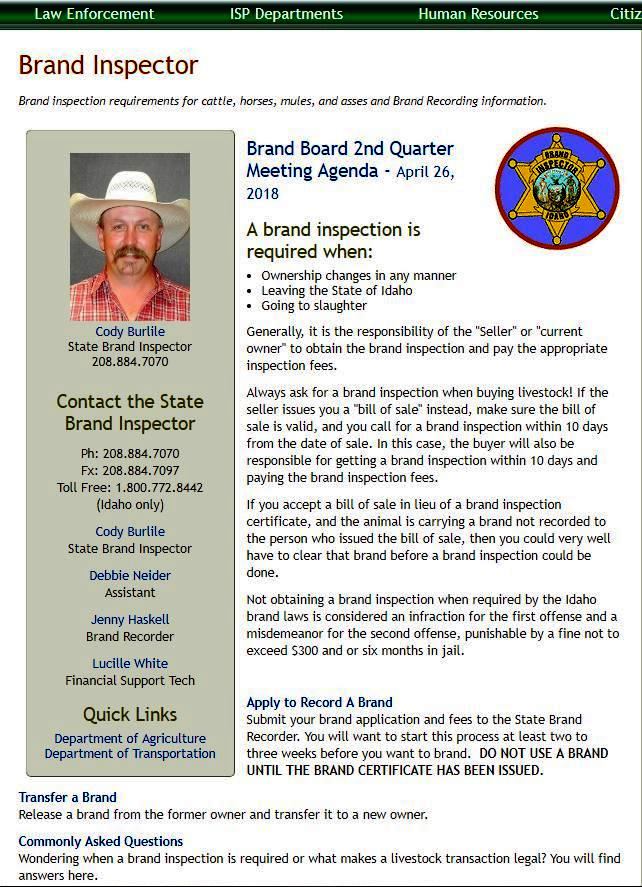
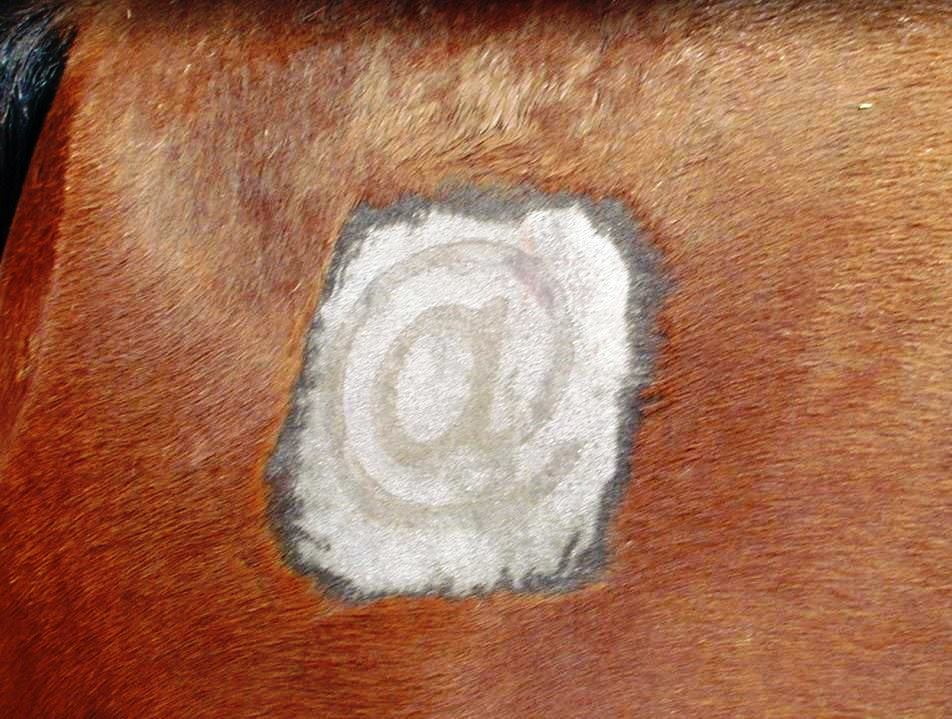
When is a brand inspection required?
- When ownership changes in any manner.
- When leaving the state of Idaho.
- Going to slaughter
- For the purpose of leaving the state or going to slaughter, a brand inspection is good for 96 hours.NOTE: All livestock must be brand inspected whether the animal is actually branded or not. A brand inspection establishes “Prima Facie” evidence of ownership. Brand Inspections are not required on sheep.
Is a bill of sale a legal document for a livestock transaction?
- Yes, if the bill of sale is valid and current.NOTE: A brand inspection must be done within 10 days after the date of the sale. A bill of sale does not replace a brand inspection.
A valid bill of sale must include:
- Date of the sale.
- Complete description of livestock sold.
- Name of the purchaser.
- Signature of the seller.
What is an annual brand inspection?
- Annual (also known as a “seasonal”) brand inspection is good for up to 12 months. This brand certificate is designed to allow the livestock owner to travel in and out of the state of Idaho to our neighboring states annually. We have reciprocal agreements with most all of our neighboring states, except the states of Montana and Wyoming.
- Cost: $8.26NOTE: A seasonal or annual brand inspection may not be used for slaughter, sale or trade.
What is an ownership and transportation certificate, also known as a lifetime certificate?
- The “Lifetime” certificate may only be issued on horses, mules and asses. It has no restrictions, and may be used to travel nationwide (including Montana). It may also be used for slaughter, sale or trade.
- Ownership and transportation certificates, also known as lifetime certificates for any horse, mule or ass shall be valid so long as the animal remains within the ownership of the person to whom the certificate was issued.
- The ownership and transportation or “lifetime” certificate is not transferable.
- Cost: $38.00
What information is required to obtain a brand inspection?
Proof of ownership. Ownership can be determined in several ways:
- Your recorded brand on the animal/brand card.
- Valid and current bill of sale.
- Idaho brand inspection or another state’s brand inspection.
- Purebred registration papers or possibly health papers.
- Lip Tattoos or other permanent markings not acceptable for brand recording, but acceptable for proof of ownership purposes.
How do I get a brand inspection?
- Call your district brand inspector. If you do not know who the local inspector is, call the State Brand Inspector’s Office in Meridian. In state toll free: 1-800-772-8442 or local number 884-7070.
- So we can provide the best service to you, please allow us as much notice as possible as to when you need the brand inspection. However, we do require a minimum 24 hour notice.NOTE: Make sure you have satisfactory proof of ownership. If you are going to use a bill of sale, make sure it is valid and current. If you are unclear whether or not you have satisfactory proof of ownership to obtain the brand inspection, ask the brand inspector when you are arranging an appointment and he or she will be more than happy to advise you.
What information is required to travel within the State of Idaho?
- Proof of ownership. (Basically, the very same information required to obtain a brand inspection).NOTE: If you are in possession of livestock other than your own when traveling within the state, you must have a written permit filled out by the owner giving a description of the livestock and his or her signature.
Written Permits can be obtained at no charge from the State Brand Inspector’s office in Meridian.
What other laws affect the interstate and out of state transportation of livestock?
One serious ride in Compression Socks and you’ll never look back. These socks provide light compression to the lower leg to prevent swelling. Helps with aching, swollen Legs, restless leg syndrome, leg cramps and circulation issues. Designed for motorcycle riders, but should work as well riding horses.
Moto-Skiveez Compression Riding Socks
The Moto-Skiveez Compression Riding Socks offer light compression along the length of the lower leg to combat lower limb edema (swelling) that is commonly associated with long distance motorcycle riding. You’ll feel fresher at the end of your riding day when you wear compression socks. Compression socks Video / Review Video
Incorporated into the construction is 40% aloe fiber. Aloe fiber has anti-microbial and anti-bacterial properties that will help with odor. In addition, aloe fiber is soft and is designed to reduce chafing and blistering. Using sophisticated micro-encapsulation technology, tiny amounts of Aloe Vera are locked into airtight, waterproof micro-capsules. Bonded into the sock’s fabric, the Aloe is released instantly when the fabric is touched or rubs against the leg. Even after repeated wear and washing, the smoothing benefits remain.
Sizing:
- SM: fits sizes 6-9 and is approximately 16″ high
- LG: fits sizes 9-12 and is approximately 18″ high
- XL: fits sizes 12-15 and is approximately 18″ high
I purchased these socks not only for motorcycle riding but also for prolonged air travel required by my company. I do worry about DVT (Edema) as I’ve had friends that came close to biting the bullet due to blood clots.
They work folks, what ever they are made off there is absolutely no bad odor after wearing them for almost 33 hours straight (Miami to New Zealand). In my case at 6′, they roll up to just below my knees. It takes a bit to put them but its not the end of the world.
One peace of advise is to keep them away from Velcro. I wear Sidi Adventure Goretex boots and the flap has what I call the male side of Velcro and it loves to tear up socks.
One wish is that they come in packs of threes or such with a bit of a break since they are great for more than just riding around on the GS’
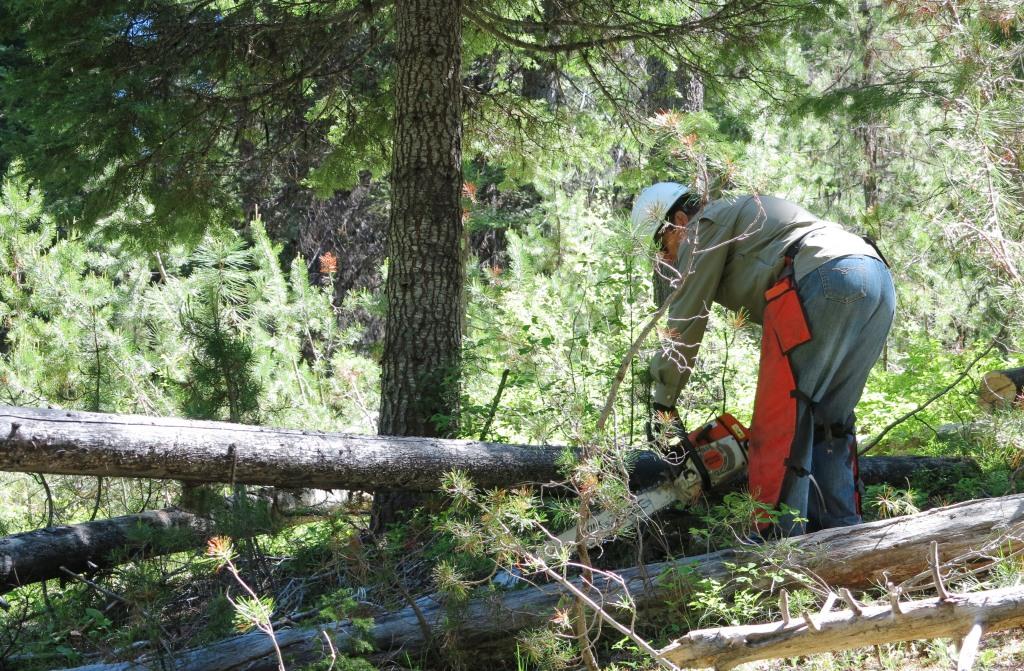
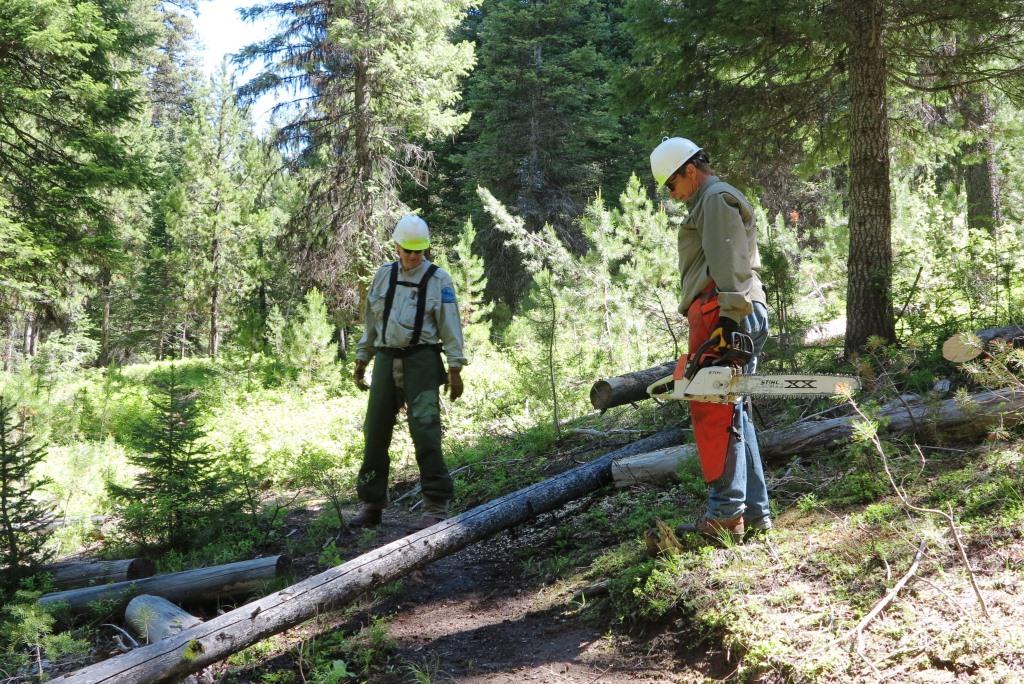
Finding the right saw for your needs doesn’t have to be a guessing game. This guide for buying a chainsaw is designed to help you better understand which STIHL chainsaws have the power and features you need for your task.
If you have specific questions about a chainsaw, such as which size guide bar to buy or how to find a direct comparison of performance between two or more models of chainsaws, visit your local STIHL Dealer for more information. They can help you with specific questions, as well as provide live demonstrations, in order to help you choose the right chainsaw.
BLM Idaho manages six wild horse herd management areas on approximately 418 thousand acres. The combined appropriate management level for all HMAs in the state is 617 animals.
The Four Mile wild horses are known to be of excellent size with good conformation and color. This is the result of the influence of released Thoroughbred and Quarter Horse studs to the herds periodically up to 1978. It is also suspected that horses bred for Cavalry Re-Mounts may have also influenced the herd. In addition to the typical colors of bay, brown, and black, the wild horses include many chestnuts, pintos, paints, roans, grays, duns, grullos, and a few Appaloosas. Population 111.
Location: About 15 miles north of Emmett, Idaho
Size: 25,806 acres
Topography/Vegetation: Rolling hills and sagebrush steppe
Wildlife: Wildlife living in the area include pronghorn, mule deer, and upland bird species.


On October 15,2017 eight members of Squaw Butte spent an almost perfect fall day exploring a small section of this HMA. Parking at 4 mile creek, we rode an eight mile loop in the south west section of the HMA. We saw a band of mustangs, but they were on a hill side a couple of miles away on the other side of a canyon which would have taken a couple of hours to cross. Everyone indicated that they had enjoyed the day and were excited to see the horse, even if it was at a distance.

BEARS EARS NATIONAL MONUMENT | PHOTO BY PATRICK BROOKS BRANDENBURG/TANDEM
The people of Utah have sent a clear message to state political leaders looking to reduce the size of federally protected lands: Take a hike.
Thanks to a campaign led by the Sierra Club’s Utah Chapter, Summit County followed Salt Lake City as one of the latest jurisdictions to unanimously pass a resolution proclaiming “the irreplaceable value these lands provide to our economy, recreation, quality of life, and national heritage.” The resolution is one in a series of actions that defenders of the outdoors have taken in response to the state political leadership’s efforts to shave down the Grand Staircase–Escalante and Bears Ears National Monuments. (In July, the Outdoor Industry Association announced that it will move its Outdoor Retailer expo to Denver after two decades in Salt Lake City.)
Meanwhile, the Utah legislature has made a show of setting aside $4.5 million for a possible lawsuit to force the U.S. government to transfer federally protected land over to the state. Environmentalists fear that politicians want to increase industrial development or even sell the land to private interests.
At the heart of the fight are the Utah residents dedicated to protecting the land. “We feel like the land is our heritage,” said Becky Yih, a volunteer for the Sierra Club’s Keep Public Lands in Public Hands campaign. “These lands belong to all Americans, not the state of Utah.”
This article appeared in the November/December 2017 edition with the headline “Utah Residents Stand Their Ground.”
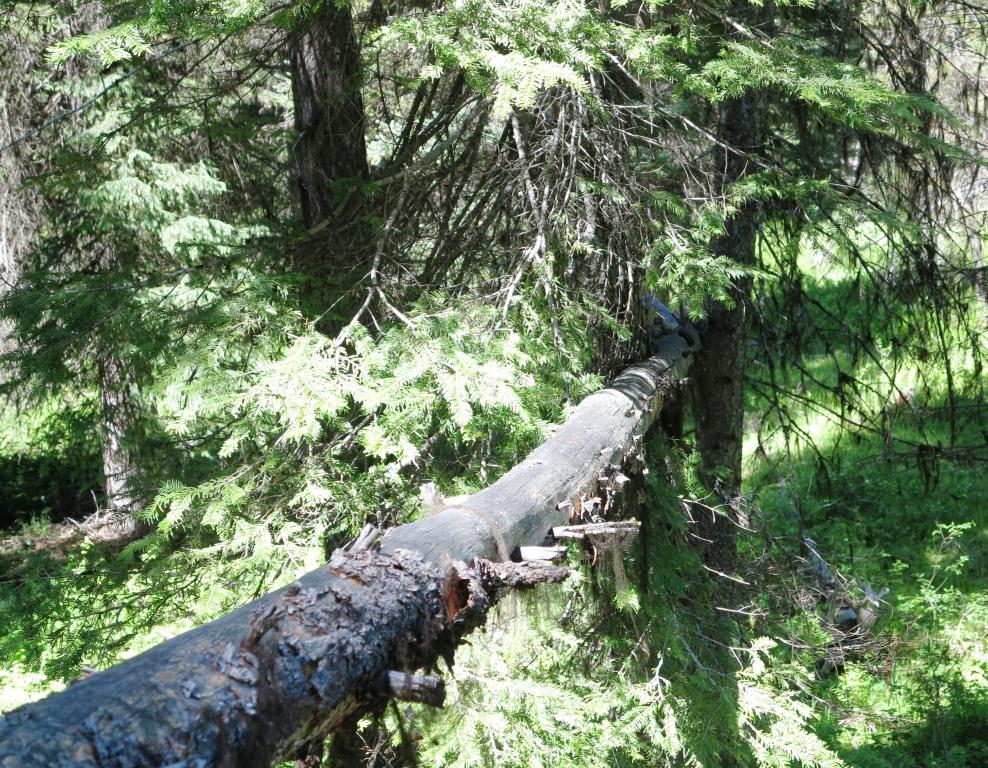
Things to consider when making the choice to tackle or walk away from a tree that is hung up
Hung-up-Tree-Awareness 01/24/2007
BY DEVIN HENRY – 10/09/17 04:41 PM EDT
A House committee on Wednesday will mark up a bill to overhaul the Antiquities Act, a law that gives the president power to establish national monuments for preservation.
The bill, introduced Friday by House Natural Resources Chairman Rob Bishop (R-Utah) would put new rules on large national monument designations made by presidents. Antiquities Act reform is a key priority for some conservatives, interest groups and Westerners.
The bill would maintain the president’s power to declare national monuments, but any monument larger than 640 acres would be required to go through a federal environmental review process.
The legislation applies increasingly strict rules to potential monuments the larger they get, ultimately requiring county and state governments to sign off on the monument designation before it takes effect.
It also codifies the president’s ability to reduce the size of a monument. The Natural Resources Committee will mark up the bill on Wednesday.
Bishop, a frequent critic of presidential monument designations under the Antiquities Act, said his bill would fix a law that has a “worthy goal” that “has been manipulated for ulterior political purposes.”
“Today the act is too often used as an excuse for presidents to unilaterally lock up vast tracts of public land without any mechanism for people to provide input or voice concerns. This is wrong,” he said in a statement.
He said his bill “modernizes the law to restore its intent, allowing for the protection of actual antiquities without disenfranchisement of local voices and perspectives. It standardizes and limits the president’s power to reshape monuments.”
The legislation comes as the Interior Department recommends President Trump shrink a handful of large monument designations made since the 1990s.
That proposal is highly controversial among conservationists who have opposed efforts to shrink monuments and will likely sue to test the legality of such decisions.
Energy industry groups, ranchers and other interests have encouraged the review and Antiquities Act reform on the grounds that monument designations set large tracts of land, especially in the West, for conservation rather than use.
The Natural Resources Committee on Wednesday will also consider ranking Democrat Raúl Grijalva’s (Ariz.) resolution requiring Interior Secretary Ryan Zinke share with Congress more information related to his national monuments review.
“The Trump administration, urged on by well-funded ideologues and fossil fuel interests, is engaged in an unprecedented effort to destroy our country’s system of public lands,” Grijalva wrote in an op-ed in The Hill last week. “This effort is not about our shared national interest, and if left unchecked it will eventually reach your backyard.”
Congress Aims Killing Blow at Public Lands
The Wilderness Society

Calendar Info – Contact Charles & Lorraine Chick if you have any questions about the Calendars.
Respectfully submitted by Marybeth Conger, SBBCH State Director

Thank you so much, for giving me the opportunity to represent you at the September 16, 2017 State Board meeting. I am very glad to report that 14 of the 16 chapters were represented. I have not yet received the official BCHI meeting minutes, so this will be a brief, abbreviated report. Here are some of the meeting high lights:
BCHI received was given a 501 c 4 tax exempt status effective March 2017
Dale Schremp, has agreed to be BCHI’s Sawyer coordinator. He is the perfect candidate
BCHI is looking for a Broomtales editor, which is a member at large position. This fall will be Lorelei’s last edition. Expenses to attend the BOD meeting are reimbursed. Please let me know if you might be interested or have additional questions
The Boise Chapter proposals were discussed and the specific actions will be detailed in the minutes. BCHI to get a list of grant info and Idaho congressional delegation to make contacts easier
Discussed media and important to NOT over- represent info presented
Nominating committee was established. Chair, Vice Chair, National Director, and Alternate are open position to be voted upon. I agreed to run for the open national director position
We discussed calendar photo criteria and the pros and cons of providing email info to BCHA
The website coordinator received ok to make the changes she feels will make the website easier to use
Ways and means again reviewed the calendar sales. Our chapter continues to support this fundraiser
All chapters are to have the Y/E volunteer reports and the annual report to Rod Parks no later than Jan 15. He would like a short, simple report of activities with one photo from each chapter
IHC Grants and coloring book update- Easy one page form for grant request found on the IHC website The IHC coloring books are done too and no cost details as of this writing
There will be some By-Law changes with more info to come on this. The current format was discussed as it pertains to revision, some housekeeping, and then matching up new officers’ effective dates.
Public lands reports both north and south reviewed
Once I get the official minutes, I will send them out for placement on the blog and email out to all SBBCH members. Let me know if any questions. Here is IHC coloring book. What a great way to involve youth!
Respectfully submitted by Marybeth Conger, BCHI Education chair October 5, 2017

Back Country Horseman of Idaho (BCHI) Leave No Trace (LNT) Master Educator Training Expectations. Let’s re-energize LNT at the chapter level.
BCHI LNT Master Educators should successfully complete a minimum of 2 trainings and 1 public awareness workshops, for a minimum duration of five years. BCHI does encourage LNT Master Educators to train beyond this timeframe, to include completion of LNT/Education refreshers courses as appropriate.
Examples of these annual trainings would be the LNT Train the Trainer session, and/or LNT awareness workshops. The public outreach will create and foster collaborative Leave No Trace Education trainings with agencies and organization.
Should the BCHI Master Educator conduct trainings beyond that of their chapter, The BCHI foundation should reimburse the BCHI Master Educator the prevailing BCHI mileage rate. The BCHI Master Educator will provide appropriate reimbursement documentation as required by BCHI foundation.
BCHI will continue to support statewide education efforts.
GRANTS to pay for education Items
Marybeth to develop by October month end an education template to request grants monies to cover master education tuition cost plus a jacket.
BCHI Educators List
Working to update the current list of BCHI LNT Master Educators and Trainers. So far 3 of 16 chapters have provided information. Marybeth plans to attend the Master Educator Clinic in 2018.
BCHI Education/Expansion Video
Completed and on the website. Chapters can use this at public outreach events. Who can tell me where it is on the website? Watch Video
* A big thanks to Robbin, who continues to support BCHI education efforts even though he has moved.
BCHI website updated with relevant Education materials
Plan to start with the LNT section after completing the Master Education course in 2018. Every BCHI chapter should start to submit electronic education materials to the BCHI Education chair for inclusion. Mb is meeting with the website coordinator this month to recommend changes. Need to make Education information on the website easier to find.
BCHI now has a co- chair- “A big thanks to Karen Kimball” and watch for more details about Idaho’s first ever Leadership Training
In 2018, I will coordinate BCHI Leadership training with Karen to have something for members at the BCHI convention. Having Karen as an Education co-chair will help to move BCHI education and this project forward. A training template was recently created and emailed to Karen. Idea to have rotating three training modules on Sunday, so folks could attend and then head home from. Reached out to Rob to iron out logistics. More details to come.
BCHI EC and CEC Job descriptions
Completed in 2016 and now are available to all BCHI members. All chapters received these attachments, and EC job description is on the website. MB will email the CEC job description to our amazing website coordinator by month end.
BCHI now has a Sawyer Training coordinator
Dale Schremp, will now be handling this for the state, after he gets back from hunting! His number is 208-448-1255 and you can email him at anchorranch@sandpoint.net.

BCHA President’s call notes
respectfully submitted by Marybeth Conger, BCHI Alt National Director
On 9/ 27/ 17 I participated in BCHA Presidents ‘phone conference covering a variety of BCHA topics and activities. It is just amazing to me, to see and hear about all the outstanding work BCHA continues to do for us. Idaho was very well represented on this conference, as Amy attended too. Anyways, here are some of highlights that stood out:
Chairman Report, Freddy Dunn- BCHI should continue to pay for their national directors to attend the national board meeting. Regarding funding, consider adding a line to your membership application to make additional donation.
Treasurer’s report- As of August, current income is ahead of expenses. BCHA may have a slight expense overage by the end of year. BCHA is working to developing simpler reports for use during the fiscal year.
It is the recommendation of the BCHA Legacy Committee, that BCHA to consider opening of a stock brokerage account for BCHA to receive stock and bond donations. The Executive committee is researching to see if this action would impact current BCHA by-laws and/ or governance rules.
Public Land Report- (Note- I am only reporting on what was presented at the NATIONAL level. BCHI’s amazing Public land reps will continue to report and make recommendations about land issues in their areas.)
• Congressional champion identified who is willing to promote increase in Forest Service trails funding (CMTL) in Fiscal Year 2018. Oregon Senator Jeff Merkley sits on the appropriations committee, so we have an advocate in the relevant subcommittee.
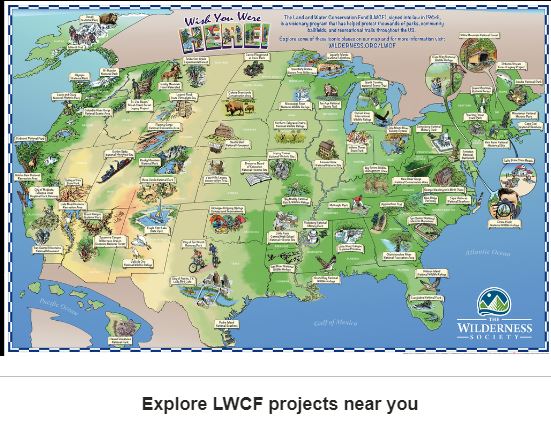
• CMTL currently slated to get $77 million in the House bill (a $2 million cut from 2017 level). The Land and Water Conservation Fund is up for reauthorization by Congress. LWCF has benefited Trail access. It has been used for purchasing conservation easements, purchasing land outright and we would like calls made re supporting its reauthorization and full funding. Bipartisan-supported bills now that would do this are HR 502 and S 569. Alabama, Montana, Florida, Mississippi and Tennessee will lose out on trail related projects next year if LWCF funding cut as proposed by House (only $275 million, when last year it was$400 million.
• Bikes in Wilderness Bill (HR 1349), the good news is there’s been no further action on the bill. BCHA is working with the American Horse Council, who is meeting with the house natural resources committee staff. The committee has other priorities that they want to get passed. BCHA will continue to track the bill.
Back Country Horsemen of America has added to its value to members by offering excess
Equestrian liability insurance through Equisure . The liability policy is available to BCHA
individual and family members in good standing and covers excess personal liability up to $1
million. Cost for the policy is $20 for individual and $40 for family BCHA members.
To purchase a policy or to learn more visit: https://bcha.site-ym.com/store/ListProducts.aspx?catid=584459.
Should anyone wish to review the actual minutes, I will be happy to make those available. Please take a minute to check out the BCHA website that contains a wealth of information. Thanks for giving me the opportunity to attend this meeting as BCHI’s Alternate Director. See you on the trail!
BCHO Sawyer Web page
Saw Certification Program Documents
- National Saw Policy Related Documents, Background and FAQ’s(Forest Service Link)
- BCHO Saw Program Rev 3
- FS Saw Operations Guide, July 14, 2016 – PDF
- PPE chart – Posted 4-9-17 – MS-Word or PDF
- JHA Chainsaw – Posted 4-9-17 – PDF
- JHA Crosscut Saw – Posted 4-9-17 – PDF
- Field Evaluation Form 2017 – MS-Word or PDF
- Saw Certification Reporting Form – MS-Word or PDF
- Saw Incident Report Form – MS-Word or PDF
- First Aid Kit contents per OSHA – Posted 4-9-17 – PDF
USFS Manuals and Other Information
- Chain Saw and Crosscut Training Course – Student’s Guidebook,
(Large File, best for quality printing) or (Smaller single file, fine for online viewing) - Chain Saw and Crosscut Training Course – Instructor’s Guidebook (Large File)
- Chain Saw and Crosscut Training Course (Smaller Files)
- Saws That Sing – A USFS Guide to Using Crosscut Saws – Full PDF Document (Large File) or (Smaller Files)
- An Ax to Grind – A Practical Ax Manual – Full PDF Document (Large File)
- An Ax to Grind – A Practical Ax Manual – (Smaller Files)
- FSH 6709.11 USFS Health and Safety Code Handbook,
(See 22.48 for Saw Operations)
Work Party Documents
- Tailgate Safety Briefing – Cover Sheet – MS Word or PDF
- Tailgate Safety Checklist – Work Party Leader – MS Word or PDF
- Tailgate Safety Briefing – Work Party Members – MS Word or PDF
Safety Information
- Pacific Crest Trail Hazard Tree Study – PDF
- Chainsaw Fuel Geyser Hazard – Posted 10-24-16
- Rapid Lesson Sharing Chainsaw Geyser Sprays/Ignites Sawyer – Posted 10-24-16 PDF
- An Incident Investigation Report for a fatal bucking accident – Workers’ Compensation Board of B.C. – PDF & See a video of this accident.
Instruction Videos
- The Crosscut Sawyer Video, This 43 minute video is a companion to the Forest Service “Chain Saw and Crosscut Saw Training Course.”
- Handtools For Trail Work – Part 1 – USDA Forest Service 1999 – 26 minute video on – Crosscuts – Loppers – Digging Tools
- Handtools For Trail Work – Part 2 – USDA Forest Service 1999 – 25 minute video on Axes – Sledge Hammers – Handles and Sharpening
- The Sawyers – A 70 year old sawing training film, Shows good sawing techniques for the crosscut saw.
- The Axman – Vintage ax use training video. US Forest Service. Maybe late 1940’s
- How To Start A STIHL Chain Saw
- STIHL – Chain Saw Safety, Operation & Maintenance – 1 Hour
- Chain Saws – Part 1 – Spring Poles
- Chain Saws – Part 2 – Bucking: Top Bind
- Chain Saws – Part 3 – Bucking: Bottom Bind
- Chain Saws – Part 4 – Bucking: Blow Down
- Chain Saws – Part 5 – Bucking: Angle Cut
- Danger : Chain Saw Washington State Dept. of Labor and Industries 2008 – Video V1295
PPE: Do Not Pick Up a Saw without it!


How to Properly Operate and Maintain Your Chainsaw (STIHL USA)
Danger! Chain Saw Safety – Training Video
Chainsaw Chaps – Why wear them?
520-120 / 410-120 Chain Grinder Operating Instructions
Sharping you saw chains with a power grinder
Chainsaw How To – Notch and Hinge Techniques
Time to refresh your Saw Skills
BC Sawyer Training Video’s
BC Sawyer Training #1 BC Sawyer Training #2 BC Sawyer Training #3 BC Sawyer Training #4
BC Sawyer Training #5 BC Sawyer Training #6 BC Sawyer Training #7 BC Sawyer Training #8


2017 Guideline for CPR – American Heart Association