




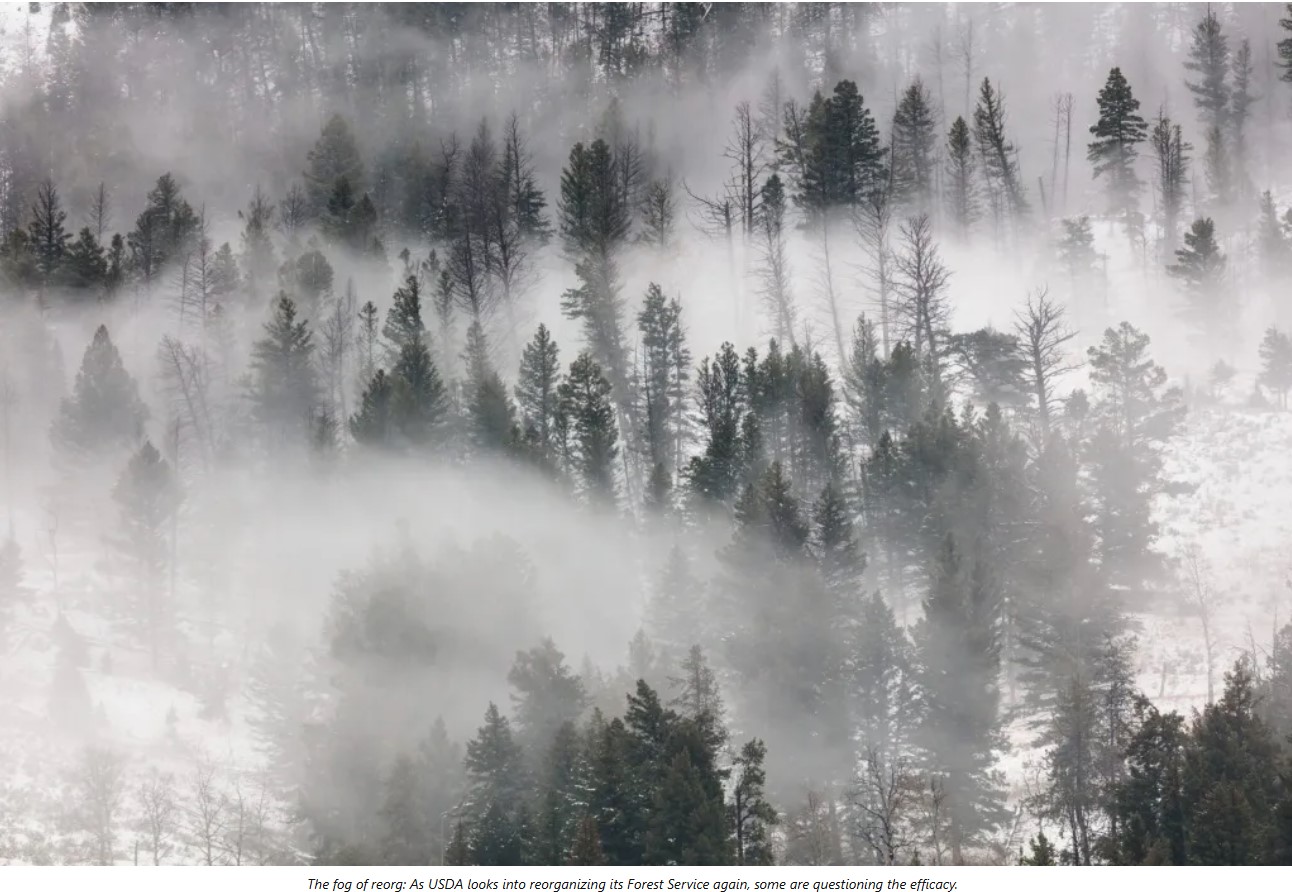
The U.S. Forest Service has been searching for an identity almost since the federal government began managing trees in the 19th century.
It started in 1876 inventorying public lands to prevent over-logging. Then it became the lumber provider to the nation. Now, just shy of its 150th birthday, the Forest Service faces another fundamental reorganization announced by Agriculture Secretary Brooke Rollins last week.
Or not. A week after Rollins’ announcement, the Senate Agriculture Committee ordered Deputy Agriculture Secretary Stephen Vaden to present a “Review of the USDA Reorganization Proposal.” Many public lands watchdogs hoped the Wednesday hearing would clarify where the idea came from and how the Forest Service’s tree focus fit in the farm-and-ranch world of the Department of Agriculture.
During the hearing on July 30, Committee Chairman John Boozman, R-Arkansas, offered his appreciation that Vaden, who took the job just two weeks before Rollins announced the reorganization on July 24, was working on his third week when he was summoned to explain the plan.
Ranking member Senator Amy Klobuchar, D-Minnesota, was less welcoming.
“The reason for the short notice is because the administration put out a half-baked plan with no notice,” Klobuchar said. Rearranging a major department that had already lost 15,000 staff members at a time when tariffs and pests such as the screwworm are roiling farm markets is “nothing short of a disaster,” she said.
Sharon Friedman, former Forest Service regional planning director, called the Rollins memo “way out of the normal range of ‘things to do.’” In particular, she pointed to the proposal to phase out Forest Service regional offices, instead of shrink them from the current nine to some smaller number. Earlier this year, draft maps showing a two- or three-region compression were in circulation.
“I think Congress is going to say this is a really stupid, bad idea,” Friedman told Mountain Journal on July 29 ahead of the hearing. “Go back to the drawing board.”
The National Association of Forest Service Retirees was equally aghast. “We do not see anything in the proposal that would improve services or efficiency,” they wrote in a July 29 letter to Senate committee leaders Boozeman and Klobuchar. “Rather, it appears to simply cut staffing and funding without describing how the work will continue to get done. It provides the classic direction to do more with less.”
NAFSR Chairman Steve Ellis told Mountain Journal the proposed reorganization of the Forest Service is nothing new. “I’ve been through a lot of these in my career, going back to when Jimmy Carter was in the White House,” he said. “The political ones are easy to smell, and this has the political smell to it. I doubt that it came from the Forest Service. It came from higher up. They were told ‘Eliminate regional offices and station offices — figure it out.’”
Where to call home?
While the impact that Rollins’ reorganization plan might have on the Forest Service has drawn particular attention, it affects all 29 agencies within the Agriculture Department. Rollins told Politico on Friday that “perhaps 50 to 70 percent of our Washington, D.C. staff will want to move” to five new hubs the agency is creating and the rest should seek jobs in the private sector.
That amounts to about 2,600 of the 4,600 USDA staff now in Washington, D.C. offices. The department has about 100,000 employees nationwide, 90 percent of whom work outside the national headquarters area.
The regional hubs would be in Raleigh, North Carolina; Kansas City, Missouri; Indianapolis, Indiana; Fort Collins, Colorado; and Salt Lake City, Utah. The memo did not say if the Forest Service regional offices would be redistributed among those five cities or eliminated altogether.
Vaden told senators that the plan removed some layers of middle management. “But that does not automatically mean everyone located in a former regional office of an agency will be moved,” he said. Vaden also pledged that USDA would help with moving costs for current employees, while “building the next generation of USDA leadership” in the regional hubs.
Most of Wednesday’s Senate hearing focused on two issues: Why there was so little advance notice of the plan and what senators’ districts were being considered for receiving the USDA jobs Rollins was moving out of Washington, D.C.
Senator John Hoeven, R-North Dakota, praised the reorganization’s goals, but warned he needed to see more collaboration with Congress.
“There’s a difference between you selecting hubs on your own and if we work together and come up with a plan,” Hoeven said. “Is this an outcome that we’re going to talk about, or a fait accompli?”
But Vaden did reveal a few expectations for the Forest Service.
Senator Ben Jay Luján, D-New Mexico, asked about the impact of “eliminating a regional office” of the Forest Service. Vaden replied that the Forest Service’s national human resources office in Albuquerque would not be affected in the reorganization, but that “the regional office will no longer be there.” Its building is already on a federal list to be closed and sold, and its employees would “be absorbed to other areas or asked to move.”
In his testimony, Vaden said one of the biggest reasons for the organization was to get the USDA workforce out of the National Capitol Region, which has “one of the highest costs of living in the country.” Federal salaries include a “locality rate,” or pay boost, to help employees afford expensive areas. The Washington, D.C. locality rate is 33.94 percent above a federal job’s base pay. Federal workers with new families couldn’t afford to buy homes in the Capitol area, where prices are averaging more than $800,000, he said.
What saves money?
“If you’re really looking for savings and belt tightening, focusing on the higher level of the organization doesn’t bother me,” said Mary Erickson, the recently retired supervisor of the Custer-Gallatin National Forest. “It’s not like you couldn’t downsize the regional offices, but the transitional costs of that are daunting. As you eliminate regional offices, where does that work go? And how do you do that in a year’s time? That’s a lot of work. And they say they don’t want to do this in fire season. Those are pretty long these days.”
Erickson pointed out that Fort Collins’ locality rate is 30.52 percent, resulting in almost no payroll savings. And although Salt Lake City’s locality rate is 17.06 percent, Utah’s public land is predominantly managed by Interior’s Bureau of Land Management, not the Forest Service.
“There’s been no explanation for those locations,” Erickson said. “No one seems to know who’s the mastermind behind this design.”
Nor does there appear to be any acknowledgement of previous federal reorganization attempts. Congress created a Special Agent in the Agriculture Department to survey the nation’s public forests in 1876, and opened a Division of Forestry in 1881. A decade later, Congress passed oversight of “forest reserves” to the Interior Department. President Theodore Roosevelt moved it back to Agriculture in 1905, naming Gifford Pinchot the first chief of the Forest Service.
An official history of the Forest Service’s first century labels eight more evolutions, including “The War Years,” “Environmentalism/Public Participation Era” and “Ecosystem Management and the Future Era.”
Ellis recalled the attempt at slimming down the BLM during the Clinton administration.
“They decided to take the district office layer out, which is like removing the forest supervisor layer in the National Forest System,” Ellis said. “It ended up costing a lot of money to move people around and get out of office leases. It ended up being a total flop. When the second Bush administration came on, they quietly put that layer back in.”
The first Trump administration took a similar track in 2019 when it moved the BLM headquarters out of Washington, D.C. Staff were dispersed to new offices in Colorado, Nevada, Utah and several other bases.
A 2021 survey of BLM workers by Public Employees for Environmental Responsibility reported that 87 percent of reassigned employees either retired or quit rather than move. The field offices were staffed largely by new hires who lacked the scientific or experiential backgrounds of the former staff. “This lack of expertise in new hires has resulted in a shunning of science at the agency, and even a demonization of intellectual culture in some cases,” the PEER report stated.
It also resulted in a paucity of workers handling public business. At the time, the Utah area reported an average of one BLM employee for every 37,277 acres of public land. Arches National Park, which is surrounded by BLM lands, had one employee for every 1,530 acres.
Biden administration Interior Secretary Tracy Stone-Manning moved much of the BLM headquarters staff back to Washington in 2022. But she also reinforced the Colorado office, expanding its contingent from 27 positions under Trump to 56.
Friedman now runs the forestry policy blog Smokey Wire. She was a planning director in 2007 when a “Transformation Team” explored ways of performing Forest Service duties better. It did not appear to consider moving to another part of the federal org chart, such as Interior. But Friedman noted her own inability to find out what it actually accomplished: “I couldn’t find any documentation for the effort. It wasn’t even clear whom I would ask at the Forest Service. Historian? Archivist? I got some phone numbers and emails, but no one returned the messages.”
Some of that effort looked into moving the Forest Service from Agriculture to Interior. A 2009 Government Accountability Office report concluded “a move would provide few efficiencies in the short term and could diminish the role the Forest Service plays in state and private land management … [If] the objective of a move is to improve land management and increase the effectiveness and efficiency of the agencies’ diverse programs, other options might achieve better results.”
The 2009 GAO report also cataloged other past consolidation initiatives. One was the colocation of wildland firefighting experts from the Forest Service, BLM, Fish and Wildlife Service, National Park Service and Bureau of Indian Affairs to create the National Interagency Fire Center in Boise, Idaho. That took place in 1965.
Where’s the Fire?
One particular problem drags public lands management off balance: wildfire.
While logging trees and grazing cows and digging trail occur far from the average American’s attention, forest fires are literally front-page news. The Forest Service routinely spends nearly half its annual budget fighting fire. It handles between 70 and 80 percent of the public land ignitions, with Interior agencies such as the Bureau of Land Management chasing most of the rest.
Federal firefighters have long chaffed at being just a tool in a larger agency’s land management toolbox, according to Freidman.
“There’s a tension between wildfire people and everybody else,” she said. “They got pay raises and nobody else did. They want to work for other wildfire people, because they feel they’re a national asset. They think they shouldn’t have others holding them back when they could be making money.”
But wildfire and public land management are woven together in a tight braid. Fire-dependent ecosystems cover most of the western United States. Local ranger districts not only map and monitor their surrounding forest for fire potential, their staffs often donate their time to the community volunteer fire department and ambulance service.
Removing fire duties from the Forest Service would “hollow out” the agency, according to Ellis.
“Fire is integrated in every program the Forest Service does,” he said. “Anything you do on public lands affects the fuel. It isn’t just burning slash piles. It’s how you graze range land. It’s timber harvest. That’s all fuels management. The fuel in Los Angeles fires [last January] was homes.”
During the hearing, Senator Klobuchar asked if there was a bigger plan to move the Forest Service, or parts of it, to some other cabinet agency. She particularly wanted to know about the fate of wildland firefighting.
Vaden replied that the president’s budget, not the reorganization plan, called for the centralization of wildfire services. In other responses, Vaden said the Missoula-based Fire Lab would not be moving, and that the Salt Lake City regional hub was chosen in part because it offered “aviation assets” that would help the Forest Service in the “administration’s plan regarding centralizing wildfire efforts.”
Congress had already shown resistance to other Trump administration moves. Last week, both the House and Senate Appropriations committees rejected a plan to wrap the Forest Service’s firefighting duties into a new wildland fire management service housed in the Interior Department. Despite a Trump executive order creating the consolidated wildfire service and Forest Service and Interior budget reports detailing how it would work, congressional budgeters put the 2026 wildfire allocations back in their traditional multiagency bankbooks.
“The committee is disappointed with the utter lack of regard for complying with Congressional intent on spending funds as appropriated,” the Senate Appropriations Committee bill report stated. On other pages, the Senate committee overruled Trump’s order changing the name of North America’s highest mountain from Denali to McKinley. And it blocked an Interior Department plan to hand over some unnamed small national park facilities to state management.
“Over my whole career, the president’s budget, if you took it as reality, was completely drastic,” Erickson said. “We always expected it was going to be moderated by the Congressional process. Up to this point with Trump, you hadn’t seen that. Maybe we’re seeing some good signs there.”

This morning, USDA Secretary Rollins announced a major reorganization of the U.S. Department of Agriculture and restructuring of the U.S. Forest Service.
The Press Release can be found here
.The Secretarial Memorandum can be found here. Secretary Memorandum: SM 1078-015 sm-1078-015
Here are some key takeaways (USDA-wide, not just the Forest Service):
- USDA currently has about 4,600 employees in the Washington, D.C. area. That will be reduced to 2,000. Employees will be relocated to new Hubs or the field.
- USDA’s five Hubs will be: Raleigh, North Carolina; Kansas City, Missouri; Indianapolis, Indiana; Fort Collins, Colorado; Salt Lake City, Utah
- USDA will vacate certain office spaces in Washington, D.C. and will revisit (but retain) “the utilization and functions in the USDA…Yates Building…” which has been the permanent home of the Forest Service since the 1990s.
- This is the first step in a multi-step, multi-month process of reorganization and restructuring to reduce the size and costs of the USDA workforce. As of today, 15,364 individuals voluntarily elected deferred resignation Department-wide.
What does this mean for the Forest Service?
There will be more information and announcements in the coming weeks and months. Here’s what we know from the Secretarial Memo:
- The Forest Service will phase out the nine Regional Offices over the next year. Implementation of the Regional Office phase out will consider the current fire season.
- While not stated in the Memo, we expect current Regional staff to be reassigned or relocated to the Hubs or individual forests.
- It’s our intel that Regional Foresters will also take on larger geographic and administrative responsibilities.
- Note: None of the Hubs are in AFRC’s service area and have little correlation to the National Forest System land base.
- The Forest Service will maintain a reduced state office in Juneau, Alaska and an eastern service center in Athens, Georgia.
- The current stand-alone Research Stations will be consolidated into a single location in Fort Collins, Colorado.
- The Forest Service will retain the Fire Sciences Lab and Forest Products Lab.
We’ll continue to gather and share more information about these significant structural changes to USDA and the Forest Service. We are already in touch with key agency leaders to better understand implications for the Forest Service, our industry, and our work. Change is disruptive. AFRC will continue to strategize and adapt accordingly to maximize our advocacy and effectiveness for our members under this new structure. One thing is clear: the restructuring underscores the power and importance of AFRC’s model of having a presence, relationships, and involvement at the local and national forest level.
Sincerely,
Travis Joseph
President/CEO
American Forest Resource Council
(Washington, D.C., July 24, 2025) – U.S. Secretary of Agriculture Brooke L. Rollins today announced the reorganization of the U.S. Department of Agriculture (USDA), refocusing its core operations to better align with its founding mission of supporting American farming, ranching, and forestry.
Over the last four years, USDA’s workforce grew by 8%, and employees’ salaries increased by 14.5% – including hiring thousands of employees with no sustainable way to pay them. This all occurred without any tangible increase in service to USDA’s core constituencies across the agricultural sector. USDA’s footprint in the National Capital Region (NCR) is underutilized and redundant, plagued by rampant overspending and decades of mismanagement and costly deferred maintenance. President Trump has made it clear government needs to be scrutinized, and after this thorough review of USDA, the results show a bloated, expensive, and unsustainable organization.
To be clear, all critical functions of the Department will continue uninterrupted. For example, we are at the height of fire season, and to date, have not only exceeded hiring goals, but have preserved the ability to continue to hire. Earlier this year, Secretary Rollins issued a Secretarial Memorandum exempting National Security and Public Safety positions from the federal hiring freeze. These 52 position classifications carry out functions that are critical to the safety and security of the American people, our national forests, and the inspection and safety of the Nation’s agriculture and food supply system. These positions will not be eliminated. However, employees may be subject to relocation.
“American agriculture feeds, clothes, and fuels this nation and the world, and it is long past time the Department better serve the great and patriotic farmers, ranchers, and producers we are mandated to support. President Trump was elected to make real change in Washington, and we are doing just that by moving our key services outside the beltway and into great American cities across the country,” said Secretary Rollins. “We will do so through a transparent and common-sense process that preserves USDA’s critical health and public safety services the American public relies on. We will do right by the great American people who we serve and with respect to the thousands of hardworking USDA employees who so nobly serve their country.”
The reorganization consists of four pillars:
- Ensure the size of USDA’s workforce aligns with available financial resources and agricultural priorities
- Bring USDA closer to its customers
- Eliminate management layers and bureaucracy
- Consolidate redundant support functions
To bring USDA closer to the people it serves while also providing a more affordable cost of living for USDA employees, USDA has developed a phased plan to relocate much of its Agency headquarters and NCR staff out of the Washington, D.C. area to five hub locations. The Department currently has approximately 4,600 employees within the National Capital Region (NCR). This Region has one of the highest costs of living in the country, with a federal salary locality rate of 33.94%. In selecting its hub locations, USDA considered where existing concentrations of USDA employees are located and factored in the cost of living. Washington, D.C. will still hold functions for every mission area of USDA at the conclusion of this reorganization, but USDA expects no more than 2,000 employees will remain in the NCR.
USDA will vacate and return to the General Services Administration the South Building, Braddock Place, and the Beltsville Agricultural Research Center, and revisit utilization and functions in the USDA Whitten Building, Yates Building, and the National Agricultural Library. The George Washington Carver Center will also be utilized until space optimization activities are completed. These buildings have a backlog of costly deferred maintenance and currently are occupied below the minimum set by law. For example, the South Building has approximately $1.3 billion in deferred maintenance and has an average daily occupancy of less than 1,900 individuals for a building that can house over 6,000 employees.
USDA’s five hub locations and current Federal locality rates are:
- Raleigh, North Carolina (22.24%)
- Kansas City, Missouri (18.97%)
- Indianapolis, Indiana (18.15%)
- Fort Collins, Colorado (30.52%)
- Salt Lake City, Utah (17.06%)
View the Secretary Memorandum (PDF, 2.6 MB)
This is only the first phase of a multi-month process. Over the next month and where applicable, USDA senior leadership will notify offices with more information on relocation to one of the regional hubs.
To make certain USDA can afford its workforce, this reorganization is another step of the Department’s process of reducing its workforce. Much of this reduction was through voluntary retirements and the Deferred Retirement Program (DRP), a completely voluntary tool. As of today, 15,364 individuals voluntarily elected deferred resignation.
Dan Waugh – Public Lands
501 E. Baybrook Ct
Boise Id, 83706
Office: 208-424-3873
Cell: 360-791-1591

 Fire crews remain on the ground in the Payette National Forest, working to contain three wildfires, with efforts focused on protecting structures at two lodges along the Salmon River, according to the U.S. Forest Service.
Big Bear Fire
The Big Bear Fire started on July 9 from a lightning strike in the Krassel Ranger District and has burned approximately 2,529 acres.
Officials in a Wednesday, July 16 update said flames moved into the Arctic Creek drainage and around Arctic Creek Lodge overnight, prompting firefighters to begin structure protection efforts.
The U.S. Forest Service said the lodge remains unaffected, and firefighters will continue to protect structures using pumps and sprinklers. Structure protection also remains in place at River of No Return Lodge.
The Payette National Forest is coordinating with the Salmon-Challis National Forest regarding rafting on the Salmon River.
Rush Fire
The Rush Fire has burned 747 acres since it started on July 10 due to lightning.
The U.S. Forest Service said on Tuesday, July 15, firefighters at Taylor Ranch created fire lines to protect threatened structures. The fire remained active overnight into Wednesday, until humidity levels reduced the fire’s behavior.
Crews remain on scene and are prepared to begin back-firing operations if needed, according to the Forest Service. The Soldier Bar airstrip burned over and is closed for public safety as of Wednesday, July 16.
Skunk Fire
The Skunk Fire has burned roughly 4 acres in the McCall Ranger District. The fire is 60% contained as of July 16.
The human-caused fire started on July 13 north of Skunk Springs between Forest Service roads 337 and 340, southeast of Warren Summit.
The Forest Service on Tuesday said fire activity was minimal within its established containment lines. No active fire was reported along the perimeter.
Officials said firefighters plan to focus on mop-up operations on Wednesday, July 16.
For further information regarding these fires, visit the U.S. Forest Service website here.

 There’s nothing wrong with buying cheap products from Walmart — everyone loves a good deal — but sometimes it can backfire. In the case of a new Ozark Trail recall, that’s literally what happened to several people injured by water bottles.
Walmart announced a massive recall Thursday of its Ozark Trail water bottles. The one-piece, screwcap lid can evidently pop off from built-up pressure, causing impact and laceration injuries. If you own a silver 64-ounce stainless steel insulated water bottle from Ozark Trail purchased at Walmart, you should stop using it immediately to avoid potential injuries, government regulators said this week.
Approximately 850,000 of these water bottles have been recalled, according to a July 10 notice from the Consumer Product Safety Commission (CPSC). The model number — listed on the packaging but not on the product — is 83-662. Walmart has been selling this product since 2017 for around $15.
Walmart received three reports of consumers being struck in the face after the water bottle lid was violently expelled. https://gearjunkie.com/food-hydration/walmart-ozark-trail-water-bottle-recall


 Author: Tracy Bringhurst
Published: 12:30 PM MDT June 30, 2025
MCCALL, Idaho — The Payette National Forest announced on Monday that it is proposing changes to recreation fees at various sites throughout the forest, with public comments open through September 15.
Forest Supervisor Matthew Davis stated that the fees are crucial for maintaining high-quality recreation experiences.
“We recognize how important our recreation areas are to local communities and visitors of the Payette National Forest,” Davis said. “Recreation fees are a critical funding source that helps us provide clean, safe, and accessible recreation opportunities.”
Even with the proposed changes, more than 52% of forest recreation sites would remain free to use, according to the Forest Service.
The 2004 Federal Lands Recreation Enhancement Act allows the Forest Service to retain at least 80% of collected recreation fees for local use in operating, maintaining and improving sites. Revenue would help fund infrastructure improvements and additional seasonal recreation staff.
The Forest Service said recreation fees help provide quality opportunities that meet modern visitor expectations while creating a more financially sustainable program for future generations.
The public can submit comments through Sept. 15 by mail to Payette National Forest, Attention: Emily Simpson, 500 North Mission Street, McCall, Idaho 83638. Comments are also accepted online.
Oral comments can be provided in person to Simpson during business hours, Monday through Friday from 9 a.m. to 4 p.m., or by calling 208-634-0700.
After public comment closes, the proposed fee changes will be reviewed by a citizens’ advisory committee representing various recreation interest groups. The committee will submit recommendations to the Regional Forester for a final decision.
More information is available here. Payette National Forest | Proposed Changes to Recreation Fees on the Payette National Forest | Forest Service
Public Commentary Period
The public is invited to provide comments on these proposed changes until September 15, 2025. This public comment period allows you to ask questions and share feedback with agency decision-makers. Your comments regarding the proposed fee change will be considered.
How to Provide Comments
To ensure that your comments are considered, please share your comments no later than September 15, 2025 using one of the methods listed below.
Online
Comments can be provided online at https://arcg.is/1eKXDW0.
Postal Mail
Utilizing the downloadable Recreation Fee Proposal Comment Form, send postal mail comments to:
Payette National Forest
Attn: Emily Simpson
500 N Mission Street, McCall, ID 83638
Oral Comments
Oral comments must be made in person at the Payette National Forest Supervisor’s Office during normal business hours (Monday- Friday 9 a.m. – 4 p.m.), or by calling 208-634-0700 and indicating you would like to provide comments on the proposed recreation fee changes.
Comments will be accepted by email at this email address:
Please ensure to list Recreation Fee Changes in the subject line.
(Santa Fe, N.M., June 23, 2025) – Today, U.S. Secretary of Agriculture Brooke L. Rollins announced during a meeting of the Western Governors’ Association in New Mexico, the U.S. Department of Agriculture (USDA) is rescinding the 2001 Roadless Rule. This outdated administrative rule contradicts the will of Congress and goes against the mandate of the USDA Forest Service to sustain the health, diversity, and productivity of the nation’s forests and grasslands. Rescinding this rule will remove prohibitions on road construction, reconstruction, and timber harvest on nearly 59 million acres of the National Forest System, allowing for fire prevention and responsible timber production.
This rule is overly restrictive and poses real harm to millions of acres of our national forests. In total, 30% of National Forest System lands are impacted by this rule. For example, nearly 60% of forest service land in Utah is restricted from road development and is unable to be properly managed for fire risk. In Montana, it is 58%, and in Alaska’s Tongass National Forest, the largest in the country, 92% is impacted. This also hurts jobs and economic development across rural America. Utah alone estimates the roadless rule alone creates a 25% decrease in economic development in the forestry sector.
“Once again, President Trump is removing absurd obstacles to common sense management of our natural resources by rescinding the overly restrictive roadless rule,” said Secretary Brooke Rollins. “This move opens a new era of consistency and sustainability for our nation’s forests. It is abundantly clear that properly managing our forests preserves them from devastating fires and allows future generations of Americans to enjoy and reap the benefits of this great land.”
This action aligns with President Trump’s Executive Order 14192, Unleashing Prosperity Through Deregulation to get rid of overcomplicated, burdensome barriers that hamper American business and innovation. It will also allow more decisions to be made at the local level, helping land managers make the best decisions to protect people, communities and resources based on their unique local conditions.
Of the 58.5 million acres of inventoried roadless areas covered under the 2001 Roadless Rule, 28 million acres are in areas at high or very high risk of wildfire. Rescinding this rule will allow this land to be managed at the local forest level, with more flexibility to take swift action to reduce wildfire risk and help protect surrounding communities and infrastructure.
 Breaking news: Senator Mike Lee’s proposal to sell off up to 3.3 million acres of public lands appears to have been removed from the Senate’s budget reconciliation bill.
Over the past two weeks, hundreds of thousands of outdoor enthusiasts—alongside hunters, anglers, motorized users, and conservationists—spoke up to defend public lands. Late yesterday evening, the land sales were removed on a technicality by the Senate parliamentarian, meaning that this dangerous proposal is out of the budget bill for now.
Lawmakers heard you, and the proposal to sell off millions of acres was already facing strong headwinds and was on the cusp of being scaled back or removed prior to this ruling.
This is a big win—for a few important reasons:
• Those 3.3 million acres will remain public, for now, accessible to the 175 million Americans who recreate each year.
• The outdoor community showed up in force. In just days, more than half a million letters poured into Congress—a volume we’ve never seen before.
• Lawmakers responded. In the past week, multiple Senators publicly opposed the sell-off proposal, sending a clear signal that these ideas aren’t welcome.
Thank you for raising your voice. This community continues to show that when public lands are under threat, we are ready to fight for them.
That said, we’re not out of the woods yet. Senator Mike Lee has already indicated he plans to revise his proposal and push again for public land sell-offs—this time with narrower language that he hopes will pass.
We’ll keep fighting—and we hope you will too.


Perpetua eyes possible Stibnite mine expansion – Valley Lookout
 A gold and antimony mine approved in eastern Valley County is well-positioned for future expansion, according to executives for the mining company.
On Wednesday, Perpetua Resources outlined preliminary plans for a possible expansion of its Stibnite mine, which was approved earlier this year following an eight-year review by the Payette National Forest.
Marcelo Kim, who chairs the company’s corporate board, told shareholders that the company will explore additional zones that could add as much as 2.4 million ounces of gold to the mine’s current reserve of 4.8 million ounces.
“We believe there are ample high-grade extensions to our existing reserves that we plan to drill out,” Kim said. “Should we be able to bring this material into reserves, we could see a substantial benefit to our gold production from higher grades as well as antimony production.”
A shareholder presentation included a map showing more than two dozen new exploration zones and nine “priority targets.” Many of the areas are adjacent to the two existing pit mines the company is already permitted to develop.
Kim said the exploration zones are based on mineralization the company has observed and “not blue sky prospects.”
However, any expansion of the company’s planned mining operations would require further regulatory approval from the Payette and other agencies.
Marty Boughton, a Perpetua spokesperson, told Valley Lookout the acreage for the exploration zones is not currently available.
“We haven’t finalized a detailed plan yet, just some forward-looking targets,” Boughton said. “Our primary focus is bringing the Stibnite Gold Project as permitted online.”
Latest stock offering
Wednesday’s investor presentation came on the heels of Perpetua securing another $425 million in financing following a stock offering that opened last week.
The offering initially was for $300 million, but the company increased it to $325 million to fund the additional exploration work, Kim said.
At the same time, Paulson & Co., a New York City investment firm led by billionaire John Paulson, agreed to purchase another $100 million in stock.
The purchase raised Paulson’s total investment in Perpetua to $185 million since 2016. The firm owns about 32.3 million shares of Perpetua stock, giving it a 31% ownership stake in the company as its largest investor, Boughton said.
Kim, a Paulson partner since 2011, was appointed to his role as board chairman in 2020 when five longtime board members resigned amid Paulson’s demands for leadership changes.
$2B loan application
Most of the $425 million Perpetua raised through the stock offering will be used to meet equity requirements for a $2 billion loan the company applied for through the Export-Import Bank of the United States.
If approved, the loan would fund the $2.2 billion cost to build the mine, a process that Perpetua estimates would take two to three years.
Construction cannot begin, however, until Perpetua receives approval from the Payette on a financial assurance package that guarantees funding for clean-up of the site.
The company is actively seeking financial assurances totaling about $155 million to cover the construction phase of the project. It currently expects to begin mining operations in 2029.
Project background
Perpetua plans to extract more than $6 billion in gold, silver, and antimony from Stibnite, the site of historic mining operations during World War II and as far back as 1899.
The mine could produce an estimated 148 million pounds of antimony and 4.8 million ounces of gold, which would account for nearly all of the mine’s projected revenue.
The metals would be extracted from three open pit mines totaling about 473 acres within the 1,740-acre project zone, which is about three miles from the Frank Church – River of No Return Wilderness.
Opponents of the mine fear it could pollute the East Fork South Fork Salmon River, which flows through the project site, and cause other environmental damage.
Water quality in the East Fork and other streams at the proposed mine site does not currently meet federal drinking water standards due to high concentrations of arsenic and antimony from pollutants left by previous mining companies.
Perpetua’s mining proposal is authorized by the General Mining Act of 1872, a federal law that allows anyone to patent mining claims on public land.
A review of the project began in 2016 under the National Environmental Policy Act, a federal law that requires all projects that could affect natural resources to be studied for environmental harm. 
 Public Lands Eligible for Sale interactive Map


#2 Accident/Incident Narrative (Broken Foot):
Date/Time of Near Miss
05/31/2025 3:30 PM
Location (trail number and description of scene)
3382, Chimney Peak trail southeast of Middle Santiam Wilderness
Weather: Warm, sunny
Trail work activity (relating to incident)
Logging with power saws
Description of Near Miss
Sawyer was standing on a large log cutting a 40″ log that was on top of the log the sawyer was standing on. The objective was to cut the upper log so that it dropped to the ground and make a less complex cut at the trail. The sawyer made an offside cut on the downhill side of the log, moved to the uphill onside and started the onside cut. The sawyer stopped cutting while another person assisted with starting a wedge into the offside then moved to a safe area. The sawyer continued the onside cut for a short time and was getting ready to place a wedge in the kerf in the top of the log. The onside cut was started but did not get very far when the log split out, driving the uncut portion toward the sawyer and down. The chainsaw was thrown to the ground away from the sawyer. The uncut portion of the log hit the sawyer’s left foot on the way down. The log’s fibers were compromised by rot more so at the current cut than at the previous cut only a few feet further up the log. The sawyer was able to hike back to the trailhead.
Lessons learned; Recommendations to avoid similar event in the future:
Rotting fiber in a log can change within a few feet. Don’t expect that the holding wood will be the same a short distance away from a previous cut. Stand as far away as possible when doing the onside cut.


https://wildernessskillsinstitute.org/nrwsi/
Bryce Shull
Wilderness Ranger Fellow
Northern Rockies Wilderness Skills Institute, 5/19-5/23/2025
The season finally feels like it’s begun. After a week of indoor training in Missoula, my fellow SBFC Fellows and I were eager to get into the field and attend the Northern Rockies Wilderness Skills Institute (NRWSI) at Powell Ranger Station in the Nez Perce-Clearwater National Forest. Nestled beside the beautiful Lochsa River and bordering the Selway-Bitterroot Wilderness, Powell is a perfect setting to kick off a season of stewardship.
Going into the NRWSI, I wasn’t sure what to expect. I didn’t know how big Powell would be, how many people would be there, or what exactly our classes would cover.
We left Missoula early Monday morning, making a quick stop at the Lolo Pass Visitor Center before arriving at Powell. My first impression was surprise— Powell was much larger than I anticipated. The station included bunkhouses, a gym, a barn, storage facilities, and more. Even more striking was the scenery: the Lochsa River flowed right next to the station, and the surrounding mountains made it feel like we were tucked into a hidden gem. But what stood out the most was the deep sense of community. Returning participants greeted each other like old friends, former coworkers reunited, and complete strangers bonded over their shared passion for wilderness stewardship.
On Tuesday, training began in earnest. All of the SBFC Fellows were enrolled in the Trail Maintenance Foundational Skills course. We loaded tools and gear into the rigs and headed to a nearby trail, where seasoned trail workers from across the country shared their knowledge and experience. We got our hands on crosscut saws, axes, Pulaskis, McLeods, and picks. For some fellows, this was their first time using these tools. Regardless of our experience levels, we all shared a common excitement for the week ahead and for the season as a whole.
Our second class focused specifically on crosscut saws. We learned how to properly care for, maintain, and use them in the field. We bucked logs, felled trees both large and small, and gained confidence using crosscuts and axes through hands-on practice. READ MORE
Finding Human Connection in the Largest Wilderness Area in the Lower 48
Raegan Dick | Wilderness Ranger Fellow
Norton Ridge/Marble Creek Trail, Salmon-Challis Forest
05/26-05/31/2025
On the third day of this hitch, I was nervous. The day before, we had made it 2.5 miles up Norton Ridge— a daunting 5.5-mile trail that gains nearly 4,000 feet of elevation to an abandoned fire lookout deep within the Salmon-Challis Forest. It was a tough trail, and I knew it would only get harder the higher we climbed.
As we climbed Norton Ridge that morning, we ran into a woman named Kristin and her two dogs. She lives on a ranch inholding within the wilderness— one we had admired from across the Salmon River earlier in the day. We chatted briefly about our respective work before continuing up the trail.
By the end of the workday, around 3.5 to 4 miles in, our crew decided to push to the summit and see the fire lookout. The temperature had climbed to 85 degrees, and most of us were nearly out of water, but the opportunity to explore the fire lookout was within reach, so we went for it.
It turned out to be one of the hardest hikes I’ve ever done. Even after four weeks out west, I’m still adjusting to the elevation— the 7,500-foot difference from my home in Michigan hit me hard. The heat, lack of water, and general fatigue from a full day of trail work compounded the challenge, but quitting wasn’t an option.
The fire lookout came into view as we reached the summit, and I knew it was all worth it. Now eye-level with the snow-capped peaks, it felt like you could see for miles and miles in any direction you looked, almost like being on another planet.
As we began our 6.5-mile hike back to base camp, I was preoccupied with how relieving it would be to finally collect and filter water from the river once we were back. All of a sudden, I slipped down the toe of the trail and twisted my ankle. The pain was sharp, but I knew that the only choice was to continue forward, one foot in front of the other. READ MORE
 Dale Forrester Obituary
October 26, 1939 – May 25, 2025
Emmett, Idaho – Dale Edward Forrester passed away at home May 25, 2025 in Emmett, Idaho at age 85 surrounded by family.
Dale was born on October 26, 1939 in Riceville, Tennessee to Robert and Grace Forrester. He was the youngest of nine children. At the age of 8, his family moved from Tennessee to Mesa, Idaho where he began a new way of life. Then, in 1954, he and his family moved from Mesa to Emmett where he attended high school. In his junior year he joined the National Guard. He then graduated in 1957. Two years later in 1961, he was placed on active duty orders during the Berlin Crisis to Ft. Lewis, Washington. Before leaving, he married the love of his life for 63 years, Linda Gates. After serving a year at Ft. Lewis, Dale and Linda moved to Richland, Washington where they had two wonderful sons, Neal and Don.
In 1969 Dale and his family returned to Idaho. Dale went to work for the Boise Fire Department in 1970 where he made many lifelong friends in his 25 year career. He achieved the rank of captain where he was well liked and highly respected by his crew.
Anyone who knew Dale was aware of his love for the outdoors. Archery was his main passion, and he was instrumental in promoting organized archery in the area. In 1972 Dale and Linda opened D & L Archery which they owned and operated for 8 years. During these 8 years, they shared their knowledge and enthusiasm of archery with multitudes of people, and he with several friends started Treasure Valley Bowhunters. Then in 1973 he spearheaded the start of the Idaho State Bowhunters. He passed his love for hunting and archery down to his family where they spent many years pursuing this passion.
In his later years fishing became his favorite pastime. Brownlee Reservoir and Cascade Lake were some of his favorite fishing spots.
Dale was preceded in death by his mother and father, Robert and Grace; his brothers, Vern, John, Kyle, Norman and Taylor; his sisters, Margaret, Mary Lee, and Elizabeth Ann.
Dale is survived by his wife, Linda; children, Neal (Shannon) Forrester and Don (Rochelle) Forrester; grandchildren, Dylan (Sami) Forrester, Taylor Forrester (Kaleigh Gomez), Bryce Forrester; great-grandchildren, Hayden and Larson Forrester
Dale was well known for his quick wit and sarcastic sense of humor. He loved a good practical joke. He influenced the lives of so many people while passing on his excitement for the outdoors. He loved his family dearly and he will be deeply missed.
Services will be held at Potter Funeral Chapel on Monday, June 2, 2025 with a viewing at 12 p.m. and a funeral service at 1 p.m. Burial will follow at the Emmett Cemetery.


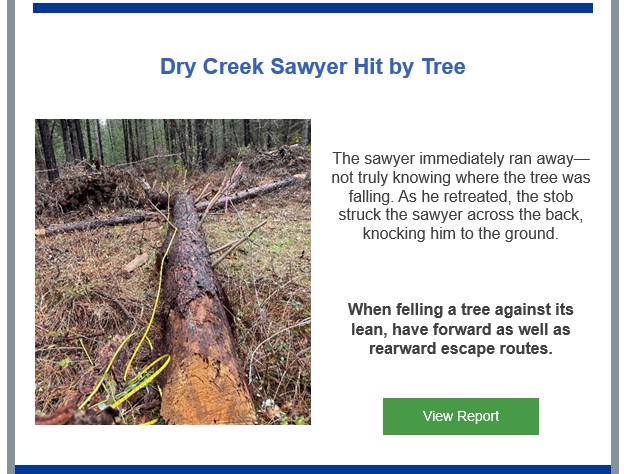


Exploring the wilderness can be a rewarding and enriching experience, but it also comes with inherent risks. Accidents can happen at any time, and being in a remote location often means that medical help is not immediately available. Knowing basic first aid procedures is essential for preventing minor injuries from becoming serious and for responding effectively to emergencies. Whether you need to treat cuts and burns, stabilize fractures, or manage environmental hazards like dehydration or hypothermia, preparedness can make all the difference. By understanding fundamental first aid techniques and taking proactive safety measures, outdoor enthusiasts can minimize risks and ensure a safer, more enjoyable adventure.
Wilderness Survival Basics
Surviving in the wilderness requires preparation, awareness, and adaptability. Injuries, harsh weather, and a lack of resources can quickly turn a simple outing into a dangerous situation. Knowing how to respond to medical emergencies, build shelter, find water, and start a fire can mean the difference between life and death. First aid skills can help manage injuries like cuts, burns, and fractures until professional medical help is available. Understanding basic survival techniques and carrying essential supplies can prevent minor setbacks from escalating into life-threatening situations.
How to Find and Purify Water
Water is the most critical resource for survival, but drinking untreated water from natural sources can lead to severe illness from bacteria, parasites, or chemicals. Dehydration can quickly cause fatigue, confusion, and even organ failure. To ensure safe hydration, collect water from clear, flowing sources and purify it by boiling it, filtering it, or using purification tablets. If no natural water sources are available, use techniques such as collecting rainwater or making solar stills. Staying hydrated and consuming clean water is essential for maintaining strength and preventing medical complications in the wild.
- How to Purify Water in the Wild
- Two Ways to Purify Water
- How to Find Clean Water in an Emergency
- Emergency Disinfection of Drinking Water
- Purifying Your Drinking Water
The Importance of Building a Shelter
Exposure to extreme temperatures, rain, or wind can cause hypothermia or heatstroke, making shelter a top survival priority. A well-constructed shelter provides protection from the elements, conserves body heat, and reduces the risk of weather-related illnesses. If you’re stranded, look for natural formations like caves or dense tree cover for quick shelter. Use materials like branches, leaves, or tarps to build a sturdy structure. Insulation is key, and adding layers of foliage or dry material can help regulate your body temperature once you’re inside. Knowing how to construct an emergency shelter can keep you safe until rescue or better conditions arise.
- Building a Survival Shelter
- Learn How to Build a Wilderness Survival Shelter
- Surviving the Elements: Building Your First Shelter Like a Pro
- Emergency Survival Shelter
Building a Fire
Fire is essential for warmth, cooking, purifying water, and signaling for help, but improper fire management can lead to serious burns or uncontrolled wildfires. In survival situations, having the ability to start a fire without matches or lighters is crucial. Use dry tinder, kindling, and larger logs to build a sustainable fire, and always keep it contained in a fire pit or surrounded by rocks to prevent it from spreading. If someone suffers a burn, cool the area with clean water (if available) and keep it covered to prevent infection.
- How to Build Your Campfire
- Guide to Building a Campfire
- Key Steps for Building a Successful Campfire
- Rediscovering the Lost Art of Building a Fire
- How to Start a Campfire Even When it’s Wet
How to Make a Stretcher
A well-constructed stretcher can be a lifesaver when seeking medical assistance in the wild. Transporting an injured person in the wilderness can be challenging, but knowing how to make a makeshift stretcher can prevent further injury and help move them to safety. Using sturdy materials such as branches, rope, or a tarp, a stretcher can provide stability for someone with a broken bone, sprain, or serious wound. If materials aren’t available, a fireman’s carry or two-person assist can help move the injured individual. When handling a person with a potential spinal injury, keep them as still as possible and avoid sudden movements.
- How to Make an Improvised Stretcher
- Emergency Duct Tape Field Stretcher
- Making an Improvised Stretcher in a Real Emergency
- Evacuating an Injured Person
Fractures
A broken bone in the wilderness can be debilitating and, if not stabilized, can worsen with movement. Fractures require immediate attention to prevent further damage, internal bleeding, or infection. Immobilize the injured limb using a splint made from sticks, cloth, or a backpack frame, and avoid putting weight on the injury. If a bone is protruding through the skin, cover it with a clean dressing to reduce the infection risk.
- Fractures
- Dealing With Bone Fractures
- Types of Fractures
- Everything You Need to Know About Fractures
- Causes and Treatments for Bone Fractures
Bug and Animal Bites
Bug and animal bites can range from irritating to life-threatening, depending on the species and severity of the bite. Insect bites may cause allergic reactions or transmit diseases like Lyme disease or malaria, while animal bites can lead to infections or rabies exposure. If bitten, clean the wound immediately with water and soap, apply an antiseptic, and bandage it to prevent infection. If the bite is from a venomous snake or spider, keep the affected limb immobilized, stay calm, and seek emergency medical care. Avoid provoking wildlife, and use insect repellent, long clothing, and proper food storage to reduce the risk of bites.
- Useful Tips to Deal With Domestic and Wild Animal Bites
- Signs and Symptoms of Animal Bites
- Summer Safety Series: Bites
- Bites and Stings
How to Build a Kit for Emergencies
A well-prepared first aid kit is a survival essential for any outdoor adventure. If someone is hurt, having the right supplies can help you manage wounds, stabilize injuries, and prevent infections until help arrives. Essential items include bandages, antiseptic wipes, pain relievers, medical tape, tweezers, a tourniquet, water purification tablets, and a whistle for signaling for help. Personalize your kit based on the environment, length of trip, and medical conditions of the group. Regularly check and replace expired items to ensure preparedness.

 As the Department of the Interior develops a plan to “restore American prosperity” by exploiting Western natural resources, a Wyoming attorney who has steeled rural communities against federal policies is atop the hierarchy that will marshal the effort.
Secretary of the Interior Doug Burgum last month appointed Karen Budd-Falen as temporary deputy secretary and his senior advisor. As the department fleshes out a four-year strategic plan to use natural resources across 19.9 million acres of national parks and Bureau of Land Management property in Wyoming, Budd-Falen will be in the Interior’s second-highest position.
A draft of the four-year Interior plan leaked to Public Domain outlines department objectives for prosperity, security and recreation. Conservationists have decried elements they say would dismantle environmental safeguards, turn over federal property, promote energy development and favor rural communities over nationwide interests.
The Interior Department last week blasted the leak and called its publication “irresponsible.”
“It is beyond unacceptable that an internal document in the draft/deliberative process is being shared with the media before a decision point has been made,” Interior’s press office wrote WyoFile on Thursday. “Not only is this unacceptable behavior, it is irresponsible for a media outlet to publish a draft document.
“We will take this leak of an internal, pre-decisional document very seriously and find out who is responsible,” the statement reads.
The draft plan, which the agency said is “not final nor ready for release,” sets four goals and several objectives to accomplish them. Interior’s drafted goals are to restore American prosperity, ensure national security through infrastructure and innovation, and allow sustainable enjoyment of natural resources. It would do all that through the fourth goal — collaboration with states, tribes and local governments.
The draft plan to restore American prosperity would use American energy to “lower… costs and increases affordability.” But it includes elements that worry conservationists who fear damage to Interior agencies including the National Park Service, BLM, U.S. Fish and Wildlife Service and Bureau of Indian Affairs.
The plan would “deregulate” to increase “clean coal” production and oil and gas drilling. It would streamline the National Environmental Policy Act, a law designed to safeguard the environment. And it would reduce the cost of grazing, which critics say is already too low.
The draft would “release federal holdings” — divest Americans of their public property — to allow states and communities to reduce housing costs. Interior would support agriculture and increase revenues from logging, non-energy mining, and grazing. The draft treats natural resources as assets, viewing federal holdings for the economic value that can be derived from them.
The leaked document “reads like an industry wish list,” the Center for Western Priorities said in a statement. It includes “a thinly veiled reference to the seizure and sale of public lands,” according to the conservation group.
The draft treats the West’s natural resources “as nothing more than numbers on a balance sheet,” Western Priorities Executive Director Jennifer Rokala said in a statement. In the plan, those resources are “products to be sold off and exploited to help pay for tax cuts for Elon Musk and Trump’s fellow billionaires,” she said.
“It resembles a business plan from a desperate CEO, not a framework to steward public lands for the benefit of all Americans,” Rokala’s statement reads.
To her post, Budd-Falen brings years of experience fighting for ranchers and other public land users and developers. The federal government has been a frequent adversary, but so has Western Watersheds Project, another conservation group that focuses on public land grazing.
She represented a group of ranchers who sued Western Watersheds for trespassing when a field worker collected water to test for pollution caused by grazing. She advised rural counties to adopt land use plans they could leverage when contesting federal programs on public land in their areas. She also represented stock growers who sided against four Missouri hunters who corner crossed to hunt public land on Elk Mountain in Carbon County. She represented the Cliven Bundy family and others as they fought grazing reductions imposed after Las Vegas developers were permitted to occupy desert tortoise habitat. That family later became infamous for armed standoffs with federal officials over use of public land.


I invite you to watch my second video (or read the transcript below), where I talk about our agency priorities and my focus areas as Chief. I continue to believe that safety must be our highest priority, no matter where you work. We must be safe in the course of our duties, and we must look out for one another.
I also share a bit more about what I mean when I say we need to get back to basics. Everyone, including the public, knows that we fight fires, but we do so much more, from forest management to outdoor recreation to mineral and energy management. By focusing on the fundamentals of our work, we can do more to support the health and vitality of our forests and grasslands and neighboring communities.
Overall, our work is built upon relationships and communication, from those with one another to our partners, and I look forward to communicating with all of you through these videos and as we meet in person.
TRANSCRIPT
When I came in, people were asking, “What are the priorities? What are we focused on?” I looked at a couple different things. One, first and foremost, was safety.
And as we prepare for fire season or when, regardless of whether you’re a firefighter, but just doing your job day to day can be hard. And so to me, first and foremost, as we do our jobs, it’s got to be safe, how we perform them and looking out for each other. Another big focus for me is trying to get back to basics. To me, like, really focusing on what our primary responsibilities and duties are that we do.
We’re fighting fire. We have a forest management program. We have a recreation, outdoor recreation program, the minerals program, oil and gas.
But the recreation program, for me, is an area that I’ve learned a lot about that. We have over two hundred million users on an annual basis that recreate on national forest lands.
I mean, so that the interest in the use and how we’re viewed is so positive, I think when I’ve looked at some of the customer survey results, we have like seventy percent positivity in terms of like how people view us and how we interact with the public. So it’s significant, the work that we do, it’s critical, and how we deliver that to the public.
And, you know, one thing that I didn’t mention was the role of relationships, right, and partnerships. But whether it’s in fire, whether it’s in archaeology, whether it’s recreation, we have so many partners. I really think we are in the relationship business, and you all see that in how you do your jobs. Maintaining those relationships and spending the time to to get to know people, in and out of work, is critical, for us to do our jobs effectively.

Hi SNRA Trails Partners and Volunteers,
My final day with the Sawtooth NRA will be Monday April 21st. I want to thank all of you for your dedication as partners and volunteers during my time as the Trails Supervisor here, and for many of you, well before I started here. It has been a delight to maintain and enhance the trail system on the Sawtooth NRA and an absolute pleasure to do so alongside such a robust and active partnership program. Thousands of trees have been cut and hundreds of miles of trails have been maintained thanks to all the important work your organizations do.
Bryce Parker, SNRA Wilderness and Trails Coordinator, will take over as the contact for all things trails on the SNRA. His work cell is 970.409.8110. bryce.parker@usda.gov
Please let me know if I can do anything for you before I go.
Hope to see you all down the trail, Caitlin

We recommend these Trauma Kit to sawyers taking the “Developing the Thinking Sawyer” certification classes. They are to be worn on the sawyers body and not stashed in their truck, because if you need them it seconds that make the difference. They are also great for horsemen attached to their saddles.

 Amazon have Trauma kits available, a couple of the ones we recommend are:


Few things titillate the internet quite like a robot — as Kawasaki has proven once again with an ambitious new design concept.
The Japanese company arrived at the Expo 2025 Osaka this weekend with several creative ideas for the future of mobility, including a robot horse. Kawasaki’s “Mobile Instincts” pavilion at the international design event highlighted CORLEO, an electric horse powered by a hydrogen engine.
There’s no real footage of this very early prototype, which won’t actually become available until, in theory, 2050 — at the earliest. But, Kawasaki did release a concept video using CGI rendering. It depicts a dreamlike landscape reminiscent of fantastical Japanese video games, and filled with robot horse riders gingerly riding through an Alps-like mountain range.
It should come to no one’s surprise that this immediately captured the internet’s imagination. I mean, it’s a robot that leverages Kawasaki’s motorcycle expertise and advanced robotics to create a techno-steed capable of traversing rugged terrain. What’s not to love?
And hey, if they make less noise and cause less environmental destruction than side-by-sides — I say bring on the robot horsies.


Hello,
I am a recreation specialist with the Boise National Forest (BNF) based on the Cascade Ranger District. The BNF is hosting a virtual meeting April 30th from 4:00-5:30 PM to coordinate with partners on trail work planning for 2025. U.S. Forest Service staff will share what we are planning and what other planned projects trail partners have planned. You should be able to click on the highlighted text above and RSVP. I will also add your contact info to a teams meeting and you should receive a separate email with an invite.
There is an included survey here for any partners planning or wanting to do trail projects on the BNF, if each group could fill one out, I will compile all the projects with a brief description into a schedule that can be shared before the meeting. If you have multiple projects you can add forms or would rather email me a description, feel free to do so. https://forms.office.com/g/vMhW5RXsD4
If you have any questions before the meeting, please feel free to reach out to me at Jonathan.floyd@usda.gov for general meeting information, or specific trails information regarding the North Zone (Cascade, Emmett and Lowman Ranger Districts). For South Zone (Mountain Home and Idaho City Ranger Districts) please reach out to JW Cleveland, South Zone recreation specialist at joseph.cleveland@usda.gov.
Meeting Agenda
- Quick Introduction (Adam Floyd)
- Boise NF trail project plans
- How to best find a project to join (Adam Floyd)
- North Zone (Adam Floyd)
- South Zone (JW Cleveland)
- Round table with partners who would like to present their projects
- Questions or additional discussion (Adam Floyd)
- We look forward to seeing you there,
Zoom Meeting
Topic: Non-Motorized Trails Legislation Update
Time: Apr 24, 2025 10:00 AM Mountain Time (US and Canada)
Join Zoom Meeting
https://us02web.zoom.us/j/89109943525?pwd=bzKeHF50wbJvdUDvbER0pra3SeUkRi.1
Meeting ID: 891 0994 3525
Passcode: 512561

Full Text of Bill PDF – IHB – 0487 


(Washington, D.C., April 4, 2025) – U.S. Secretary of Agriculture Brooke Rollins issued a Secretarial Memo (PDF, 2.9 MB) to establish an “Emergency Situation Determination” on 112,646,000 acres of National Forestry System (NFS) land (PDF, 19.8 MB). This Memo comes on the heels of President Donald J. Trump’s Executive Order to expand American timber production by 25%, and it will empower the U.S. Forest Service to expedite work on the ground and carry out authorized emergency actions to reduce wildfire risk and save American lives and communities.
“Healthy forests require work, and right now, we’re facing a national forest emergency. We have an abundance of timber at high risk of wildfires in our National Forests,” said Secretary Rollins. “I am proud to follow the bold leadership of President Trump by empowering forest managers to reduce constraints and minimize the risks of fire, insects, and disease so that we can strengthen American timber industry and further enrich our forests with the resources they need to thrive.”
The Memo issued by Secretary Rollins is part of a larger effort to ensure American resources are properly managed for generations to come. This work will support rural economies, reduce wildfire risk, and build capacity through workforce alignment and expanded partnerships.
This Memo will also spur immediate action (PDF, 285 KB) from the U.S. Forest Service directing field leadership to increase timber outputs, simplify permitting, remove National Environmental Policy Act (NEPA) processes, reduce implementation and contracting burdens, and to work directly with states, local government, and forest product producers to ensure that the Forest Service delivers a reliable and consistent supply of timber.
This action builds on Secretary Rollins’ announcement last month to unleash American energy by directing the USDA Forest Service to take action to remove burdensome Biden-era regulations that have stifled energy and mineral development on Forest Service land. As part of these decisive actions, the agency also canceled two mineral leasing withdrawals on Forest Service land that will help boost production of critical minerals.

USDA Secretarial Memo April 3, 2025 (PDF)

 Drew Dodson writes: Work to repair damage from a landslide on U.S. 95 between New Meadows and Council will begin on Monday, and with it a complete closure of the roadway, the Idaho Transportation Department announced today.
The closure is set to begin on Sunday night at 8 p.m. and will not be lifted until repairs are completed in late April or early May, according to ITD.
There are no local detours around the closure zone due to heavy snowpack remaining in the mountains.
“ITD is working with emergency responders to ensure uninterrupted service for all areas,” the agency said in a news release. “ITD is also working with local jurisdictions to identify potential alternatives for local workers to get past the US-95 closure.”
Repairs will begin by digging about 10 feet down along a 200-foot-long section of the roadway that was damaged by the landslide on March 16 just north of the northern outlet of the Fruitvale Glendale Road.
Crews will then drive steel piles into stable rock to support a retaining wall that will be built to support the roadway.
The roadway was damaged on March 16 when steady rains and warm temperatures led to a steep bank along the Weiser River sliding away from beneath the roadway, causing asphalt to crumble away with it.
Days later, ITD re-opened one lane of the roadway to passenger cars between the hours of 7 a.m. and 8 p.m. Those hours will continue through Sunday night. Commercial traffic, including semi-trucks, will continue being detoured onto Idaho 55 for the duration of the closure, ITD said.
Idaho 55 is normally closed to most semi-trucks due to “narrow and winding” conditions, including at the Rainbow Bridge south of Cascade, where truck drivers have been instructed to slow down or stop to yield to oncoming traffic on the bridge.
(Part of U.S. 95 between Council and New Meadows crumbled away following a March 16 landslide. Photos: Courtesy Idaho Transportation Department)
 MISSOULA, Mont. — Kristin Bail is being named acting regional forester for the Northern Region on March 31.
Bail will temporarily succeed Regional Forester Leanne Marten who has planned to retire after 34 years of service.
In her role, Bail will oversee management of nine national forests and one national grassland within Idaho, Montana and North Dakota.
The USDA Forest Service sent out the following:
USDA Forest Service Chief Tom Schultz today announced Kristin Bail will serve as acting regional forester for the Northern Region, effective March 31, 2025.Bail will temporarily succeed Regional Forester Leanne Marten as she reaches her long-planned retirement date after 34 years of service.
“I would like to thank Leanne for her dedication and exemplary leadership. She leaves a legacy of successful partnerships and collaboration,” said Forest Service Chief Tom Schultz.
As acting regional forester, Bail will oversee management of nine national forests and one national grassland within Idaho, Montana, and North Dakota.
“Kristin’s understanding of the importance of field work and collaboration with state and local decision-makers perfectly positions her to serve in this leadership role for the Northern Region. As the agency focuses on safety, active forest management, fire management and recreation, Bail will work with our partners to advance the agency’s mission critical work,” said Chief Schultz.
Bail’s land management career spans more than 40 years where she served in a variety of field positions and leadership roles at the Forest Service and Bureau of Land Management. Most recently, Bail served as the deputy regional forester for the Southwestern Region and previously as forest supervisor for the Okanogan-Wenatchee National Forest in Washington State.She also served at the executive level as assistant director for the Bureau of Land Management’s Resources and Planning Directorate.
“I am grateful for the opportunity to lead the Northern Regionas we steward the health and productivity of our nation’s forests and grasslands,” said Bail. “I look forward to building relationships across the region as we focus on delivering on the agency’s priorities.”
For more information about the Forest Service visit http://www.fs.usda.gov/.
 The Whitebark Pine survives harsh weather conditions and can live over 1,000 years and grow over 90 feet tall. The oldest is over 1,200 years old and is living in Idaho’s Sawtooth National Forest.
“The Whitebark pine (Pinus albicaulis) is a marvelous tree – what ecologists call a keystone, or foundation, species,” the Bureau of Land Management notes on its website. “Its roots stabilize rocky soils at the snowy, windswept 6,000- to 12,000-foot elevations where it grows, and its large, high-protein seeds feed several bird and mammal species – nuthatches, squirrels, black bears, grizzly bears, and red foxes.”
In addition to feeding several birds and mammals, the tree provides shelter and nest sites for many animals including deer and elk. It is also key to helping with Idaho’s water supply.
“Tolerant of the harshest conditions, whitebark pine grows at the highest treeline elevations; its canopies shade snowpack and protract snowmelt, thus regulating downstream flows; its roots stabilize soil, which reduces erosion, particularly on steep, rocky slopes,” the Whitebark Pine Ecosystem Foundation notes. “Thus, whitebark pine protects watersheds, which is important for both agricultural and drinking water.”
Another interesting fact about the Whitebark Pine is that it relies solely on the bird – the Clark’s nutcracker – to reproduce.
“Carrying the seeds in a pouch under its tongue, the bird buries them in shallow soil caches, sometimes up to 10 km away,” the National Park Service notes on its website. “Nutcrackers are known to cache up to 90,000+ seeds in a good seed crop year!”
These trees are very slow-growing. For example, once the seeds start to sprout, it can take the whitebark pine 25 to 30 years to begin producing cones. At 60 to 80 years, the tree’s peak cone production begins.
While the Whitebark Pine is crucial to Idaho’s ecosystem, its survival has been threatened by several different factors.
“Today, their survival as a species is jeopardized by mountain pine beetle outbreaks, altered fire regimes, climate change, and a fungal infection called white pine blister rust,” BLM notes.
In 2022, the Whitebark Pine was officially listed as a threatened species under the Endangered Species Act. To learn more about the efforts to save the Whitebark Pine, head to BLM’s website here.

 A company owned by Texas billionaires Dan and Faris Wilks is selling 73 ranch sites carved from about 2,000 acres south of Cascade.
Plans for Legacy Creek Ranch, as dubbed by DF Development, look like subdivisions across Valley County, but are not subject to the same rules and review process because the ranch sites were created by a series of lot line adjustments and original parcel splits.
That, Valley County Planning and Zoning Administrator Cynda Herrick said, is the difference between selling raw land and being required to follow the county’s subdivision laws.
“I’ve been talking with (DF) and they understand that this isn’t the preferred method,” Herrick told Valley Lookout. “But it’s what they’re entitled to by law.”
The method used by DF enables Legacy Creek Ranch to avoid the county’s subdivision requirements, which include plans for drainage, irrigation, drinking water, septic systems, utilities, and streets. It also means that the company is not required to create a fire protection plan covering things like water supply, emergency access, and vegetation management.
The plan also avoids review by the Valley County Planning and Zoning Commission, as well as several state agencies, including the Idaho Transportation Department, the Idaho Department of Environmental Quality, and the Idaho Department of Water Resources.
How were the ranch sites created?
Most of the ranch sites have been created by lot line adjustments, which require administrative approval. County law allows landowners to adjust the boundaries of existing parcels into different shapes and sizes if no new parcels are created.
For Legacy Creek Ranch, that has enabled DF to reconfigure existing parcels to include road access along Clear Creek Road, also known as Forest Service Road 409.
The company was also able to create 18 new parcels by splitting parcels that have not been subdivided since Valley County’s subdivision regulations were adopted in 1970. Those parcels, known as “original parcels,” may be split one time without triggering a review.
“We allow original parcels to be split one time without going through a platting process,” Herrick said. “So they took their parcels and did their free splits.”
The result of the splits and reconfiguring is 73 parcels, which Herrick emphasized do not qualify as “lots” because they were not created through the subdivision process.
Marketing
Advertisements for Legacy Creek Ranch have shown up on billboards on State Street in Boise, in The Star-News, and on social media.
In The Star-News, McCall’s weekly newspaper, the ranch sites are advertised as “lots,” despite not coming with any of the certainties or amenities associated with true subdivision lots.
“This is not a subdivision, these are not lots,” Herrick said. “This is a marketing tactic.”
Unlike typical subdivision lots, the parcels DF advertised by DF do not include any utilities and are not guaranteed to be able to meet standards for septic systems and water wells.
Any buyer of the lots would be required to seek a building permit from the county and receive approval for construction plans. It is unclear if any of the lots have been sold so far.
Advertising paints Legacy Creek Ranch as “the perfect place to connect with the wilderness and start building your legacy.”
“Our early Phase-1 release at Legacy Creek Ranch ensures plenty of open space,” according to DF’s website. “Our lifestyle plan for the community is simple: build green, clean, and sustainable spaces filled with the natural wonders of mountain wildlife.”
DF Development representatives did not respond to requests for comment by Valley Lookout.
Other DF Developments Horsethief Ridge Red Ridge Village


 BOISE, Idaho — Hundreds of concerned citizens gathered at the Idaho Capitol on Saturday to celebrate and defend public lands amid growing concerns over potential privatization efforts.
“We’re here today to celebrate and defend our National Public Lands,” said Alexis Pickering, Executive Director for Conservation Voters for Idaho. “We know that there’s been talks at the federal government, and special interests are eyeing our public lands as a cash cow and to sell them off.”
Attendees came from across the state, including distant communities like Driggs and Moscow, demonstrating the widespread concern about public land access.
Pickering expressed alarm about recent developments.
She cited the Wilks brothers as an example of privatization concerns.
“Privatization, we’ve already seen the impacts of what privatization has done. Most folks know about the Texas billionaire brothers, the Wilks brothers. They purchased a ton of land in Valley County in that neck of the woods, and they essentially shut off, you know, decades, centuries of access to pristine hunting grounds and recreational access,” Pickering said.
Conservationists argue that a combination of environmental challenges, resource constraints, and political agendas creates a perfect storm that puts the future of public lands at greater risk than ever before.
According to Pickering, the consequences could be far-reaching for average citizens,
“That’s what we can expect with privatization,” she said. “Is folks no longer allowing regular Idahoans like you or me to recreate, to pick huckleberries, to hunt or fish. That would no longer be an option for a majority of the state.”
Organizers are urging citizens to contact their federal representatives to support Montana Representative Ryan Zinke’s “Public Lands in Public Hands Act,” which would protect federal lands from being transferred to state ownership.
“I think we’ll just have to get bigger and louder and stronger,” Pickering said. “We’ll have to – this is not the first time they’ve come for our public lands, and we’ve beat it back before.”
The rally included multiple conservation organizations working together, reflecting what Pickering described as “a huge intrinsic value and a uniting force amongst Idahoans of all types.”


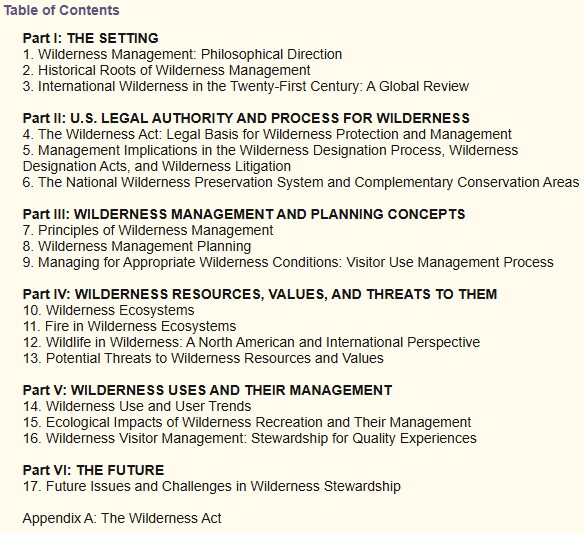
Thank you to the Boise National Forest for providing this information to Back Country Horsemen of Idaho
2024Fires_Trails_StatsTableAFedit 
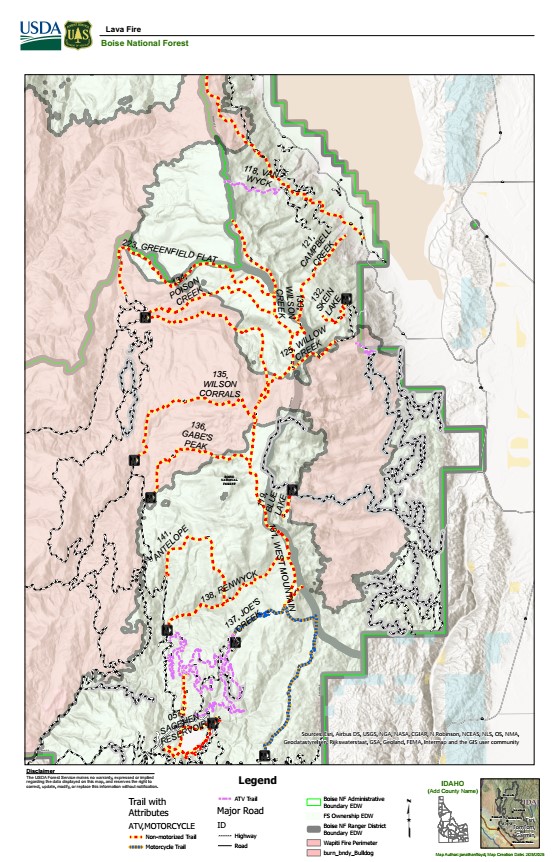

FIRE MAP PDFs